

According to Einstein’s theory of relativity, an object moving at a speed close to the speed of light should flatten. However, more than 60 years ago, physicists James Terrell and Roger Penrose made an amazing discovery: our eyes would perceive such an object not as flattened, but as rotated. This paradox, known as the Terrell-Penrose effect, was first visualized in laboratory conditions using laser technology.
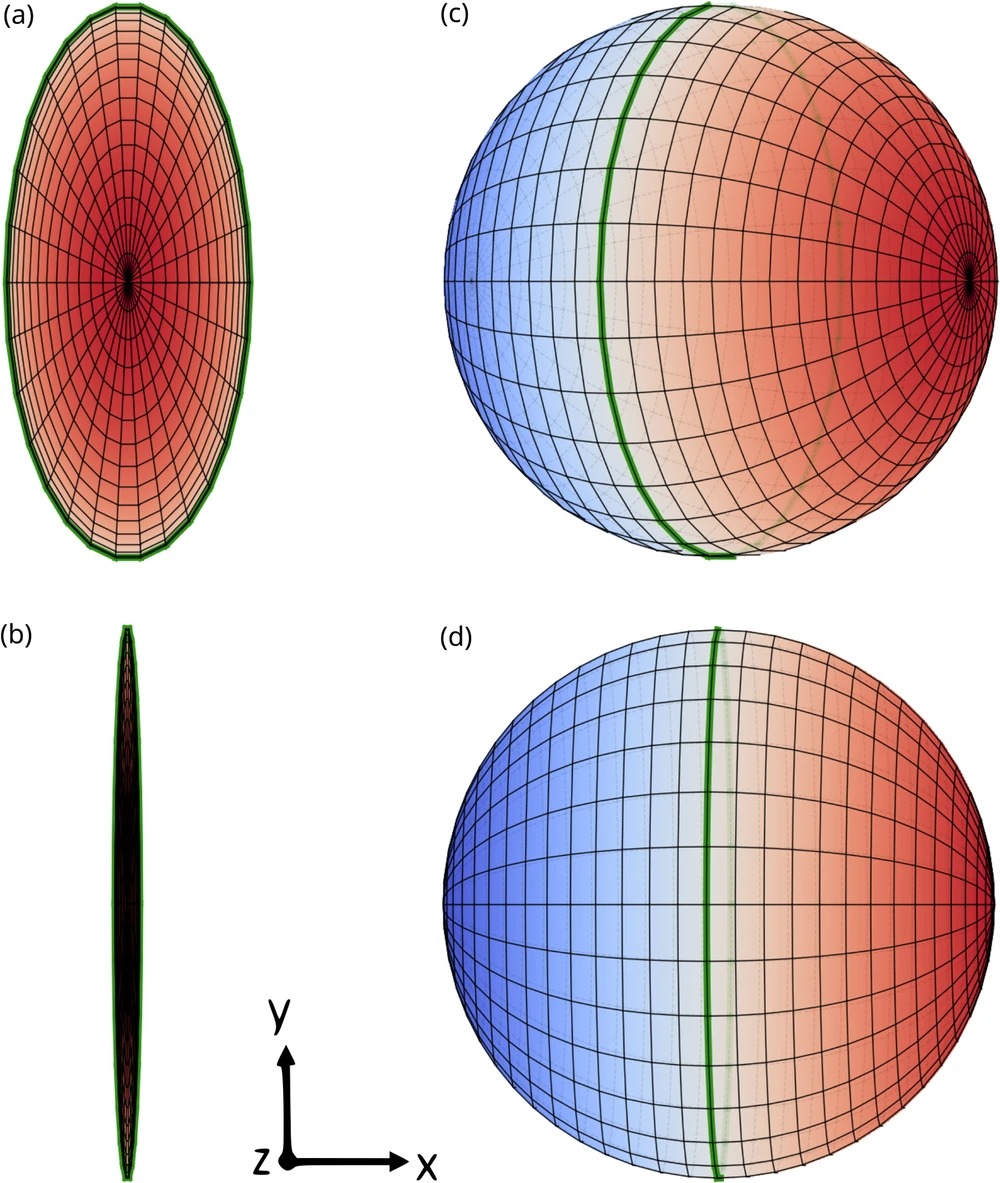
The special theory of relativity assumes a real physical shortening of the length of an object (Lorentz contraction). But our perception depends on light. When an object moves very quickly, the light from its back has to travel a greater distance than the light from its front in order to reach our eyes or a camera lens at the same time. This time difference distorts the whole picture. As a result, the fast-moving cube will appear as if it has been rotated, revealing edges that are normally hidden.
How to “trick” a camera?
The main problem for physicists led by Dominik Hornof from the Vienna University of Technology was the inability to accelerate even a small cube to relativistic speeds. This would require enormous energy. Therefore, they used a creative approach to circumvent the limitations.
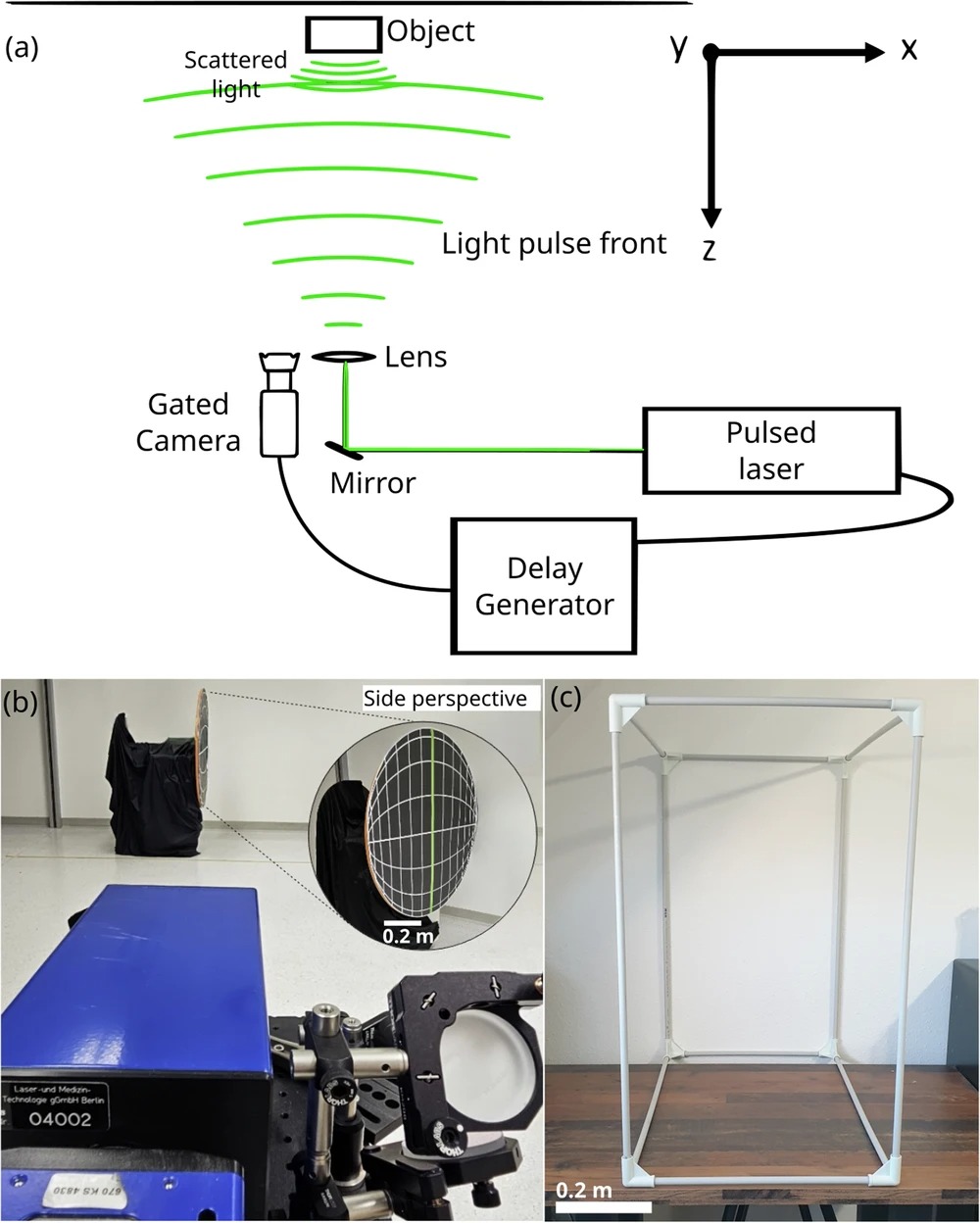
Their method can be called a “spatio-temporal puzzle.” The researchers took a cube and a sphere and began to “assemble” their image layer by layer. Instead of moving the object, they illuminated it with ultra-short laser pulses lasting only 300 picoseconds, capturing the reflected light with a camera with an instantaneous shutter. After each such “cut,” they slightly shifted the position of the object, simulating movement at 80% and even 99.9% of the speed of light.
Geometry beats physics
When all the individual slices were combined into a single image, the scientists saw exactly what the Terrell-Penrose effect had predicted. The cube looked as if it had been rotated, revealing its back edge. And the sphere took on a shape that enabled one to look beyond its equator.
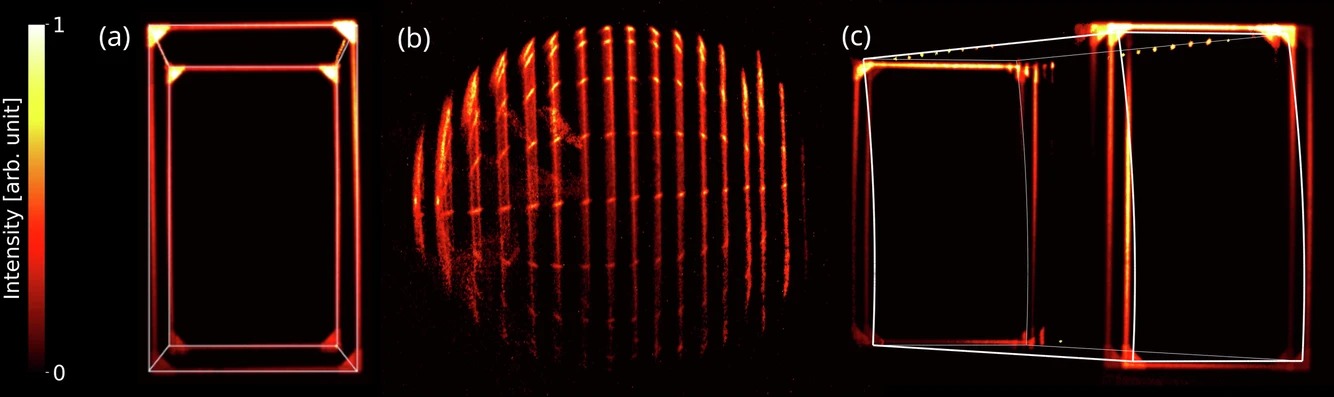
“The rotation is not physical. It’s an optical illusion. The geometry of how light arrives at the same time tricks our eyes,” explains Hornof.
This experiment, the results of which are published in the journal Communications Physics, does not contradict Einstein, but rather vividly illustrates the difference between physical reality and our perception of it.
The study opens up new avenues for visualizing complex relativistic phenomena without incredible energy costs, proving that the deepest secrets of the Universe can sometimes be seen with our own eyes in the laboratory.
Earlier, we reported on how a particle moving faster than light was discovered.
According to livescience.com

