

At the center of our Milky Way galaxy, there may not be a supermassive black hole, but rather a huge cluster of mysterious dark matter that exerts the same gravitational pull. This is according to the results of a study published in the journal Monthly Notices of the Royal Astronomical Society.
Mystery of Sagittarius A*
At the center of our galaxy is a compact radio source known as Sagittarius A*. Its mass is 4.3 million times greater than that of the Sun, and it is surrounded by a group of stars (known as S-stars) that move at tremendous speeds of several thousand kilometers per second.
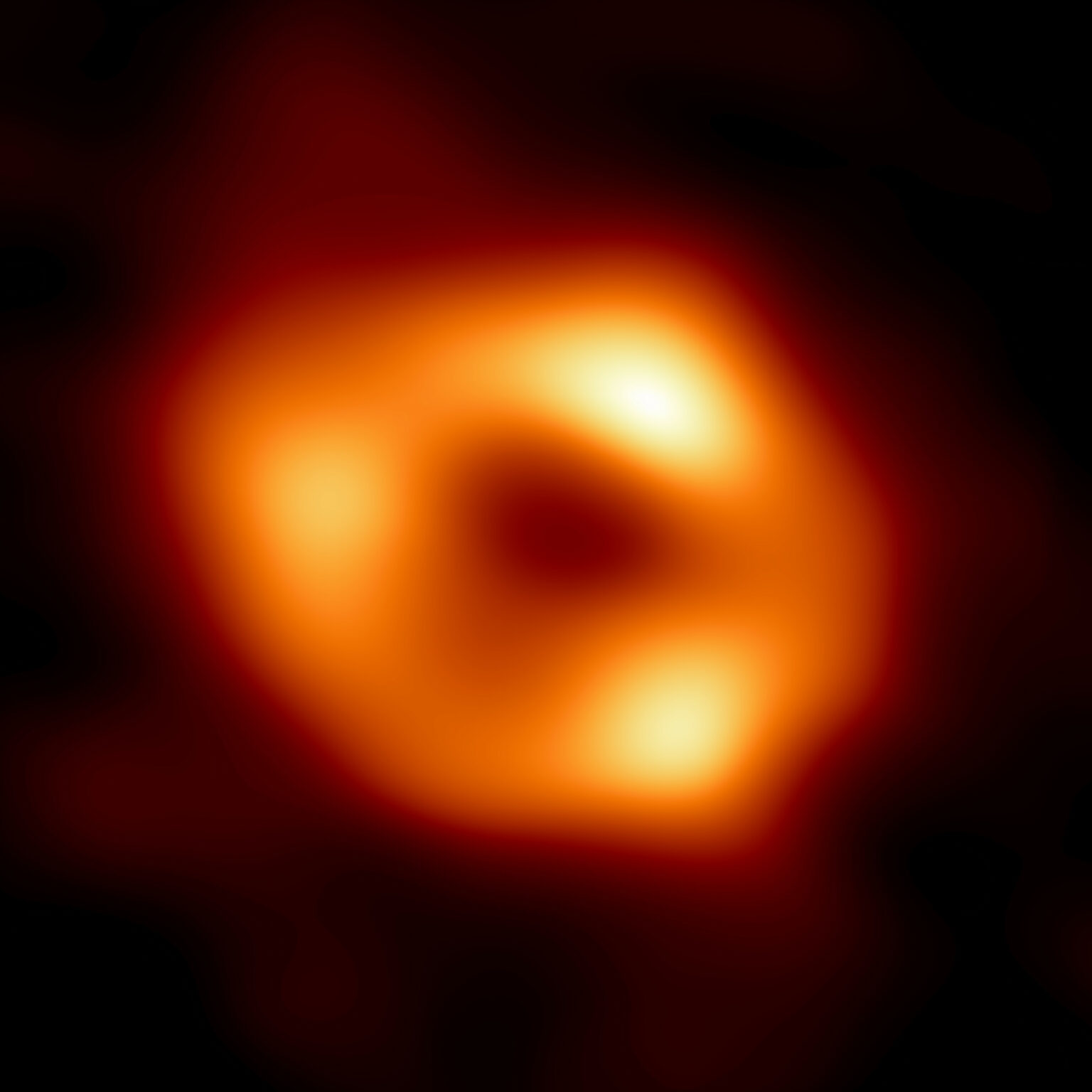
According to most researchers, Sagittarius A* is a supermassive black hole. In 2022, the Event Horizon Telescope (EHT) collaboration even managed to obtain an image of its shadow, consistent with theoretical predictions.
However, not everyone agrees with this interpretation. An international group of researchers has put forward an alternative idea, according to which Sagittarius A* is actually a cluster of dark matter — a mysterious substance that does not participate in electromagnetic interactions and manifests its existence through gravitational effects on other bodies.
Alternative hypothesis
According to a new hypothesis, Sagittarius A* consists of a certain type of light subatomic particles called fermions. It has a superdense compact core surrounded by an extensive diffuse halo, which together act as a single entity.
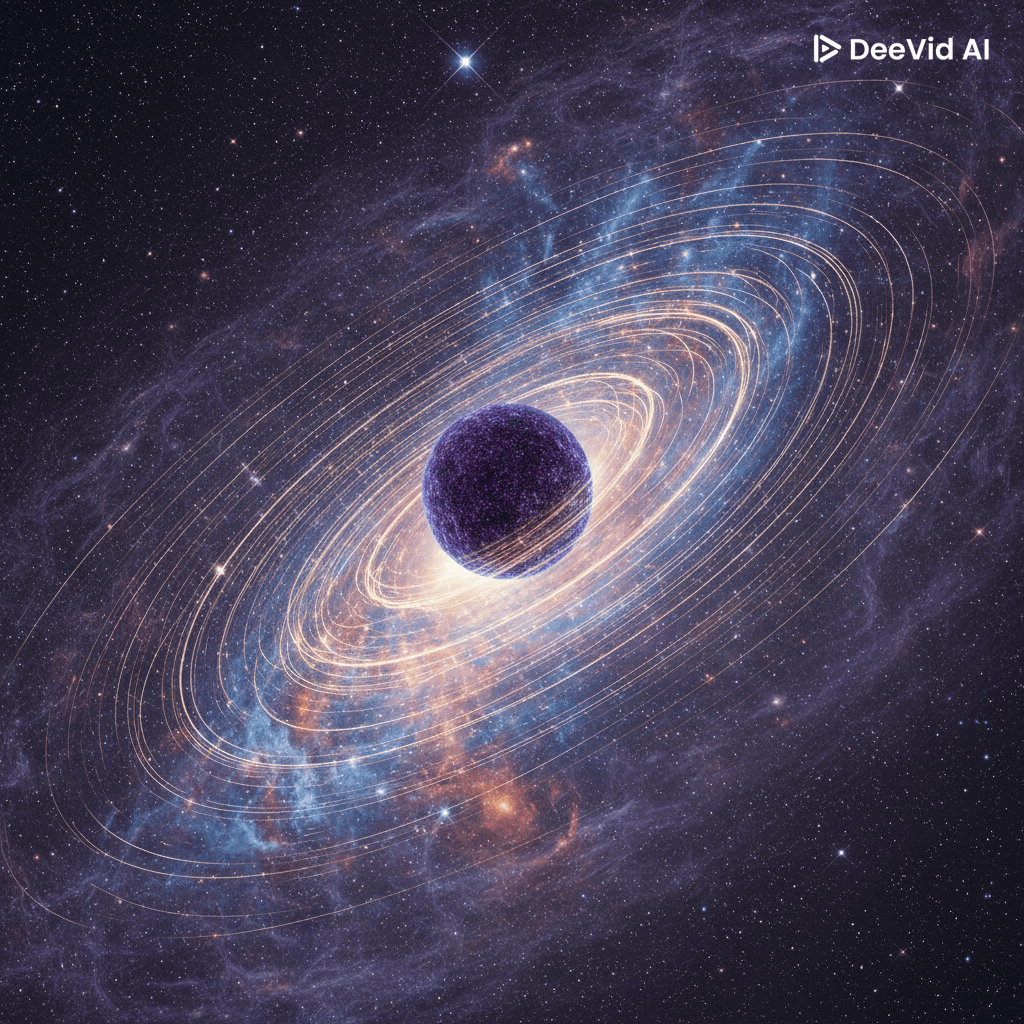
According to scientists, the inner core of dark matter is so compact and massive that it can mimic the gravitational pull of a black hole and explain the orbits of S-stars, as well as the orbits of dust-enveloped objects known as G-sources, which also exist nearby.
The data from the Gaia mission, which mapped the rotation curve of the outer halo of the Milky Way, showing how stars and gas rotate away from the center, are particularly important for this hypothesis. A slowdown in the rotation curve of our galaxy, known as Keplerian decline, has been observed, which, according to researchers, can be explained by an external halo of dark matter combined with the Milky Way’s disk and bulge, which consist of ordinary matter.
“This is the first time a dark matter model has successfully bridged these vastly different scales and various object orbits, including modern rotation curve and central stars data,” said study co-author Dr. Carlos Argüelles of the La Plata Institute of Astrophysics.
“We are not just replacing the black hole with a dark object; we are proposing that the supermassive central object and the galaxy’s dark matter halo are two manifestations of the same, continuous substance.”
Shadow of Sagittarius A*
It is important to note that the fermion model of dark matter has already undergone rigorous testing. Previous research has shown that a dense core of dark matter would strongly bend light, creating a central darkness surrounded by a bright ring. This way, its image will match the famous image of the shadow of Sagittarius A* obtained by the EHT.
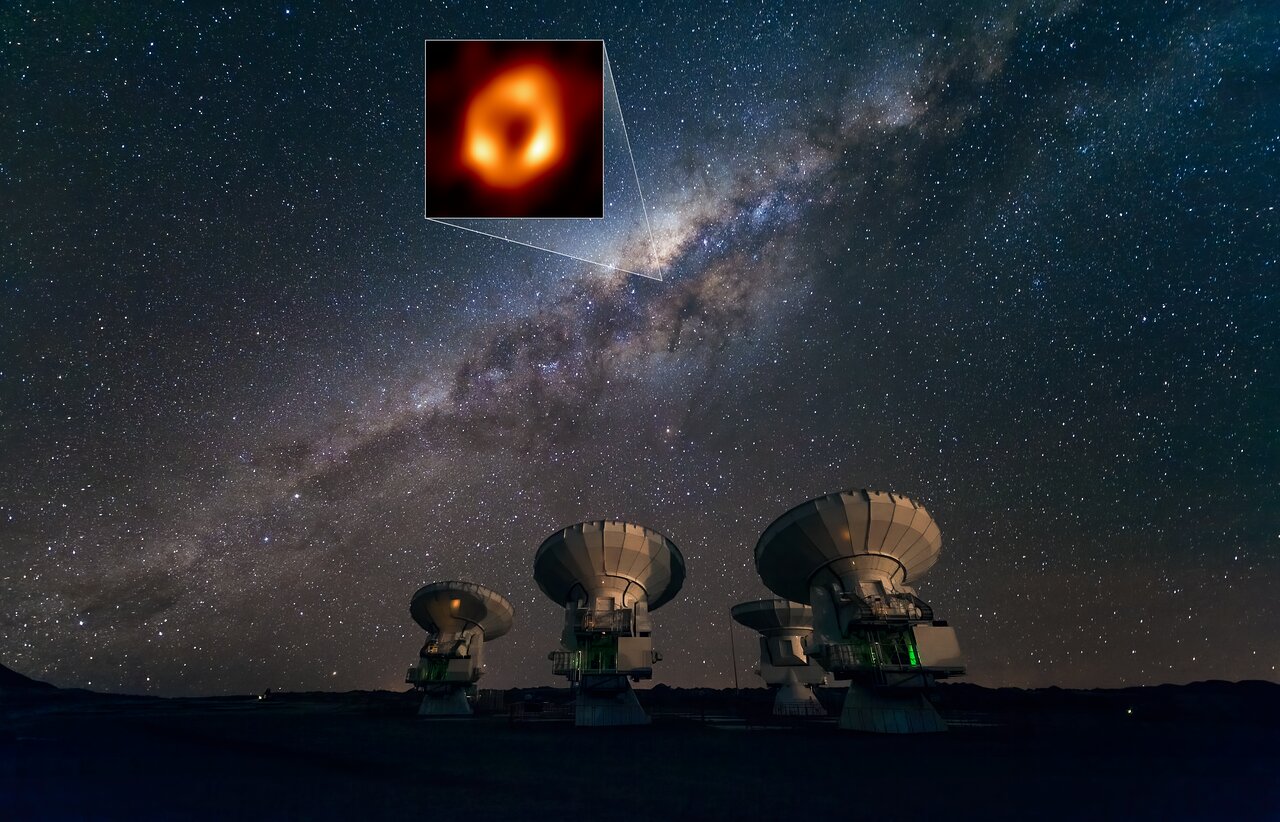
The researchers also statistically compared their fermionic dark matter model with the traditional black hole model. They found that although current data on internal stars does not yet allow these two scenarios to be clearly distinguished, the dark matter model provides a unified framework that explains both the center of the galaxy (central stars and shadow) and the galaxy as a whole.
According to the authors, more accurate data obtained using instruments such as the GRAVITY interferometer on the Very Large Telescope in Chile, as well as the search for the unique signature of photon rings — a key feature of black holes that is absent in the dark matter core scenario — will be crucial for testing the predictions of their model.
According to Royal Astronomical Society

