

The James Webb Space Telescope (JWST), humanity’s most powerful orbital lens, has likely come across something never seen before that could change our understanding of the Universe in its early stages. We are talking about hypothetical “dark stars.” If their existence is confirmed, they will help solve several fundamental mysteries of modern astrophysics at once.
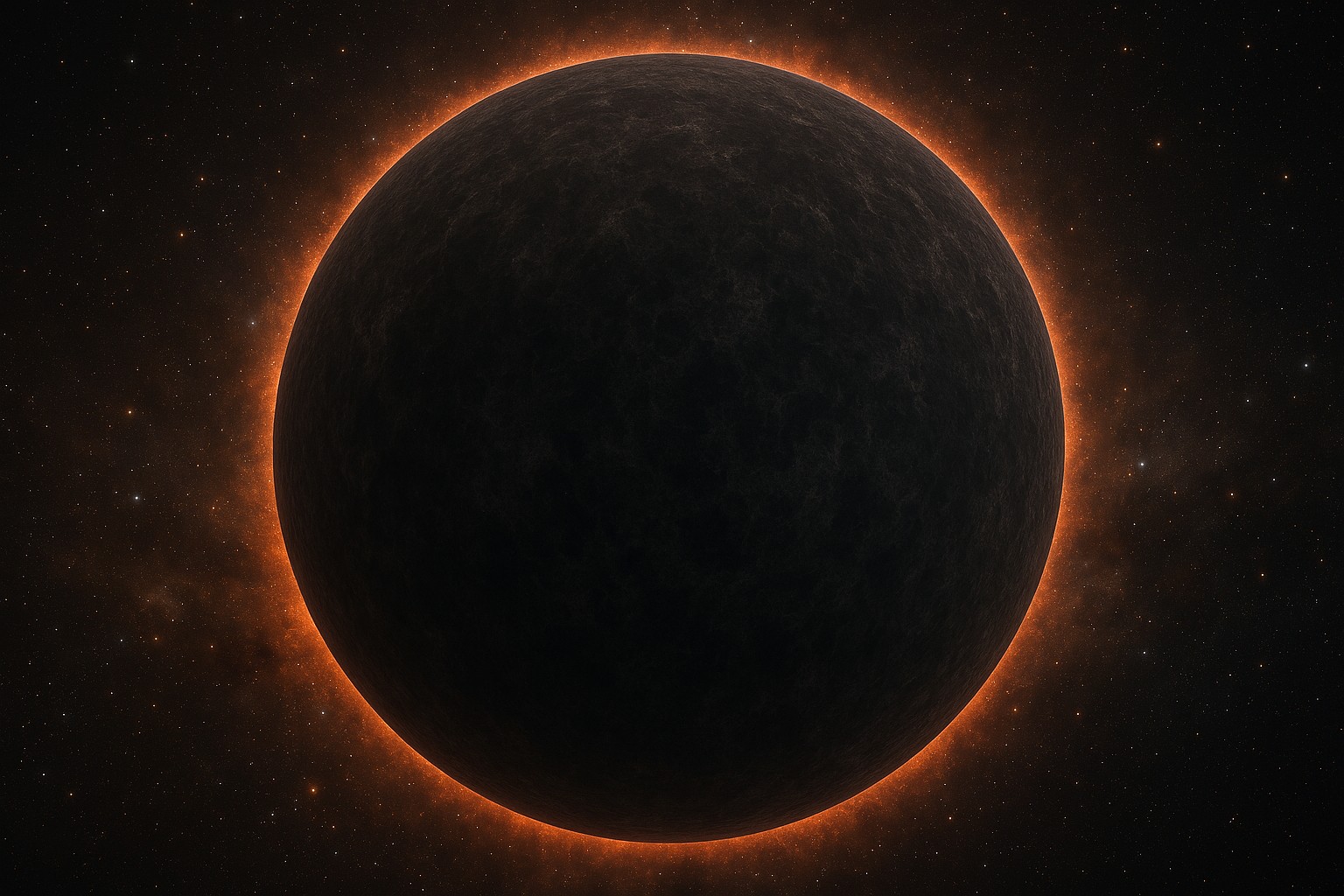
Imagine a very bright giant star, but with a completely different way of feeding. Ordinary stars, like our Sun, exist thanks to nuclear fusion. Dark stars, in theory, obtain energy through the annihilation of dark matter particles in their cores. This is an exotic mechanism that would allow such objects to reach enormous sizes and masses while remaining sufficiently cold.
“Supermassive dark stars are extremely bright, gigantic, but very loose, like clouds, which resist gravitational collapse due to the minimal amount of dark matter inside them,” explains Cosmin Ilie, an astrophysicist at Colgate University.
An undeniable sign of dark star
A new study published in the journal PNAS focuses on the four most distant objects ever observed. All of them correspond to dark star models. But the real discovery was the spectral analysis of one of the objects. The JWST instrument detected a distinctive feature of light absorption at a wavelength of 1,640 Angstrom, which is considered a potential hallmark of dark stars. This line may indicate the presence of singly ionized helium in their atmospheres.
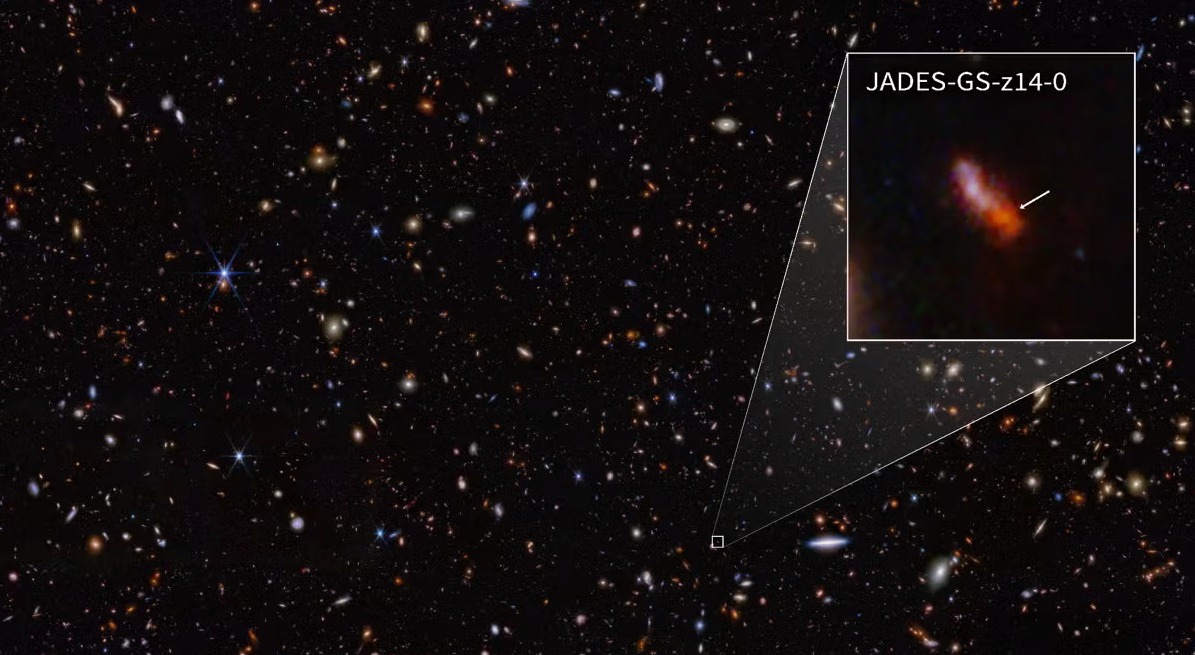
“Although the signal-to-noise ratio of this feature is relatively low, this is the first time we have found a potentially irrefutable sign of a dark star. Which, in itself, is remarkable,” notes Ilie.
Why is this so important?
The discovery of dark stars should have revolutionary consequences. First, it may shed light on the nature of dark matter—a mysterious substance that makes up most of the mass of the Universe. Secondly, it will provide an answer to the question of the origin of supermassive black holes.
Theoretically, after the dark matter was exhausted, dark stars should have collapsed, immediately forming black holes with incredible initial masses. This would explain why scientists observe supermassive black holes in the very young Universe—they simply “inherited” enormous mass from their predecessors, dark stars.
So far, scientists are cautious in their conclusions. All four objects can still be interpreted as unusually early galaxies. However, the dark star hypothesis appears to be an elegant solution to several cosmic puzzles at once. Additional observations by JWST will be needed for final confirmation.
But one thing is already clear: regardless of whether these distant giants turn out to be dark stars or something else equally astonishing, they will force us to rewrite our physics textbooks.
Earlier, we reported on how black holes were suspected of having connections to dark energy.
According to Science Alert

