

The JUICE mission experienced a serious malfunction, during which all communication with it was lost for some time. However, thanks to the coordinated efforts of the Mission Control Center in Darmstadt, Germany, and the specialists at Airbus who built the vehicle, the problem was quickly resolved.
Loss of connection
The incident occurred on July 16, when the ESA’s space communications antenna failed to establish contact with JUICE at the scheduled time. Subsequent checks showed that the problem was not with the ground equipment.
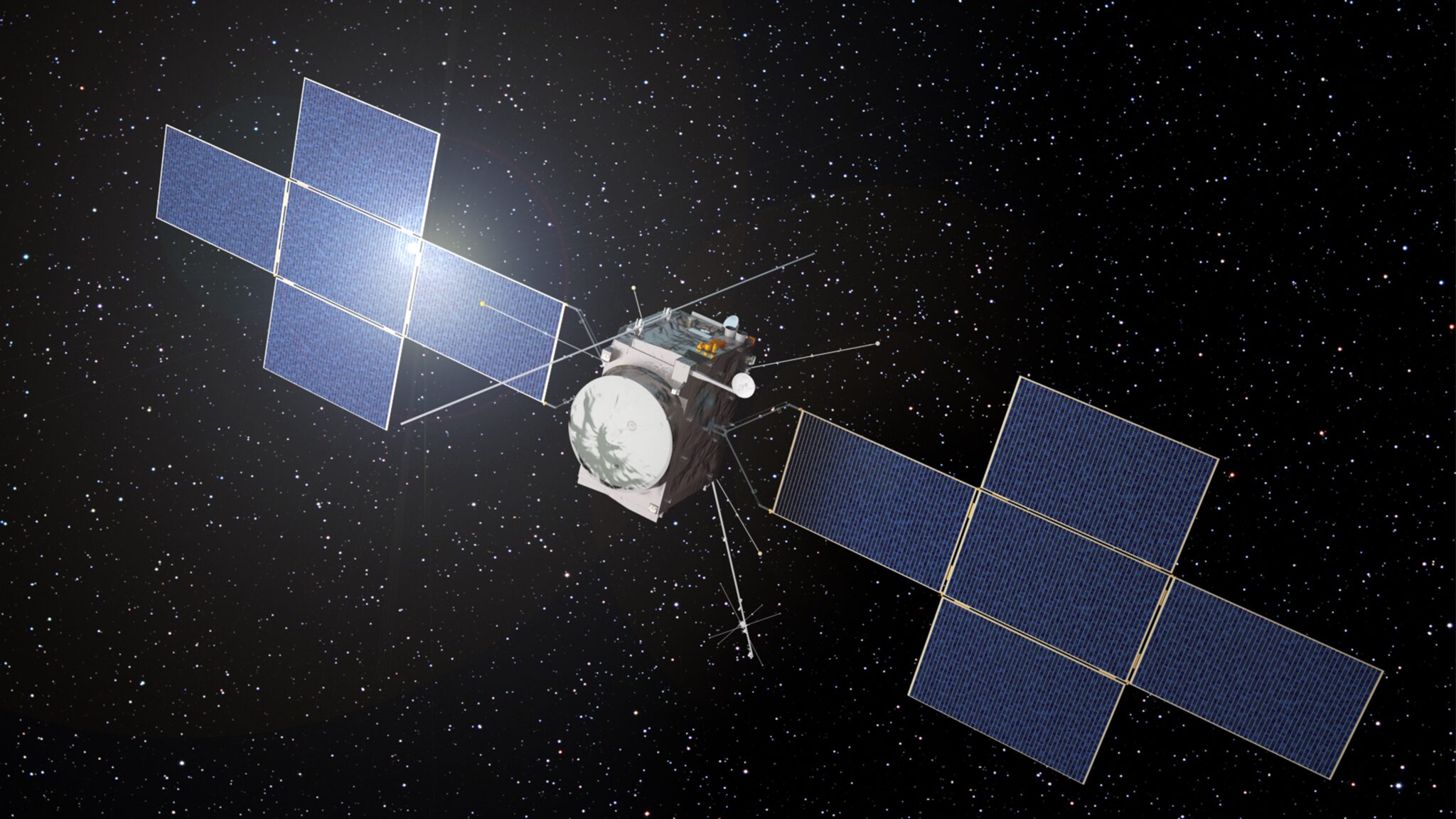
Without a signal or telemetry, engineers feared that JUICE might have switched to survival mode — a last-resort configuration that is triggered when multiple onboard systems fail. In this state, the spacecraft slowly rotates, passing its antenna over Earth once an hour. However, such an intermittent signal was not detected.
Therefore, experts suggested that the issue was related to the communication subsystem. Engineers suspected either incorrect configuration of the JUICE medium-power antenna or a malfunction in the transmitter or signal amplifier.
Two recovery strategies were considered: wait for the spacecraft’s next automatic reboot in 14 days, or send “blind” commands into space in the direction where JUICE should be and hope that they would be received by one of the low-power backup antennas. The situation was complicated by the fact that on August 31, the spacecraft was scheduled to make a critically important flyby of Venus. A two-week wait would have delayed important preparations. Therefore, the experts chose “blind” teams.
Sending the “blind” command proved to be a difficult task: JUICE was about 200 million kilometers from Earth on the other side of the Sun. It took 11 minutes for the signal from the ground antenna to reach the spacecraft’s estimated location. It took just as long to figure out whether JUICE had received it.
The first six attempts to “hit” JUICE were unsuccessful. It was only on the seventh attempt that the vehicle accepted the command, after which it directed its medium-power antenna toward Earth. After that, engineers activated a communication amplifier that boosts the power of the signal sent by JUICE to Earth and restored communication. JUICE was in excellent condition. None of the systems failed, and all telemetry data was normal. The analysis showed that the cause of the loss of connection was a software error that caused the communication amplifier to shut down.
Transit of Venus
Thanks to the successful restoration of communications, the mission team was able to focus all its attention on the Venus flyby scheduled for August 31. It will allow the spacecraft to increase its orbital velocity without using fuel. Since Venus’ surroundings receive much more sunlight than Earth, JUICE uses its main antenna as a heat shield. Because of this, it will not be able to photograph the planet during its flyby.
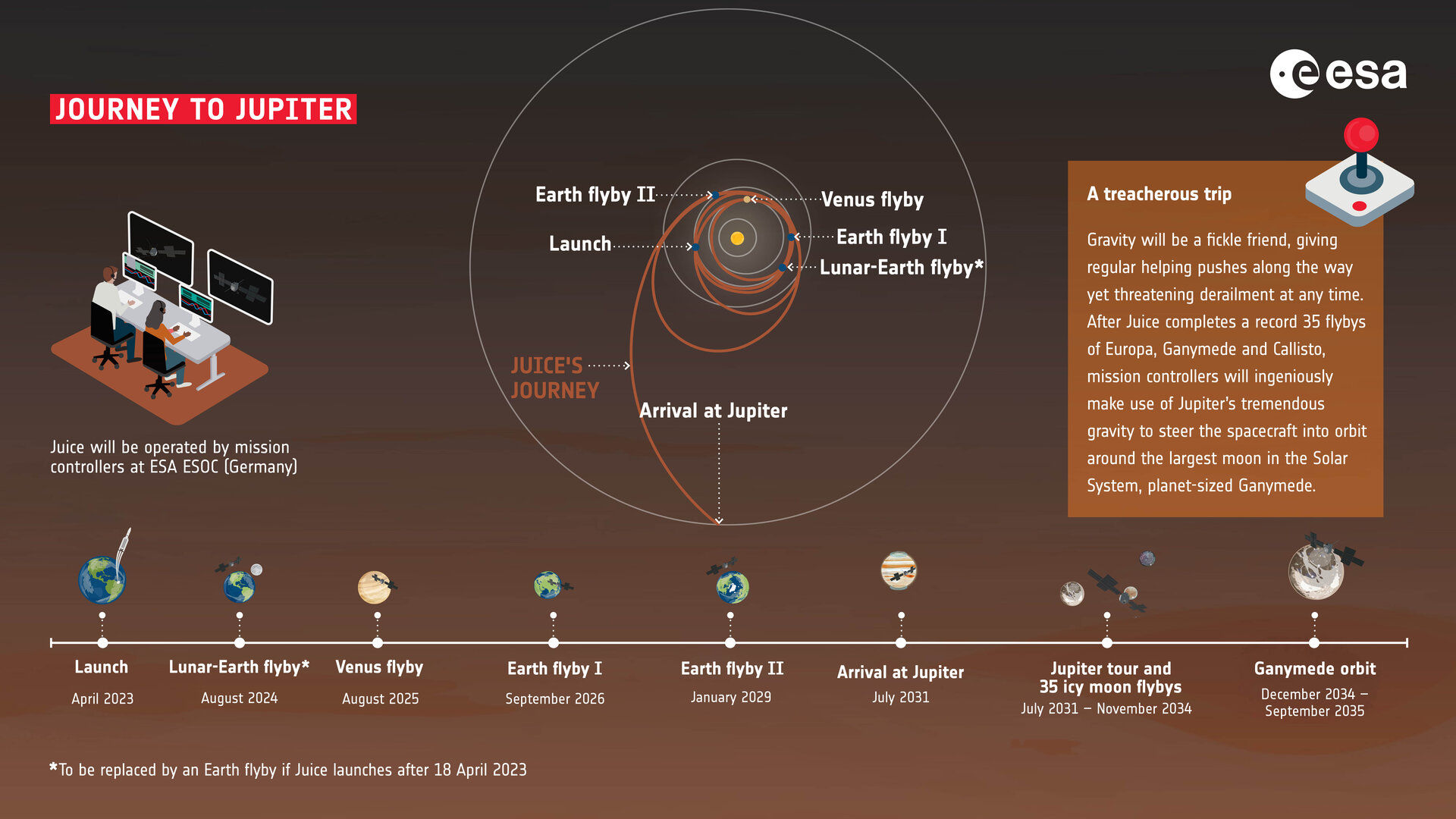
After meeting Venus, JUICE will head towards Earth. In September 2026, the spacecraft will fly past it and increase its speed again. After 2.5 years, the spacecraft will return to Earth. The final gravity assist maneuver, which will take place near our planet in January 2029, will send JUICE toward Jupiter. The spacecraft will enter orbit around the gas giant in the summer of 2031.
The main objective of the JUICE mission is to study Jupiter’s icy moons, which are believed to have subsurface oceans. You can learn more about its technical design and tasks in our article.
According to ESA

