

Science does not stand still, and sometimes the most important discoveries are hidden not in new data, but in old archives waiting for their researcher. This is exactly what happened with the secret of the clouds of Venus — a planet whose surface conditions are truly hellish. New research by a group of American scientists is radically changing our understanding of the composition of its atmosphere, opening up new possibilities in the search for extraterrestrial life.
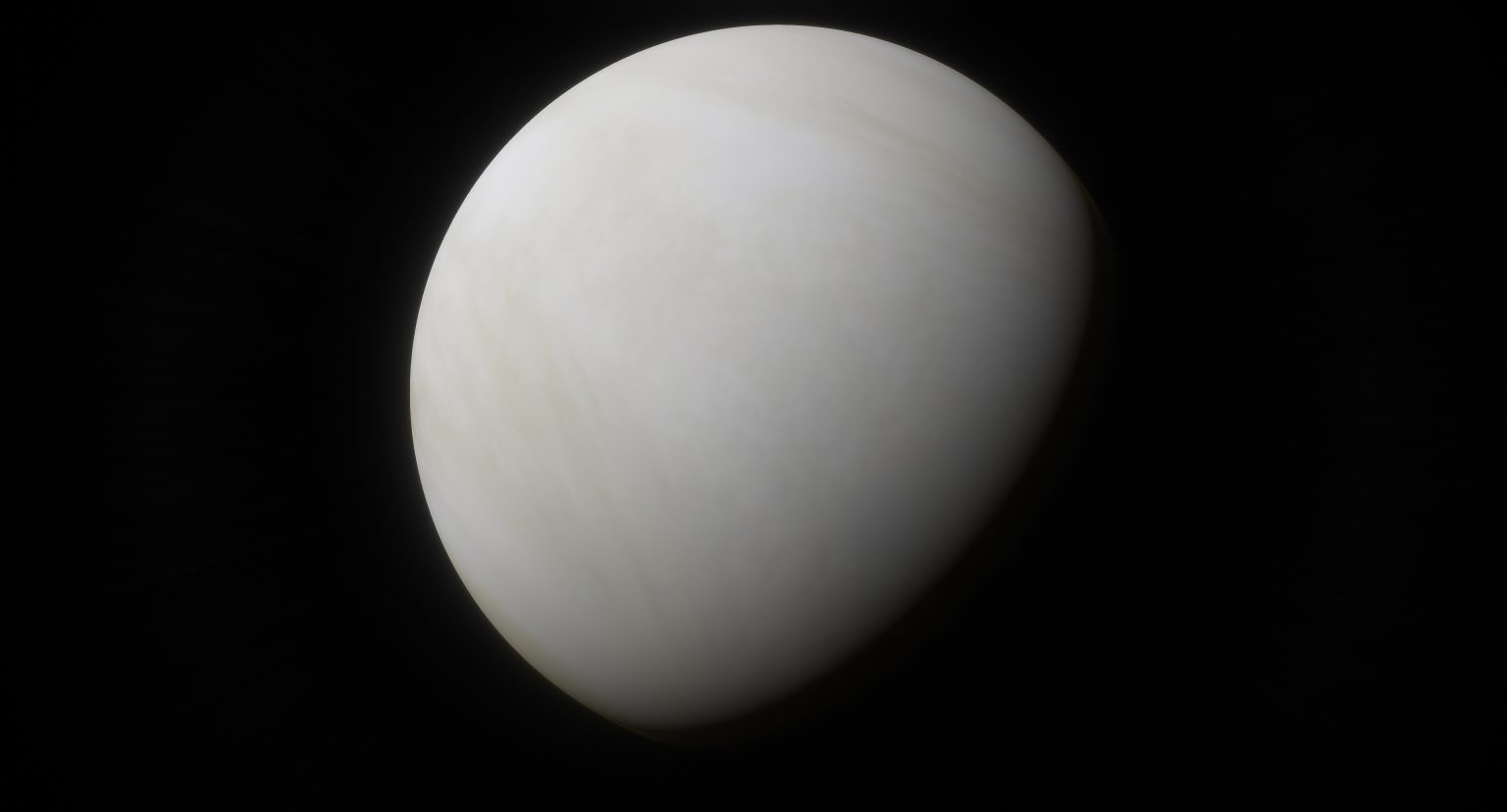
An unexpected discovery in a clogged inlet
The inspiration for the research arose during a conversation between astrobiologists who were discussing contradictory data about Venus. They decided to reanalyze the information collected by the mass spectrometers of the Pioneer Venus Multiprobe (Pioneer Venus 2), which explored the planet back in the 1970s. The data had to be literally rescued from the NASA archives, where it was stored on old magnetic tape, and digitized.
The key to solving the mystery was an incident that had previously gone unnoticed. During the descent through the clouds, the device’s inlet became clogged with aerosol particles. Instead of discarding this data, scientists used it as a unique opportunity. They tracked the temperatures at which these particles melted, releasing gases, and thus determined their composition.
Water and iron instead of pure acid
The results were sensational. Instead of consisting mainly of sulfuric acid, Venus’ clouds turned out to be rich in water. But not in a free form, but in a bound form—in the form of hydrates, such as hydrated iron and magnesium sulfate. These compounds decomposed, releasing water vapor when heated to 185°C and 414°C.
Analysis showed that water accounted for about 62% of the mass of aerosol particles. Sulfuric acid was also present—about 22%—but was not dominant. In addition, scientists have discovered iron sulfate, particles of which are likely to be of cosmic origin — dust entering Venus’ atmosphere from space.
Life in the clouds?
This discovery is of great significance for astrobiology. One of the main counterarguments against the existence of life in the clouds of Venus is the extreme dryness of the environment. It turns out that there is water there, and in significant quantities. Although it is contained in aggressive acidic compounds, this discovery makes conditions in clouds significantly less hostile than previously thought.
This story is a perfect example of how an old discovery, revisited through the lens of modern knowledge, can rewrite entire chapters of planetary science. And most importantly, it reminds us that the most interesting secrets of the Universe sometimes await us not only in future missions, but also in old archives.
Earlier, we explained the reason why Venus is such a dangerous and inhospitable planet.
According to Science Alert

