

Almost half a century ago, in September 1977, NASA launched a pair of pioneering twins into space — the Voyager 1 and Voyager 2 probes. Their goal was ambitious: exploration of distant gas giants and the boundaries of our Solar System. These days, Voyager 1 is the farthest man-made object still on its epic journey through space.
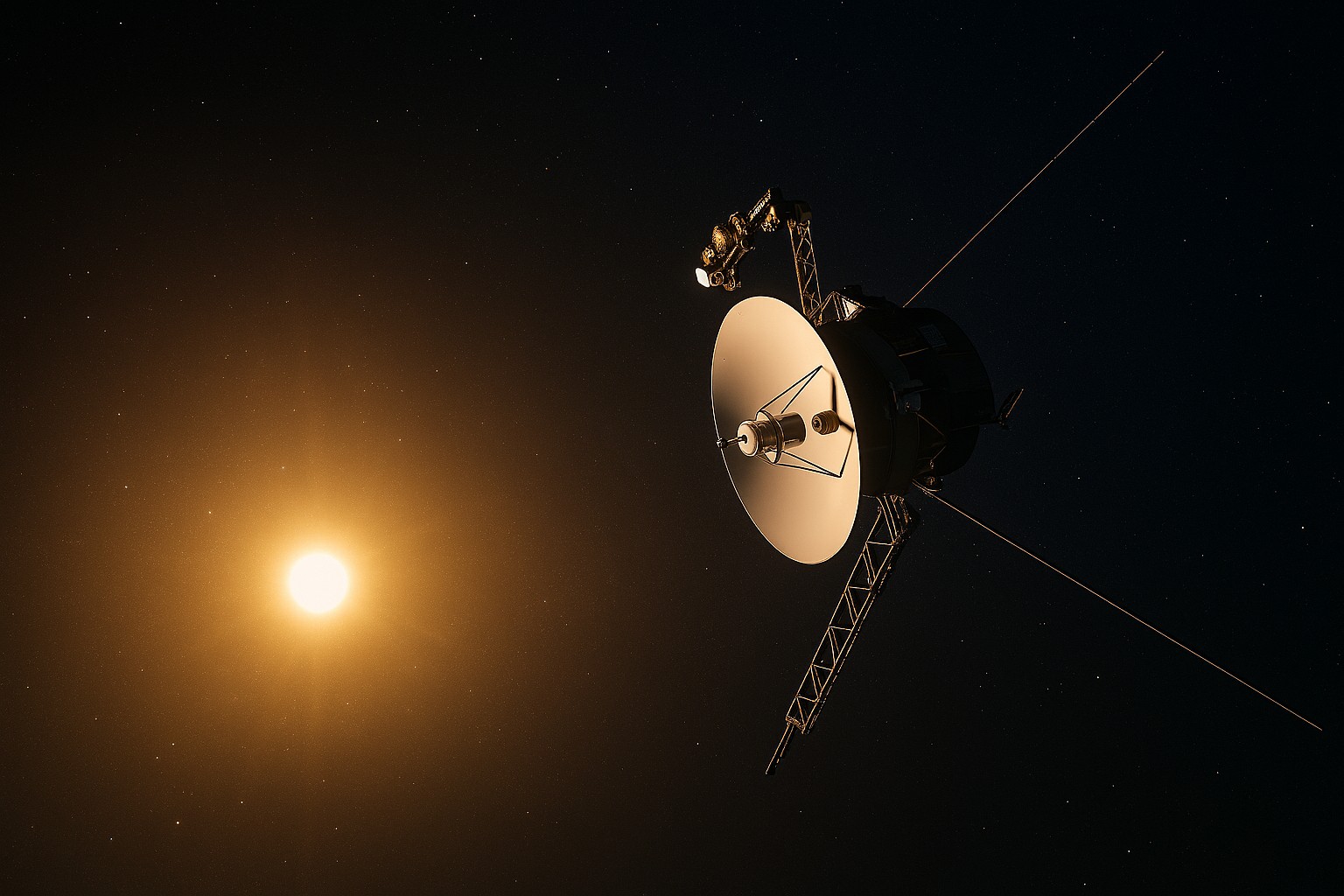
The key to the mission’s success was a clever maneuver known as the “gravity slingshot.” Engineers used the accurate positioning of the planets to accelerate the probes using their gravitational fields. This makes Voyager 1 fly at a crazy speed — about 61,000 km/h. However, on a cosmic scale, this is a very slow journey: it will take 5 hours to cover the distance that light travels in one second.
Despite this, the probe continues to set new space records. In August 2012, it became the first vehicle in history to leave the solar “bubble” — the heliosphere — and enter interstellar space. It is now at an incredible distance — more than 25 billion kilometers from Earth.
New milestone for Voyager 1
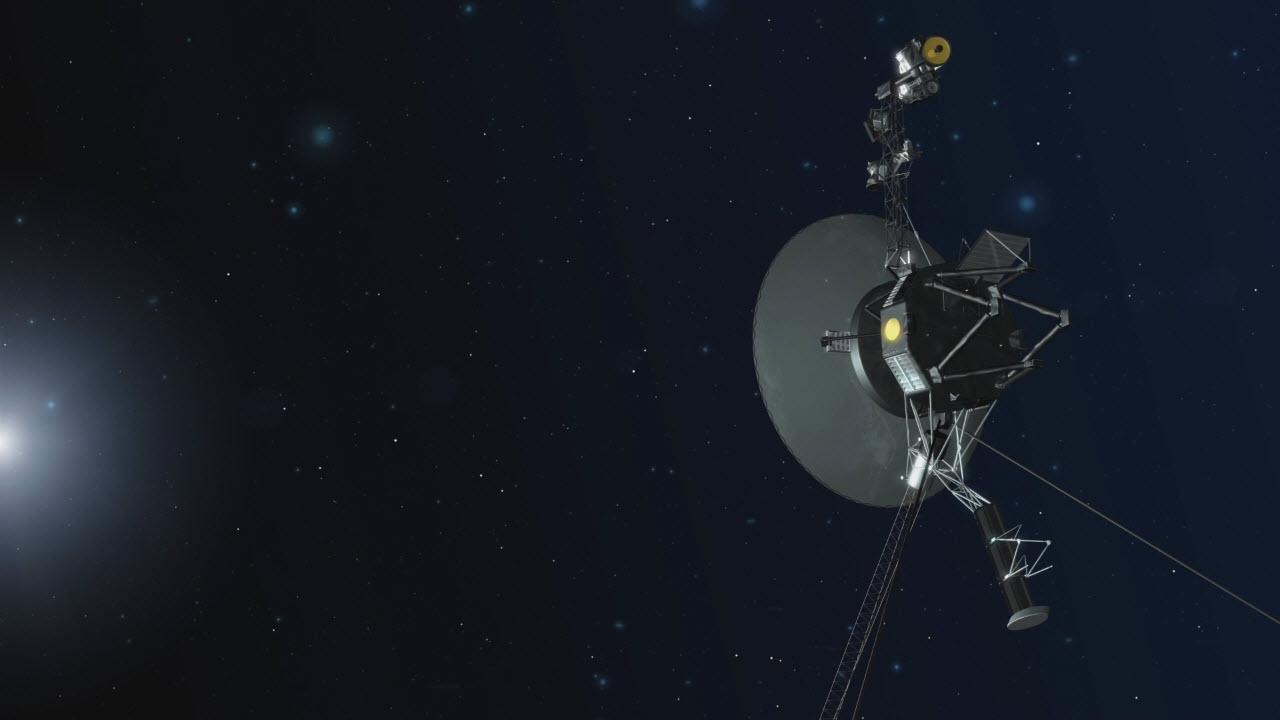
One of the most impressive events awaits us in 2026. Voyager 1 will reach a distance of one light day from Earth. This means that its radio signal, traveling at the speed of light, will take a full 24 hours to reach our planet. Consequently, it will take another day to receive a response. Imagine: a two-day dialogue with a spacecraft launched in an era when your grandparents were still young.
Future of the legendary mission
The energy of the Voyager 1 nuclear generator will only last until 2036. After that, it will fall silent forever. But its journey will not end there. In about 300 years, the probe will reach the mysterious Oort Cloud, and in another 30,000 years, it will leave it completely. Its future lies among the stars: in 40,000 years, it will fly past the star Gliese 445, located in the constellation Camelopardalis. But this “close” will also be by cosmic standards, as the probe will approach it at a distance of 1.6 light-years.
Earlier, we reported on how Voyager 1 switched to its backup engines.
According to bgr.com

