

The image shows the ice cover of Greenland. It may appear as if it is adorned with blue gemstones. However, these are actually ponds filled with melted glacial water.
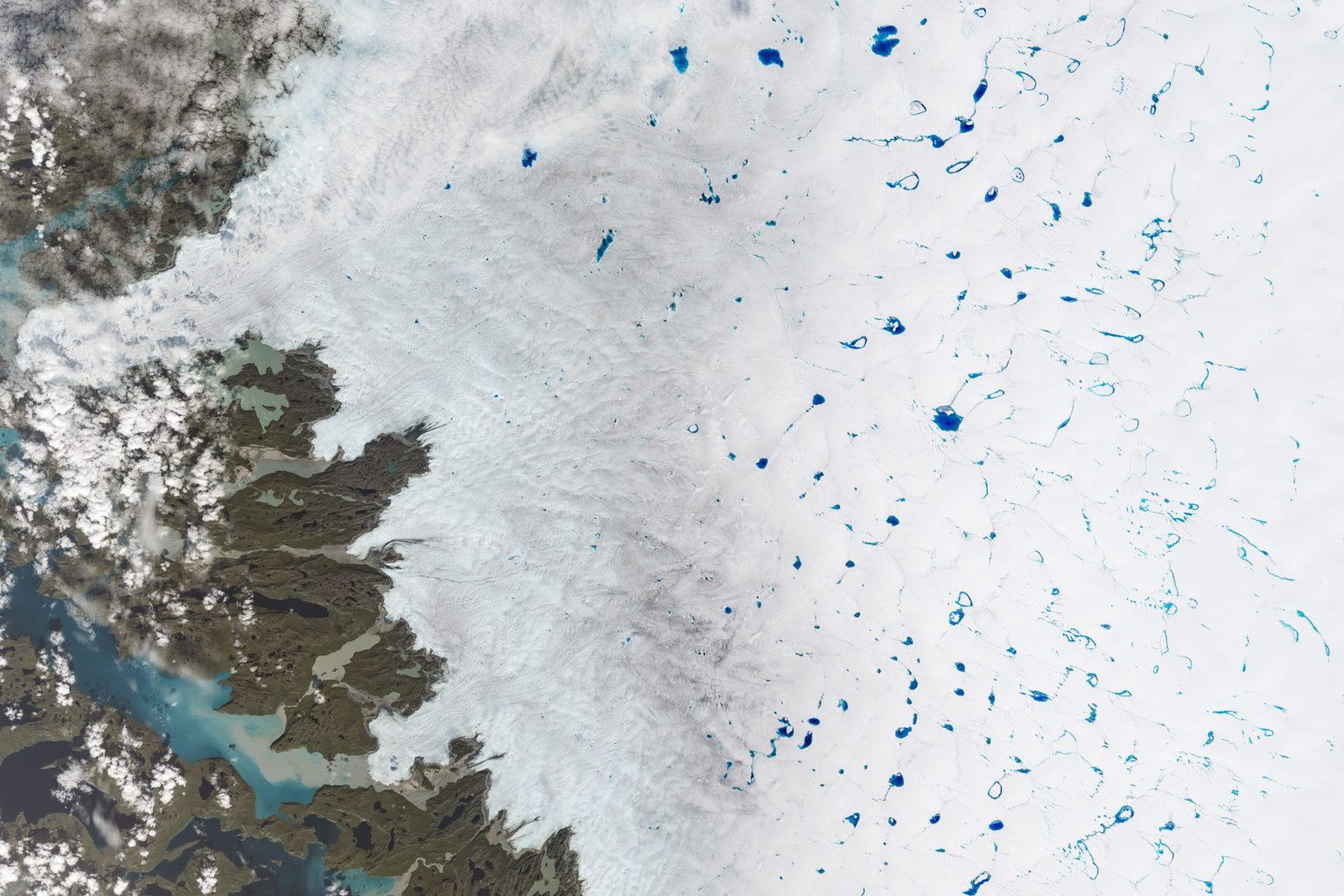
With the arrival of spring, blue dots resembling gemstones begin to appear on the white surface of Greenland’s ice sheet. With the onset of summer, they become larger and more numerous, acquiring unique shapes and sometimes connecting with each other. This colorful seasonal phenomenon occurs due to meltwater that accumulates in certain areas on the ice sheet.
On July 2, 2025, when NASA’s Landsat 9 satellite took this image, the ice cover in western Greenland was dotted with numerous ponds of meltwater. They are typical for this time of year, especially in the area shown here, east of the Nordenskiöld Glacier and southeast of the Jakobshavn Glacier, which is not shown in the image.
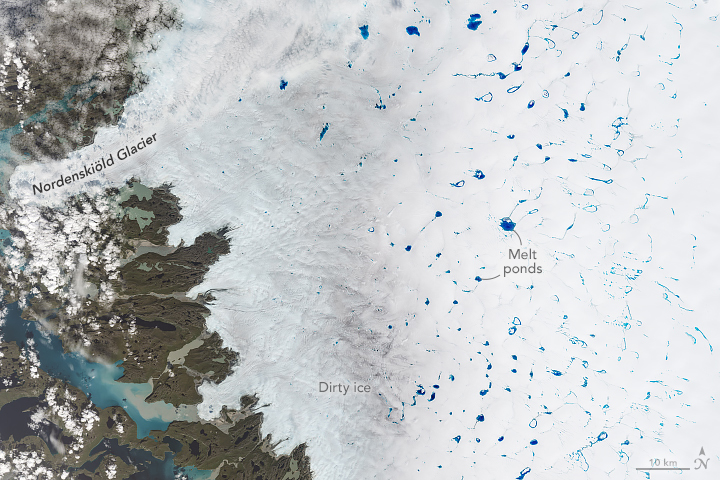
Part of the ice cover is brownish-gray in color because when snow and ice melt, impurities such as soot or dust remain, exposing old, dark, “dirty” ice. The darkening of the ice surface reduces its albedo, or reflectivity, which can accelerate melting by absorbing additional energy from the Sun during the summer months.
Scientists are interested in meltwater lakes partly because water can affect ice movement. When ponds become large enough, they can cause cracks in the ice to open up. Meltwater flowing through these cracks to the base of the ice can act as a lubricant between the ice sheet and the bedrock, accelerating the movement of ice toward the coast.
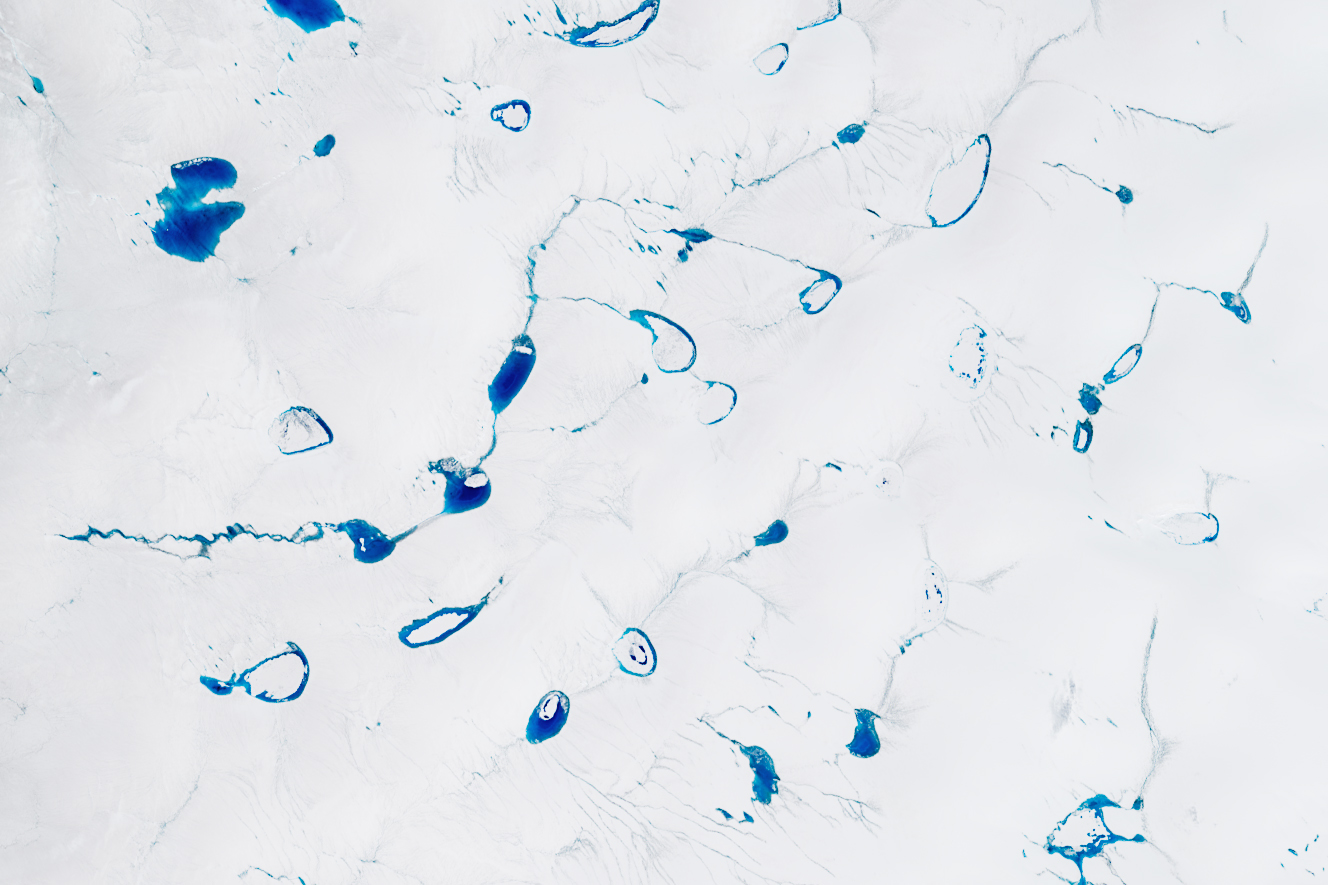
Meltwater ponds can also indicate the intensity of the melting season in Greenland, which typically lasts from May to early September. According to data from the US National Snow and Ice Data Center, as of June 20, 2025, surface melting was slightly above average. Two melting bursts — one in mid-May and another in mid-June — were the strongest along the western edge of the ice sheet. It remains to be seen whether summer melting will move even further inland, as it did during July 2024.
Earlier, we reported how NASA radar detected an old military base under the ice of Greenland.
According to Earthobservatory

