

Scientists have determined the minimum size a planet should be in order to retain an atmosphere long enough for life to emerge. The answer turned out to be quite specific: 0.8 times the radius of Earth. Objects smaller than this threshold are practically doomed to remain lifeless rocky bodies.
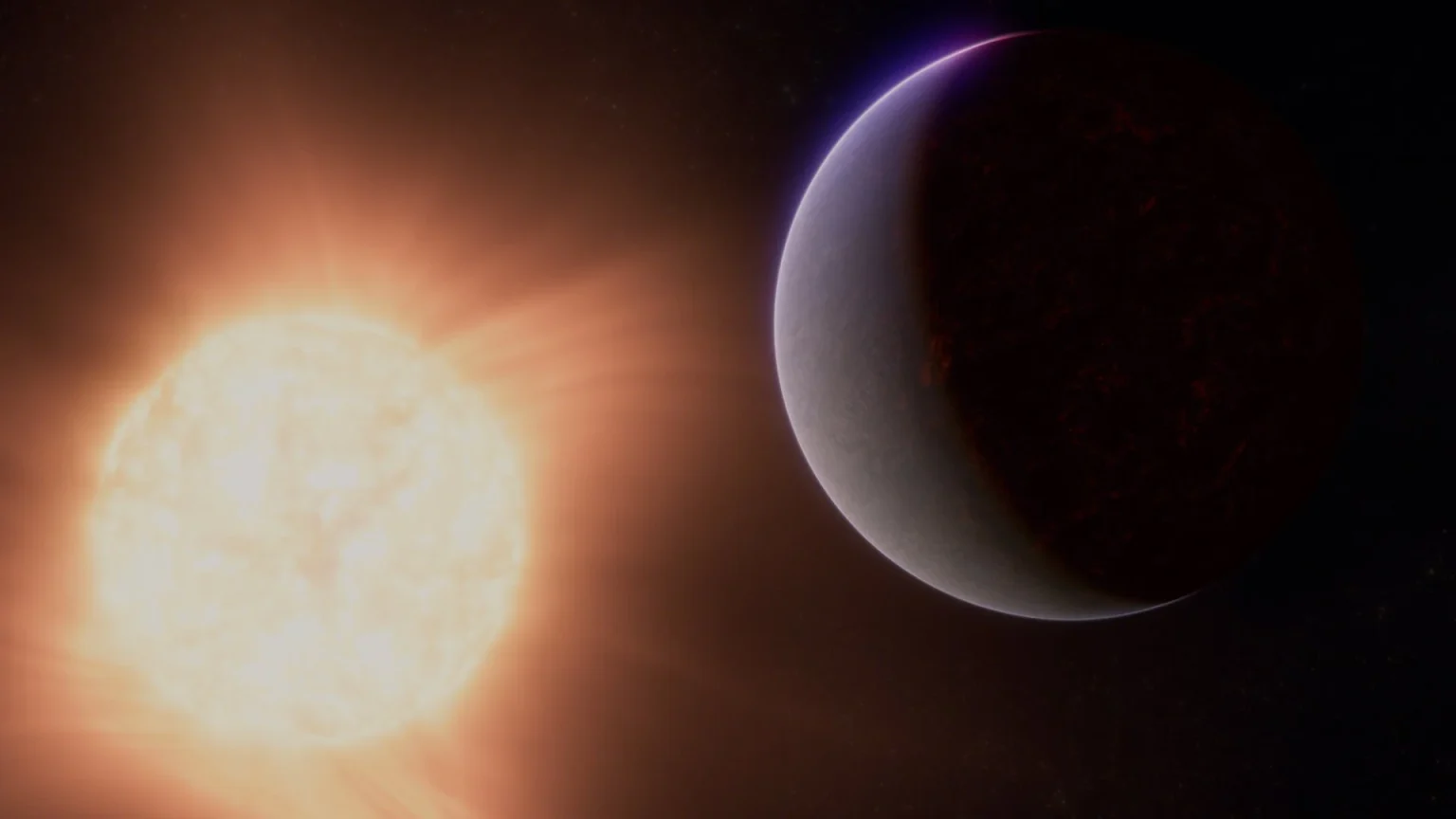
A model for small planets
Researchers at the University of California, Riverside, have developed the STEHM (Smaller Than Earth Habitability Model), a model for assessing the habitability of planets smaller than Earth, which describes how an object’s size affects the preservation of its atmosphere.
They examined planets ranging from 0.5 to 1.0 times the radius of Earth and tracked how long each could retain its gaseous envelope. The results revealed a clear threshold between 0.7 and 0.8 times the radius of Earth.
Two obstacles
The first obstacle is obvious: weaker gravity. A planet’s lower mass means a lower gravitational threshold, and high-energy particles in the atmosphere simply “escape” into space—through a process known as the Jeans escape.
The second obstacle is the cooling of the planet’s interior. The smaller the planet, the greater its surface-to-volume ratio. Heat dissipates more quickly, the rocky crust (lithosphere) thickens, and volcanoes are suppressed. Without volcanic activity, the primary mechanism for replenishing the atmosphere disappears.
What happens to very small planets?
Planets smaller than 0.7 times the Earth’s radius inevitably lose their atmospheres due to the effects of ultraviolet and X-ray radiation from their parent star. For example, a planet with a radius of 0.6 times that of Earth will retain its gaseous envelope for only about 400 million years, while one with a radius of 0.5 times that of Earth will retain it for only 30 million years.
At the same time, planets with radii as small as 0.8 times that of Earth have retained their atmospheres for billions of years.
The Pandora mission will study the atmospheres of exoplanets. Source: youtube.com / NASA Goddard
Exception to the rule
A small planet can “defy” this scenario in only three rare cases. A large carbon reservoir that sustains a dense atmosphere, because heavy CO₂ molecules resist scattering more effectively. An almost non-existent core means a larger mantle volume and a longer volcanic lifespan.
A “cold start” occurs when the core heats up slowly, the atmosphere forms gradually, and the parent star has time to weaken its intense radiation before the gaseous envelope becomes vulnerable. However, all three scenarios are extremely rare.
When searching for extraterrestrial life, this boils down to a simple rule: focus on exoplanets with radii of 0.8 times that of Earth or larger. Anything smaller than that is most likely a barren rock.
According to universetoday.com

