

Planets that formed billions of years before Earth may be less dense than those that are significantly younger. Scientists came to this conclusion based on fairly standard information about the evolution of stars.
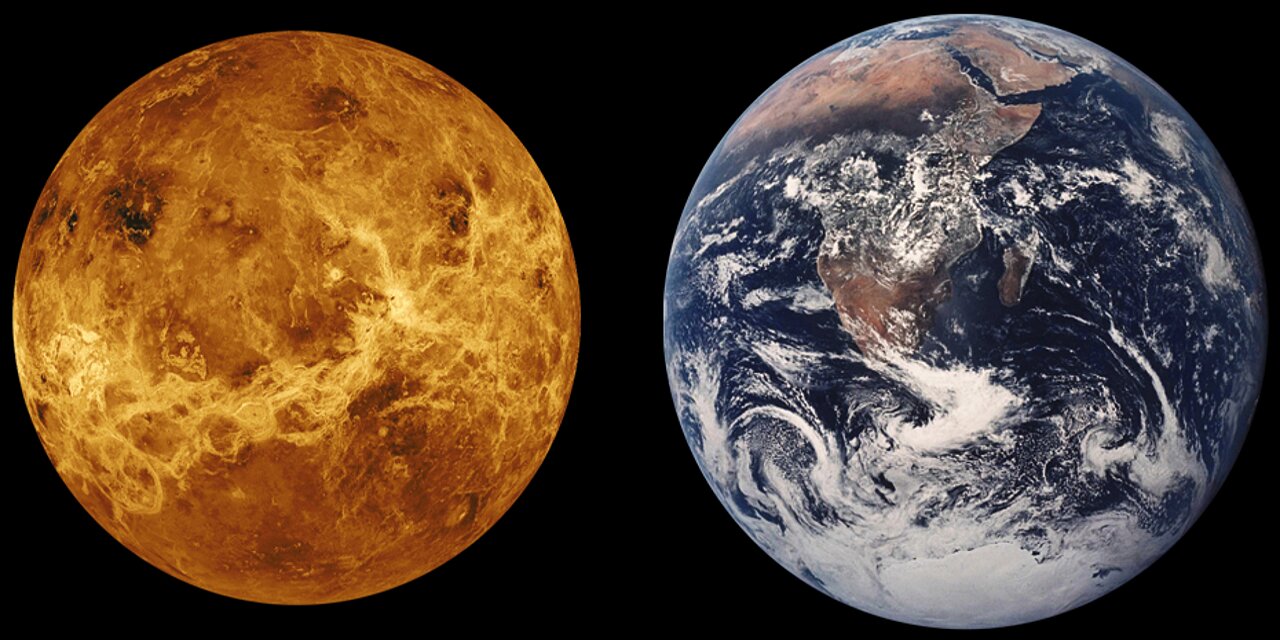
Density of Earth-like planets
Earth-like planets are worlds with an iron core, a less dense mantle surrounding it, and a solid surface. Generally, one of the main criteria for their belonging to this type is relatively high density. However, in reality, it can differ quite significantly. An article about this was recently published in Astrophysical Journal Letters.
It states that the density of Earth-like planets is determined by their chemical composition. And it can vary significantly depending on how many billions of years after the Big Bang this world was born.
The fact is that planets are born from cold gas and dust clouds. And those are the result of the death of the previous generation of stars. Accordingly, the ratio of heavy elements such as iron and nickel to lighter ones such as aluminum and silicon will be determined by the star from which the world is born.
Old and new worlds
Massive stars live for only about 10 million years. They die in colossal supernova explosions, but leave behind relatively few heavy elements. And most of the stars in the early Universe were just like that. This is precisely why older Earth-like planets have to have small cores and loose mantles.
Small stars, such as the Sun or even smaller ones, exist for billions of years and, after their death, eject significantly heavier elements into space. Therefore, planets made of this material should be denser.
All of this is very important for the search for life beyond Earth, because heavy elements are also essential for the existence of organic beings. This means that it is not worth looking for life on the oldest worlds. Most likely, it can be found on younger planets.
According to phys.org

