

When we think about the forces that formed our planet, volcanoes and continental drift come to mind. However, new research points to an even more grandiose architect — our own galaxy, the Milky Way. The geological history of Earth could be written in its spiral arms, and the evidence for this is hidden in tiny crystals.

Previously, this bold idea remained theoretical due to gaps in geological data. But now an international team of scientists has found compelling evidence by comparing maps of hydrogen distribution in the galaxy with the chemical composition of ancient minerals. The results are published in the journal Physical Review Research.
Earth time capsules
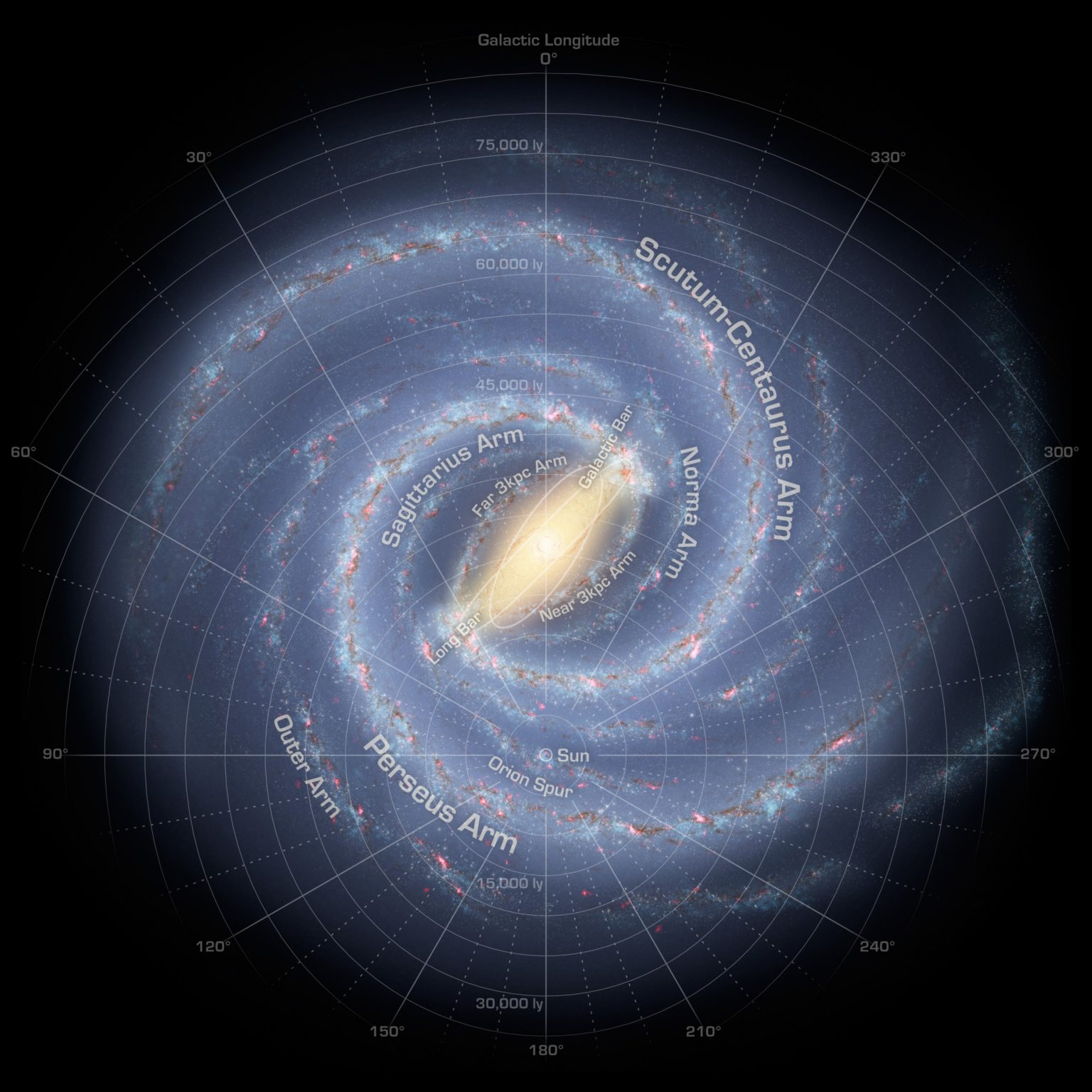
Astronomers use neutral hydrogen as a kind of cosmic marker. It emits radio waves that penetrate cosmic dust and allow us to see the spiral arms of our galaxy. These arms are not solid structures, but waves of density, similar to cosmic traffic jams. Our Solar System, orbiting the center of the galaxy, periodically passes through them approximately every 200 million years.
The key to solving the mystery was zircon crystals — extremely durable minerals formed in magma. They are true time capsules, preserving billions of years of information about the conditions of their formation. The oxygen isotopes within them are particularly important, as they indicate the origin of the magma.
Impressive correlation
In a new study, scientists directly compared oxygen isotope records from zircons with data on hydrogen density along the orbit of the Solar System. The result was impressive: the periods when our system passed through dense spiral arms clearly coincided with bursts of chemical “chaos” in the crystals. The Earth’s crust was shaken precisely when we found ourselves in the galactic arms.
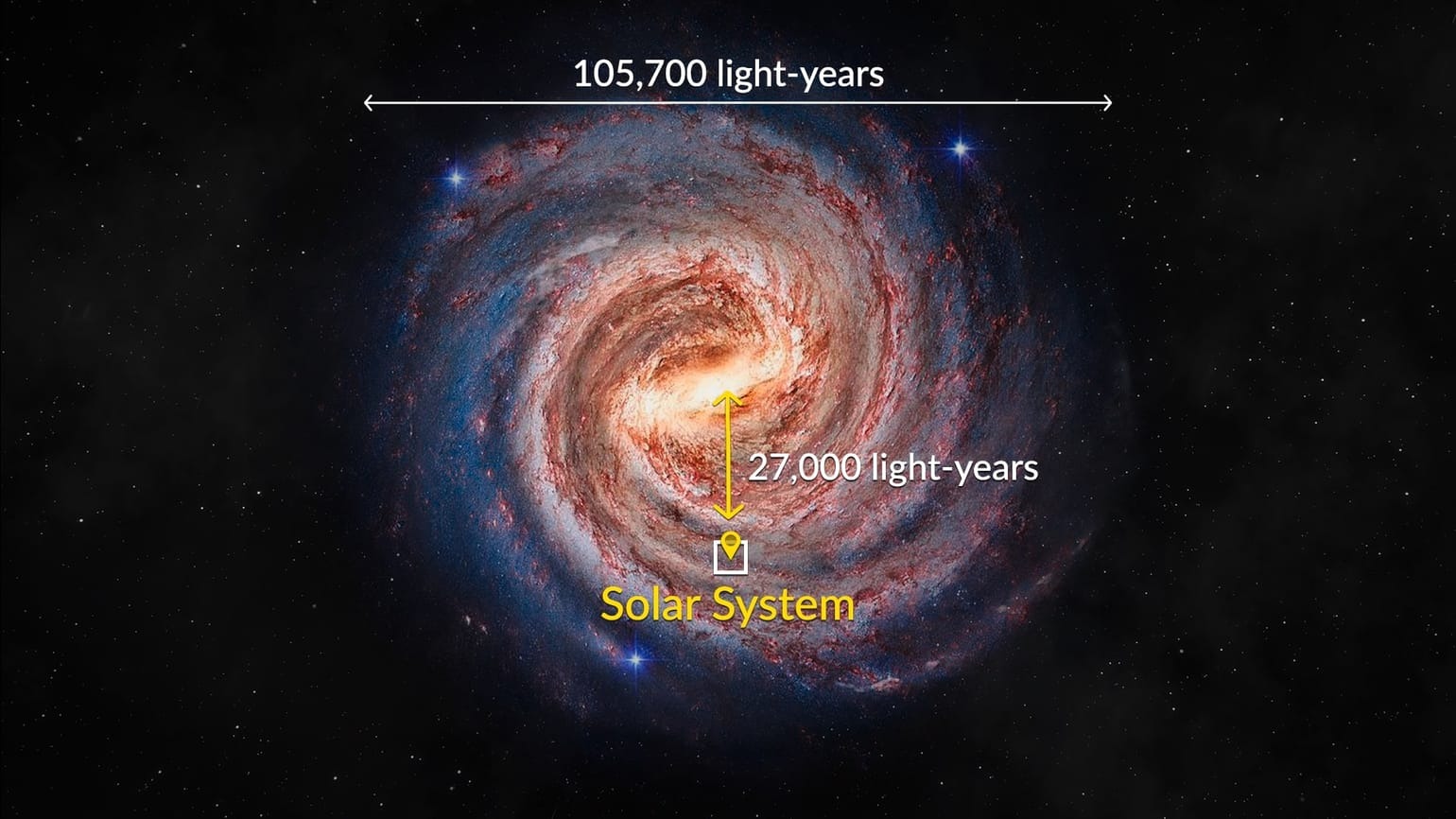
How could galactic arms influence Earth’s geology? The most likely mechanism is considered to be their influence on comets. When the Solar System plunges into the arm, gravity can disrupt the stability of the Oort Cloud — a distant repository of icy bodies. This could trigger a “bombardment” of Earth by comets. Powerful blows released enormous energy, melted rocks, and left traces that zircons recorded for billions of years.
A new vision of the planet
This discovery has profound implications. It broadens our understanding of planetary evolution, pointing to a connection between cosmic cycles and terrestrial processes. Henceforth, for a full understanding of our planet, we need to look far beyond its boundaries, at the structures of the galaxy. This knowledge may shed light on the formation of the crust, the suitability of the environment for life, and even its origin.
Of course, correlation does not prove causation, and it is difficult to distinguish the influence of space from internal processes on Earth. But the new evidence is extremely convincing. Tiny zircons, smaller than grains of sand, have become a bridge between geology and astrophysics, opening a new page in the history of our planet.
Earlier, we explained the reason for the disappearance of spiral galaxy arms.
According to sciencealert.com

