

Certainly, each individual has likely encountered a diamond at least once in their lifetime — a transparent gemstone that scintillates with a full spectrum of rainbow hues. To paraphrase the renowned quote from the 1950s film “Diamonds Are a Girl’s Best Friend,” one might assert: diamonds are a scientist’s most valuable resource. A cut diamond exhibits brilliance and radiance, whereas an uncut diamond, containing mineral inclusions, gases, and water, provides a distinctive opportunity to investigate the Earth’s most profound depths. The least explored region of our planet resides beneath us, within the mantle — the 2,900-kilometer-thick layer situated between the Earth’s crust and the iron core.
The study of this extensive region — particularly regarding the substances that cannot persist on the Earth’s surface — is more intricate than the examination of exoplanets. Surprisingly, diamonds can serve as indicators of the Earth’s mantle. Not the luxurious diamonds that sparkle in tiaras and scepters, but rather rough, unremarkable stones with numerous inclusions that are typically of no interest to jewelers. While internal inclusions decrease a diamond’s value as a piece of jewelry, they hold significant importance for scientific research.
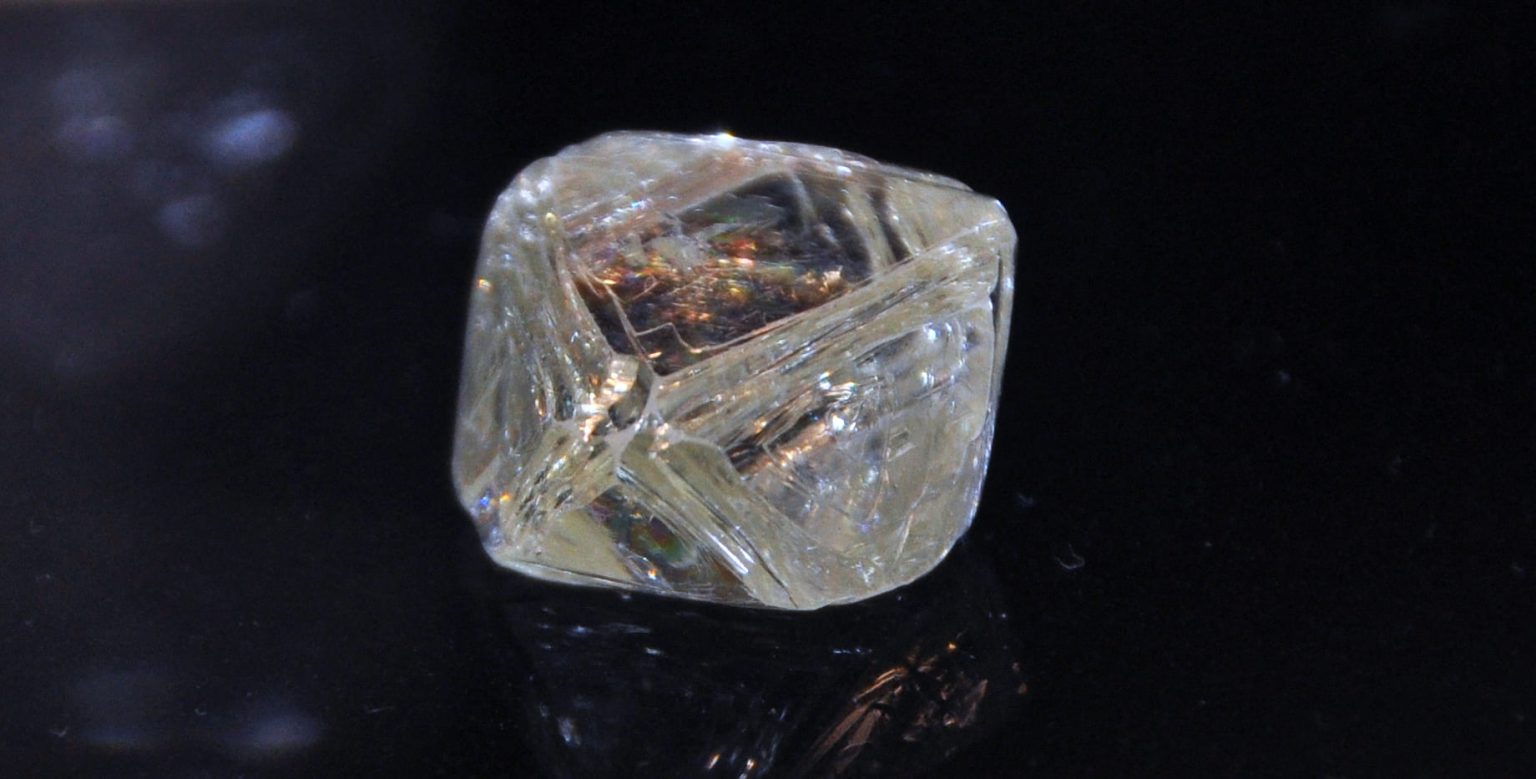
Diamonds on Earth
Diamonds are regarded as some of the oldest materials discovered on Earth — certain specimens are estimated to be 3.5 billion years old. They are formed deep within the Earth’s crust under conditions of extreme pressure. From the standpoint of diamond researchers, inclusions are considered the most critical features, as they enable scientists to ascertain the age and the depth at which the stone was formed. It is hypothesized that these inclusions may ultimately offer valuable insights into scientific inquiries concerning the origins of water on Earth and potentially the emergence of life.
Ringwoodite
Perhaps the most significant discovery was the confirmation of extensive water reserves within the mantle: In 2014, scientists identified the mineral ringwoodite within a diamond, which contains approximately 1.5% water. This discovery offered direct evidence that the transition zone of the mantle (at depths of 410–660 km) holds water reserves comparable in volume to all of Earth’s oceans combined.
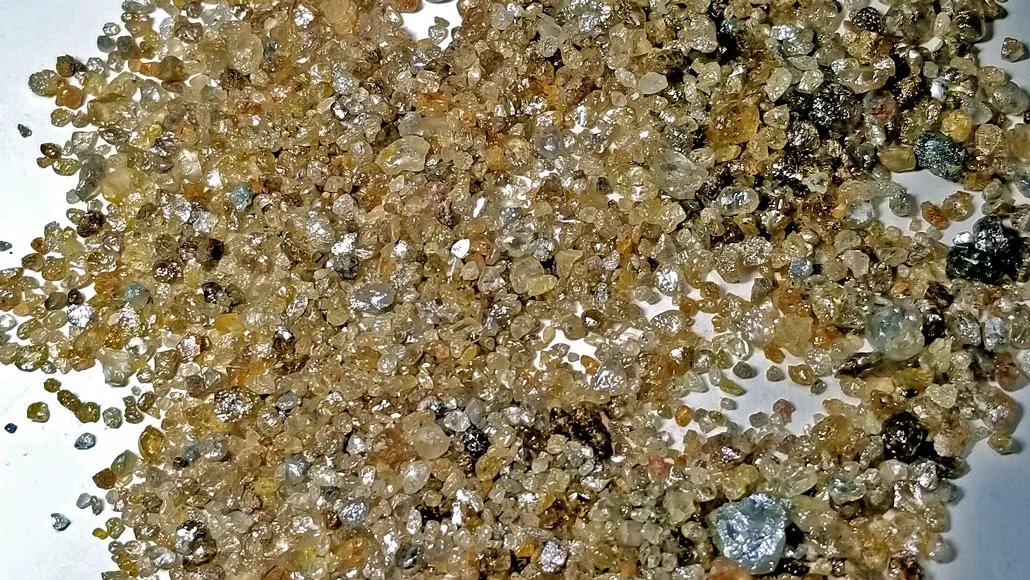
In 2008, close to the small town of Juina in Brazil, artisanal miners discovered a small, dirty-brown diamond weighing merely one-tenth of a gram and approximately 3 mm in diameter. The find was not remarkable, given that Juina is a significant hub for diamond mining. Scientists acquired it for approximately $20 to conduct mineral investigations.
In 2009, John McNeill, then a student, observed a microscopic inclusion inside a diamond that was invisible to the naked eye. Following several years of meticulous analysis employing X-ray diffraction and spectroscopy techniques, an international team of scientists, headed by Graham Pearson of the University of Alberta in Canada, officially verified in 2014 that the diamond contained ringwoodite, a form of green chrysolite that had restructured its crystal lattice under extreme pressure.
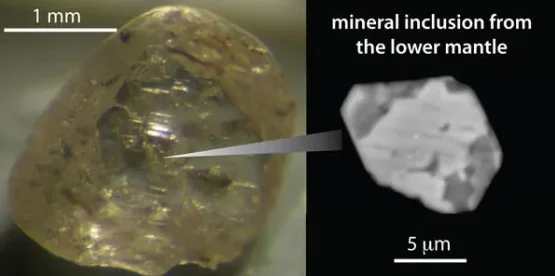
Until 2014, ringwoodite had been discovered solely within meteorites that had experienced significant cosmic impacts. Scientific understanding held that, at depths ranging from 410 to 660 kilometers — corresponding to the transition zone between the Earth’s upper and lower mantle — all olivine, whose transparent crystals are known as chrysolite and peridot, should undergo a transformation into ringwoodite. However, empirically verifying this was unfeasible because, upon ascending to the surface, the mineral would revert to ordinary olivine due to the decrease in pressure. The Brazilian diamond served as an exemplary pressure chamber. It formed at a depth of approximately 500 km, encapsulated a microparticle of ringwoodite, and, owing to its exceptional strength, preserved the ultra-high-pressure conditions as it rose to the surface.
The most astonishing discovery was that the ringwoodite found contained 1.5% water in the form of hydroxyl ions (OH–) embedded directly into the mineral’s crystal structure. It may seem like 1.5% is not much, but if you calculate the total amount of water in the Earth’s transition zone (250 km thick), it turns out there could be as much or even 2–3 times more water there than in all the oceans on the planet’s surface combined. Of course, this water is not in liquid form; it does not flow as liquid underground seas.
Davemaoite
The narrative surrounding the 2021 discovery represents a direct and even more profound continuation of the ringwoodite narrative. While in 2014, scientists examined the mantle transition zone (up to 660 km), in 2021, they successfully retrieved a sample from the lower mantle — davemaoite — for the first time in history.
The diamond was discovered in the 1980s at the renowned Orapa mine in Botswana. It initially disappointed jewelers due to its green hue, unremarkable appearance, and the presence of dark, “dirty” inclusions. Owing to these imperfections, it garnered little interest until it was obtained by the team of geochemist Oliver Choner at the University of Nevada, Las Vegas.
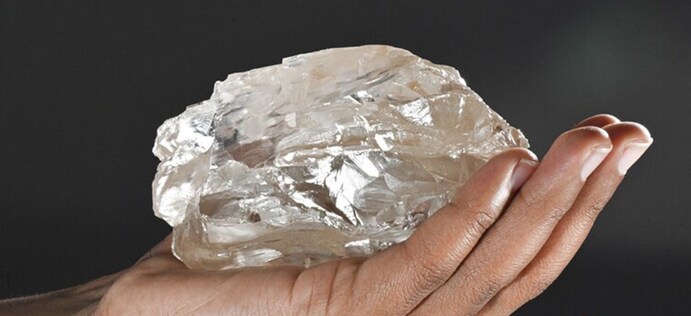
Using synchrotron X-ray analysis, which employs an extremely powerful X-ray beam focused to micron-scale dimensions, they confirmed the mineral’s structure. Prior to this, the silicate deimmaite had only been synthesized in laboratory settings using diamond anvil cells. Discovering it on the Earth’s surface, similar to ringwoodite, is physically impossible. The diamond under examination formed at a depth of 660 to 900 kilometers within the lower mantle, where the pressure exceeds atmospheric pressure by a factor of 200,000 (20 GPa).
The crystal lattice of diopside is arranged in a manner that permits the accommodation of larger atoms of elements not present in other minerals. It contains uranium (U) and thorium (Th), which are the planet’s principal radioactive elements. The radioactive decay of uranium and thorium emits substantial heat. Due to deimmaite, the mantle heats up, becomes dynamic, induces continental movement, and triggers volcanic eruptions.
If in 2014, a diamond conveyed information about groundwater, then in 2021, a diamond from Botswana unveiled the secrets of Earth’s thermodynamics and heat.
Bridgmanite
It is one of the most remarkable minerals in the history of science. It is the most abundant mineral on Earth, accounting for approximately 38% of the planet’s total mass. However, scientists were unable to assign an official name to it until 2014, due to the lack of a physical sample. It was known that the Earth’s lower mantle comprises brigmanite through seismic wave analysis and laboratory experiments. Nonetheless, according to the guidelines of the International Mineralogical Association (IMA), a mineral cannot be officially named until scientists provide a genuine natural specimen and describe its crystal structure. Obtaining a sample from the mantle is unfeasible, as the structure of brigmanite would be instantly destroyed upon reaching the surface. Unexpectedly, assistance was provided by space.
In 2014, a scholarly team led by Oliver Tschauner, the scientist who later discovered daimait in a Botswana diamond, conducted a study on the Tenham meteorite, which fell in Australia in 1879. The collision of asteroids in space creates conditions that are analogous to those in the Earth’s lower mantle. The vacuum of space and rapid cooling processes resulted in the ‘freezing’ of microscopic fragments of magnesium silicate within the meteorite, thereby preventing their disintegration. The mineral has been examined in detail by scientists and has been officially designated as brigmanite, in honor of Percy Bridgman, a Nobel laureate and pioneer in high-pressure research.
However, the quest for brigmanite on Earth persisted. In 2018, scientists identified microinclusions of brigmanite within another ultra-deep diamond originating from South Africa. This diamond was recovered at the renowned Cullinan Mine near Pretoria. The precise year of extraction for this unremarkable specimen has not been documented. For an extended period, this diamond, weighing merely 0.03 carats (approximately 6 milligrams), was disregarded owing to its numerous imperfections. The discovered brigmanite sample demonstrated that this mineral consistently exists at depths ranging from 660 to 900 kilometers, thereby corroborating the theoretical computer models developed by geophysicists.
Generally, ultra-deep “blue diamonds” represent the rarest and most expensive category of gemstones on Earth. For an extended period, they remained a geochemical enigma. A study published in the journal *Nature* in 2018 demonstrated that these stones are genuinely unique. An analysis of inclusions within blue diamonds confirmed that they form at depths four times greater than those of ordinary diamonds — specifically, in the transition zone and lower mantle, ranging from 410 to over 750 kilometers beneath the Earth’s surface. Consequently, they are designated as superdeep. The steel-blue coloration characteristic of these diamonds is attributed to boron (B) impurities, whose atoms selectively substitute for carbon within the crystal lattice.
These discoveries — ringwoodite (2014), brigmanite (2014, 2018), and daevmaoite (2021) — demonstrate that diamonds are not merely costly ornaments but invaluable time capsules that enable us to comprehend the internal structure of our planet.
Diamonds in space
Diamonds are by no means exclusively terrestrial formations. They are found in minute quantities in meteorites. Data on the atmospheres of the giant planets suggest that carbon in its solid crystalline form is widespread in other parts of the Solar System and, undoubtedly, beyond its boundaries.
Diamonds on planets
Uranus and Neptune are classified as ice giants; however, beneath their upper hydrogen-helium cloud layers, there exists a substantial, heated, and superdense liquid mantle composed of a mixture of water, ammonia, and methane (CH₄). Methane serves as the fundamental component in the formation of cosmic diamonds. Deeper within the planetary atmospheres, conditions become extreme — temperatures ascend to several thousand degrees, and pressures surpass Earth’s atmospheric pressure by millions of times.
When methane descends approximately 7,000–10,000 kilometers into the planetary interior, the temperature escalates to approximately 2,000–5,000 °C, with pressures reaching hundreds of gigapascals. Under these extreme conditions, the chemical bonds within the methane molecule cannot withstand the strain, resulting in its dissociation. The liberated carbon atoms, subjected to immense pressure, immediately commence compression. The most prevalent stable allotrope of carbon in such environments is the cubic lattice structure of diamond.
Once diamonds form, they commence a gradual descent. Due to their significantly higher density compared to the surrounding aqueous mixture of water and ammonia, planetary gravity exerts a downward pull on them. Certain theoretical models propose that, within the conditions prevalent in giant planets, crystals may attain substantial sizes over extended durations; however, their precise dimensions are currently unknown. These crystals steadily descend through the planet’s mantle for thousands of kilometers. This phenomenon is referred to by geologists as a “diamond rain.”
The descent of diamonds is not endless. At the very center of giant planets, temperatures reach such high levels that even diamond loses its stability. Some models suggest the existence of layers of liquid carbon or diamond-like phases near the cores of these planets, but this has not yet been confirmed by observations.
Diamond rain within the atmospheres of giant planets has historically been a theoretical concept; however, in recent years, physicists have succeeded in replicating this process in laboratory settings through the use of ultra-powerful lasers.
Diamonds in meteorites
Within meteorite material, scientists identify two distinct categories of diamonds: nanodiamonds, which predate the Sun itself, and diamonds that are formed during cosmic cataclysms.
Presolar diamonds
The earliest diamonds in the universe are unrelated to planetary geology. They consist of microscopic dust particles (measuring only a few nanometers) located within ancient stony meteorites — carbonaceous chondrites, such as the renowned Allende meteorite that fell in 1969.
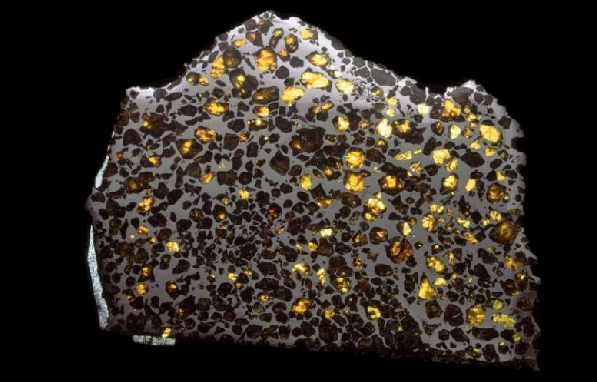
These nanodiamonds originated billions of years ago within the gaseous envelopes of dying stars, such as red giants, or during supernova explosions, predating the formation of our Solar System from a gas and dust cloud. They are estimated to be over five billion years old, thus older than the Sun. By analyzing the isotopic composition of gases such as xenon and neon enclosed within these nanodiamonds, astrophysicists effectively decode the history of star systems.
Impact diamonds
Another category of diamonds is discovered within iron and stony-iron meteorites. The most prominent instances include the Canyon Diablo meteorite crater in Arizona and ureilite meteorites, such as Al-Mahata al-Sitta. Impact diamonds are generated through two mechanisms: during asteroid collisions and deep within the interior of a former planet.
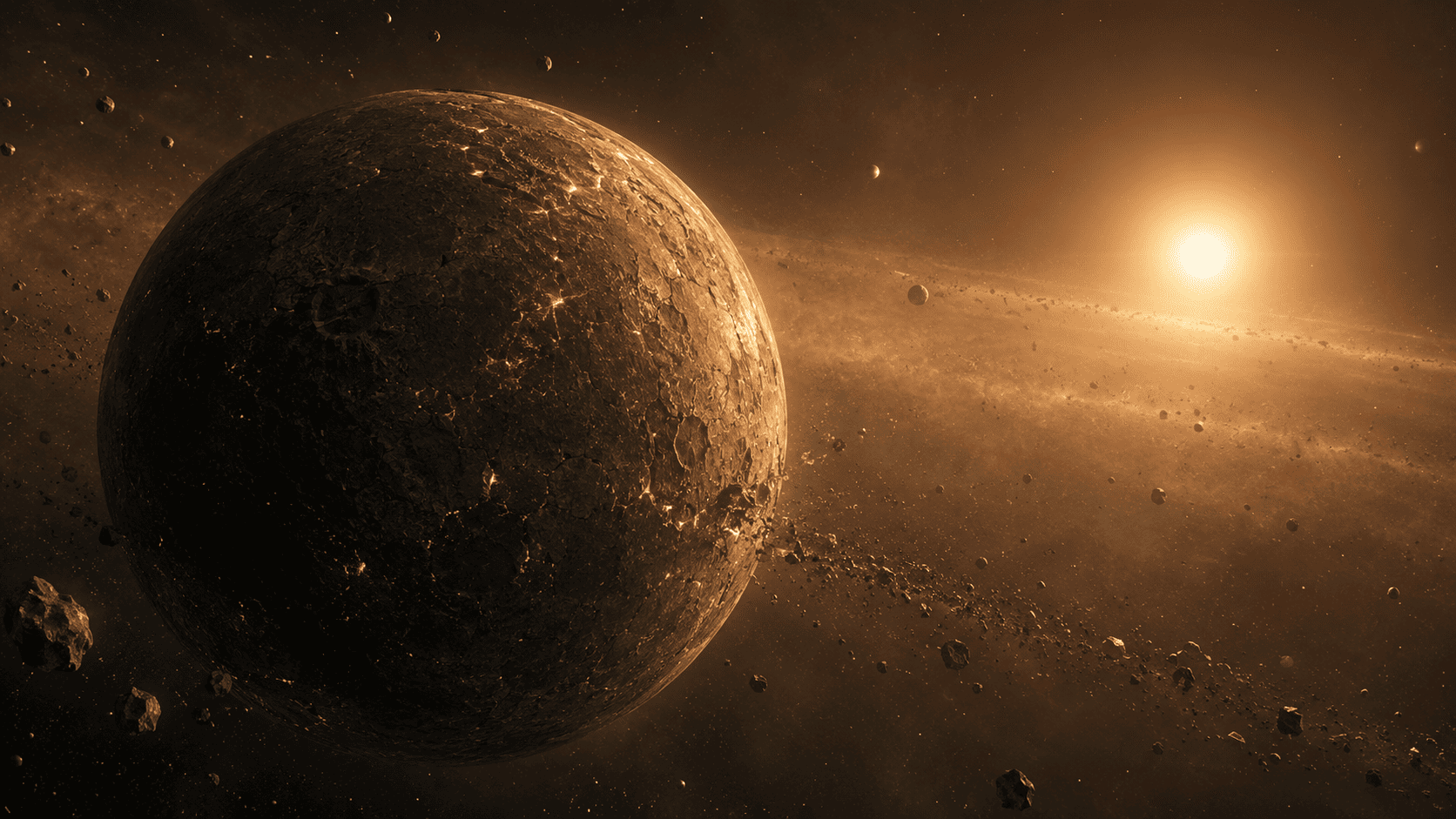
Initially, ordinary graphite is located within stony asteroids. When two large asteroids collide in space at velocities of tens of kilometers per second, exceedingly high pressure is generated. The graphite is immediately compressed into diamond.
Such cosmic impacts frequently lead to the formation of an extraordinary cubic-shaped diamond and a seldom-occurring polymorph referred to as lonsdaleite. Lonsdaleite possesses a hexagonal (six-sided) crystal lattice. Theoretical models have demonstrated that pure lonsdaleite should be approximately 58% harder than terrestrial diamond.
Remnants of protoplanets
In 2018, a group of scientists examined fragments of the Al-Mahat al-Sitta meteorite that fell in Sudan. Within these rocks, which are classified as ureilites, they discovered diamonds that are notably large by cosmic standards, measuring up to a few hundredths of a millimeter. Analytical studies indicated that these diamonds could not have formed instantaneously during the impact event; rather, they developed gradually. However, for a diamond of this size to grow consistently, sustained high pressure of no less than 20 GPa is required.
It is now believed that these diamonds originated deep within a protoplanet approximately the size of Mercury or Mars, which existed during the initial few million years of the early Solar System. That planetary body was subsequently obliterated in a catastrophic collision, and its fragments continue to descend to Earth as meteorites.
Regrettably for jewelers, space diamonds are not appropriate. Nanodiamonds are essentially invisible dust, and shock diamonds in meteorites appear as dirty, gray, or black fragments that are securely bonded to iron and graphite. Nonetheless, they are invaluable to scientific research, as they enable us to investigate the physics of extreme pressures and the history of planets that were destroyed long before the advent of humanity.
Author: Iryna Vasylieva, Ph.D. in Physics and Mathematics, Senior Researcher at the State Agency of the National Academy of Sciences of Ukraine

