

Analysis of samples collected by the Curiosity rover on Mars back in 2019 reveals the presence of extremely complex organic compounds. They do not prove the existence of life on the Red Planet, but they do suggest that traces of it may persist for billions of years and should be sought out.
Curiosity’s discovery
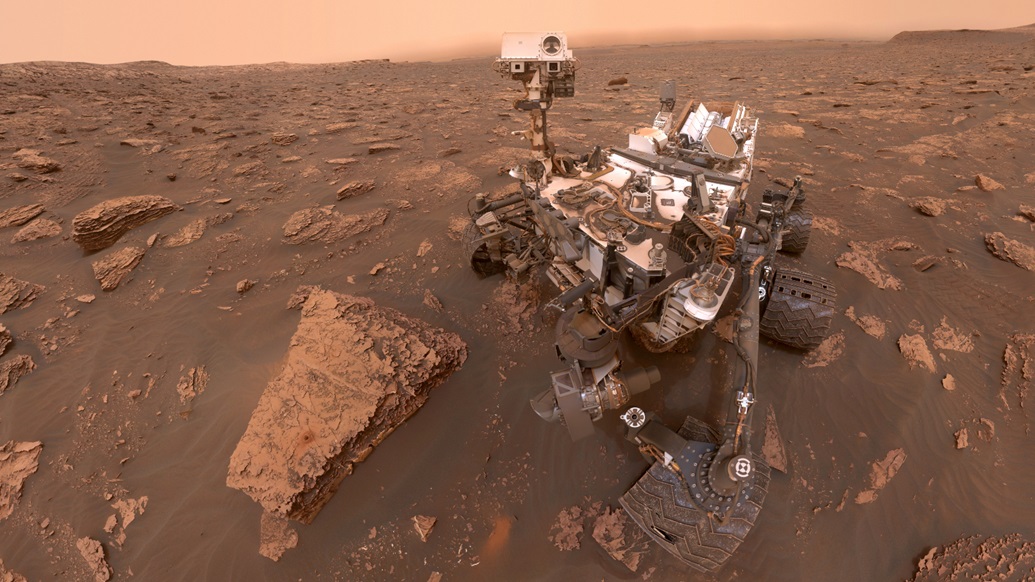
A group of researchers from the University of Florida recently published a study describing highly complex organic molecules found in Martian rocks. The data came from the Curiosity rover, which has been operating on Mars since 2012.
For many years, this rover collected and analyzed geological samples. However, in 2020, it conducted a truly fascinating experiment in an area known as Glen Torridon. There were two containers on board containing TMAH, a substance capable of breaking down organic compounds into simpler components as efficiently as possible.
This allows for precise analysis using a spectrometer and the identification of even the most complex compounds, whose peaks are not always prominent. It’s quite clear why one of the available capsules was deployed specifically in the Glen Torridon area: water once flowed here, and this was the location where the chances of finding signs of life were highest.
Organic compounds in clay
Essentially, the geological samples studied are fossilized clays. In them, scientists have identified about 20 different organic substances. However, two of them were of particular interest: a nitrogen-containing compound that closely resembles the precursors of DNA, and benzothiophene. The latter is a large molecule containing two aromatic rings and a sulfur atom.
The newly discovered substances are as close as possible to those we can identify as signs of life. However, in reality, they are not. They can be formed as a result of geological processes and meteorite impacts.
So, it’s still too early to talk about the discovery of life on Mars. However, new research suggests that we should keep looking. After all, organic samples have somehow survived for 3.5 billion years. And that means the same could be true of primitive microorganisms.
According to phys.org

