

NASA has released new satellite images showing the world’s largest iceberg, known as A-23A. It continues to break apart, creating smaller icebergs.
A-23A formed back in 1986, breaking off from the Filchner Ice Shelf in West Antarctica. However, the iceberg did not stray far from its birthplace. It became stuck on the seabed in the Weddell Sea and remained in the same place for the next three decades. It was only in 2023 that shelf currents finally shifted the giant iceberg and carried it out into the open sea. At that time, the iceberg had an area of 3,900 km, a width of 400 meters, and a mass of about one trillion tons, making it the largest iceberg in the world.
The A-23A spent the next two years in the ocean, gradually moving away from the cold waters around Antarctica that had helped it survive. In March 2025, it got stuck in shallow water 100 km from South Georgia Island. The iceberg spent two months there, then broke away from the shelf and resumed its drift, following the same currents that carried the huge A-68A iceberg at the end of 2020.
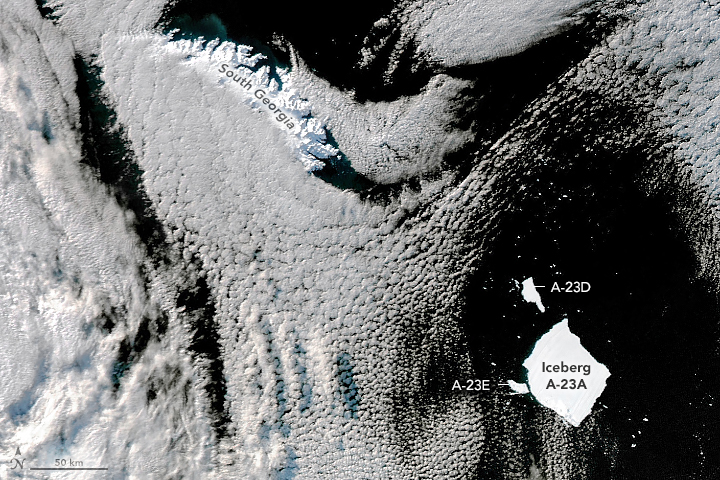
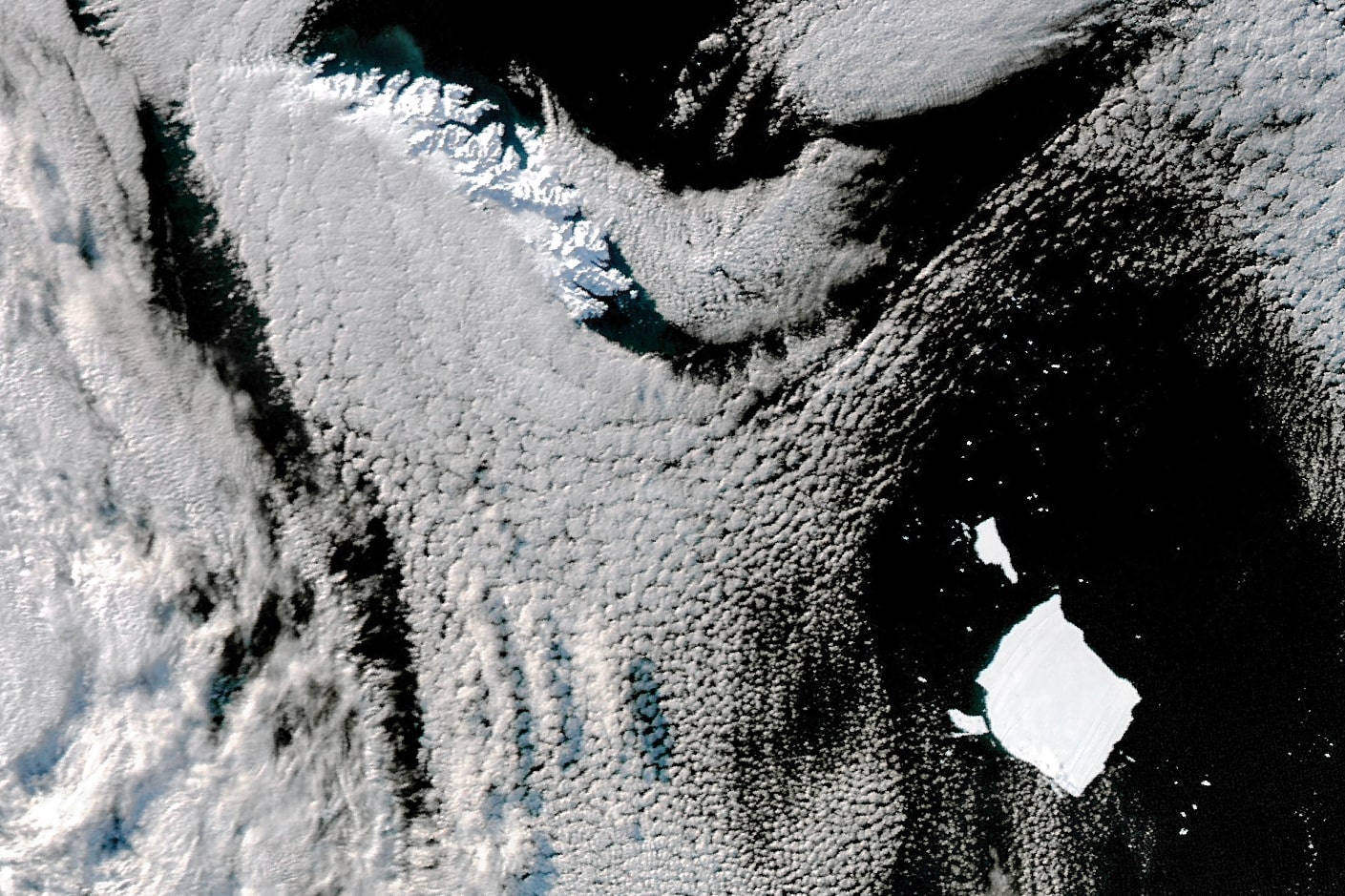
At present, A-23A has already drifted 2,400 kilometers from its point of origin. The journey north has caused significant damage to the iceberg. As shown by new satellite images taken on July 22, 2025, by the Aqua satellite, its surface area has decreased to 2,510 km², which is comparable to the territory of Luxembourg. Many fragments broke off from A-23A. The largest of them were designated A-23D and A-23E. Their areas are 159 and 73 km², respectively.
Despite all this, A-23A is still the largest iceberg in the world. However, its days are numbered. As daylight hours lengthen and the iceberg continues to drift northward, it will continue to shrink in size until it finally breaks apart.
According to Earthobservatory

