

By the end of this century, nearly a third of the world’s population—about 2.6 billion people—will be five times more likely to experience the combined effects of extreme heat and drought. This conclusion was reached by researchers from Germany and China after modeling how events would unfold given the current rate of greenhouse gas emissions.
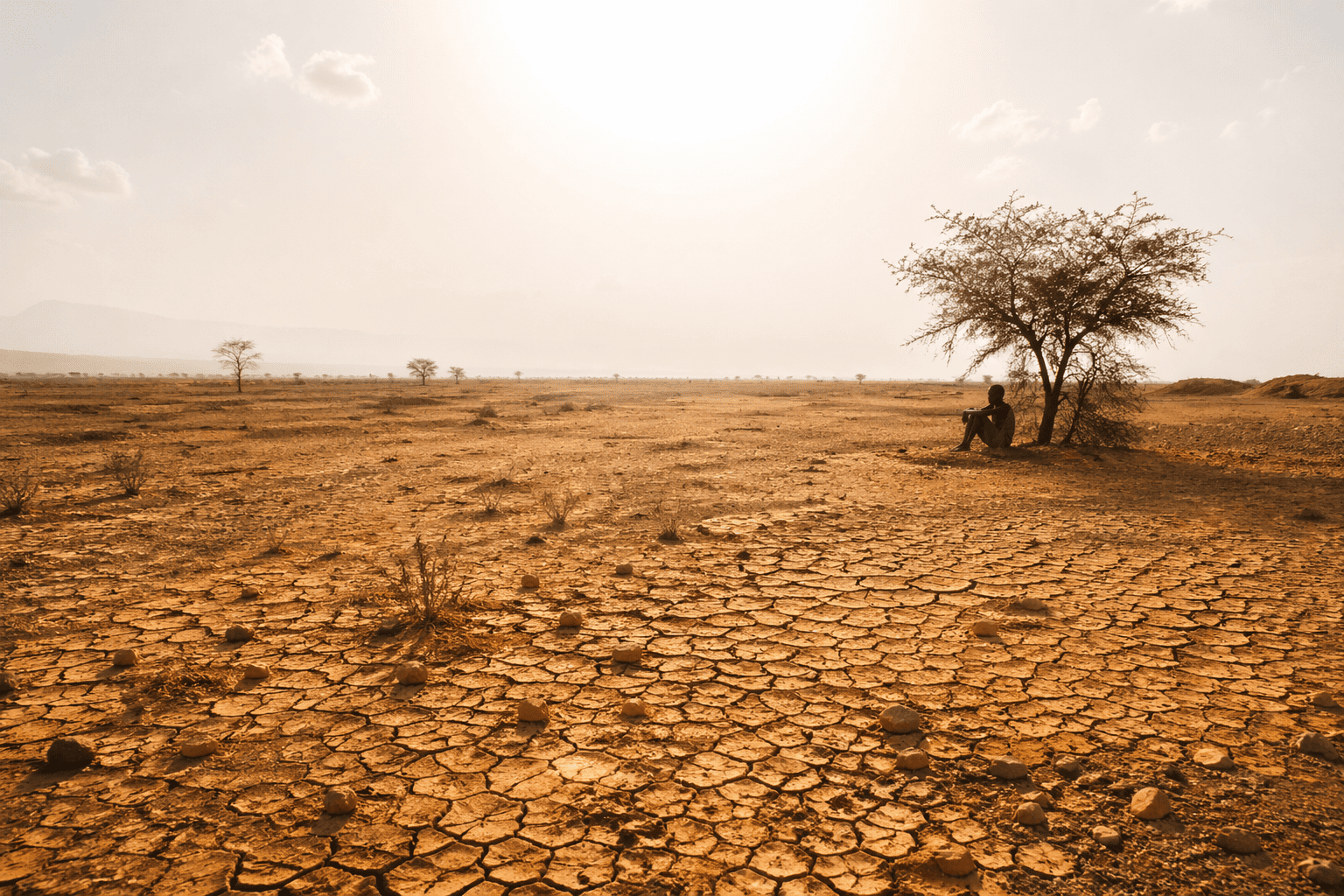
Scientists studied so-called complex heat-drought extremes—situations in which severe drought and abnormal heat occur simultaneously in the same location. When these two phenomena coincide, the consequences are significantly worse than when each occurs separately: mortality from heat stress increases, as do the risks of wildfires, crop losses, and social instability.
“Heat and drought reinforce each other,” explains climatologist Di Cai of Ocean University of China. “They lead to water shortages and volatile food prices. For those who work outdoors, this is dangerous.”
How it was calculated
The team analyzed 152 climate simulations based on eight models from the CMIP6 dataset—a standard suite of climate models used in the assessments of the IPCC (Intergovernmental Panel on Climate Change).
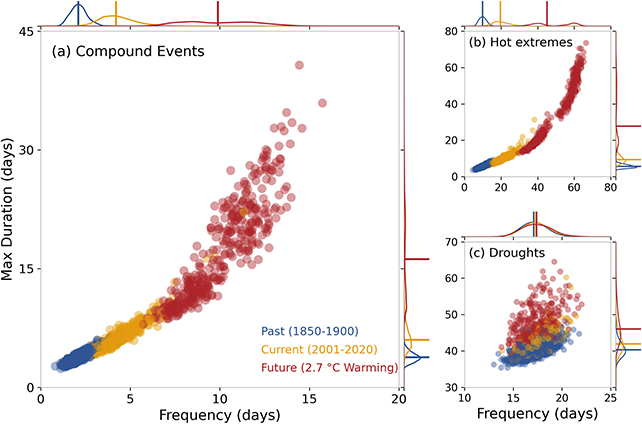
Under current emissions policies, temperatures are projected to rise by approximately 2.7°C by 2100—and under this scenario, the number of severe weather events worldwide is expected to increase by a factor of 2.4, while the duration of individual events is expected to nearly triple.
The most affected will be those who are least to blame
The impact will be distributed extremely unevenly. Tropical island nations and low-income countries—those that have contributed the least to global warming—will suffer the most severe consequences.
“For poor countries, this is a massive injustice,” says Cai. “It’s hard to afford air conditioning or proper medical care. There’s no backup plan if the water runs out. This isn’t just a matter of climate science—it’s about daily survival.”
What will the action change?
The study also points to another path. If all countries were to fully implement the commitments of the 2015 Paris Agreement and additional long-term climate pledges, the proportion of the population experiencing five times as many extreme weather events would drop from 28% to 18%—meaning that about 900 million people would be spared this fate.
“The choices we make today will directly impact the daily lives of billions of people in the future,” Cai concludes.
According to sciencealert.com
This article is based on a study published in Geophysical Research Letters:agupubs.onlinelibrary.wiley.com

