

Humanity is advancing into space rather slowly – astronauts landed on the moon 55 years ago, and since then, we have not been able to boast of any achievements of a similar scale. But our journey through the Solar System will continue, and its next destination will obviously be Mars.
While some scientists are trying to figure out how colonists can protect themselves and adapt to Martian conditions, others are proposing to change the planet itself. Is it possible to make the Martian environment more suitable for future colonists, and is it worth doing? Let’s try to figure it out.
The greenhouse effect: enemy of Earth, friend of Mars?
The technology for creating conditions on the surface of a celestial body that are as close as possible to those on Earth is called “terraforming”. The term was first used by American science fiction writer Jack Williamson in his 1942 novel Collision Course.
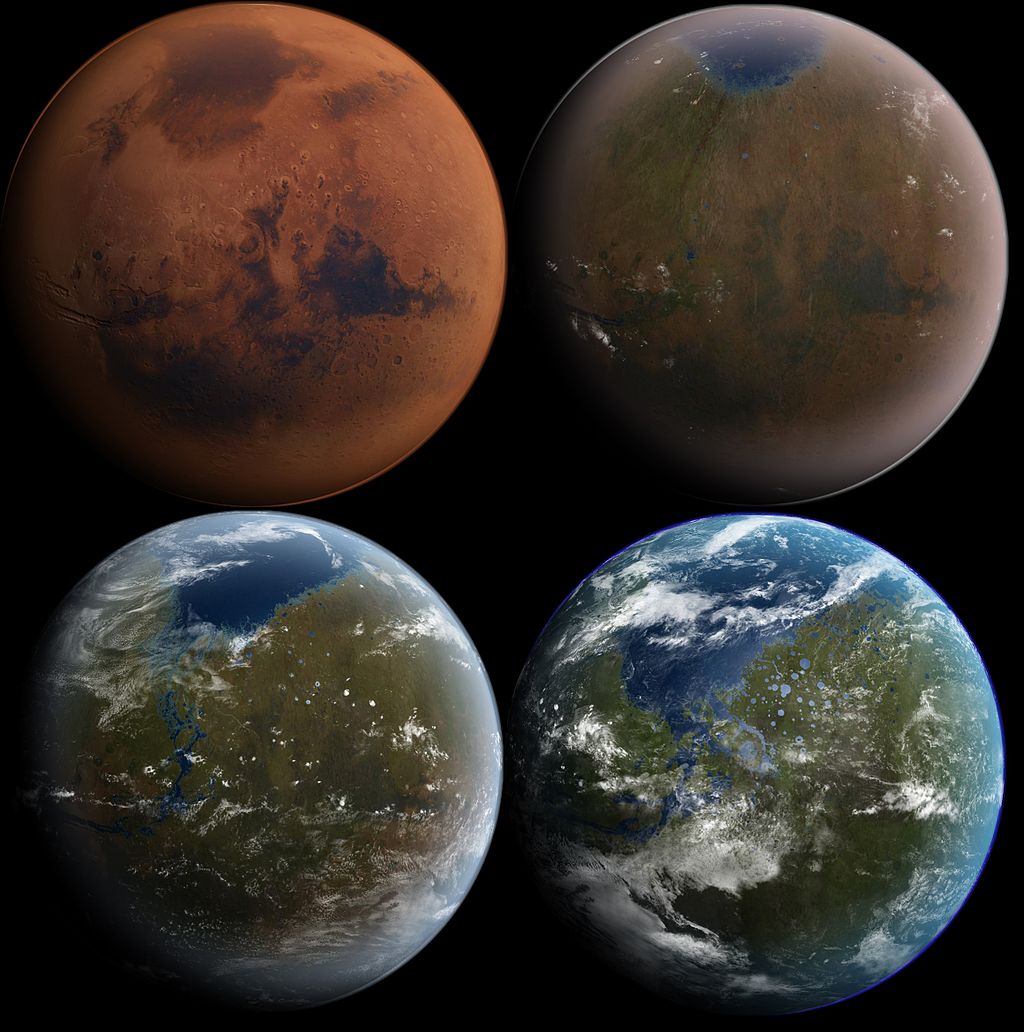
In 1971, astronomer and science popularizer Carl Sagan became the first scientist to propose terraforming Mars, which currently has a thin atmosphere consisting almost entirely of carbon dioxide with small amounts of nitrogen, oxygen, and other gases. He suggested that by releasing gases from various sources on the Red Planet, it would be possible to artificially thicken its gas envelope and increase the chances of liquid water appearing on the surface due to the greenhouse effect.
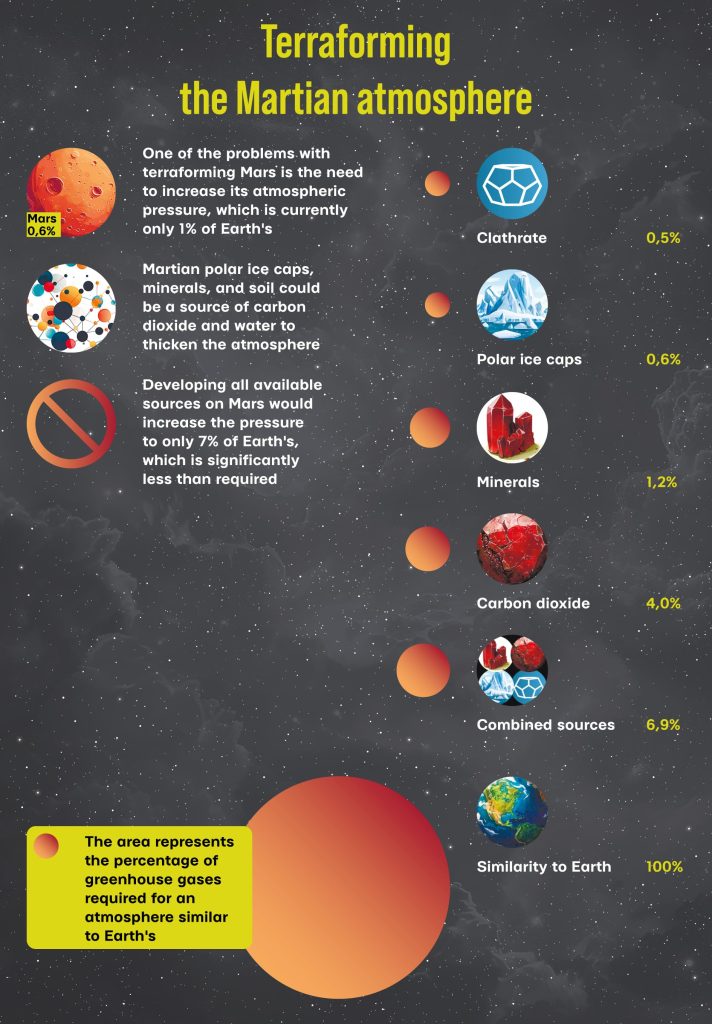
NASA took an interest in the concept. Carbon dioxide and water vapor are the only greenhouse gases present in the atmosphere and ice deposits on Mars and beneath the planet’s surface. Carbon dioxide molecules are excellent at trapping the Sun’s infrared rays. So if enough of this substance is released by melting the ice caps and filling the atmosphere with it, it will create a greenhouse effect that will raise the average temperature and thus “warm” the cold planet. This is literally the same effect that is currently causing climate change on our planet.
For its part, increased pressure will contribute to the appearance of water bodies on the surface of Mars. And although it will not be possible to breathe fresh Martian air for a long time, at least it will be possible to do without airtight compression suits there.
However, in 2018, after a series of studies, NASA scientists abandoned the project. It turned out that there was not enough carbon dioxide on the Red Planet. Based on data from the MAVEN, Mars Express, Mars Reconnaissance Orbiter, and Mars Odyssey missions, experts calculated that even if all Martian carbon dioxide were completely evaporated, the atmospheric pressure would only rise to 15 mbar (for comparison: the average pressure at the Earth’s surface is 987 mbar). The project was closed with the conclusion: “Terraforming Mars is impossible with current technology. Any such plans are only possible in the very distant future”.
Regional terraforming
Of course, they decided not to stop there. Researchers from Harvard University, the Jet Propulsion Laboratory (JPL NASA), and the University of Edinburgh came up with the idea that it is not necessary to change the climate of the entire planet – it is enough to influence only certain regions where the colonists will live. The scientists proposed using silica aerogel, one of the best insulating materials that mimics the greenhouse effect in the Earth’s atmosphere. These aerogels are currently used in several engineering projects, including the Mars Exploration Rovers mission probes. Through modeling and experiments, scientists have shown that a two- to three-centimeter-thick aerogel shield without any internal heat source can transmit enough visible light for photosynthesis, block dangerous ultraviolet radiation, and raise and maintain the surface temperature above the melting point of water ice. This material can be used to build dwellings or even autonomous biospheres on Mars.
Controlled heating of limited areas would not require large amounts of energy or maintenance of modular settlements to keep the area warm for a long time. The results of studies simulating the Martian surface showed that a thin layer of aerogel generally increased surface temperatures in the mid-latitudes of Mars to those found on Earth. However, further research is needed to build such “greenhouses”. In addition, this miracle material does not solve the problem of the harsh climate of the entire planet, and it is also quite fragile and requires large-scale production.
Nuclear bombing, or Musk’s method
Even the eccentric billionaire Elon Musk has become fascinated with the seductive idea of terraforming Mars, in his own style, through nuclear bombing. Musk is the most famous contemporary proponent of colonizing the fourth planet from the Sun. He has repeatedly shared his plans to populate it by 2050 with more than a million colonists who will live under the glass domes of Martian cities. However, he also has a long-term goal – to make Mars more like Earth.
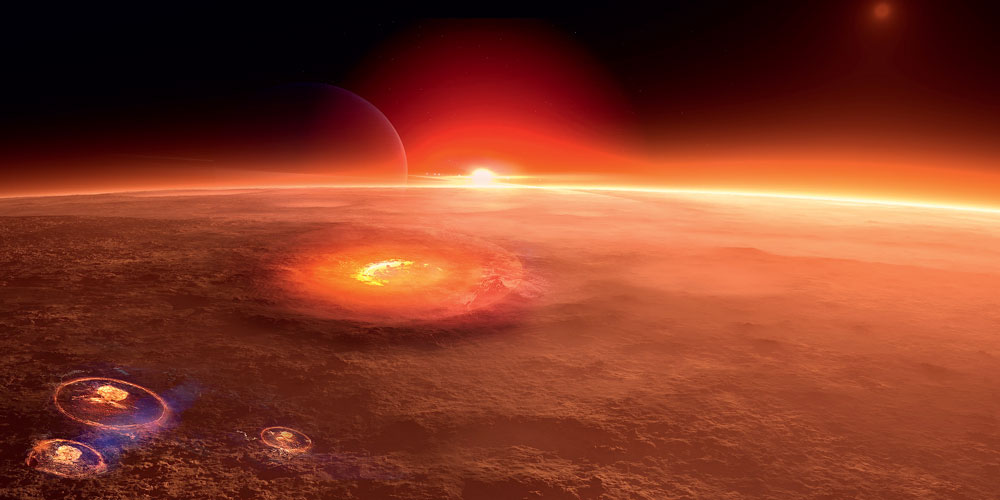
Musk also proposes to use the greenhouse effect. First, it is necessary to heat the frozen carbon dioxide reserves at the Martian poles, which can be accomplished by detonating nuclear bombs above them. In response to comments about the insufficient amount of carbon dioxide in frozen deposits, the billionaire emphasized that Martian soil may also contain a “huge amount” of this substance. Its release will help warm the planet, melt frozen glaciers, and further thicken the atmosphere, causing warming.
Therefore, scientists point out the shortcomings of this method of transforming Mars into a blooming oasis. Even if there were enough frozen CO2, such a strategy would require the use of an almost unattainable amount of nuclear weapons. According to some estimates, 3,500 half-megaton nuclear warheads would need to be detonated every day for seven weeks straight. And even at that rate, the subsequent terraforming process would take several millennia.
Giant orbital mirrors
Another popular method of terraforming Mars is to build giant mirrors in orbit around the planet, which will reflect and direct more sunlight and heat its surface. Among the most prominent proponents of this method are Christopher McCain, a planetary scientist and researcher at NASA, and Robert Zubrin, an American aerospace engineer, writer, and founder of the Mars Society.
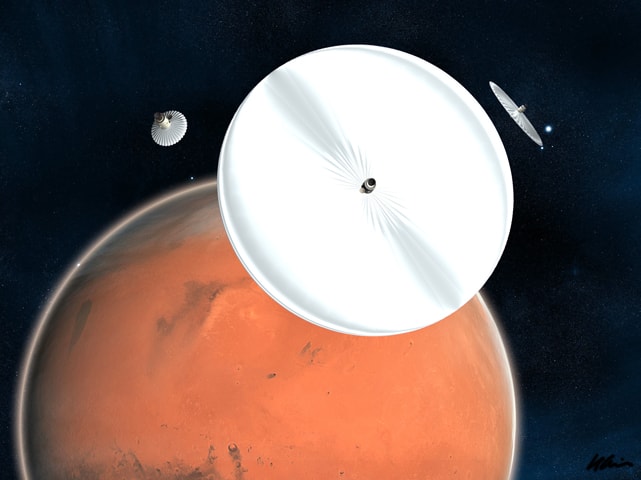
The idea is to build orbital mirrors with a radius of about 100 km from thin aluminized thermoplastic film (a similar material is used to make solar sails). Such mirrors would weigh about 200,000 tons! If they were manufactured in space using resources from the Moon or asteroids, the production of the necessary aluminum would require a huge amount of energy, not to mention time.
According to Zubrin, we do not have enough data to claim that there are insufficient carbon dioxide deposits on Mars. Until now, experts have relied on data from the MAVEN satellite and several Mars rovers, which have only penetrated a few centimeters into the Martian soil. There may be more deposits of volatile substances deeper underground. Further research involves drilling several hundred meters deep in various locations on the planet.
Asteroid bombardments
Another way to raise the temperature is to direct small asteroids or comets toward the surface of Mars. For decades, humanity has been developing programs to track potentially hazardous objects and creating systems to protect Earth from collisions. Therefore, one or more of these methods could be used to arrange for such objects to collide with Mars. The energy from the crash would then serve as a source of heat.
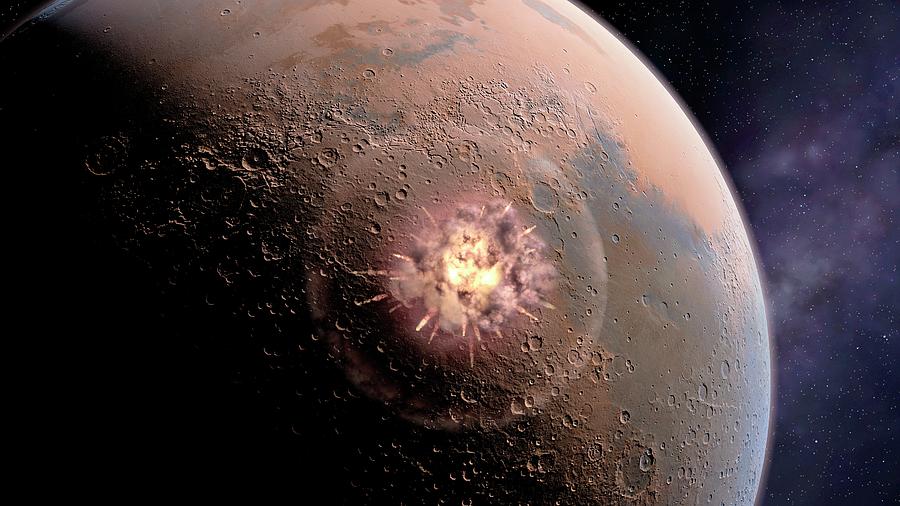
Asteroids can be selected based on their “usefulness” – for example, based on their ammonia content, which, when released into the Martian atmosphere, will further enhance the greenhouse effect, or based on the presence of water, which will turn into water vapor.
However, NASA believes that thousands of such asteroids will be needed, and there is currently no ready-made technology for their targeted transportation to Mars.
The hardest part is still ahead
There are other methods of bringing conditions on Mars closer to those on Earth by importing ammonia, hydrogen, or bacteria capable of living and serving as a nutrient substrate for plants in Martian regolith. However, scientists believe that instead of fighting the consequences, we should look at the root of the problem. More precisely, at the core. After all, any attempts to create an atmosphere on the Red Planet will be futile without a magnetosphere to hold it in place. A terraformed Mars will need a reinforced magnetosphere, similar to the one that protects Earth from the flow of charged particles from the Sun.
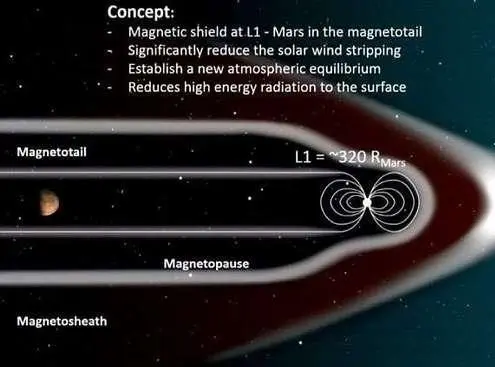
It is believed that about 4 billion years ago, Mars lost its magnetic field due to the cessation of core rotation. Without a magnetosphere to serve as a shield, solar winds began to bombard and destroy the atmosphere. Leading NASA scientist James Green, who has worked at the agency for 40 years, proposes creating a huge magnetic shield to prevent our star from destroying the future Martian atmosphere. As a result, the planet will be able to retain heat near the surface, pressure will increase, and the climate will improve and become suitable for life. According to the scientist, this method will entail the least amount of interference and destruction, and then Mars will begin to terraform on its own. However, he does not provide estimates of the cost of the project, the necessary technological capabilities, or the time required for such long-term processes.
Ethical issues and the benefits of concepts and research for the Earth
Although humanity is still quite far from realizing its plans to terraform Mars, we must nevertheless consider the ethical and appropriateness of such projects. Similar to protected wilderness areas on Earth, Mars has extreme, historically important, and aesthetically valuable regions. Any interference with the planet’s natural development will lead to irreversible changes. Mars will forever lose its unique historical and research value for future generations.
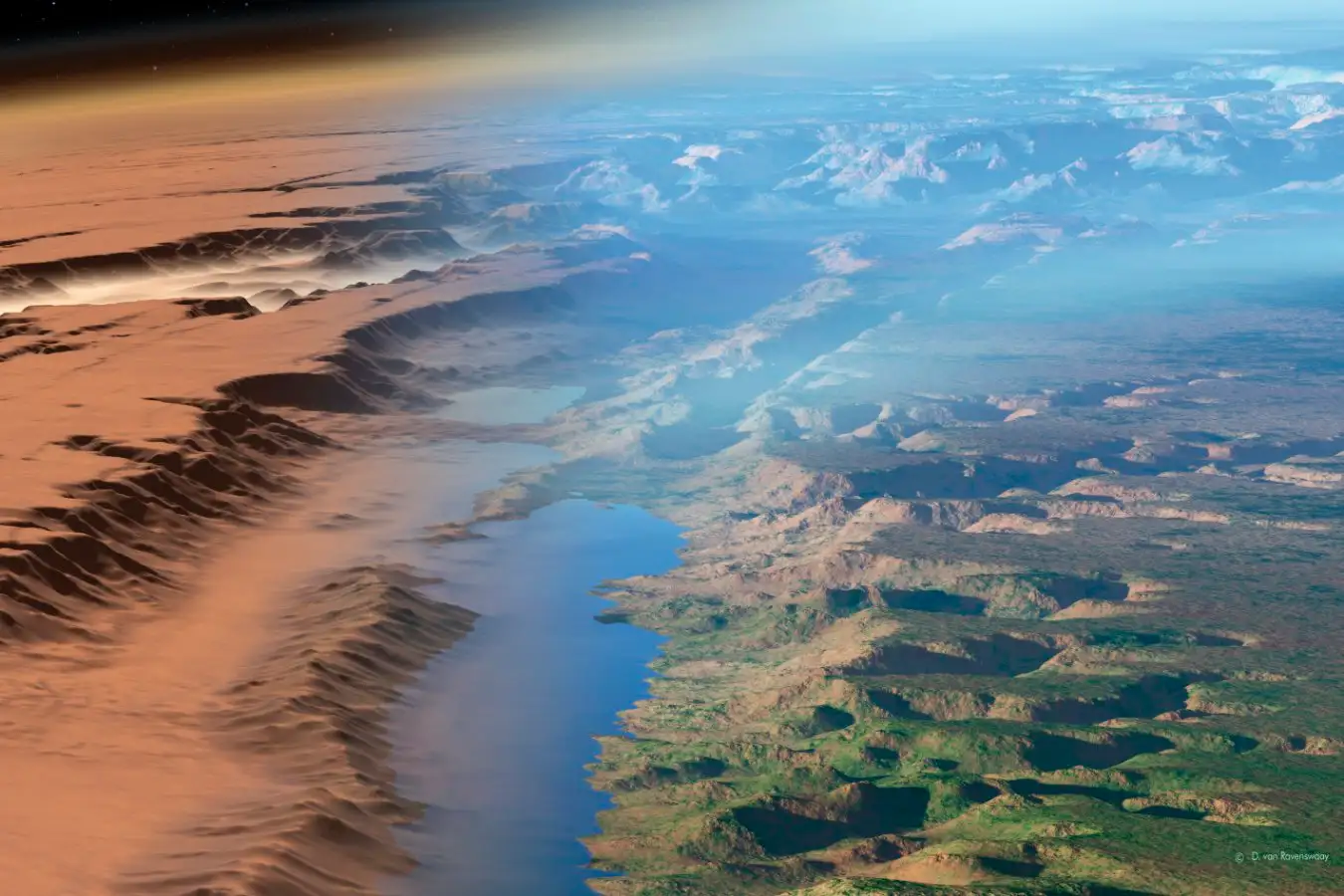
Another problem with terraforming Mars is the high cost of such missions. And if, say, humanity had such resources, wouldn’t it be more expedient to use them for the benefit of Earth? Scientists around the world are already sounding the alarm about climate change, the destruction of fertile land, the depletion of fresh water and mineral resources, and the lack of preparedness for possible epidemics.
We should not forget the history of colonization, which has always been accompanied by tragedy. Even today, destructive wars continue over territory, resources, religious beliefs, and so on. So, have we reached the point of moral development where we can become wise guests in the Universe, rather than destructive invaders?
We will have to find answers to these and other questions in the future. However, similar research, such as improving soil quality or developing protection against asteroids, can also be used on our planet. Like many other technologies that are part of our everyday life, thanks to space developments. And in the event of an inevitable catastrophe, Mars would become “plan B” for the salvation of the human race.
Author: Anastasiia Bernatska, journalist
This article was published in issue No. 1 (190) of Universe Space Tech magazine in 2024. You can purchase this issue in print or electronic format from our store.

