

On October 18, 1967, the Venera 4 spacecraft entered the atmosphere of the second planet from the Sun. Its descent module had a high-strength hull designed to withstand pressures of up to 20 atmospheres. But it never made it to the surface. Venera 4 was crushed by the Venusian atmosphere at an altitude of 28 km. This put an end to the hopes of space romantics that the second planet from the Sun was similar to Earth and that life as we know it could exist there.
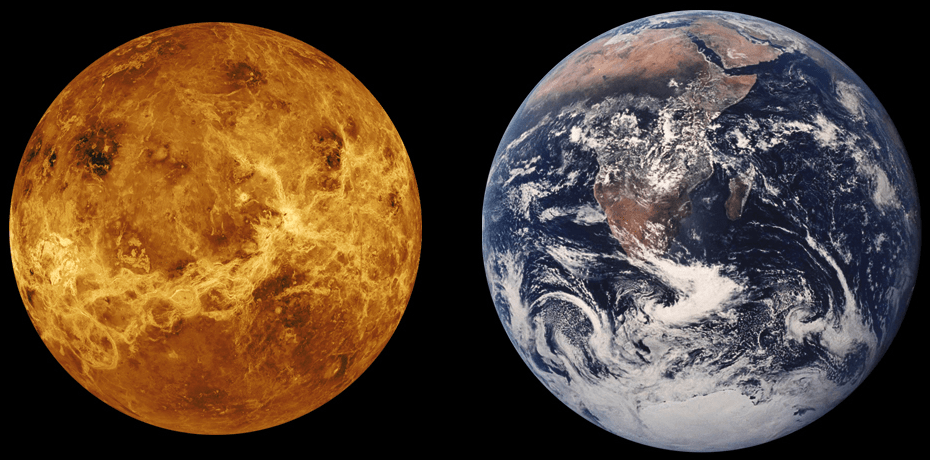
But why were such high hopes pinned on Venus in the first place? And why, despite its physical properties being similar to Earth’s, is it so different from our planet in reality?
Earth’s younger sister
Venus is sometimes referred to as Earth’s younger sister. This is because the planets are similar in size and basic properties. Like Earth, Venus is a rocky body with a solid surface. Its diameter is 12,100 km, which is only 5% less than Earth’s diameter. Thanks to this, Venus is the only body in the Solar System where we would not feel any significant difference from the gravity we are used to when walking on its surface. Gravity on Venus is only 10% less than on Earth. Therefore, it is not surprising that the planet has earned the nickname of Earth’s younger relative.
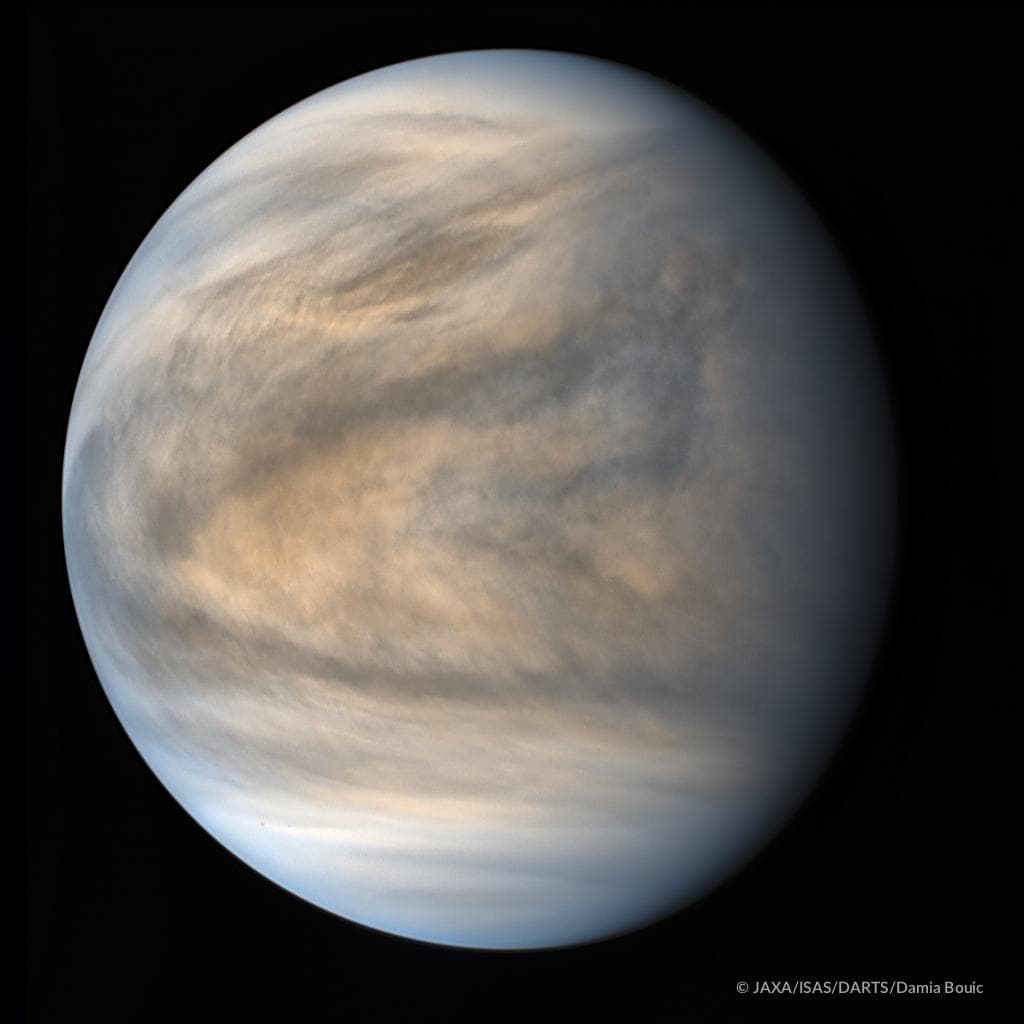
Source: JAXA/ISAS/DARTS/Damia Bouic
The diameter and mass of Venus (as well as the fact that it has an atmosphere) are among the few reliable facts that scientists knew about it just 65 years ago. The thing is, the planet’s surface is constantly hidden by thick clouds. Because of this, scientists knew nothing about it. They did not even know the planet’s rotation period.
However, the lack of specific knowledge did not greatly hinder various assumptions about what exactly was hidden under the thick cloud cover. Many science fiction writers were greatly impressed by the “carboniferous” image: the idea of Venus as a planet resembling Earth during the Carboniferous – a hot, primitive world covered with swamps and inhabited by various insects and primitive lizards.
Of course, scientists had more down-to-earth assumptions. Some believed that the planet’s surface was completely covered with water. Others believed that Venus was experiencing something like an ice age. Still others thought that the planet was a giant desert. In any case, there was only one way to find out what was really hidden beneath the clouds: by sending a spacecraft to Venus.
The evil twin of Earth
Before the space age, Venus was called Earth’s little sister, but soon after the first automated missions arrived there, its nickname changed to Earth’s evil twin. It turned out that Venus is one of the most inhospitable places in the entire Solar System for humans.
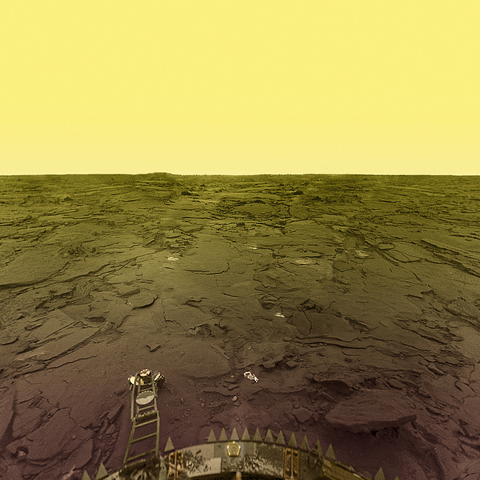
Source: Don Mitchell
Let’s start with the atmosphere. It is much denser than Earth’s and consists almost entirely of carbon dioxide, which creates a monstrous greenhouse effect. The average surface temperature is about 470°C, and the pressure is about 93 bar. Venus is hotter than Mercury, the planet closest to the Sun.
Spacecraft have also managed to uncover the secret of Venusian clouds, which obscure the planet’s surface. They consist of droplets of sulfuric acid. Venusian clouds reflect most of the sunlight, making the lighting conditions on the surface comparable to a cloudy day on Earth.
This is far from the only “extreme” feature of Venus. As it turns out, the planet has an abnormally slow rotation period. Venus completes one rotation around its axis in 243 days, while its orbital period around the Sun is 224 days. In other words, a local day lasts less than a local year. On top of that, Venus also rotates “incorrectly” – from east to west (when viewed from the north pole), i.e., in the opposite direction to most planets.
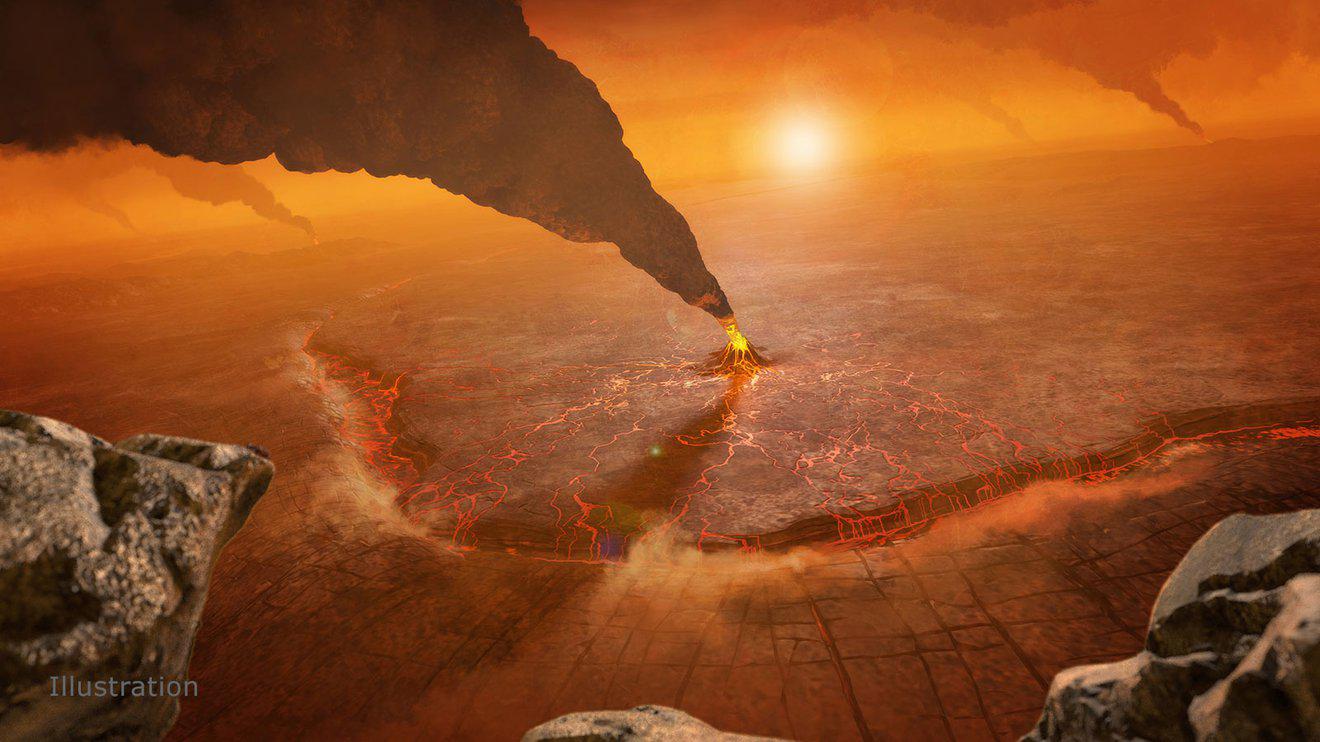
Unlike Earth, Venus shows no signs of plate tectonics. The planet has a relatively flat surface, 90% of which is covered with solidified basalt lava. Analysis of radar images has revealed over 80,000 volcanoes. Scientists have little doubt that at least some of them are still active.
Venus does not have its own magnetic field. Moreover, unlike Mars, which at least had one in the distant past, it is quite possible that the second planet from the Sun never had its own magnetosphere at all.
The mystery of Venus’ past
All this raises a logical question: why is Venus so different from Earth, and has it always been this way? Scientists are very interested in the answer to this question. After all, if we assume that young Venus was much more similar to Earth, there must have been some point of no return after which the fates of the two planets diverged forever.
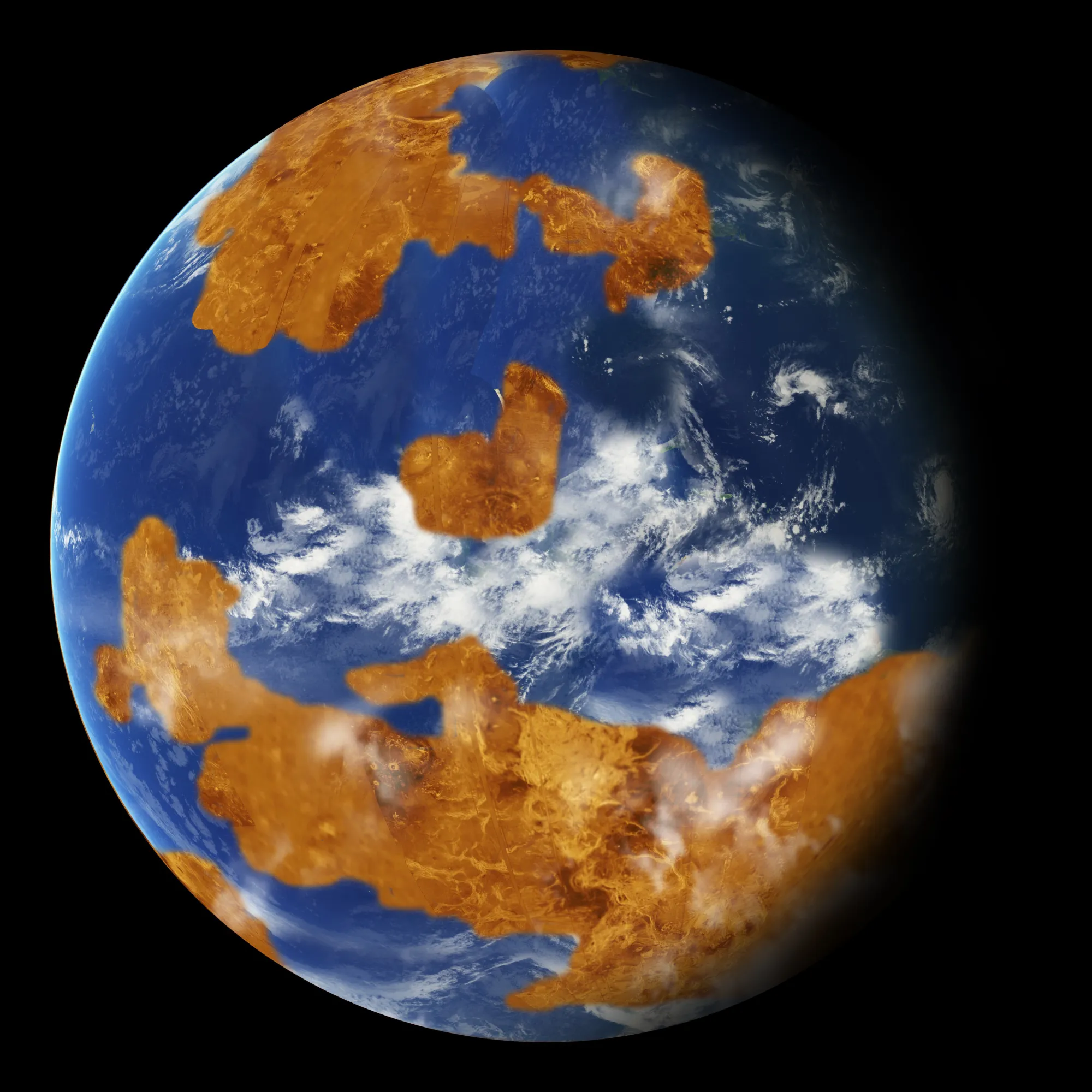
Unfortunately, it is not so easy to get an accurate answer. The geological youth of Venus’ surface suggests that approximately 500-700 million years ago, it underwent a “renewal.” This was a global event during which virtually the entire planet was covered with lava flows. Many scientists attribute this catastrophe to the absence of plate tectonics on Venus, suggesting that this is how it dissipates excess internal heat.
Whether this is true or not, the consequences of the global renewal of Venus’ surface greatly complicate any attempt to study its past. The solidified lava concealed all traces of ancient relief and sedimentary deposits, the analysis of which could have provided answers to questions about what the planet’s climate was like in the distant past, whether it had an ocean, and whether it could support life.
Moreover, the generally hostile conditions on the surface of Venus have meant that we still lack some of the most basic knowledge about it. For example, about its internal structure. It is believed that Venus has a crust, a silicate mantle, and an iron-nickel core, but these conclusions are based solely on analogies with Earth. The reality may be very different. The only way to find out what is hidden inside the planet is to place a seismometer on its surface that can operate and transmit data over a long period of time. This is a complicated engineering task. But without seismic data, we will never know what its core is like and whether or not it has a liquid layer, the solidification of which could explain the absence of a magnetic field.
Due to all these factors, scientists’ assumptions about why Venus is so different from Earth are based on indirect evidence. However, even with the lack of knowledge, the most likely version is obvious: a giant collision. At some point in its history, Venus must have collided with a very large object that forever changed the planet’s fate and literally turned it around, causing it to rotate in the opposite direction. Such a scenario explains not only the abnormal rotation but also the planet’s lack of moons: after such a cataclysm, they would eventually fall to its surface, further exacerbating the consequences of the disaster. The powerful impact could also have affected Venus’ core and shut down the planetary dynamo mechanism, depriving the planet of its protective magnetic field. This, in turn, would have led to irreversible climate change and the loss of all water reserves.
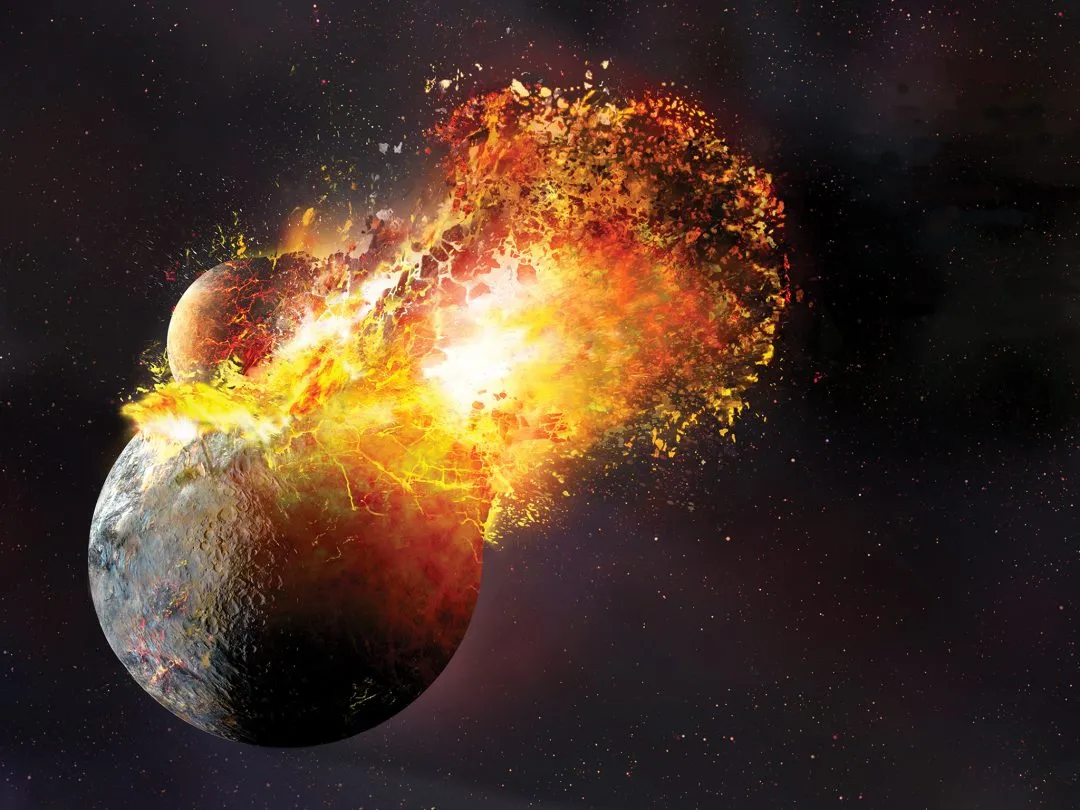
The main question is when exactly this collision occurred. If it happened at the dawn of the Solar System, then most likely Venus never resembled Earth – it simply did not have enough time for that. But we cannot rule out the possibility that it could have happened at a later stage. In that case, for some time, the second planet from the Sun could indeed have been considered Earth’s sister. It is possible that it had oceans in which life could have arisen.
At this point, it is difficult to say whether we will ever find out what Venus was like in the past. But scientific progress gives us hope that, sooner or later, we will find the answer to this question. Then we will understand whether Venus has always been Earth’s evil twin or whether it was a completely different planet in the distant past.

