

Imagine an air defense system that does not launch missiles or fire shells, but hits drones with an invisible energy pulse. Similar to how a microwave oven heats food, this weapon “heats” the drone’s electronics – only much more powerfully and from a distance. Such electromagnetic weapons can instantly disable a drone or even a swarm of drones, effectively frying their electronic brains in flight. This technology is developing rapidly around the world, as it allows drones to be shot down at the speed of light and at minimal cost per shot.
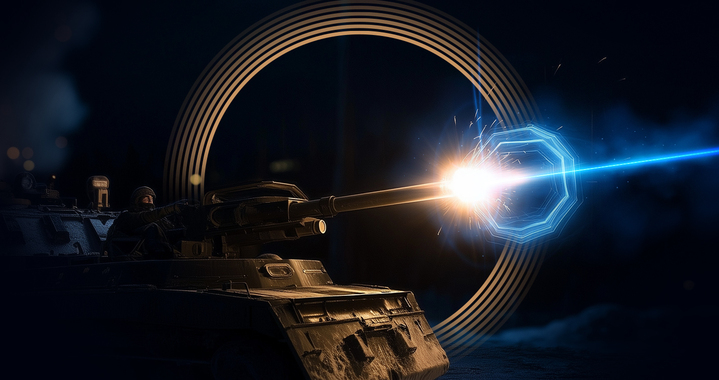
How a “microwave cannon” shoots down drones
An electromagnetic weapon (EMW) is a device that generates a short pulse of ultra-high-power electromagnetic radiation. When such a pulse is directed at a drone, currents are induced in its wires and microchips, which can disable the electronics. The drone immediately loses control and crashes. Importantly, this happens at a distance and without physical contact – the invisible wave hits the target in a fraction of a second. One shot can cover several drones at once, as the beam has a certain angle of dispersion.

Unlike radio jamming, which only disrupts communication, such a “microwave cannon” causes real damage to the drone’s electronic systems. And unlike a laser, which must target each drone individually, an electromagnetic pulse acts more broadly – dozens of drones can be disabled with a single strike. According to the American classification, modern systems are already capable of hitting groups of small drones (1-2 units) at a range of up to 1-2 km with a short, powerful pulse lasting several nanoseconds. This is true “electromagnetic air defense” – a new type of countermeasure against air threats.
Energy balance assessment of a single shot
Let’s estimate the conditional shot of an electromagnetic cannon at 1 km. To obtain a sufficient effect on the target’s unshielded electronics equal to ≈300 V/m, a dish with a diameter of 3 m at 3 GHz (≈37 dBi) requires a peak power of about 0.56 MW. If the pulse lasts 100 ns, the energy of the shot is only ~0.056 J. This is ~6.2 million times less than what is needed to boil 1 liter of water in a kettle (~350 kJ). 1 kWh is equivalent to approximately 64 million such shots, and a full charge of a Tesla Model 3 (~75 kWh) is ~4.8 billion shots.
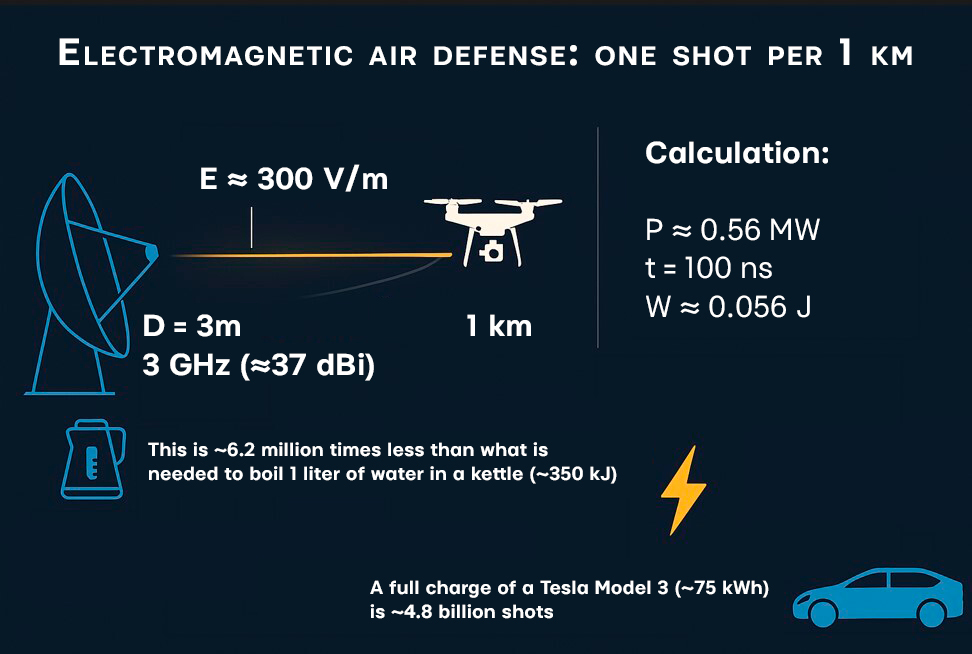
At a rate of $0.15/kWh, one shot costs literally nano-dollars (even taking into account ~1% efficiency, this is micro-cents). The paradox is that the energy is negligible, but a huge aperture, peak power, and fast pulse circuits are required – hence the size and power consumption of such installations.
Engineering challenges: energy, antennas, and dimensions
Creating such a “cannon” is not an easy task. To burn electronics at a distance, you need a super-powerful energy pulse. In practice, this means enormous power requirements: the system needs a generator or batteries and capacitors capable of storing and delivering a pulse wave of lightning-level energy. For example, a prototype of the American Phaser device is powered by a diesel generator. Other prototypes use pulse generators and even special explosive devices.
The antenna is another critical element. Electromagnetic waves need to be directed, so a large parabolic dish or phased array is usually installed to focus the energy in the desired direction. The dimensions of such antennas are measured in meters, so the entire installation is still quite cumbersome. Most existing systems are housed in a truck bed or a standard container, similar to laser systems. This, in turn, complicates mobility and deployment – transportation, installation time, and power supply are required.
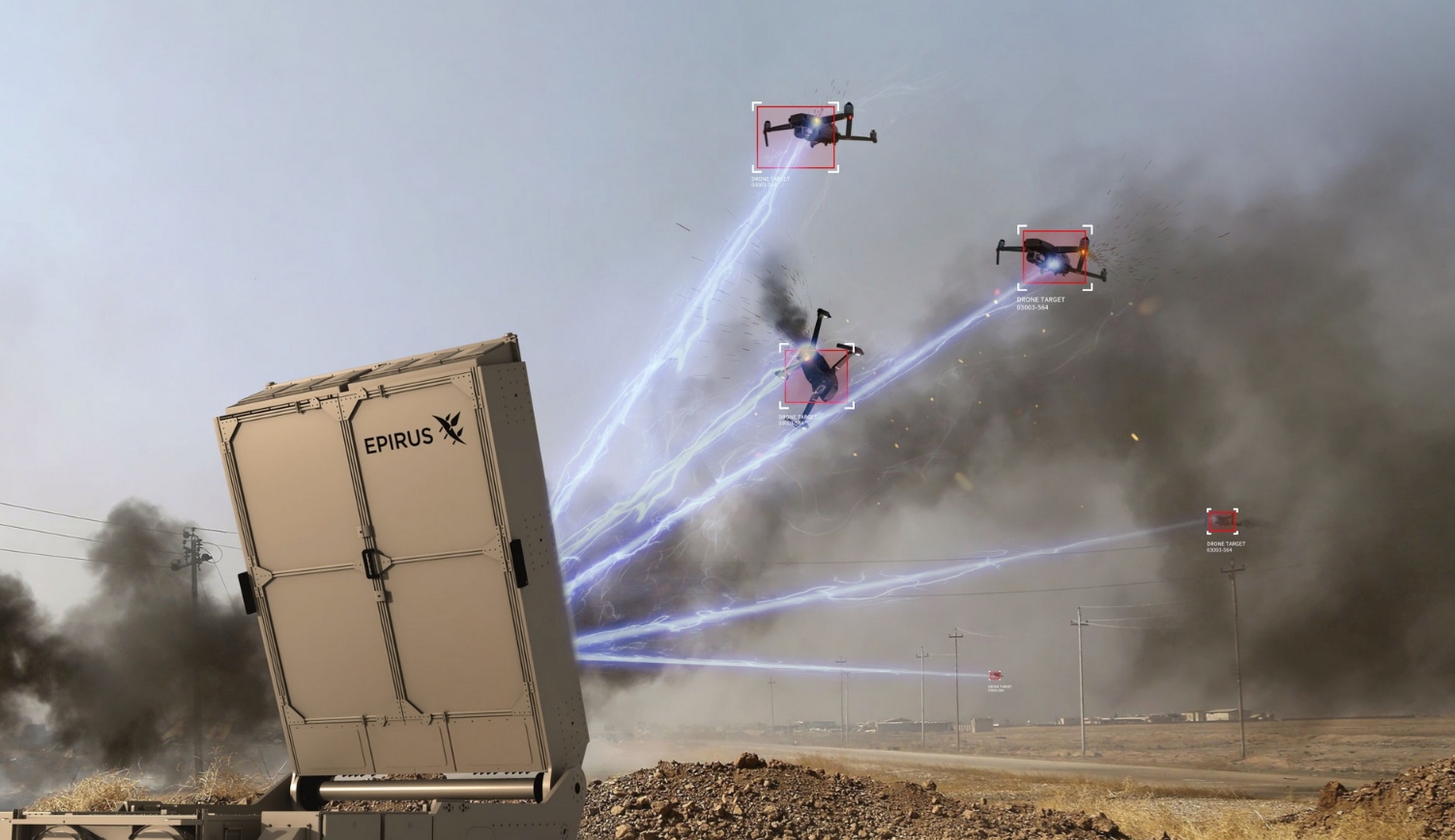
However, the speed of electromagnetic air defense is impressive – the beam reaches the target almost instantly, as it travels at the speed of light. But for the system to be effective in the dynamics of combat, it needs to be integrated with radars and optical sensors that will detect and track targets. Modern systems combine radar for detecting drones and electromagnetic pulses for shooting them down. A wide microwave beam even has an advantage over a laser – it is easier to hit a maneuvering target with it, and it is less dependent on weather conditions. However, such pulses are not very selective: there is a risk of collateral damage. High-power radiation can affect the target’s own communication systems or electronics if they are not protected. Therefore, engineers are tasked not only with amplifying the pulse but also with learning how to direct it accurately and shield friendly objects.
Currently, electromagnetic weapons are still in the prototype and testing stage. No country has yet established mass production, despite significant advances in technology. The main obstacles to practical electromagnetic air defense can be summarized as follows:
- Enormous energy demand and risk of hitting yourself
- Bulky and complex
- Limited series production
Examples of modern electromagnetic “shields” and “cannons”
Despite the challenges, there are already several working models of electromagnetic air defense systems in the world. Most of them are being designed and tested in the United States. Let’s take a look at the most famous ones and evaluate their strengths and weaknesses:
- Phaser (USA) – an experimental high-energy system from Raytheon. Phaser is installed in a container with a diesel generator and a large antenna. In tests, it has demonstrated the ability to shoot down drones in a matter of seconds. Its power and range are kept secret. According to estimates, Phaser can destroy the electronics not only of drones, but also of cars and other objects.
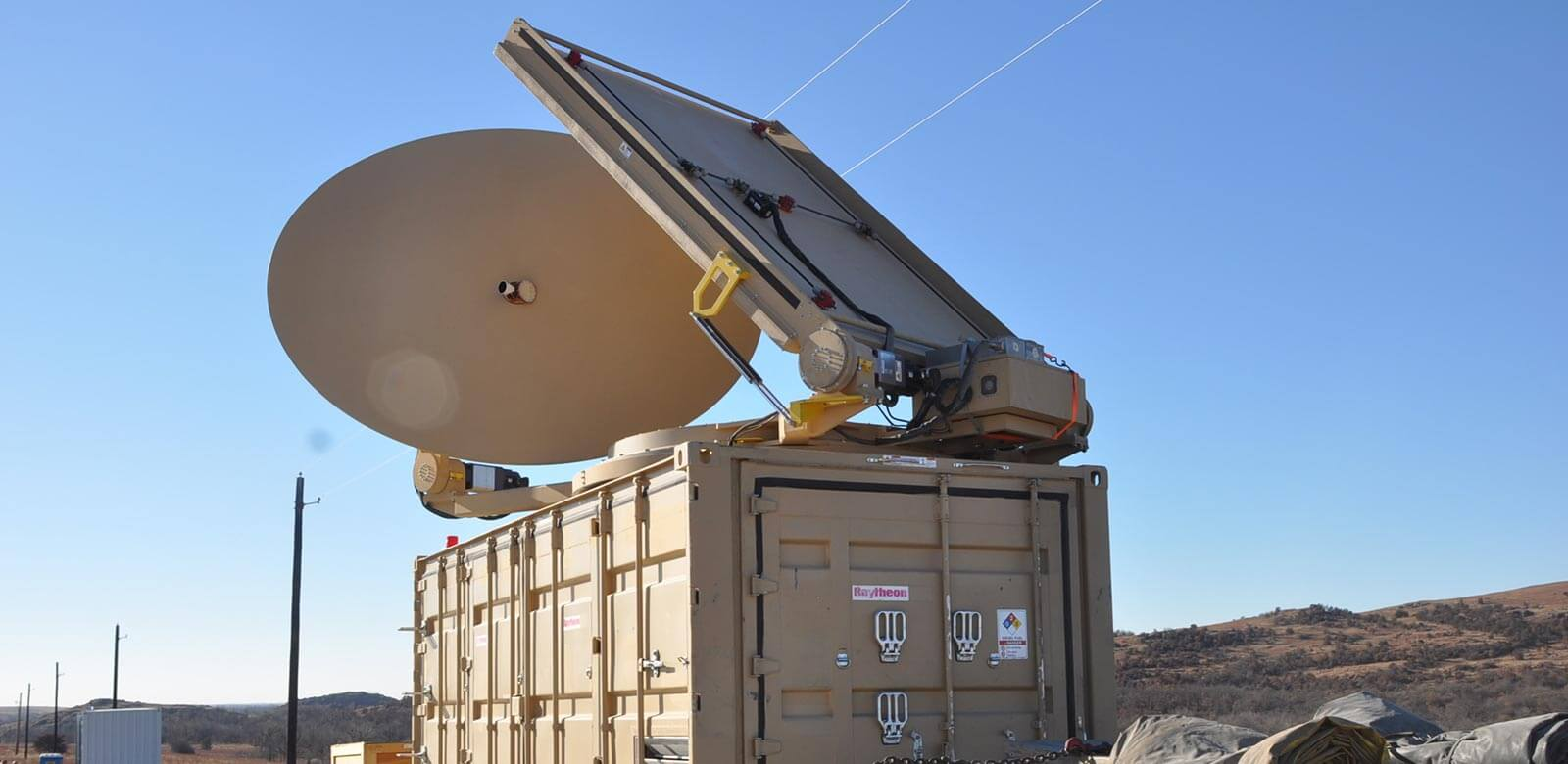
Source: rtx
Its strength is its instantaneous effect on multiple targets (the pulse lasts milliseconds), while its weakness is its large size and the need for a powerful energy source in the field.
- THOR (USA) – Tactical High-Power Operational Responder, a US Air Force project for protecting military bases. It is also a high-power microwave device, designed to be relatively portable. THOR is designed to combat swarms of small drones: during tests in April 2022, it successfully destroyed an entire group of UAVs. The system works on the principle of rapid deployment to protect, for example, an airbase from an invasion of drones.

Its advantages are mobility and wide coverage. Its disadvantage at present is its experimental status: THOR is not yet in service as a serial system, and its effectiveness against larger targets or in different weather conditions is still being tested.
- Leonidas (USA) – the latest system from Epirus. Unlike older models, which used tube generators, Leonidas uses semiconductor amplifiers (such as GaN transistors), which have significantly reduced its size and increased its reliability. The system attracted attention after it destroyed a swarm of 49 drones with a single pulse during a demonstration firing in Indiana in August 2025.
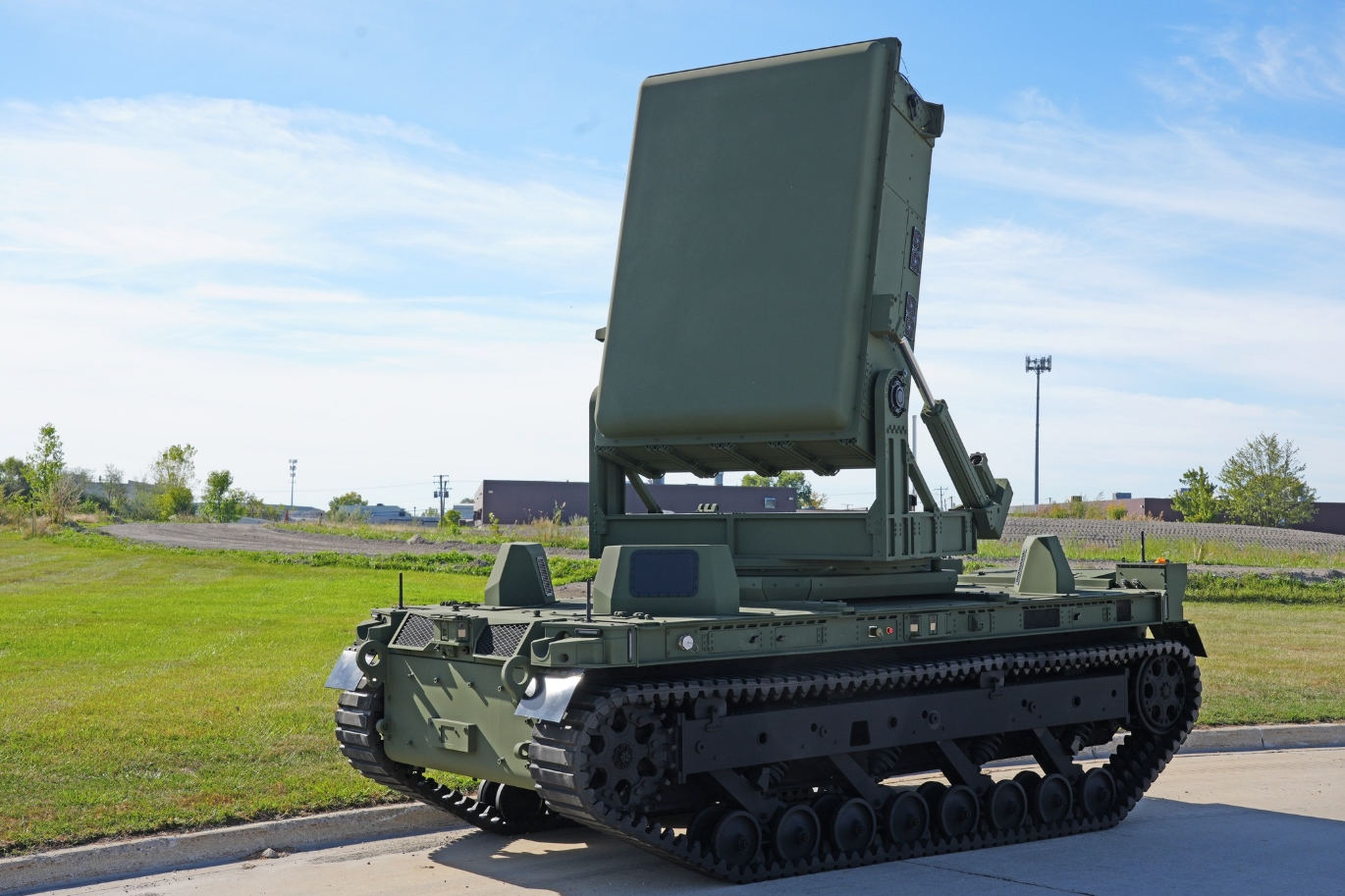
Epirus has already manufactured several such systems for the US Army and has been awarded a contract for an upgraded version, Leonidas Gen II (with double the range to ~2 km and higher power). There are several modifications: stationary for bases, mobile on armored vehicles (for example, it is planned to be installed on Stryker armored personnel carriers), and even an aviation “capsule” Leonidas Pod for installation on aircraft and drones.
Prospects: from protecting cities to military bases
Electromagnetic weapons are on the verge of widespread recognition, and the next few years are expected to be pivotal. In the military sphere, high-power microwave systems are expected to become part of multi-level air defense systems. For example, the US Army is already deploying prototypes in training exercises. In 2025, during the Balikatan exercises in the Philippines, the Americans successfully used an HPM system to neutralize drones in the jungle. In the next 2-3 years, it is planned to deliver the first pre-production Leonidas installations to US air defense units for evaluation in real conditions. Similar systems are likely to appear in the armies of other advanced countries – Israel, Germany, and China are actively experimenting with these technologies. Given the rapid growth of the threat of kamikaze drones and swarm attacks, electromagnetic shields may become a common element of protection for bases, airfields, and cities. They will be deployed where conventional air defense is overloaded or where it is risky to use missiles (for example, over densely populated areas).

There are also many prospects in the civilian sector. Protecting airports and critical infrastructure from unauthorized drones is one of the first potential niches. An electromagnetic system installed on the roof of the terminal could bring down an intruding drone in seconds without risking the safety of aircraft. Such systems can be used to protect mass events: instead of jamming the signal (which does not work on autonomous drones), it is better to immediately neutralize the enemy drone with a pulse, for example, if the UAV is carrying dangerous cargo. It is only important to ensure that the fall of the downed aircraft does not harm people – for this purpose, combined solutions are being considered (first, the pulse disables the drone, and then a net or interceptor drone gently catches it).
Law enforcement agencies are also looking into EM weapons. Police often encounter criminals in cars or with potentially explosive devices. A microwave engine jammer could stop cars by disabling their electronics without shooting at the wheels. Or it could neutralize radio-controlled bombs from a distance by burning out their receivers before bomb disposal experts get close. Such solutions are already being tested: for example, the British RF Safe-Stop system emits directional radio waves that jam a car’s engine ignition. With the development of technology, such devices could become more compact – even portable guns capable of disabling surveillance drones or other criminal electronics with a single pulse.

Despite all these prospects, the technology needs improvement. The efficiency of microwave emitters is not yet very high: a significant part of the energy is scattered, and the effective range is limited to a few kilometers. Therefore, work is continuing on new generators (for example, Chinese scientists have tested an HPM cannon based on compact Stirling engines and superconducting magnets, which reduces energy consumption to 20% of current analogues). Improvements in the component base – from power sources to antennas – will make the installations smaller, more economical, and more reliable. It is expected that in the next 5-10 years, we will see a new generation of electromagnetic weapons: with the ability to operate for long periods (several hours without overheating), automatic targeting of dozens of targets, and integration into unified troop control systems.
Electromagnetic air defense is no longer science fiction and is entering the phase of practical application. Spectacular tests – where entire swarms of drones fall from the sky at the push of a button – demonstrate that this technology has the potential to change the rules of the game. Of course, it is not a panacea and will not replace all other types of weapons. But in combination with traditional means (missiles, anti-aircraft guns) and the latest lasers, electromagnetic “cannons” can fill the niche where the enemy tries to win with quantity and cheapness. When dozens of inexpensive drones fly simultaneously, it is economically and technically more advantageous to shoot them down with a pulse for pennies than to waste expensive missiles and risk missing some of the targets. That is why armies around the world are rushing to test such systems, and developers are improving their design. It is possible that very soon electromagnetic air defense will become as commonplace as radar once was: invisible to the naked eye, but reliably guarding the skies, with complex engineering solutions working simply and unobtrusively to protect us all.

