
The European Space Agency (ESA) has published an image showing Europe at night. This is the first color night mosaic of the continent ever created using calibrated space images.
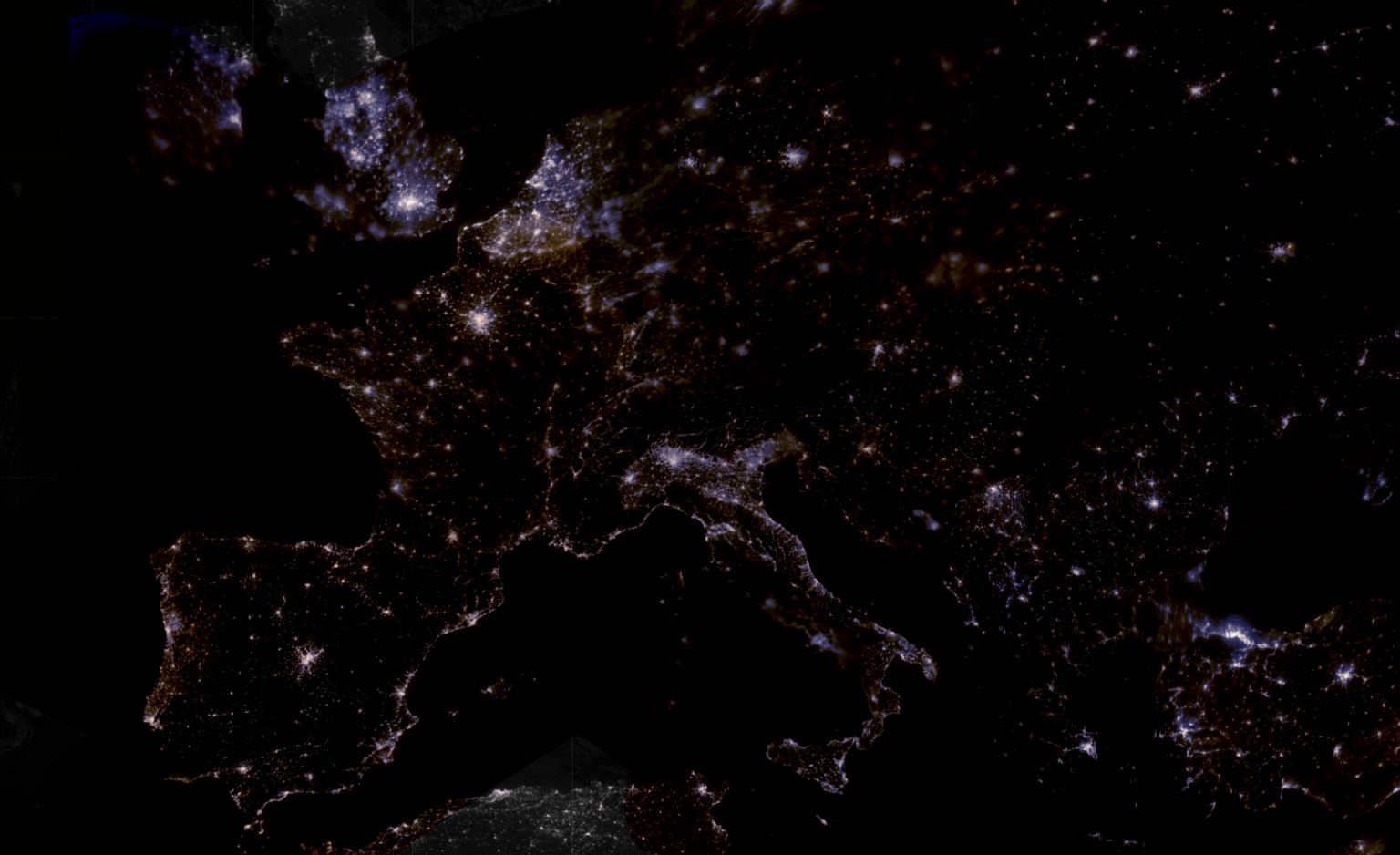
More than 7,000 photographs taken by the ISS crew in 2017 were used to create the composition. Until 2021, it was the only spacecraft capable of taking color images of Earth at night. Resolution is equally important. Astronauts were able to take pictures with a resolution of up to five meters per pixel, which exceeds the capabilities of most modern satellites. Therefore, photographs from the ISS have become the best source of information for scientists involved in mapping artificial lighting.
“Most images of Europe at night that you see are artistic interpretations of black-and-white images, not actual colors,” explains Alejandro Sánchez de Miguel of the Complutense University of Madrid and the Institute of Astrophysics of Andalusia in Spain.
By combining citizen science with artificial intelligence, the Cities at Night project created a mosaic by processing thousands of images and time-lapse videos and correcting distortions in them. The missing areas at the bottom (North Africa) and top (Scotland in the UK) were filled in with data from NASA’s Suomi NPP meteorological satellite.
Different colors indicate different lighting technologies. Warmer, red tones usually indicate sodium light sources. Whiter and bluer emissions belong to LED lamps.
According to scientists, the transition to white and blue light disrupts natural night cycles across the continent. Excessive lighting disrupts the circadian rhythm of living organisms, including humans, which negatively affects the health of species and entire ecosystems. Scientific research has identified three main negative effects: melatonin suppression, the reaction of insects and bats to light, and the visibility of stars in the night sky.
“The photographs taken by astronauts allow us to look back in time and see global light pollution during periods when color-sensitive satellites did not yet exist,” added Alejandro.
Earlier, we reported on how an industrial project threatens the most powerful observatory on Earth.
According to ESA

