

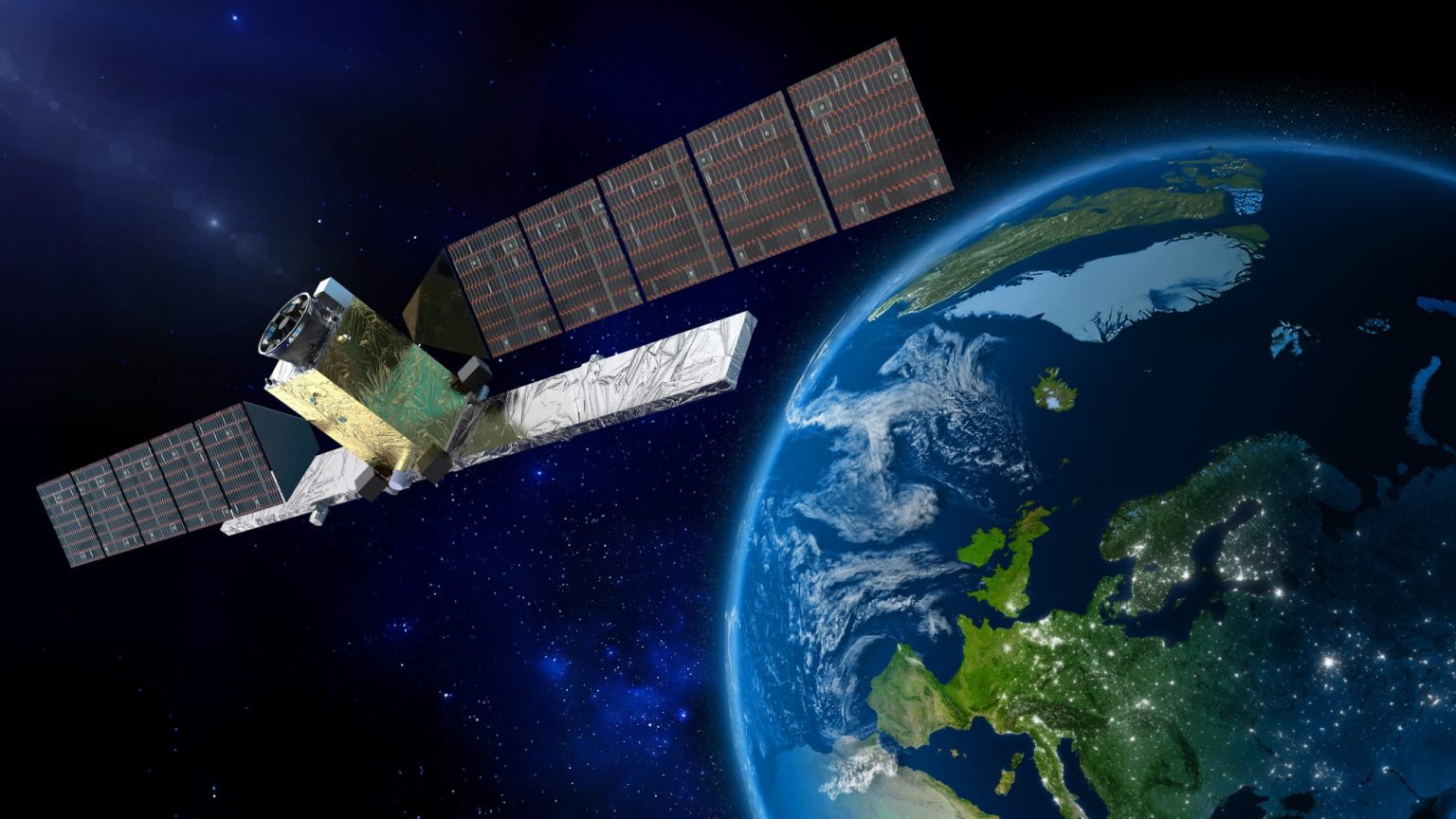
ESA has signed a contract for the construction of two new radar satellites for the Copernicus Earth observation program. They will be built by the French company Thales Alenia Space, with the radar units manufactured by Airbus Defence and Space. The first satellite is expected to launch in 2034.
Contract and Cost
Thales Alenia Space has been awarded a contract with an initial tranche of 700 million euros, equivalent to approximately 807 million dollars. Neither the company nor the ESA has disclosed the total value of the contract.
Airbus Defence and Space will manufacture the radar units for the satellites under a separate contract worth €345 million. The two companies have already collaborated on previous satellites in the Sentinel-1 series.
Performance improvements
The new satellites will be equipped with a synthetic aperture radar featuring improved geometric resolution. While the resolution of previous satellites was 5 × 20 m, that of Sentinel-1 NG will be 5 × 5 m.
The swath width will also increase from 250 to 400 km. In addition, the new satellites will be able to conduct observations in polar regions thanks to active beam steering.
Launch dates
Airbus expects to launch its first satellite in 2034. ESA has not officially announced a date, but the satellites will not be ready until the early 2030s.
The new Sentinel-1 NG satellites will be the fifth and sixth in the series. Three of their predecessors are currently in orbit: Sentinel-1A, Sentinel-1C, launched in December 2024, and Sentinel-1D, launched in November 2025. Sentinel-1B failed at the end of 2021.
Copernicus Program
The Sentinel-1 series is part of the Copernicus program, which is jointly implemented by ESA and the European Commission. It provides Earth observation using a wide range of tools for monitoring the marine environment, mapping land areas, and responding to emergencies such as floods and earthquakes.
The program has been in existence for over a decade. Sentinel-1A has been in orbit for more than ten years, but the new satellites will significantly expand its capabilities.
According to spacenews.com

