

ESA has published a radar image of the Moon obtained by the JUICE spacecraft. It is interesting because it shows the same area of the surface as the iconic photo taken in 1968.
JUICE radar testing
In 2023, ESA launched the JUICE mission, targeting Jupiter’s three largest icy moons: Europa, Callisto, and Ganymede. The spacecraft will study these moons and determine the characteristics of the oceans hidden beneath their surfaces.
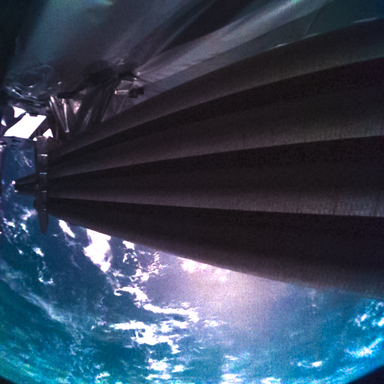
On its way to Jupiter, JUICE will perform a series of gravity maneuvers. The first one took place in August 2024, when the spacecraft first flew past the Moon and then Earth. ESA used this opportunity not only to change JUICE’s orbit, but also to test its scientific instruments in real conditions.
One of the proven instruments is the RIME (Radar for Icy Moon Exploration) radar, designed to study the interior of moons. ESA had previously encountered problems with it when, shortly after the station was launched, the radar antenna jammed. It was only possible to disclose it through considerable effort. Another unforeseen complication was that electronic interference from other devices in the apparatus significantly complicated the operation of this sensitive instrument. ESA engineers spent many months developing an algorithm to solve the problem.
Famous part of the Moon
During its flyby of the Moon, RIME had eight minutes for observations, while other instruments were either turned off or switched to silent mode. It managed to obtain a radar image of the surface showing its elevation. It clearly matches the elevation of the terrain on other lunar relief maps obtained using laser altimeters. This means that despite all the technical difficulties, the JUICE radar coped with its task.
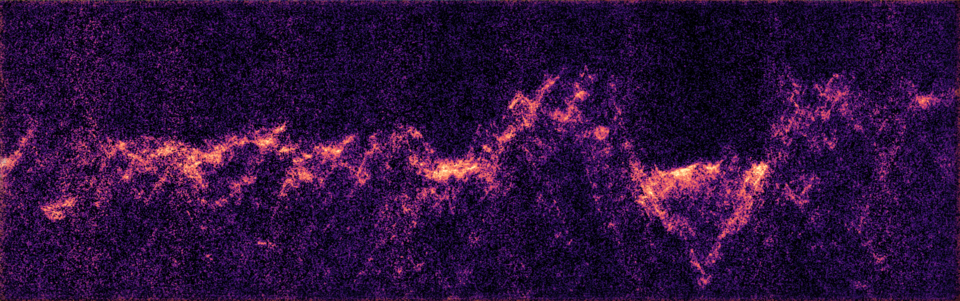
The result obtained by JUICE has an interesting feature. It shows the same region that astronaut William Anders photographed on December 24, 1968, during the Apollo 8 mission. The photo, which instantly became iconic, captured the Earth rising above the lunar surface.
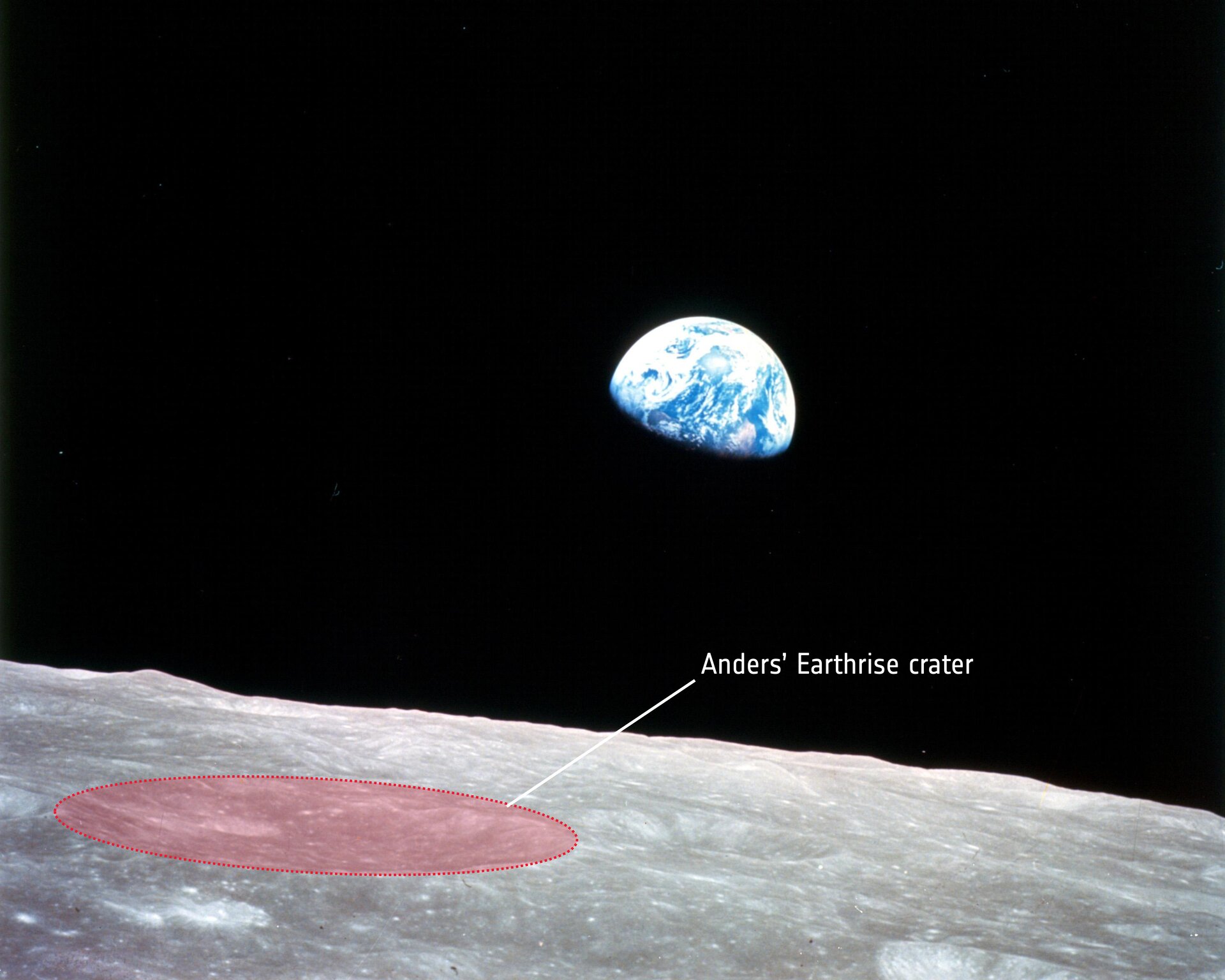
Later, the largest crater in the foreground of the image (with a diameter of 40 km) was named “Anders’ Earthrise.”
According to ESA

