

For more than 40 years, one NASA photograph has continued to delight and frighten at the same time. It shows astronaut Dale Gardner floating freely in the depths of space without any safety equipment that would help him return to the spacecraft in case of an emergency. No cables, just boundless darkness, the curvature of the Earth, and the enormous satellite he headed toward. This photograph, taken in 1984, still amazes us today with its eerie boldness.
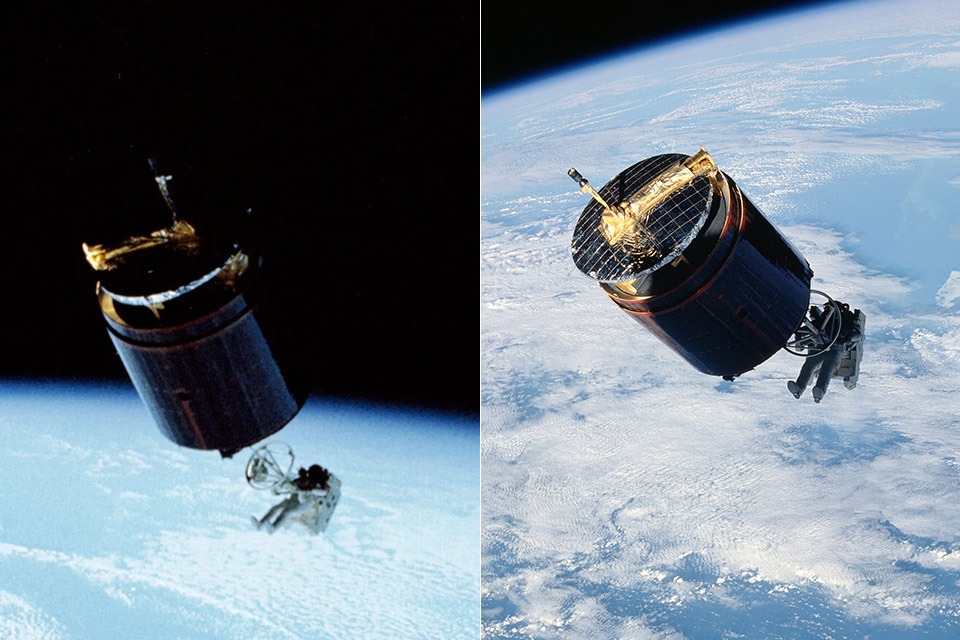
In November 1984, Space Shuttle Discovery (STS-51A) was launched with a unique mission: to rescue two communications satellites, Westar 6 and Palapa B2, which had failed to reach their correct orbits, and to launch two new ones into orbit. This operation, dubbed Two up, Two down, was unprecedented. The astronauts, led by Frederick Hauck, along with Dale Gardner, Anna Fisher, David Walker, and Joseph Allen, were to become space rescuers.
Jetpack on a back and Stinger in hands
To save them, NASA used revolutionary maneuverable jetpacks (Manned Maneuvering Units, or MMUs), which allowed astronauts to move freely in open space. The key tool was the Stinger, a special rod for capturing satellites. The plan seemed ambitious but extremely dangerous, like something out of a science fiction movie.
Approaching Palapa B2, Joseph Allen, equipped with an MMU, was the first to enter open space. It flew freely more than 300 km above Earth and stopped the satellite’s rotation using Stinger. Then Anna Fisher, operating the Canadarm arm, moved Allen with the satellite above the cargo compartment. There, Gardner attempted to mount Palapa. When the first method failed, they quickly switched to the backup plan: Allen held the satellite while Gardner installed the mount. The first part of the mission was completed in six hours.
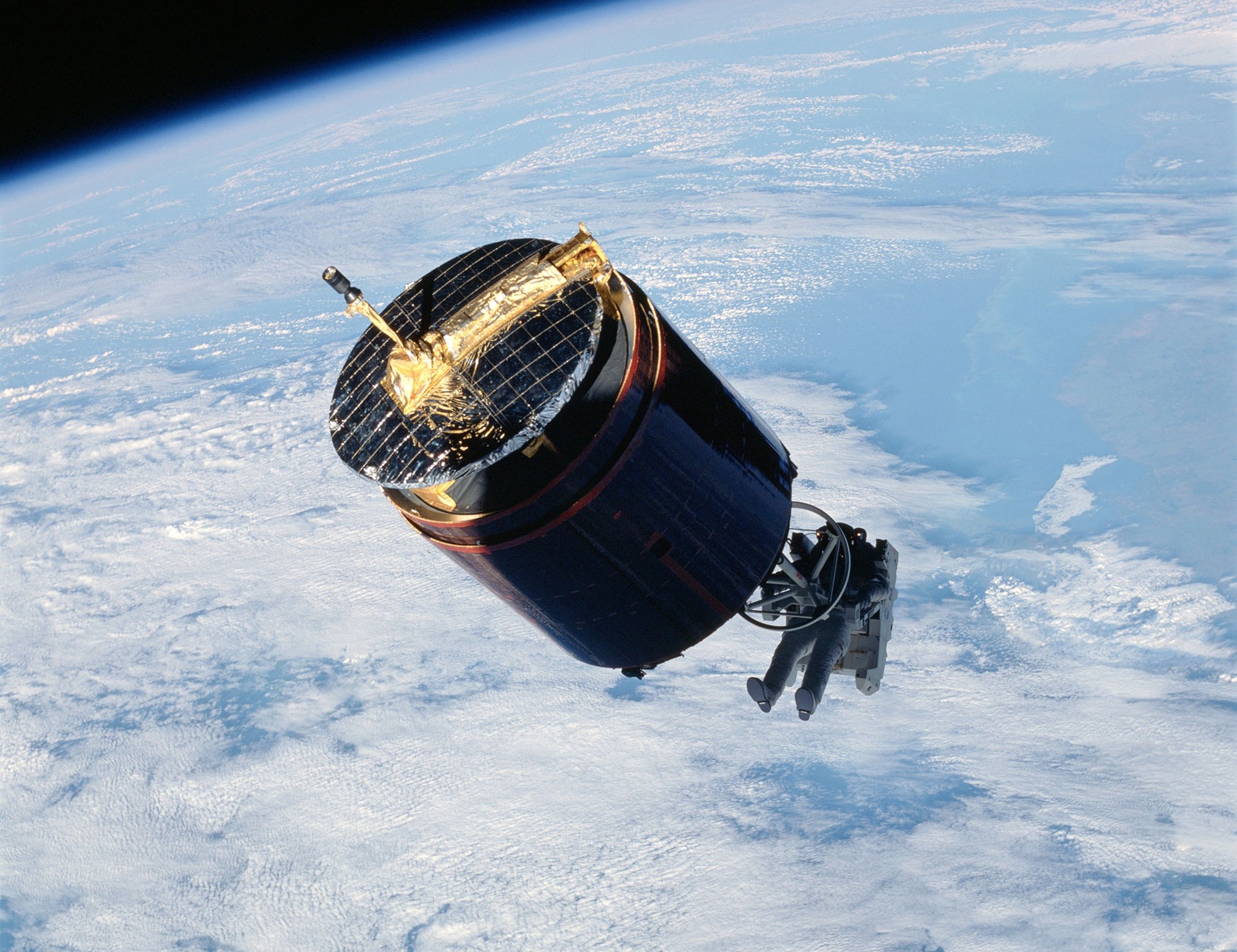
On the seventh day of the mission, the roles were reversed. Now Dale Gardner put on the MMU and headed for the Westar 6 satellite. It was the moment when he was captured in the famous photograph — a small figure against the backdrop of a giant vehicle and endless space. Repeating the maneuvers with Allen, they used the Westar antenna for support and successfully fixed it in the cargo compartment in 5 hours and 42 minutes. The rescue mission was a complete success.
Legacy without a rope: MMU’s last dance
The STS-51A mission proved that returning satellites from orbit is possible. But it was the last one to use MMUs for spacewalks without being tethered to the spacecraft. The risk proved too great. It was only in 1994 (STS-64) that astronauts stepped outside without a tether again, but this time with the compact SAFER safety system. Since then, all spacewalks have been accompanied by insurance, and SAFER remains an emergency measure.
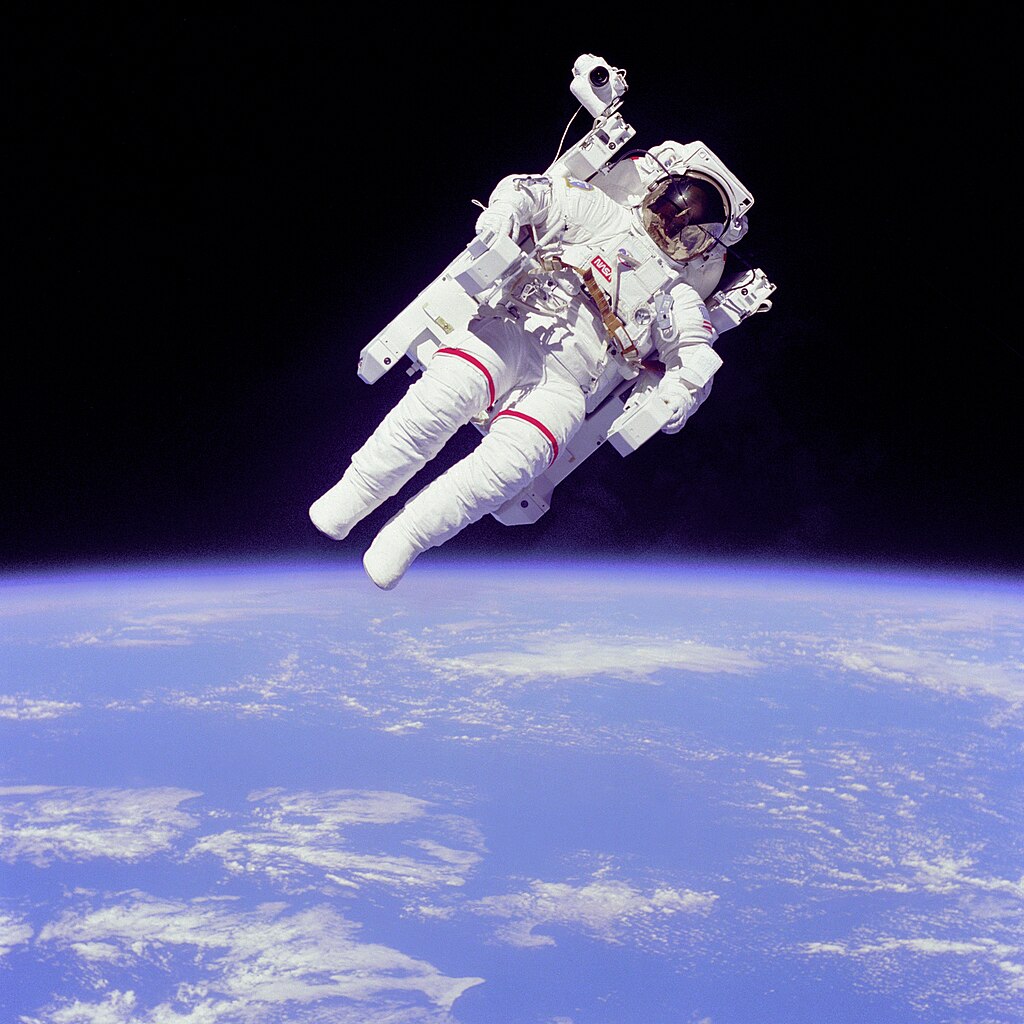
Dale Gardner died in 2014, but his image as a fearless space traveler, frozen against the backdrop of Earth, remains forever etched in the history of space exploration as a symbol of human courage and technological prowess. His flight remains one of the most dangerous and impressive achievements in space.
Earlier, we reported on how the most distant photograph of Earth from space was taken.
According to unilad.com

