

The James Webb Space Telescope (JWST) has discovered an unexpectedly high number of large, bright galaxies in the very early Universe, which formed only 180-270 million years after the Big Bang. Their number initially confused scientists: there were many times more than the models had predicted. This raised the question: should we radically rethink cosmology?
Sensational statement
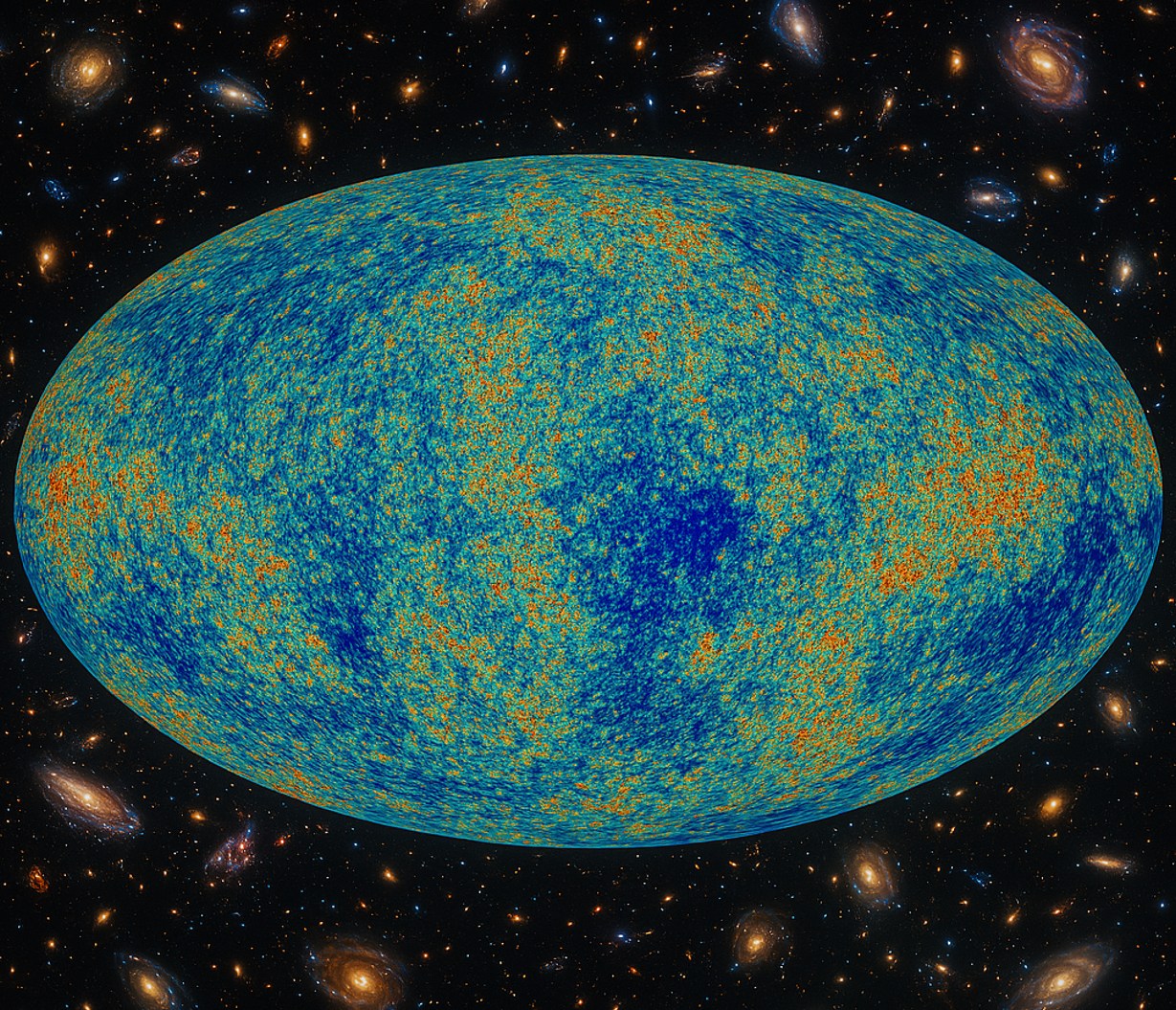
Recently, a bold idea has emerged in scientific circles: the light from the first formed galaxies could be the source of energy for cosmic microwave background radiation. The authors of the article argue that the traditional picture of the formation of the Universe cannot explain the large number of galaxies observed by the James Webb. In fact, the discovery of the telescope literally “destroys” many theoretical models.
Scientists suggest that giant clouds of matter actually collapsed really early, forming these galaxies, and their energy could have been anywhere from 1.4% to 100% of the microwave background energy, considered to be an “echo” of the Big Bang.
Destroying the myth
Although the galaxies found by JWST are real and interesting, the idea that they have a big impact on the CMB has some serious issues.
Firstly, the light from these galaxies is predominantly ultraviolet, visible light, and near-infrared radiation. Even in its early stages, it has a temperature of only about 40-60 K. Nowadays, the microwave background is almost perfect blackbody radiation with a temperature of 2.7 K. For starlight to become background radiation, it has to be absorbed and perfectly re-emitted by a uniformly distributed substance as a black body at the exact temperature of that era. That’s incredibly unlikely.
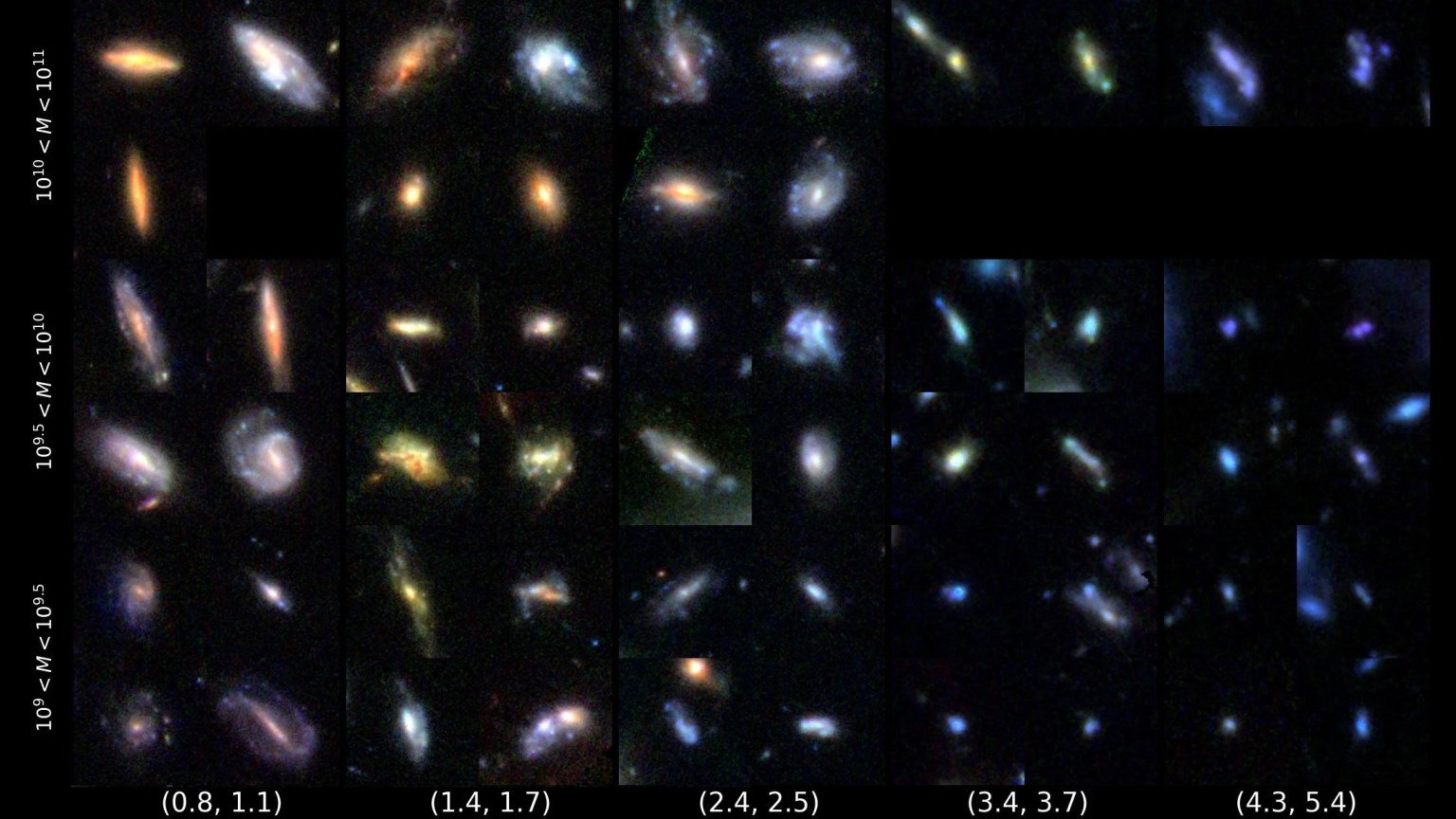
Secondly, there is a problem with dust. Cosmic dust, capable of absorbing and re-emitting starlight, was only available in massive galaxies in the early Universe, with a stellar mass of more than 300 million solar masses, which were in the minority – only ~10% of all galaxies in the first 550 million years. It was concentrated in galaxies rather than evenly distributed. In addition, dust heats up very unevenly, emitting in a wide range of temperatures, rather than like an ideal black body.
Thirdly, there is a significant discrepancy. The smallest temperature fluctuations that we measure in microwave background radiation using modern telescopes have a field of view of about 1 arcminute. Individual early galaxies observed by JWST occupy less than 1/100 of an arcminute in the sky. Their influence on microwave background fluctuations, which cover significantly larger areas of space, would be less than 1/10,000 — that is, completely imperceptible.
The theory of microwave background radiation remains unchanged
Of course, the galaxies found by James Webb are an exciting discovery that made scientists rethink their models. Their unexpected abundance can be explained by a combination of factors: the higher quality of JWST, the formation of structures in the rarest superdensities earlier than modeled, bursts of star formation, and the influence of active black holes. However, they are not an alternative to relic radiation. Their light has an irregular spectrum, it is emitted at irregular scales and cannot uniformly “pollute” the radiation that we see.
Microwave background radiation remains the best evidence of the hot early Universe and its evolution after the Big Bang. The sensational claim that it is a “fake” made by early galaxies, unfortunately, resembles a house of cards rather than a scientific revolution.
Earlier, we reported on the process of the birth of the Universe.
According to Big Think

