

The idea of having children in space sounds like something out of science fiction. However, scientists argue that the issue of protecting the reproductive health of astronauts is not futuristic, but a pressing reality, without which it is impossible to seriously talk about long-term missions to the Moon or Mars, or even further into the Solar System.
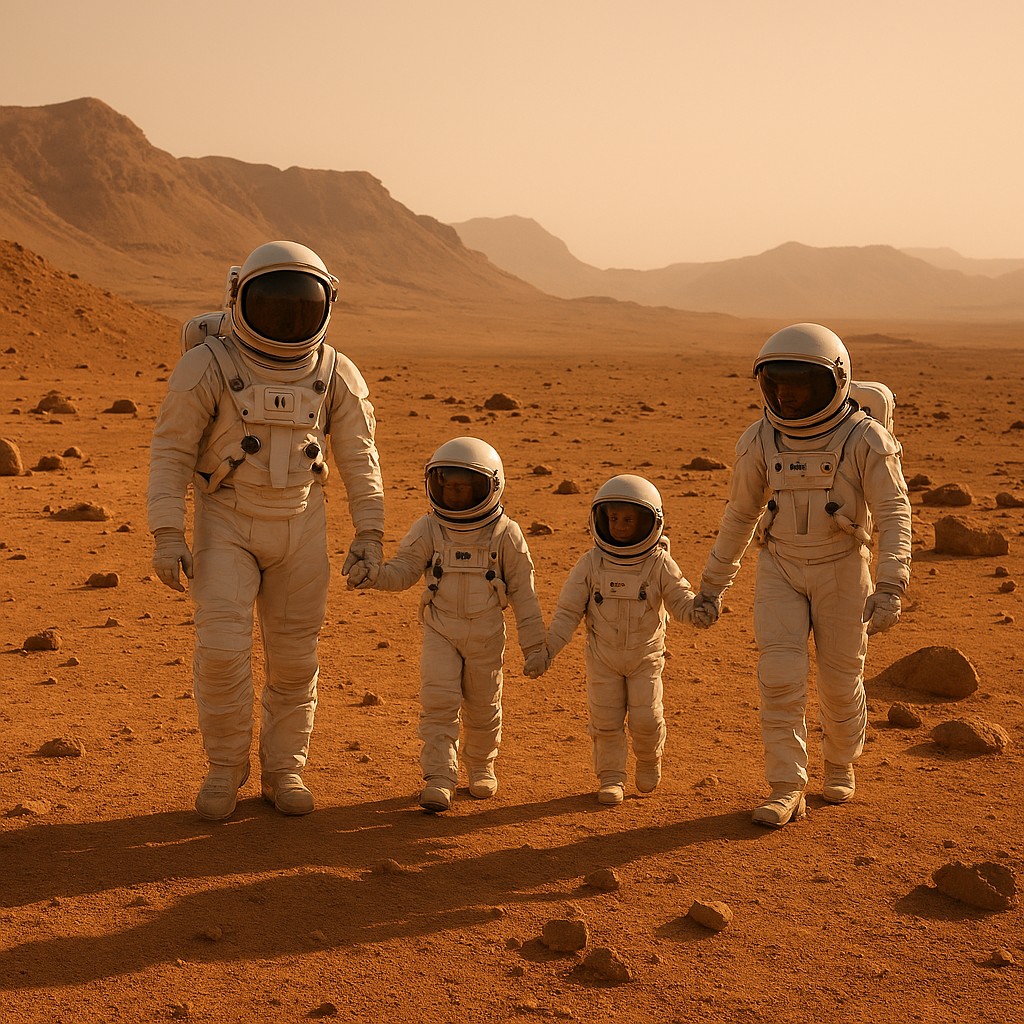
The human body evolved on Earth, so the space environment is hostile to our biology. The two biggest threats are cosmic radiation and microgravity. Radiation can damage the DNA of reproductive cells and increase the risk of cancer, while the absence of gravity disrupts hormonal balance and affects embryo development.
Added to this are toxic dust from other planets, limited resources, stress factors, and disruption of circadian rhythms. In the long term, this poses a risk of cumulative damage to the reproductive system and even epigenetic changes that could affect the health of future generations.
What do we know, and what is unknown?
Scientists currently have too little data to draw definitive conclusions. Only limited animal studies exist. Information from astronauts who have been on long missions is insufficient. It is unknown how exactly prolonged stays outside Earth affect male fertility and female reproductive health.
That is why a group of experts led by clinical embryologist Giles Palmer is calling for a comprehensive research program to be launched immediately. “It is very important to prepare for fertility risks as interest in lunar missions and Mars exploration grows,” explains the scientist.
Towards a secure future
Future research should focus on understanding the impact of space factors on each stage of the reproductive process. This will enable the development of effective protective measures, ranging from special radiation shields to fertility preservation methods and medical countermeasures.
Advanced reproductive technologies, particularly those utilizing artificial intelligence and automation adapted for use in space, will play a key role.
It’s time to act now
Science does not plan to send pregnant women into space for experiments. Research will be conducted on Earth under simulated conditions. However, it is already necessary to establish international ethical principles to regulate this area. The priorities should be informed consent, transparency, gender equality, and absolute protection of the health of future generations. This is not only a matter of science, but also of responsibility for the future of humanity beyond our planet.
Reproduction in space remains a distant prospect, but planning has to start today. Overcoming reproductive challenges is no less important for colonizing the solar system than developing powerful rockets or life support systems. The future of space civilization depends on how we now move to protect what is most precious — human life in all its potential for continuation.
We previously reported on the dangers of sex in space.
According to space.com

