

The return of human spaceflight to the Moon is not only a spectacular launch, but also a rare opportunity to see how a heavy-lift lunar rocket works from the inside. Let’s analyze the fuel consumption during the Artemis II launch: from ignition on the launch pad to the separation of the solid-fuel boosters, the depletion of liquid hydrogen and liquid oxygen supplies in the SLS core stage, and the transition to the next phase of the Orion flight. The Artemis 2 mission was launched on April 1, 2026, marking the first crewed mission of the Artemis program and the first human flight around the Moon in more than 50 years.
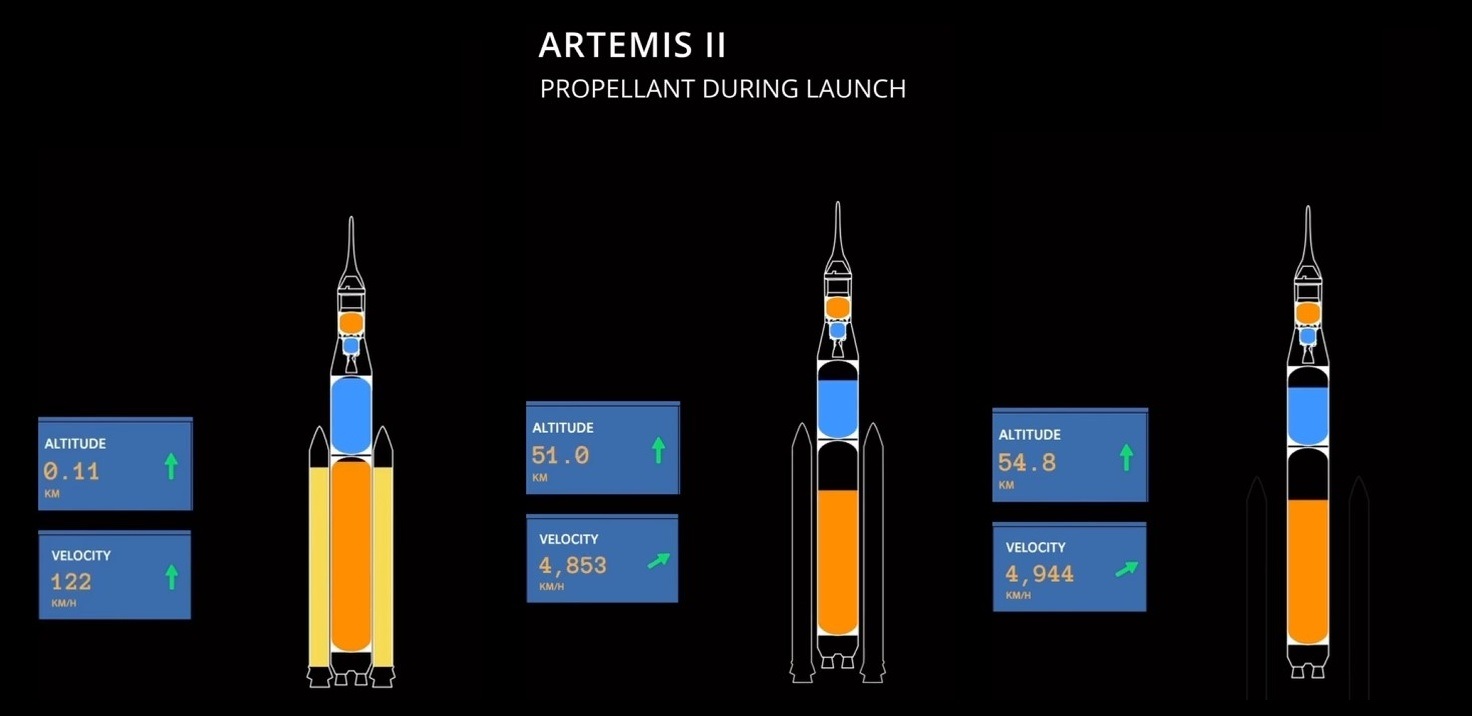
Visualization of fuel consumption by NASA’s Space Launch System (SLS) during the initial phase of the Artemis II mission. The image on the left shows the moment immediately after launch: altitude—0.11 km, speed—122 km/h; the solid-fuel boosters and the first stage are operating with a full fuel load. In the center is the next stage of ascent: altitude—51.0 km, speed—4,853 km/h; there is a noticeable decrease in fuel reserves in the side boosters and the central stage. On the right is the stage just before the boosters separate: altitude—54.8 km, speed—4,944 km/h; the solid-fuel boosters are nearly out of fuel, while the core stage continues to accelerate the Orion spacecraft on its way to the Moon.
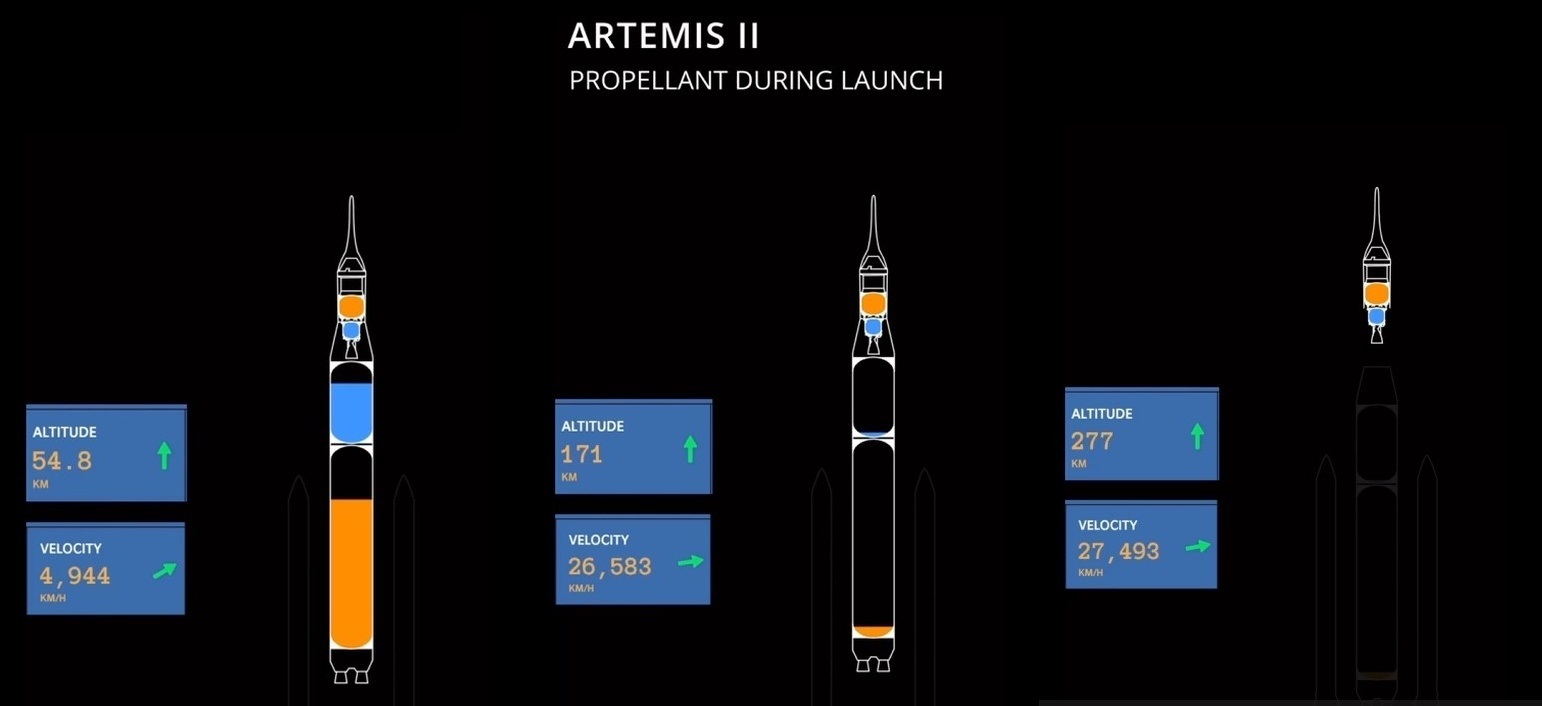
Next: fuel consumption as the NASA Space Launch System (SLS) rocket continues to accelerate during the Artemis II mission. The image on the left shows the stage following the separation of the solid-fuel boosters: altitude—54.8 km, speed—4,944 km/h; the central stage still contains a significant reserve of liquid fuel and continues to accelerate the spacecraft. In the center is the late phase of the flight: altitude—171 km, speed—26,583 km/h; the central stage’s fuel reserves are nearly depleted, and the rocket is entering the final stage of its operation. On the right is a moment after the Orion spacecraft separated: altitude—277 km, speed—27,493 km/h; the first stage has nearly completed its mission, while Orion continues its independent flight to the Moon.
How does it work? As shown in the image, at launch, the greatest thrust is provided by two large solid-fuel boosters, which operate for approximately the first two minutes of flight, after which they separate to avoid carrying excess weight. The flight then continues with the SLS core stage, equipped with four RS-25 engines powered by liquid hydrogen and liquid oxygen, which accelerate the spacecraft even further. At around the 8-minute mark, the main engine shuts down and the central stage separates; control then passes to the ICPS upper stage, powered by the RL10 engine: first, it guides Orion into a safe low-Earth orbit, and then prepares the spacecraft for the onward journey to the Moon.

