
Microgravity conditions dictate their own rules. Fragile products are prohibited — their small particles pose a threat to equipment. Liquids pose a particular hazard: stray drops can damage electronics. How do astronauts solve the seemingly simple hygiene task of washing their hair while spending months in space?
Sunday was hair wash day! pic.twitter.com/NsTlQDQIzb
— Nichole “Vapor” Ayers (@Astro_Ayers) August 4, 2025
NASA astronaut Nichole Ayers, who arrived at the ISS in March 2025, recently demonstrated this process. “It’s similar to the process on Earth, but without gravity pulling the water down,” she explains.
To wet long, thick hair, Ayers uses a special water bag equipped with a one-way valve. This allows for precise control of the fluid flow. To prevent water droplets from flying into the air, she presses the tube firmly against her scalp before releasing the water, directing it first onto the ends of her hair.
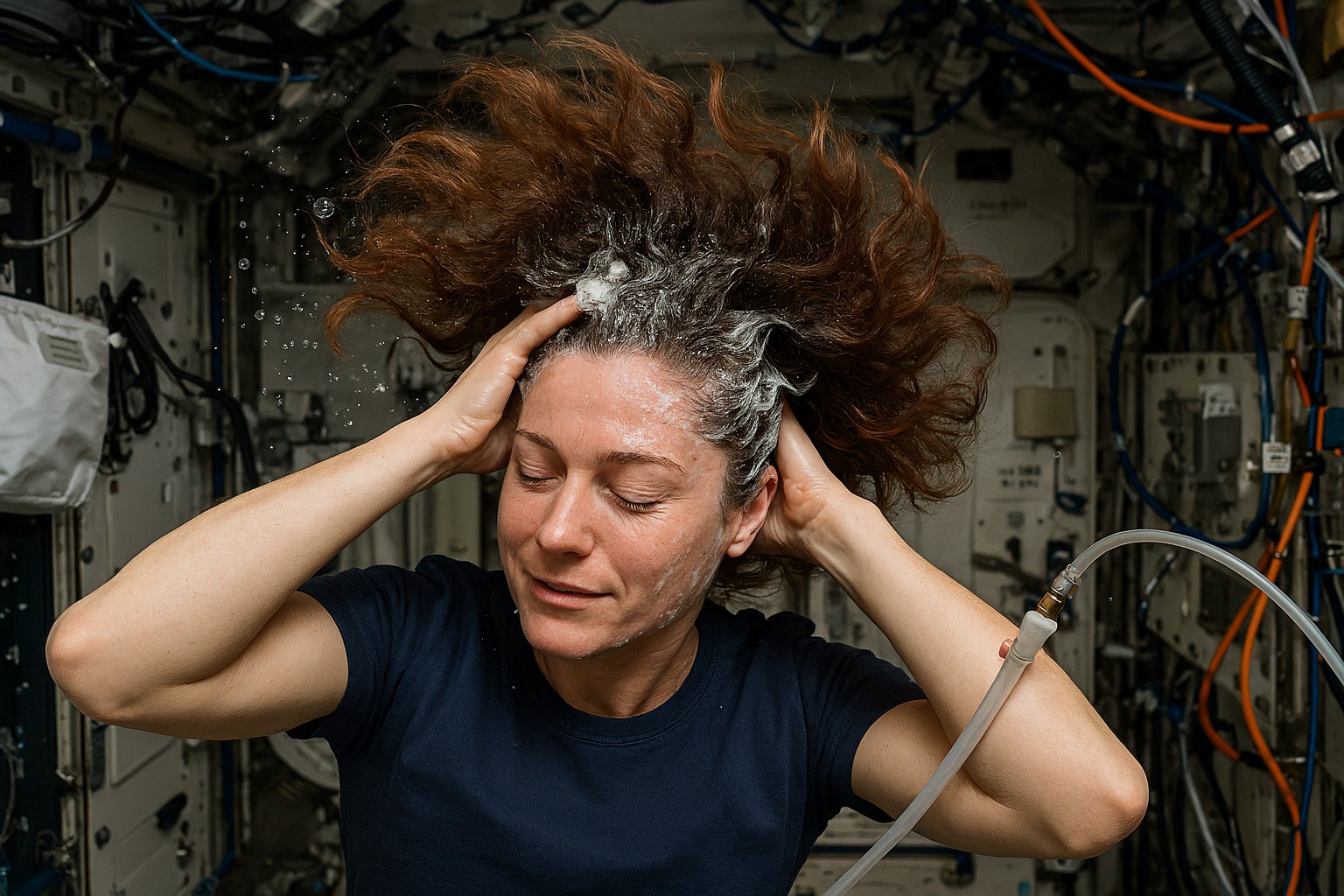
Despite all efforts, the hair only gets wet on the surface. But this is enough to apply shampoo in the form of a solid bar and start washing. When rinsing, Ayers focuses on the scalp. After quickly drying her hair with a towel, the astronaut adds a little conditioner, combs her hair, and lets it dry naturally.
Where does the water go after washing? “It evaporates, enters the air, and humidifies it. Then we will return it by condensation. Perhaps tomorrow this water will become someone’s coffee,” Ayers remarks humorously, alluding to the closed water recycling system on the ISS.
This process is just one of many ordinary yet extraordinary aspects of life in orbit. You can learn more about the daily life of astronauts, including complex toilet procedures, from videos shot by the ISS crews themselves.
Earlier, we reported on how a NASA astronaut invented a funny way to put on pants on the ISS.
According to Digital Trends

