

An international team of researchers from the University of Edinburgh and Cornell University has made a breakthrough in space biotechnology. As part of the BioAsteroid project, they sent not ordinary astronauts to the International Space Station (ISS), but tiny helpers — bacteria and fungi. The goal of the experiment was ambitious: to find out whether microorganisms could extract valuable metals from asteroids in zero gravity as efficiently as they do on Earth.
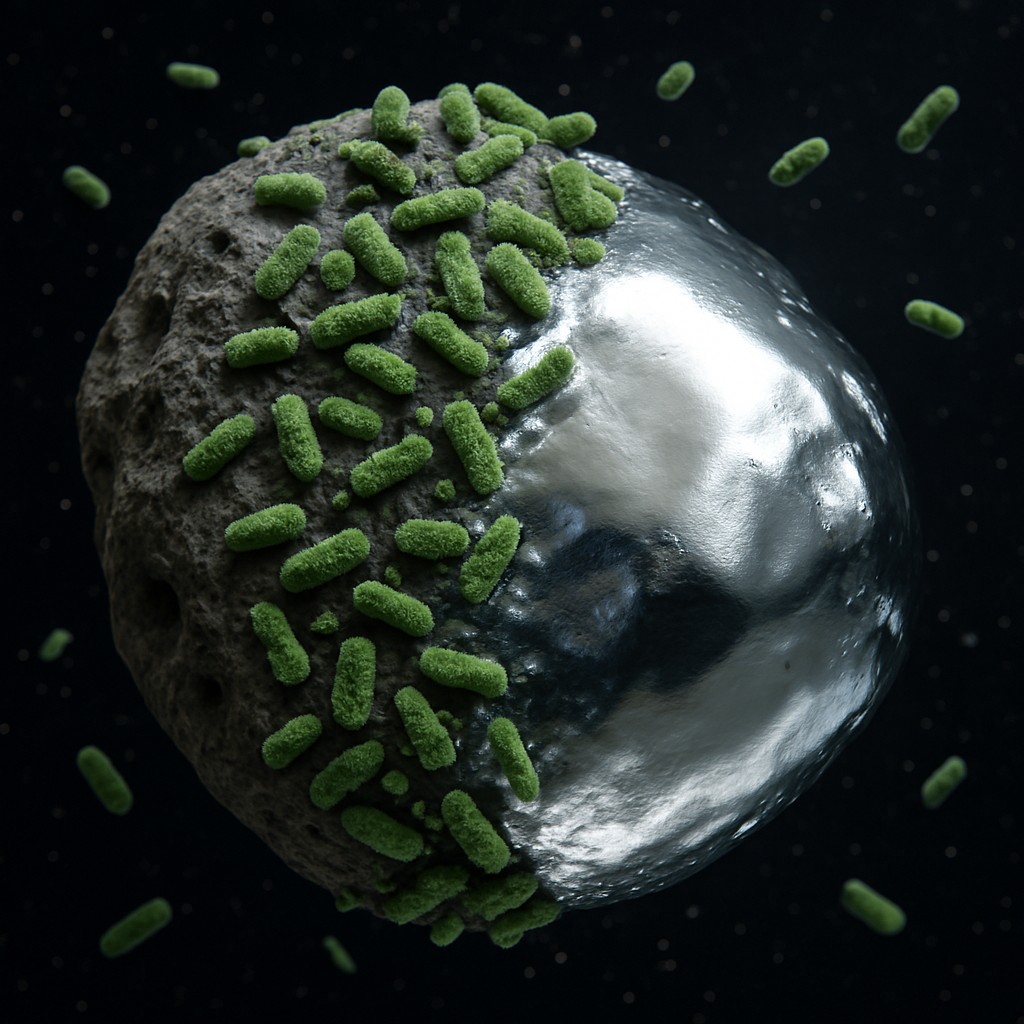
Scientists selected two different types of “workers” for the mission: the bacterium Sphingomonas desiccabilis and the fungus Penicillium simplicissimum. These microbes are known for their ability to produce carboxylic acids — a kind of “chemical tweezers” that detach metal atoms from rock. A piece of meteorite (L-chondrite) was used as test material to simulate asteroid rock.
“This is probably the first experiment of its kind on the ISS with a real meteorite. It was important for us to understand not only what microbes can extract from it, but also how they do it in space, because almost nothing is known about their behavior there,” notes Dr. Rosa Santomartino, a researcher at Cornell University and the University of Edinburgh.
Weightlessness is not an obstacle
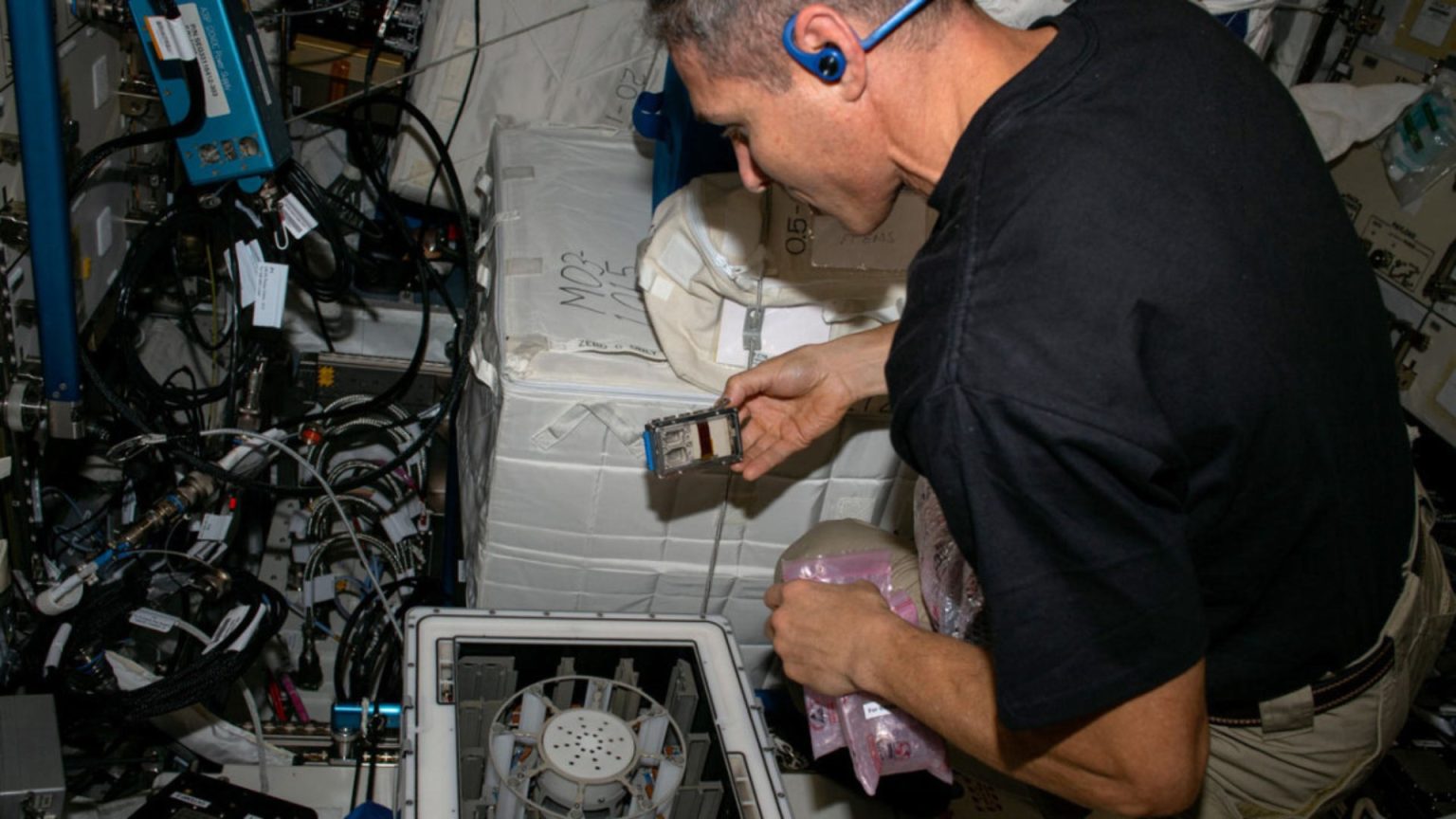
NASA astronaut Michael Scott Hopkins conducted a series of experiments with microorganisms aboard the station. At the same time, a control group of scientists replicated the same experiment in a laboratory on Earth to compare the effects of gravity.
The results were unexpected and promising. Overall, the microbes were able to release 18 different chemical elements out of the 44 analyzed. Analysis of metabolomes (sets of biomolecules) has shown that the metabolism of microorganisms changes in space. Fungi proved to be particularly active: they increased the production of carboxylic acids and, as a result, intensified the release of valuable metals, in particular palladium and platinum.
Cosmic stability
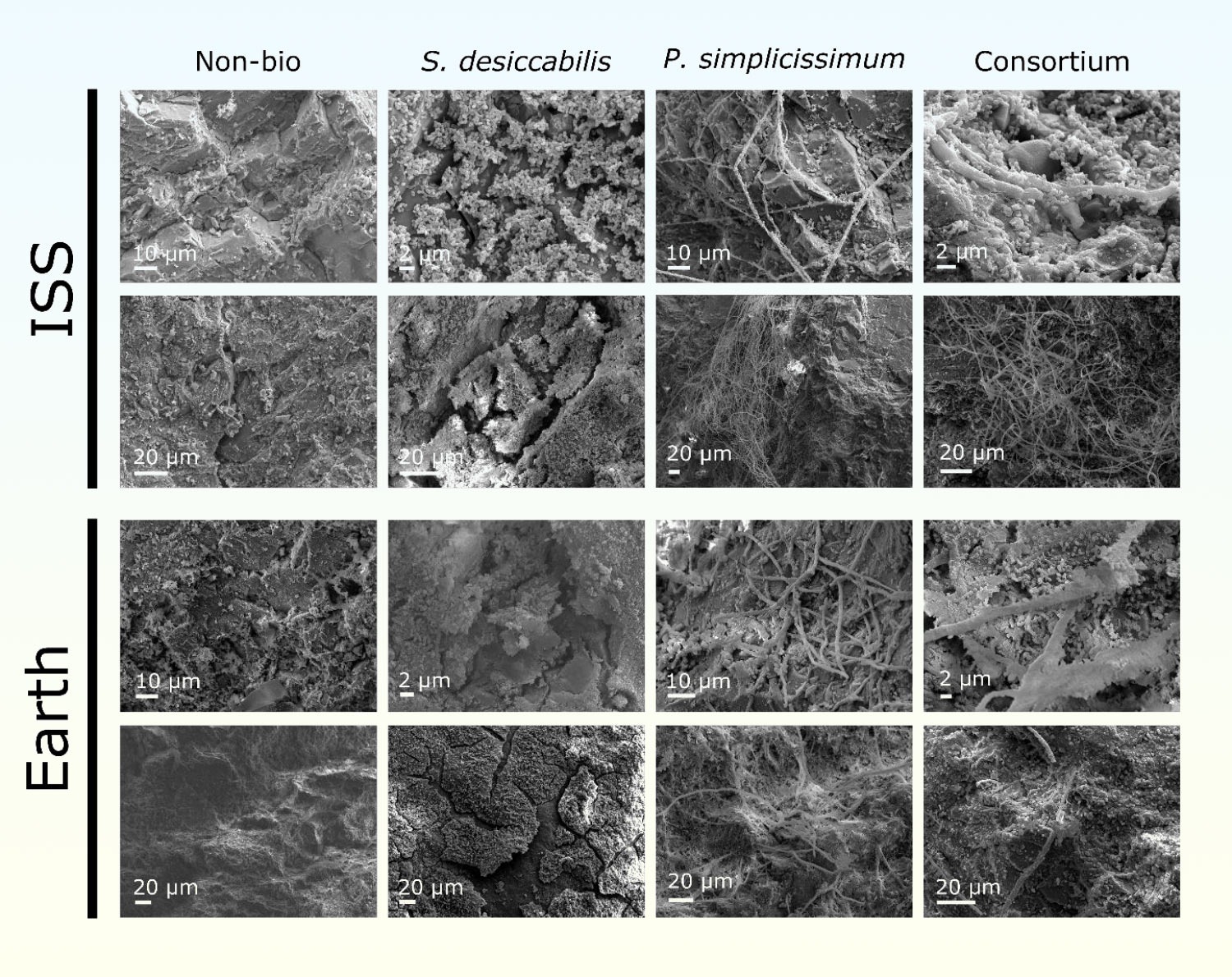
The most interesting discovery was the difference in the effectiveness of “extraction.” For many elements, normal (non-biological) leaching in microgravity worked less effectively than on Earth. However, where microbes were at work, the result remained consistently high regardless of gravity.
“In some cases, microbes do not accelerate the process, but they make it stable. And this applies not only to palladium, but also to various other metals,” explains Dr. Santomartino. Dr. Alessandro Stirpe, co-author of the study, adds: “We saw a clear picture: the extraction rate is highly dependent on the type of metal, the type of microorganism, and even gravitational conditions. This opens up a huge field for further research.”
The results of this unique experiment, published in the journal npj Microgravity, prove that bacteria and fungi are quite capable of becoming the basis for future biotechnological factories in orbit, extracting resources directly from asteroids for the needs of space colonies.
We previously reported on how bacteria can withstand conditions similar to those found in space.
According to Sci News

