

Redwire Corporation has successfully completed the first full-scale deployment of its 60-kilowatt Rollable Solar Array (ROSA) — the most powerful to date — designed to power the Power & Propulsion element of the future Lunar Gateway station in lunar orbit. The test confirmed the system’s operability and its readiness for qualification testing for the space environment.
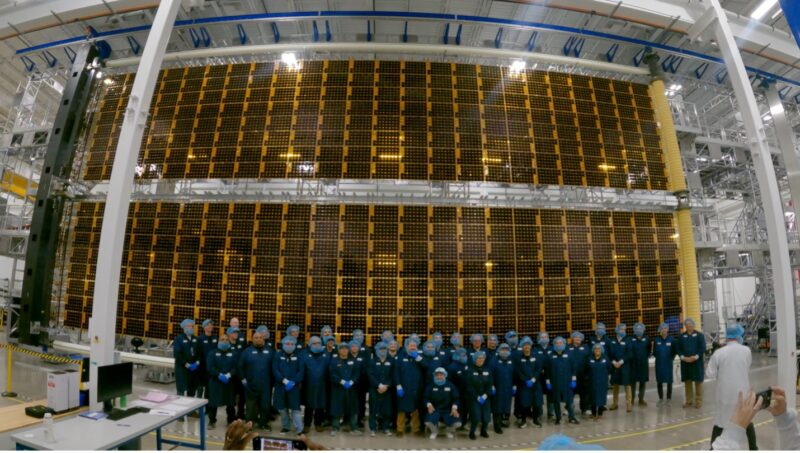
Each ROSA wing consists of composite beams that use stored elastic energy to deploy independently without electric drives. According to the company, the stored power density reaches 40 kW/m³, and the specific power is 100–120 W/kg, making the unit one of the most energy-efficient in its class. This indicator is particularly valuable for orbital platforms, where every kilogram counts.
NASA has commissioned Maxar Technologies to build the Gateway power and propulsion module; Maxar, in turn, has ordered two ROSA wings from Redwire, with delivery scheduled for the fourth quarter of 2025. The combination of high power and low weight will enable the station’s ion engines to be powered, ensuring long-term orbit maintenance and the ability to correct it without unnecessary fuel reserves.
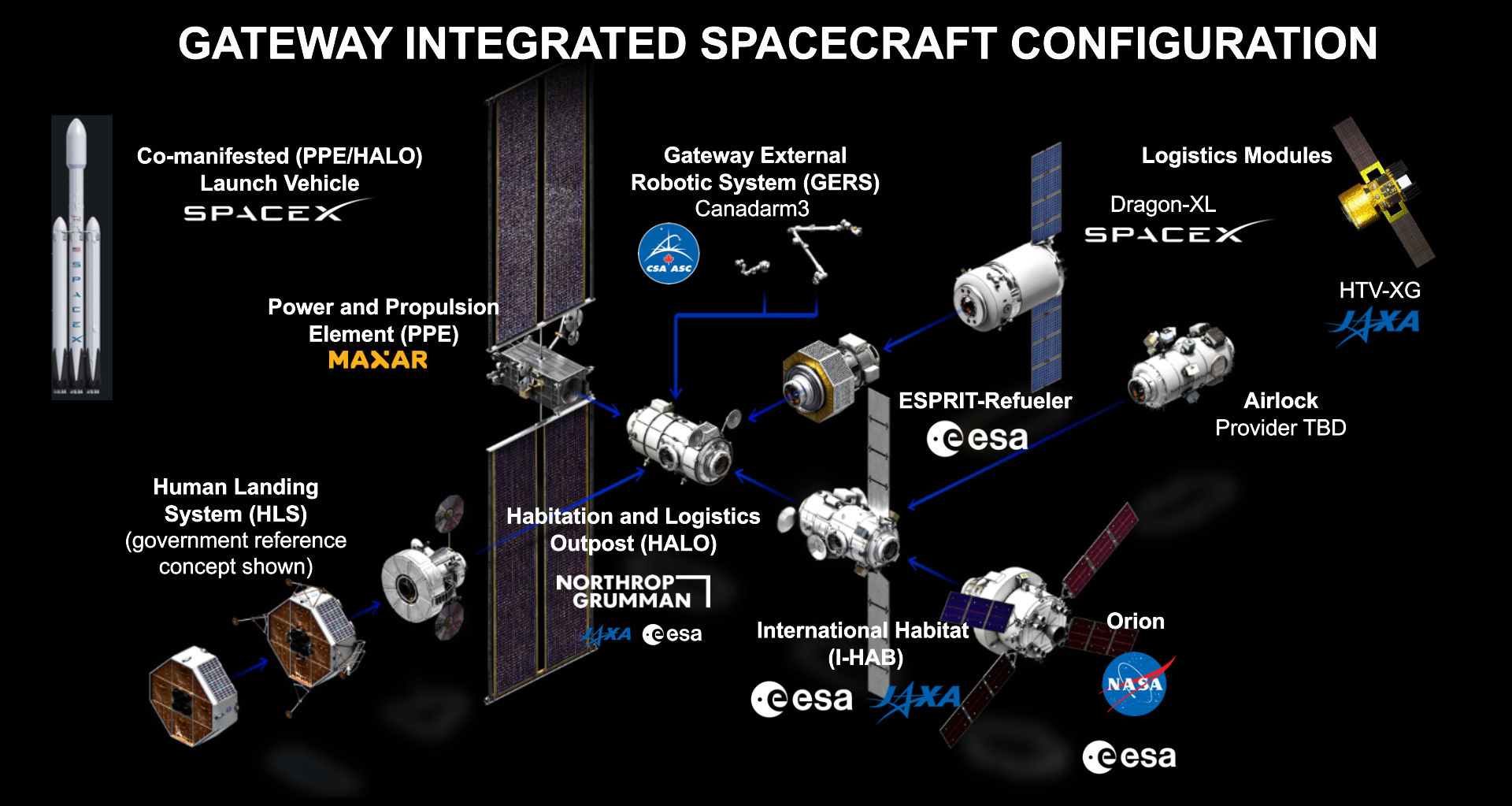
Gateway remains a key element of the Artemis program: a small international station in Near-rectilinear halo orbit (NRHO) will serve as a transit base for landing crews on the Moon’s surface and testing deep space transportation technologies. Despite unstable funding, Congress has maintained its support for the project, and Redwire’s success demonstrates that the industry is moving forward even in times of political uncertainty.
With powerful, lightweight, and compact solar panels available on Gateway, it’s now possible to put big scientific instruments on the station — from super-sensitive radiometers to telescopes for observing wavebands that aren’t accessible in low Earth orbit. A stable power supply and unique position near the Moon will ensure continuous observations without Earth’s shadow, as well as testing of new technologies — a key step on the path to remote observatories on Mars and beyond.
Interested in learning how technologies such as ROSA (Roll-Out Solar Array) solar panels are extending beyond spaceports and changing everyday life? Read our article “Space in every home: how space innovations will change our lives by 2030” and find out what breakthroughs — from ultra-light materials to autonomous energy systems — will soon find their way into your gadgets, homes, and even cities. You will discover that testing in orbit today leads to conveniences on Earth tomorrow.


