

December is often unfairly considered the gloomiest month of the year: short days, leaden skies, and endless pre-holiday hustle and bustle. But it is precisely when the nights become longest and darkest that space prepares a grand gift for us. The main headliner of the 2025 winter astronomical season is the majestic Geminid meteor shower, which, in terms of its spectacularity and scale, eclipses even the famous August Perseids.
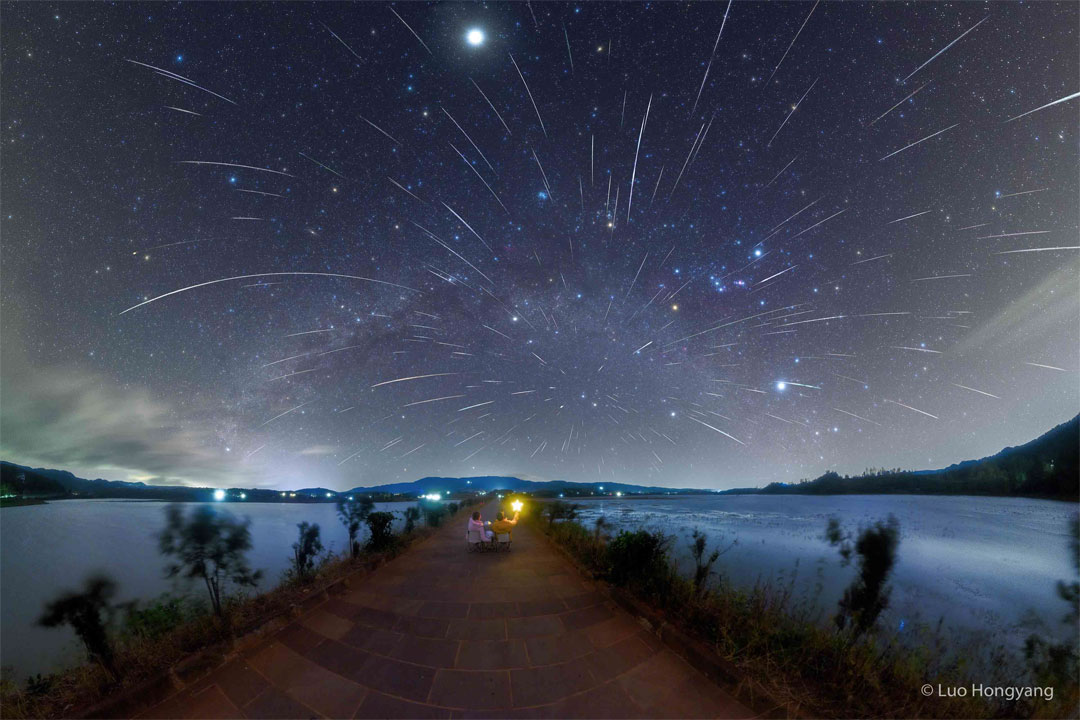
Image Credit & Copyright: Hongyang Luo
If you are ready to brave the night frost for the sake of heavenly beauty, you are incredibly lucky. This year’s show promises to be so intense that it is worth escaping the city for it. After all, it is in winter that the transparency of the cold air is often perfect, allowing you to see the meteor shower in all its stunning detail.
The most powerful meteor shower
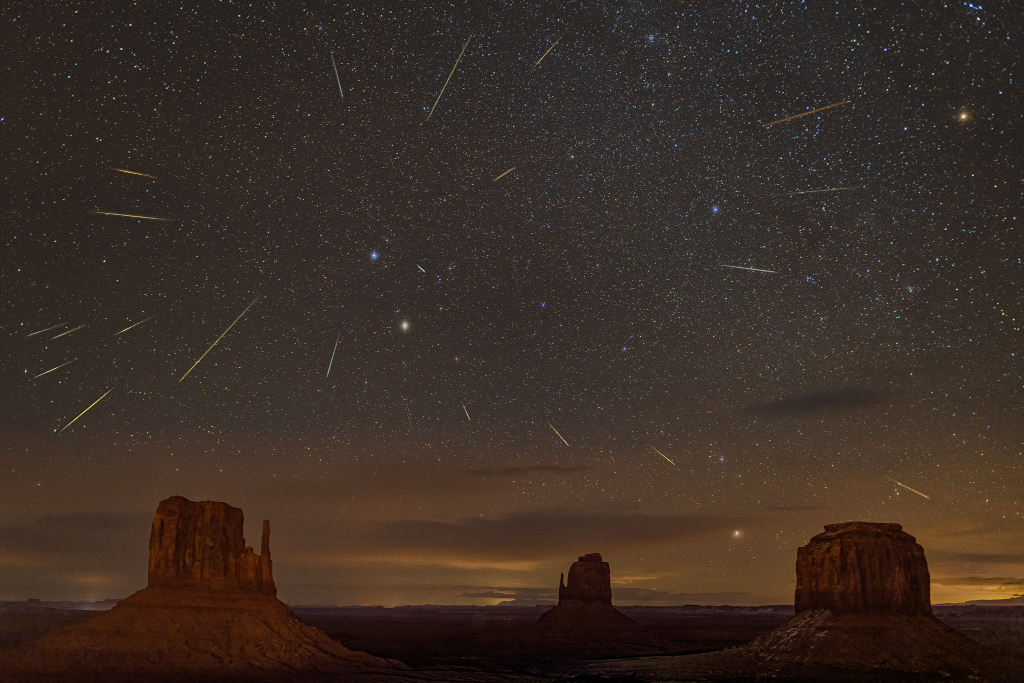
Image Credit & Copyright: Chuck Derus
Why are professional astronomers so excited about the Geminids? The reason is not only the number of flashes, but also the unique physical nature of the phenomenon, which distinguishes it from everything else in the sky.
The legacy of a strange asteroid
Most of the “meteor showers” we know are just loose dust left behind by icy comets as they approach the Sun. Here, the story is radically different. The parent body of this swarm is object 3200 Phaeton. It is a very strange asteroid, resembling an extinct comet with a solid rocky core. Because of this, the particles that fly into the Earth’s atmosphere have a high density. They do not burn up instantly, but pierce the sky deeply, drawing long, slow lines that sometimes even sound like a slight crackling. They are called electrophonic fireballs.
Colorful “aristocrats” and majestic slowness
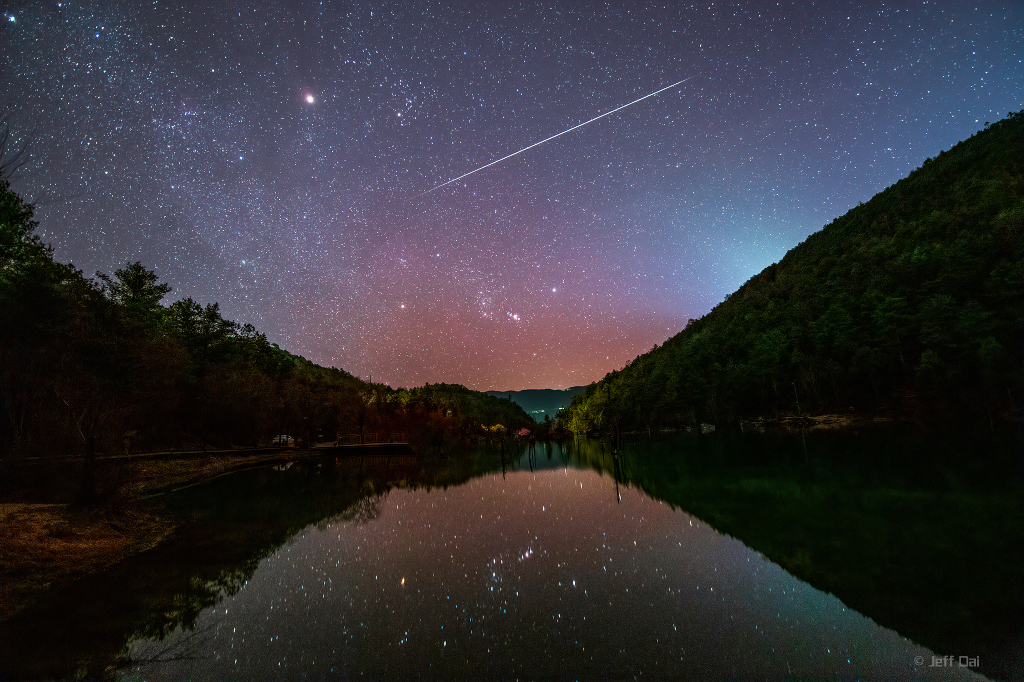
Image Credit & Copyright: Jeff Dai (TWAN)
Another feature is their chemical composition. The Geminid meteor shower is known for its unique variety of colors. While ordinary meteors are usually white, here you can often see yellow, blue, and even rich emerald lights. This is due to the intense burning of sodium and magnesium metals in the rock fragments.
In addition, the Geminids are true “aristocrats.” They are in no hurry. While the summer Perseids fly into the atmosphere at a breakneck speed of 59 km/s, these meteors “float” at a speed of 35 km/s. This gives the observer precious fractions of a second to enjoy the flight and even make a wish.
And there will be plenty of reasons to wish, because the Geminids have an amazing property: unlike other meteor showers, they do not fade over time, but only gain momentum. This is thanks to Jupiter’s gravity, which methodically pulls the asteroid trail closer and closer to our planet. At its peak in 2025, the intensity of the show could reach a fantastic 150 objects per hour, making this winter meteor shower the most active and spectacular in the annual calendar.
When to observe the Geminids
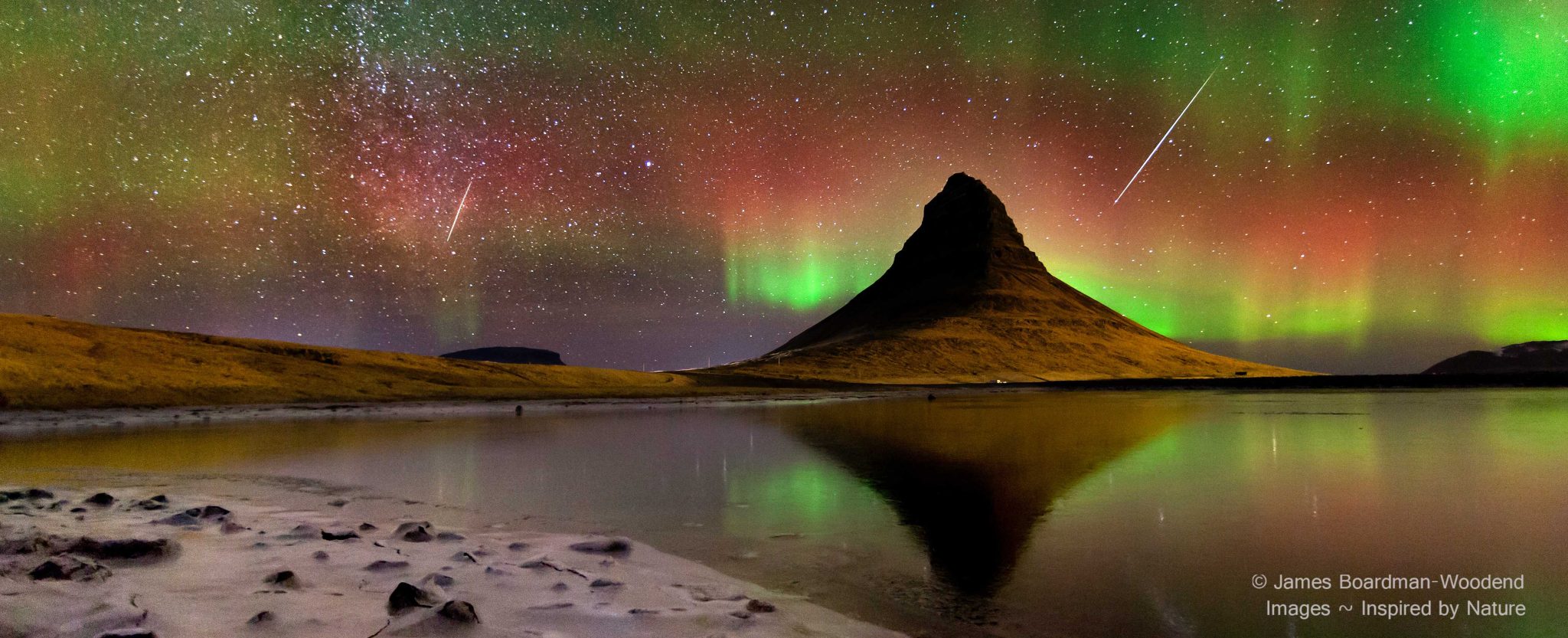
Image Credit & Copyright: James Boardman-Woodend
Although Earth will pass through this wide cosmic trail for almost two weeks – from December 4 to 17 – the key moment for us will be the night of December 13 to 14, when the intensity of the stream will reach its peak.
The perfect time and gift from the Moon
In 2025, celestial mechanics played out the best possible scenario for us. The observer’s main enemy – the bright Moon – will be in its last quarter phase and will only set around 2 a.m. This creates a perfect “window of opportunity”: the evening and the first half of the night will be completely dark.
You can start observing as early as 10:00 p.m. That’s when the radiant (the point of departure in the constellation Gemini) will appear low above the horizon, and you will be able to catch the legendary “Earth-grazers.” These are meteors that enter the atmosphere tangentially, almost parallel to the horizon. They burn long and brightly, crossing the entire sky like signal flares. Such a spectacular meteor shower is rare and looks simply cinematic.
Secrets of successful “hunting”
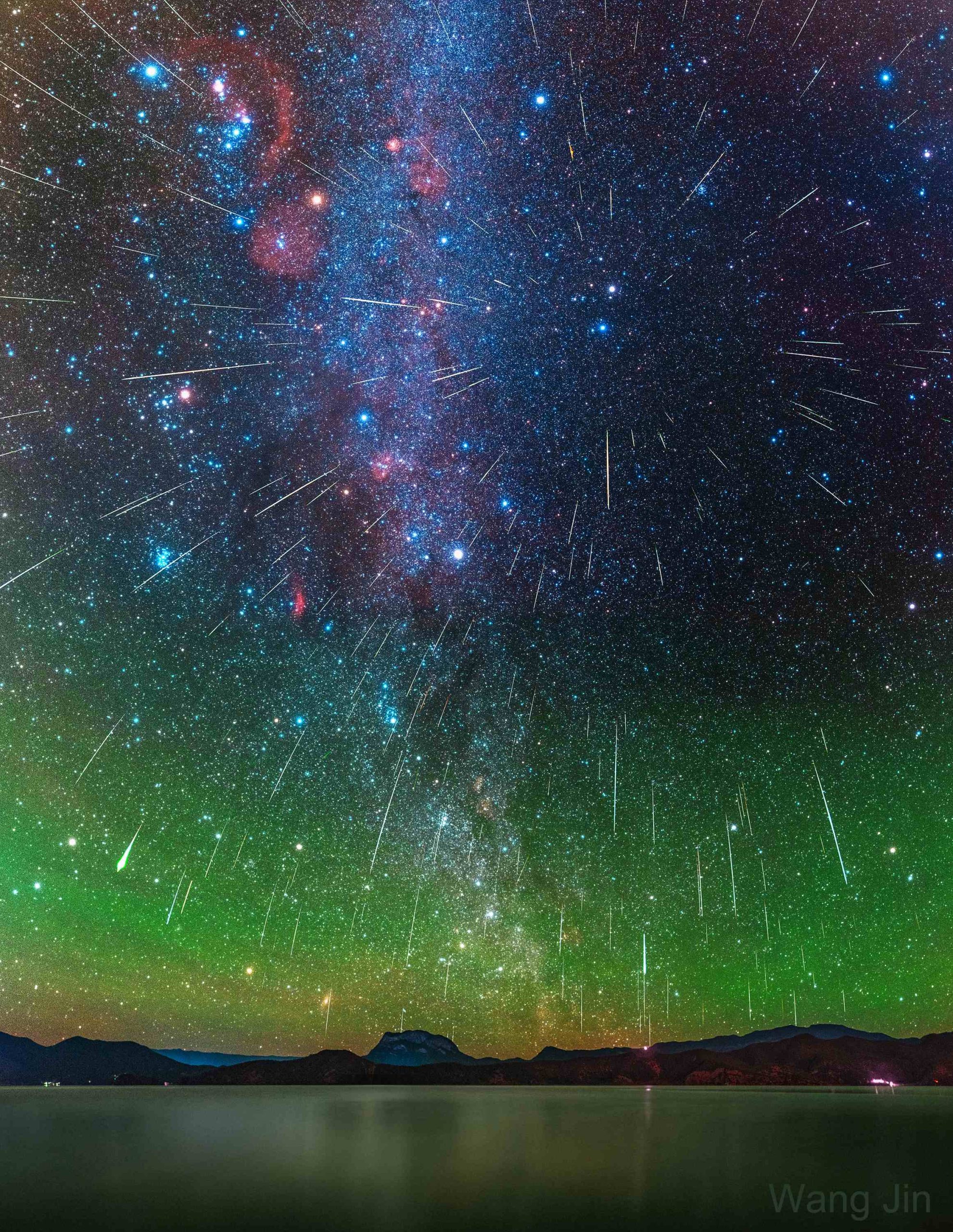
Image Credit & Copyright: Wang Jin
Dress as if it were 10 degrees colder outside than it actually is. Put your smartphone away as far as possible: it only takes a second for the screen to blind you, but your eyes need 20 minutes to readjust to the darkness. If you really need light, take a flashlight with a red filter. It will not disrupt your night vision.
Forget about binoculars and telescopes: they narrow your field of vision, and you need space. The best position is lying on a camping mat so that your neck does not get stiff and your gaze covers as much of the sky as possible. If you plan to take photos, be sure to bring a tripod. It is simply impossible to capture such beauty with your hands on a long exposure.
It is a real test of endurance in the cold, but the reward is worth it. The silence of the snow-covered forest, steam rising from your mouth, and dozens of colorful lights silently streaking across the black canvas above your head. The Geminid meteor shower is undoubtedly the best way to say goodbye to 2025 and make your wildest wishes come true while watching the magical meteor shower.

