

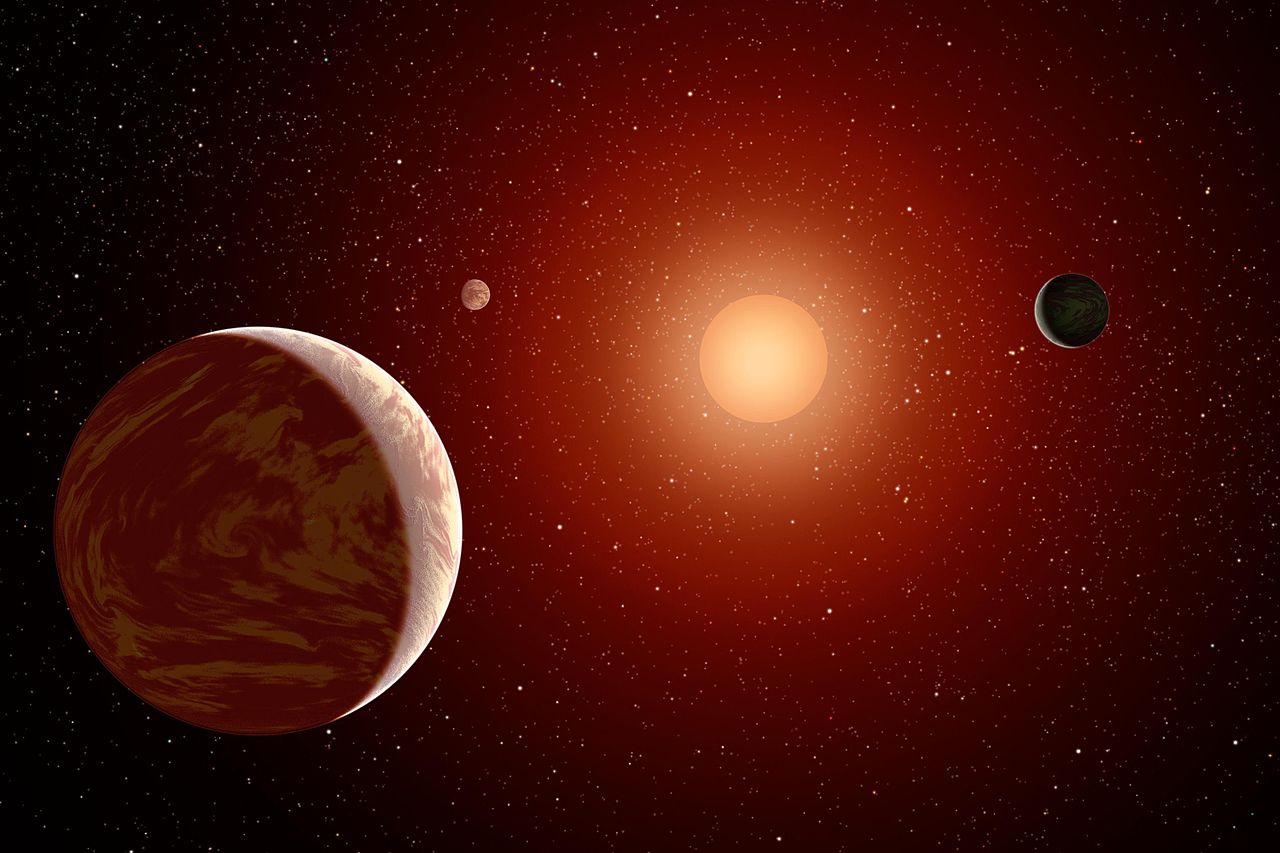
Astronomers have announced the discovery of a star system with a highly unusual configuration. It consists of a red and brown dwarf, as well as a Neptune-like exoplanet orbiting around them.
Today, the most popular methods for searching for exoplanets are transit and radial velocity methods. They enable us to effectively determine their size and mass, as well as study their atmospheres. However, they also have many limitations, forcing researchers to seek alternative ways to study extraterrestrial worlds.
One of them is the gravitational microlensing method. It is based on the use of alignment relative to Earth of a small object (a star or brown dwarf) and a more distant background star. In this case, the gravity of the object closer to us acts as a lens, causing a brief increase in the brightness of the more distant body. If the lens object has hidden companions, astronomers will be able to detect the effect they produce.
Despite a number of limitations, the gravitational microlensing method has several important advantages over more traditional methods. First, it allows us to find exoplanets that are very far away from Earth. Secondly, gravitational microlensing can be used to find small exoplanets in non-standard orbits, as well as exoplanets in multiple star systems.
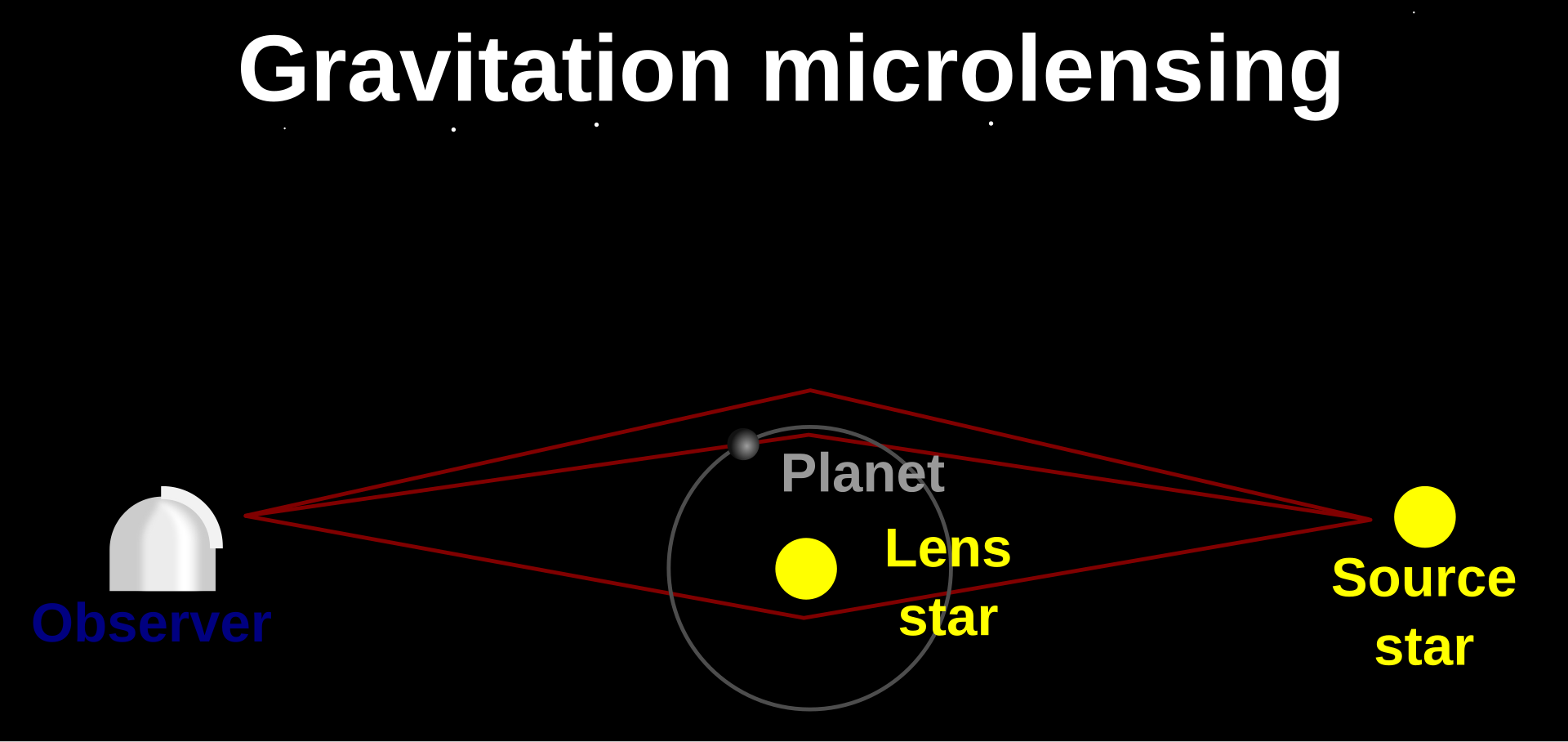
The KMT-2024-BLG-0404 microlensing event is a perfect example of these advantages. It was recorded by telescopes in the KMTNet ground-based network on April 3, 2024. Two stars located in the Milky Way galaxy participated in it. This is the name given to the spherical structure at the center of our galaxy, which consists mainly of old stars. The interstellar comet 3I/ATLAS is thought to have arrived in the Solar System from just such a region.
During subsequent analysis of the data, astronomers determined that the lens star was 23,500 light-years away from Earth. It is a red dwarf whose mass is 11 times less than that of the Sun. It has two companions. The mass of one of them is 27 times greater than that of Jupiter. This means that it is a brown dwarf. Such objects are also referred to as failed stars. They do not have sufficient mass to initiate thermonuclear reactions involving hydrogen within them.
This system also has a third component orbiting around the red and brown dwarf. Its mass is 17.3 times greater than that of Earth, which is comparable to the mass of Neptune.
This discovery marks the ninth exoplanet detected using microlensing in a binary system and the first time this system consists of a red dwarf and a brown dwarf. The discovery is of great scientific importance. Such systems challenge traditional ideas, since according to them, they should have a very limited amount of material for forming brown dwarfs and large exoplanets.
According to Arxiv.org

