

Individuals retain the most vivid memories of their childhood throughout their lives. These memories originate from straightforward acts of attention, shared evenings, intriguing questions, or unforeseen discoveries. A telescope is among the few gifts that genuinely foster such memorable moments. It does not merely entertain; it captivates.
However, to ensure this evening becomes truly unforgettable, it is essential to select the appropriate telescope. The market presents numerous models, ranging from toy-grade to professional-grade, and it can be challenging to differentiate between them without prior knowledge. This article aims to assist you in identifying the telescope that is most suitable for your child.
Prior to Making a Purchase
Historically, Galileo Galilei observed the sky through a telescope with a lens approximately the size of a coin, leading to a paradigm shift in humanity’s understanding of the cosmos. Presently, a typical children’s telescope, priced at a few hundred dollars, can possess substantially greater capabilities.
Astronomy is arguably the only science accessible to every child. All that is required is a dark sky and an inclination to observe it. A telescope can ignite curiosity within a single evening and foster a lifelong passion for the starry sky in a child. Subsequently, the child starts to inquire, read, and anticipate the arrival of the next clear night.
A telescope fosters greater social interactions than initially apparent. Evenings shared on the balcony, with family members taking turns to observe Jupiter or the Moon through the eyepiece, exemplify genuine, meaningful human connections. Contemporary models facilitate immediate photography of celestial views via smartphones for sharing on social media platforms — featuring Saturn in your Stories will undoubtedly captivate your audience. Over time, a tradition develops: inviting friends for stargazing excursions, particularly when the sky forecasts remarkable celestial phenomena.
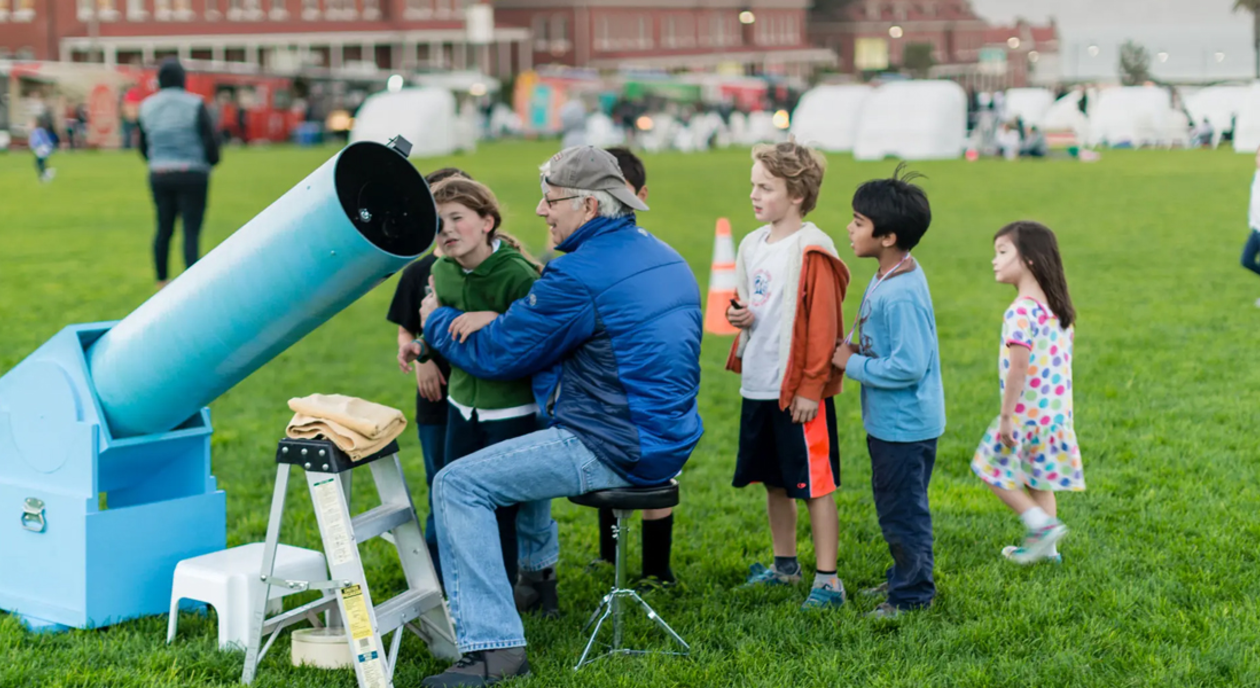
Prior to making a purchase, it is advisable to ascertain whether this hobby is suitable for you. It is recommended to seek an opportunity to observe through another person’s telescope — such as at an astronomy club, with friends, or during a public stargazing event. Experiencing it firsthand is the most effective method to determine if it is appropriate for you.
Furthermore, please consider the viewing conditions. If you intend to observe from a balcony, ensure it provides an unobstructed view of the sky. Typically, observing the Moon and planets is most convenient in an urban environment, although luminous star clusters and nebulae can also be observed. However, to observe distant galaxies, it is advisable to venture outside the city.
Stargazing is likely to develop into a mutual pastime for you and your child. Particularly initially, your child will require assistance from an adult to assemble the telescope, orient it correctly, and elucidate what to observe and where. Be prepared for this involvement. With time, they will learn independently; however, those initial evenings with the telescope are opportunities for shared experience, and they will be among your most memorable moments.
The Construction of a Telescope
A telescope primarily functions as a light collector; however, its capacity to surpass the resolution limitations of the human eye is equally significant. The Moon is luminous and distinctly observable without optical aid, yet discernment of craters or mountain ranges remains unattainable through naked-eye observation. The same principle applies to the planets. Saturn presents as a luminous point, but only a telescope can unveil its rings.
It gathers light via a lens or mirror with a larger aperture, concentrates it, and generates an image with substantially higher resolution than the human eye can discern independently. These are precisely the two primary functions of a telescope.
The diameter of this lens or mirror is referred to as the aperture. It represents the most significant parameter of any telescope. The larger the aperture, the more light the instrument gathers, enabling the observation of fainter objects. This relationship is nonlinear, as the area increases proportionally to the square of the diameter; therefore, a telescope with a 150-mm aperture collects not merely twice but four times the amount of light compared to a 75-mm aperture.

Focal length constitutes a critical parameter. It refers to the distance from the primary lens or mirror to the convergence point of the gathered rays. A longer focal length facilitates higher magnification but results in a narrower field of view, which is particularly suitable for planetary observations. Conversely, a shorter focal length offers a broader field of view, enabling the observation of a larger portion of the sky and making it more appropriate for viewing open clusters and extensive nebulae. Consequently, manufacturers specify not only the aperture but also the focal length.
Magnification is not an intrinsic property of a telescope; rather, it is determined by the eyepiece used. The shorter the focal length of the eyepiece, the higher the magnification it provides. The focal length of an eyepiece is typically measured in millimeters and is usually marked on its body. For instance, a 10 mm eyepiece offers greater magnification than a 25 mm one. However, excessive magnification results in a darker and less distinct image because the same quantity of light is dispersed over a larger area. Consequently, the effective magnification is always constrained by the aperture, which cannot be altered by any eyepiece. Additionally, the aperture attainable at a reasonable cost depends on the telescope’s light-gathering capability. There are two primary approaches in this regard — refractors and reflectors.
Refractor: A Telescope Equipped with Lenses
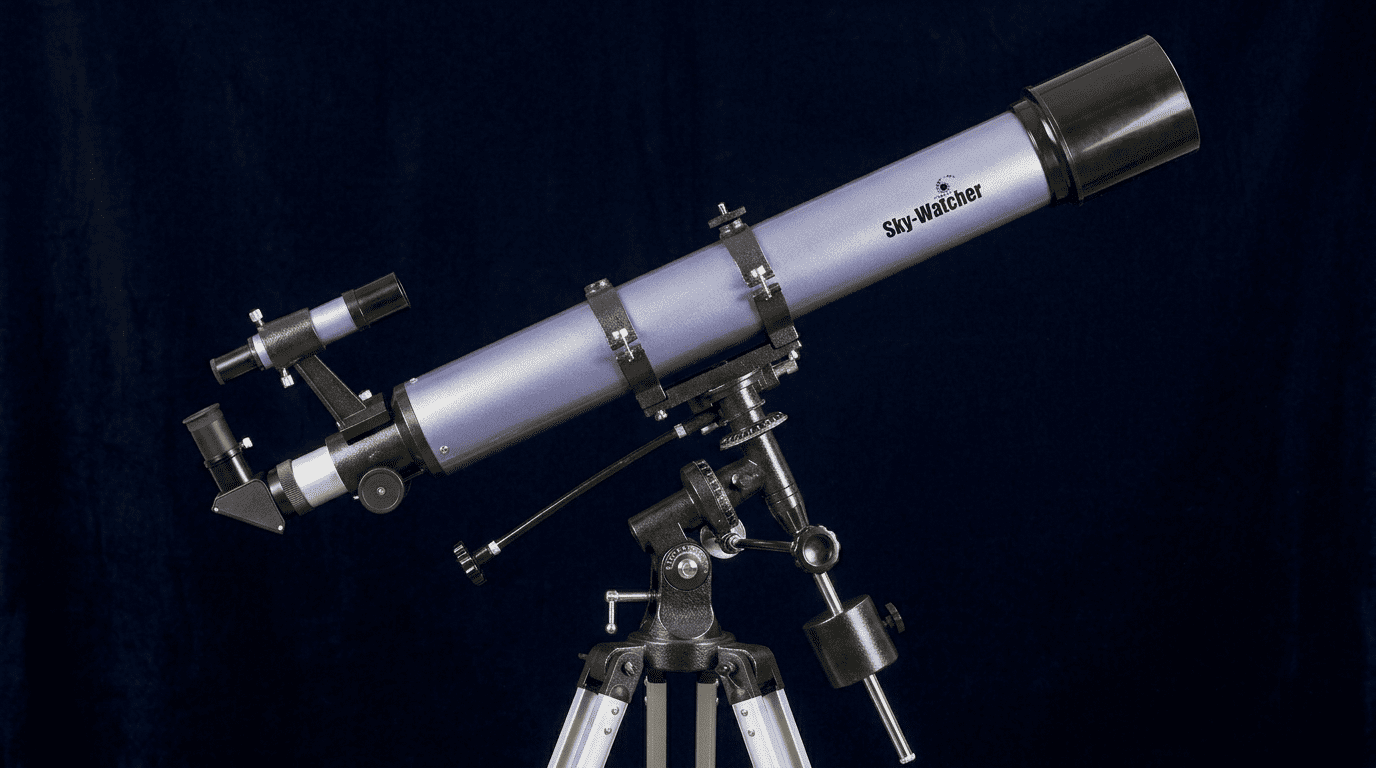
The refractor represents the earliest form of telescope. It is the same type that Galileo Galilei utilized when he first directed it towards the sky in 1609. The underlying principle is straightforward: light enters through the lens situated at the front of the tube, undergoes refraction, and creates an image at the focal plane, which is subsequently enlarged by the eyepiece located at the opposite end. The name of this type is derived from the Latin word ‘refringere,’ meaning ‘to refract.’
A refractor yields a crisp, high-contrast image and necessitates minimal adjustment. The optical components are housed within a tube, safeguarding them from dust and moisture. The alignment — pertaining to the precise relative positioning of the optical elements — remains stable over several years and demands virtually no maintenance. For lunar and planetary observations, it represents one of the most convenient options.
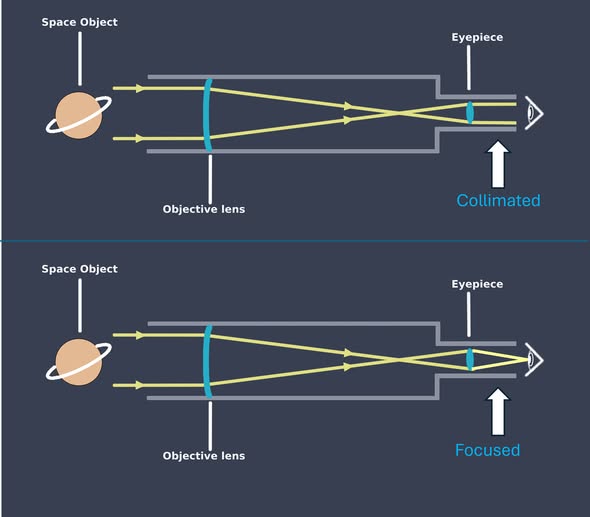
However, refracting telescopes possess a distinctive defect known as chromatic aberration. The lens refracts various wavelengths of light at slightly differing angles, resulting in a colored halo — typically purple or bluish — that manifests around luminous objects. This phenomenon is more prominent in economic models; mid- to high-end telescopes employ specialized multi-element lenses that substantially mitigate this issue.
There is also a design limitation. To increase the aperture of this type of telescope, you need to increase the diameter of the lens — and, consequently, the tube. Refractors with large apertures become long and expensive. That is why, in the affordable price range, they usually do not exceed 70-80 mm.
Reflector: A Telescope Featuring Mirrors
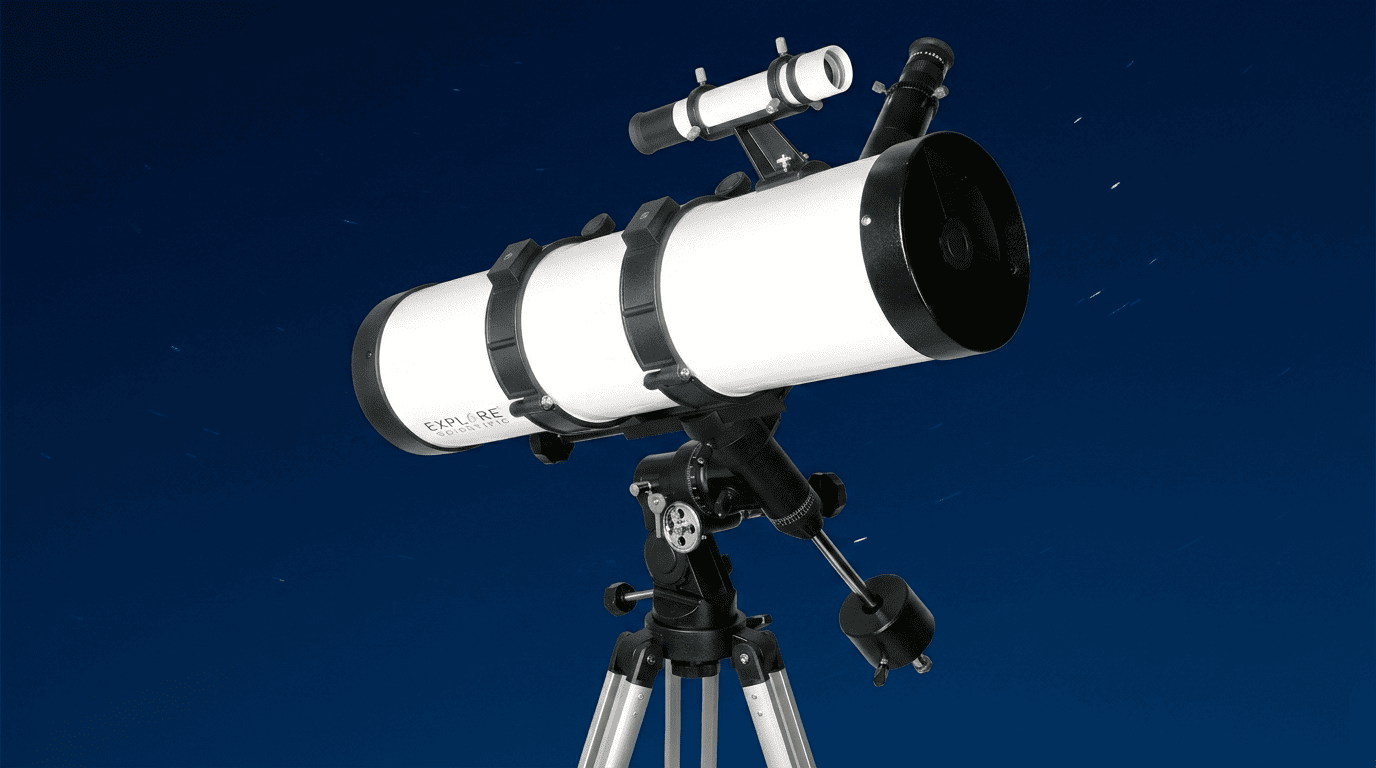
The reflector was engineered as a solution to this fundamental design constraint. In 1668, Sir Isaac Newton proposed substituting the lens with a concave mirror, and this innovation revolutionized the field. The Latin term *reflectere* translates to “to reflect,” and it is this very reflection that constitutes the core of the underlying principle. Light enters an open tube, strikes a concave mirror at its base, is directed toward a secondary (diagonal) mirror, reflects off it, and subsequently enters the eyepiece from the side.
The primary advantage is that a mirror can be manufactured significantly larger than a lens at the same cost. A larger mirror gathers more light and detects objects that emit less illumination.
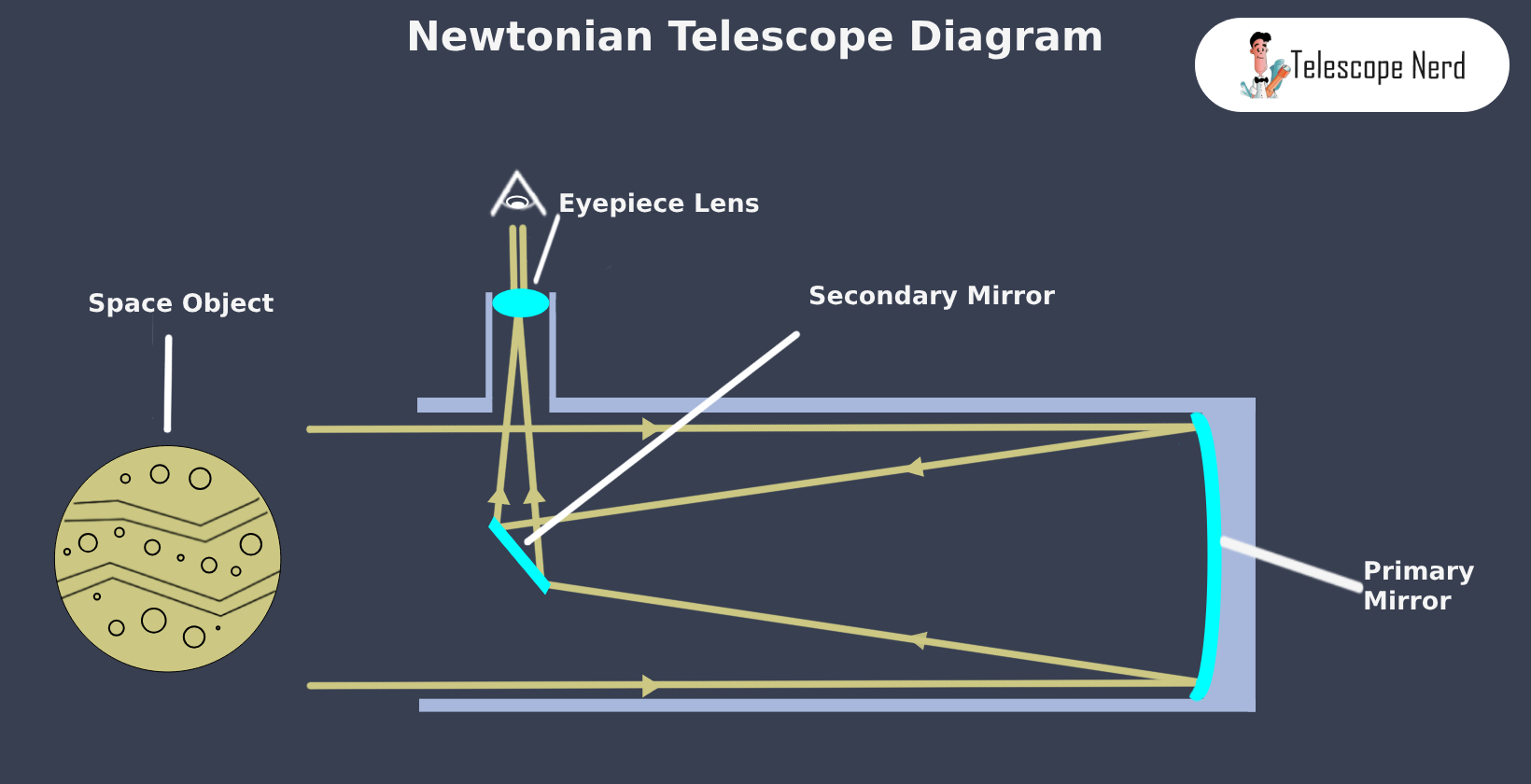
There are certain nuances to consider. Over time, mirrors necessitate maintenance and precise alignment, which involves the accurate adjustment of their relative positions. This process typically requires specialized tools, such as a laser collimator or a dedicated eyepiece, which are seldom provided with the telescope. For novices, this may appear complex; however, it generally takes only a few minutes and soon becomes intuitive.
It is important to note the geometry of the mirror as a separate consideration. A spherical mirror is relatively simple to produce but tends to generate a blurry image at the periphery. Conversely, a parabolic mirror focuses light with greater accuracy and delivers a clearer image throughout the entire field of view. The type of mirror is consistently included in the specifications, and it is advisable to give it proper consideration.
Catadioptric: When Lenses and Mirrors Collaborate Effectively
There exists a third category of telescope that integrates both methodologies. A catadioptric telescope employs both a lens and a mirror. The lens at the entrance corrects the incoming light, while the mirror gathers and concentrates it. This configuration enables a long focal length within a short and compact tube. The most prevalent designs are the Schmidt-Cassegrain and Maksutov-Cassegrain models.
The primary disadvantage of this type is the costliness. These telescopes are considerably more expensive than refractors and reflectors with comparable apertures. While this type is infrequently selected as a child’s initial telescope, it is beneficial to be aware of it, as the child’s interests may expand over time.
Mounting: proper techniques for holding and aiming
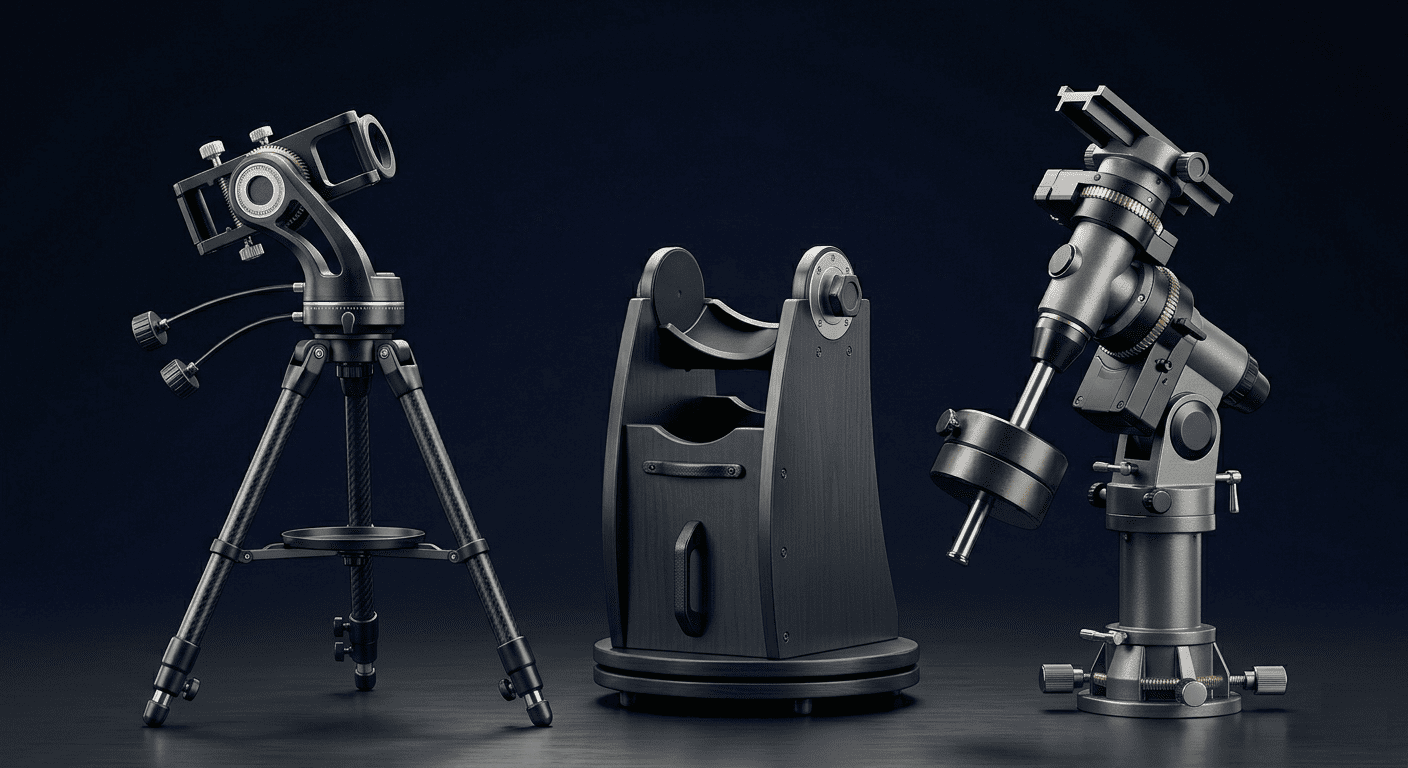
The telescope tube necessitates a support structure that permits it to be directed and stabilized in the preferred orientation. This function is precisely fulfilled by a mount.
One of the most straightforward and frequently employed types for novices is the alt-azimuth mount. The tube is capable of moving in two directions — vertically and horizontally — similar to a camera mounted on a tripod. It is intuitive from the outset.
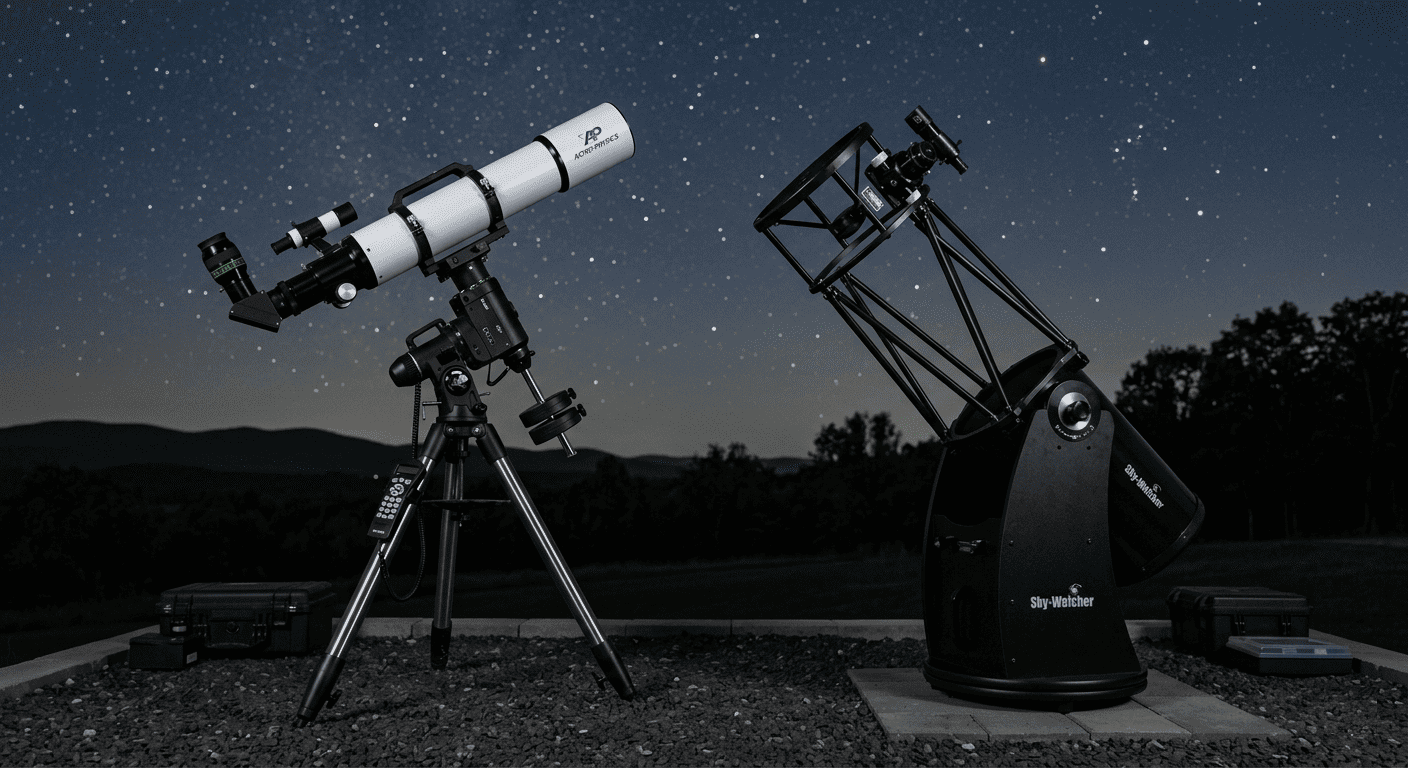
One type of azimuth mount is the Dobsonian mount, which is named after its inventor, John Dobson. Similar to any azimuth mount, this design permits the telescope to move along two axes: altitude and azimuth. The Dobsonian mount is characterized by its straightforward construction and ease of use, as well as its stable design. Typically, for smaller apertures, the Dobsonian mount is a tabletop model, whereas for apertures measuring 130–150 mm and larger, it is a floor-mounted model.
An equatorial mount possesses a more intricate design. One of its axes is aligned parallel to the Earth’s axis of rotation, enabling the tracking of celestial objects with a single movement as the sky gradually rotates. Observations using such a telescope must commence with the alignment of this axis to the celestial pole (approximately with the North Star). While this alignment is unnecessary for visual observations, it is essential for astrophotography.
What is the most advisable course to prevent
The initial evening spent using a telescope can significantly influence a child’s interest in astronomy. An unfavorable experience might diminish their enthusiasm permanently, even if they possess a genuine fascination with the night sky.
The telescope market exhibits a notable peculiarity. Aside from premium instruments, there exists a plethora of products that are merely labeled as telescopes. Frequently, these are the items that find their way into Christmas stockings or serve as birthday presents. An attractive packaging, a high magnification figure noted on the label, and an affordable price often characterize these products. However, the outcome is frequently disappointment.
The most prevalent error is emphasizing magnification as the primary selling feature. The packaging declares, “350x magnification!” However, magnification without an adequate aperture fails to generate a clear image, resulting merely in a blurry, dark picture. Analogous to enlarging a small photograph to poster dimensions, no additional detail is gained; only increased graininess occurs. The useful magnification of a telescope is constrained by the diameter of its optics, and no numerical value on the packaging can alter this fundamental limitation.
The second concern pertains to an unstable tripod. Even high-grade optical equipment is ineffective if the tube jitters with minimal contact. When a child aims the telescope at the Moon and inadvertently touches the eyepiece, the image becomes blurred. Such repeated incidents can diminish their interest. Prior to making a purchase, it is advisable to personally assess the stability of the tripod; it should be secure and free from wobbling.
The third pitfall pertains to eyepieces with a 0.96-inch thread diameter. This is an antiquated standard prevalent in budget models. Such eyepieces tend to produce inferior images, and it is virtually impossible to replace or augment them due to the limited availability of compatible accessories. The contemporary standard is a 1.25-inch eyepiece. When reviewing the specifications of a telescope or eyepiece, this parameter is consistently included; therefore, it is advisable to exercise caution when interpreting the descriptions.
Finally, telescopes with plastic optics are considered. Lenses and mirrors ought to be manufactured from glass. Plastic components are susceptible to scratching and discoloration over time and can generate distorted images. These models typically retail for up to $34 and are marketed as children’s toys. They are not even appropriate for an initial observation of the night sky.
It is noteworthy to specifically mention brands. In the Ukrainian market, counterfeit products are frequently sold under well-known brand names. Therefore, it is advisable to purchase from official stores that provide warranties and to review evaluations of specific models prior to making a purchase.
Selection of a Telescope: three tiers of capability
Your initial telescope need not be the most superior model. It merely requires being the appropriate choice — one that will not intimidate you with its complexity, will not disappoint you with its image quality, and will not remain disassembled in a box after your first night of use.
This is the reason we are categorizing it according to budget, from basic, cost-effective models to premium tools.
Up to $160. A first taste of the sky
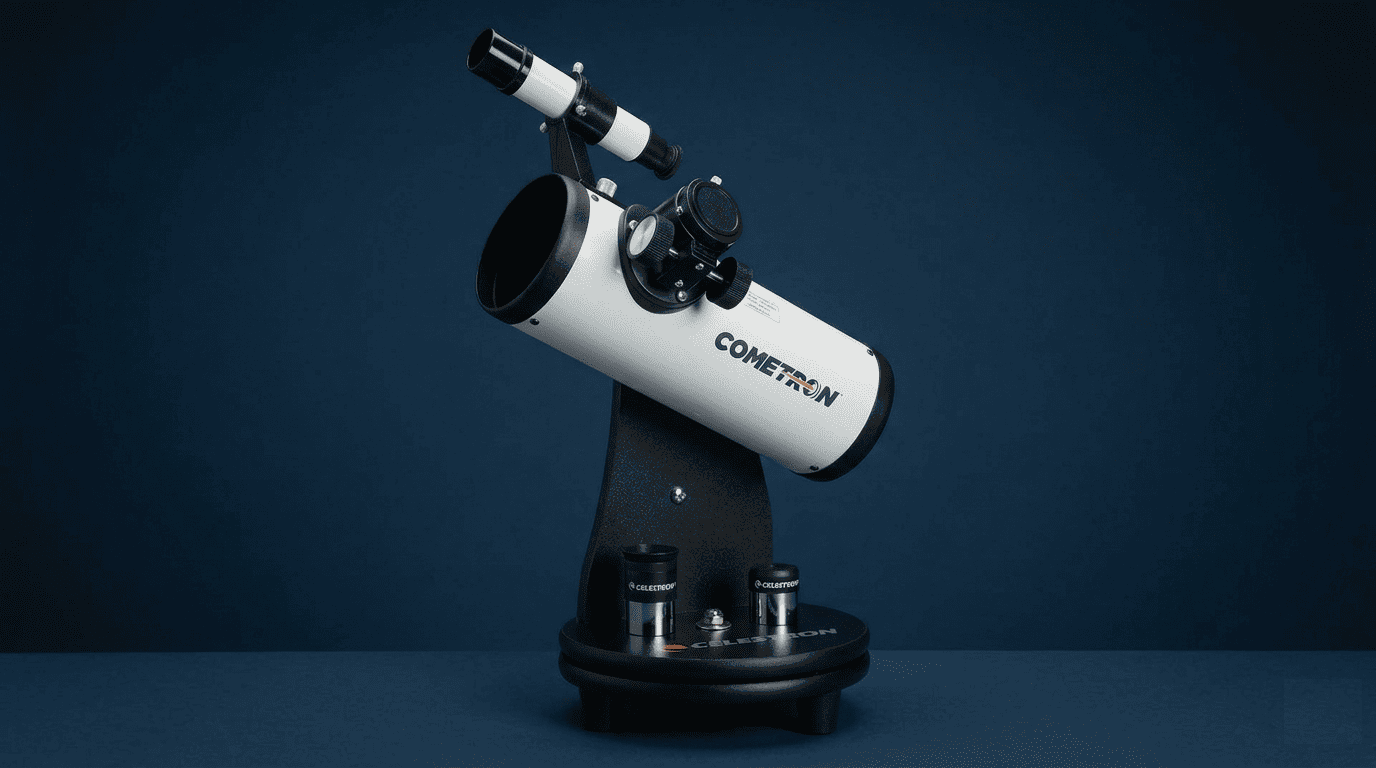
These telescopes all have a common characteristic — they are straightforward. They are easy to assemble, operate, and comprehend. A child unpacks the box, an adult assists with setup — within a few minutes, one can begin observing the Moon. There is no extensive setup, nor are tables or star charts necessary to commence observations.
Most models within this category are affordably priced refractors. There are significantly fewer Dobsonian reflectors available at this price point within the market; they are more difficult to locate, yet they offer noticeably superior performance. Reflectors with a 114 mm aperture are generally not smaller tabletop instruments; rather, they are marketed with azimuth or equatorial mounts, supported by a tripod.
Telescopes in this category typically possess a mirror diameter ranging from 76 to 114 millimeters. A 76-mm telescope may be insufficient for observing nebulae and galaxies; however, under suitably dark skies outside urban areas, a 114-mm reflector can effectively reveal star clusters, brighter nebulae, and the most luminous galaxies, including the Andromeda Galaxy. This provides a commendable initial capability.
Models to consider: Sky-Watcher BK 707 AZ2, Celestron Cometron FirstScope 76, Meade EclipseView 82mm Mini Dob, and Meade DOB 114—the latter two are available on Chinese marketplaces.
Telescopes priced at up to $160 constitute an excellent initial option. However, if your financial plan permits, we advise considering the subsequent category without delay.
$160–$340. Value for money
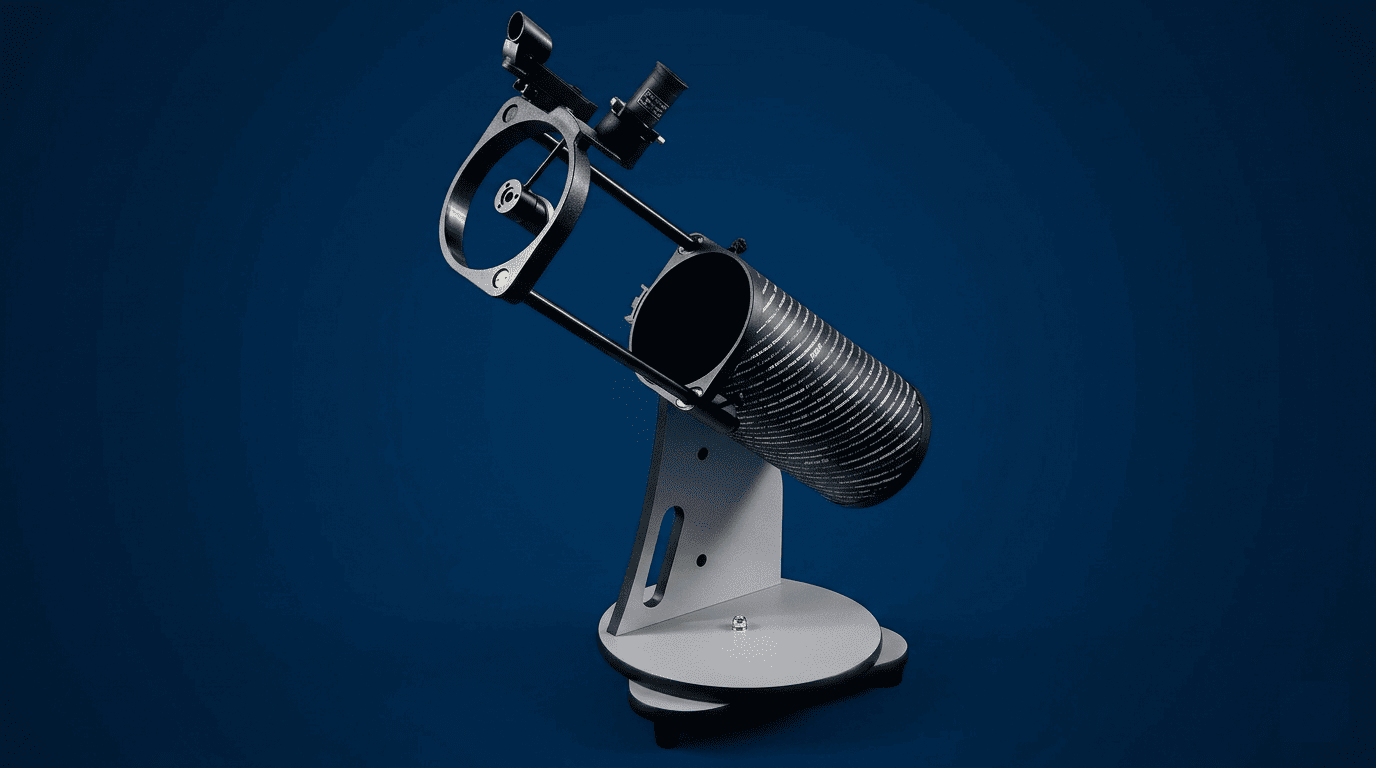
Telescopes within this category are fully established instruments. Here, consumers are presented with a genuine choice between two types of optical systems. This point often marks where most parents cease their initial assessment and begin to scrutinize the matter in greater detail. The distinction between a refractor and a reflector within this range becomes particularly evident in practical application.
For the same price, a mirror with a diameter of 114–130 mm captures considerably more light than a 70-mm lens. Jupiter appears more luminous, the features on Saturn are more distinct, and the range of observational opportunities broadens to encompass the initial deep-sky objects. Through a 114-mm reflector, the Orion Nebula no longer appears as a fuzzy blur but rather as a cloud containing a star cluster.
One of the premier choices in this category is the Sky-Watcher Heritage 130P telescope. It features a telescoping reflector mounted on a Dobsonian tabletop stand, equipped with a 130 mm parabolic mirror. The tube is adjustable in length and can be folded to reduce its overall length by half, thereby enhancing ease of storage and portability. Among enthusiasts, it is regarded as one of the most cost-effective options available in the market.
Several models within this category are already equipped with a smartphone adapter or offer it as an optional feature. Your child can capture a photograph of the moon and share it immediately on their Stories. Although the photographs may not be of professional quality, they will be recognizable. This serves as a compelling incentive to observe the sky more frequently.
What will a child observe through a telescope in this category? The Moon, exhibiting such detail that one could spend hours exploring its surface. Jupiter, with its four Galilean moons, is prominently visible with its cloud bands. Saturn’s rings, which are already distinctly resolved in a 130-millimeter telescope. The Orion Nebula, along with double stars, open clusters, and globular star clusters. Additionally, the Andromeda Galaxy is the most distant object visible to the human eye without instrumentation. Through a telescope of this caliber, it appears brighter and larger, and its satellite galaxies become discernible nearby.
Recommended models include the Sky-Watcher Heritage 114P and the Sky-Watcher Heritage 130P Dobson.
Beginning at $340, a high-quality instrument is available
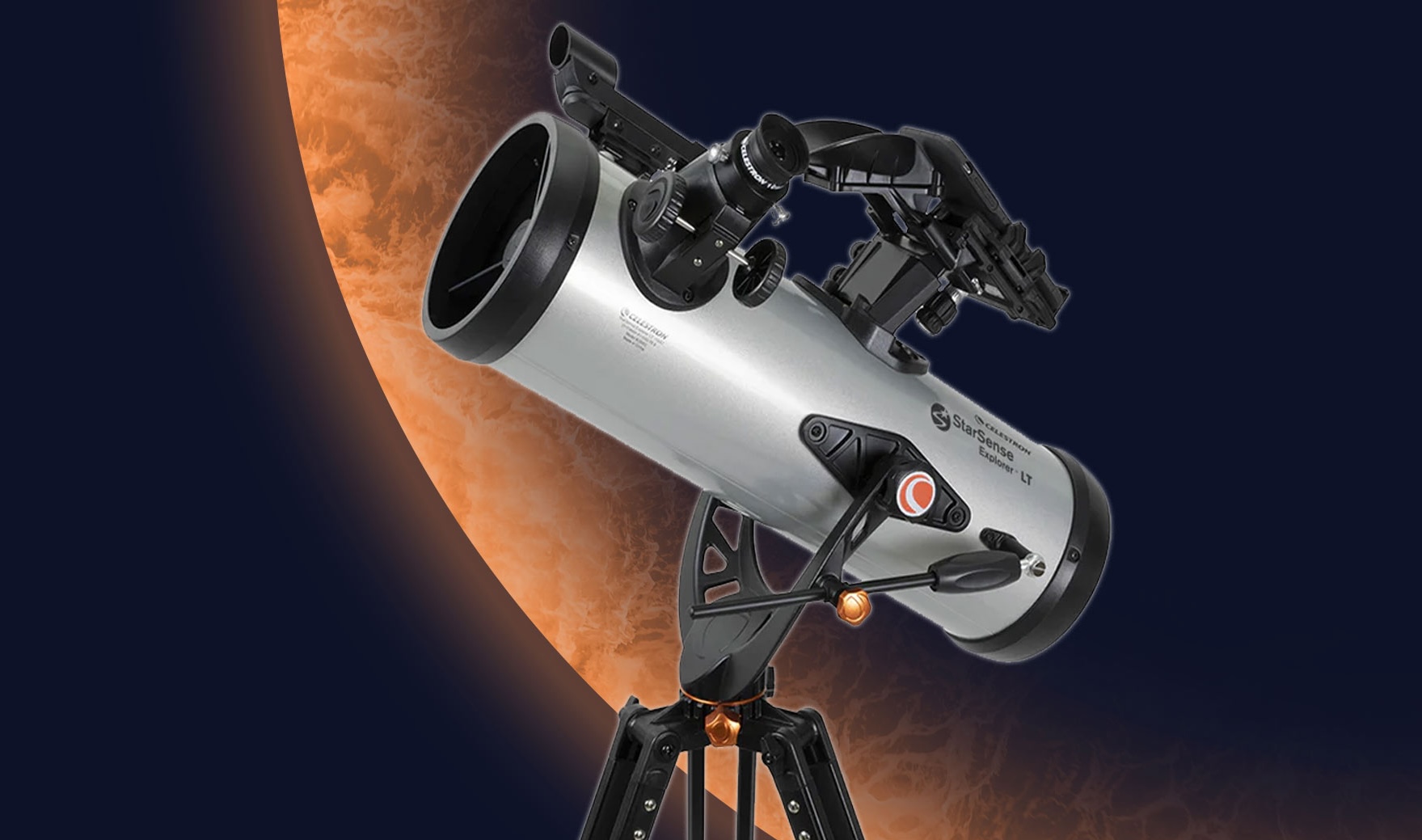
The utilization of telescopes within this category marks the commencement of genuine astronomical observation. They enable astrophotography and facilitate the observation of deep-sky objects that are not visible with more affordable models. It is advisable to consider the purchase of such a telescope if the child has prior experience with telescopic observation and desires a more sophisticated instrument. Alternatively, it is appropriate if parents are intentionally selecting a single device that will serve their needs for many years to come.
The refractors presented herein are models equipped with an 80 mm aperture, mounted on a high-grade alt-azimuth mount. The Bresser Messier AR-80/640 Nano AZ exemplifies this category effectively. It features a compact tube, a stable base, and yields a sharp image with minimal, nearly imperceptible chromatic aberration. A refractor within this class is ideally suited for planetary and lunar observations. Moreover, owing to its straightforward setup, it can be operated independently by a child.
The Sky-Watcher Heritage 150P is the larger counterpart of the 130 model, featuring a 150 mm parabolic mirror. It is a significant light-gathering instrument: individual stars are discernible within globular clusters, details become observable in nebulae, and the Andromeda Galaxy appears clear and expansive. The design remains consistent: a telescoping tube, a Dobsonian mount, and straightforward manual operation. While it is marketed as a tabletop instrument, it is often more practical for a child to set it up directly on the ground.
The Celestron StarSense Explorer LT 114 AZ can serve as a conventional telescope, or alternatively, a navigation module can be connected via a smartphone. The concept is straightforward: one positions the smartphone in a designated mount, initiates the application, and it analyzes the night sky through the camera, displaying arrows on the screen indicating the direction in which to point the telescope to locate the desired object. There is no need for paper star charts or prior experience in reading them. For a generation accustomed to smartphones, this interface proves to be immediately intuitive.
What will a child observe through a telescope in this category? All objects visible in the previous categories, but with greater clarity and vibrancy: Saturn’s rings in enhanced detail, additional bands on Jupiter, and the Great Red Spot. During Mars’s opposition—the period when Earth and Mars are at their closest — the polar caps and dark surface features can be discerned. Furthermore, in the dark sky away from urban light pollution, a vastly different panorama presents itself — globular star clusters, nebulae, and distant galaxies that are obscured in city environments.
Recommended models include the Bresser Messier AR-80/640 Nano AZ, Sky-Watcher Heritage 150P Dobson, and Celestron StarSense Explorer DX 130 AZ.
Considerations to keep in mind
If a teenager is enthusiastic about the prospect of capturing images of the sky through a telescope, that is commendable. However, astrophotography entails specific protocols. It necessitates a specialized mount with accurate tracking capabilities, an appropriate camera, and dedicated software for image processing. While photographing the Moon with a smartphone is entirely feasible, even with a more basic telescope, capturing galaxies and nebulae involves a different level of expertise and thorough preparation.
The same consideration applies to the overall quality of the telescope. Telescopes that genuinely withstand the test of time and provide a significantly superior view of the sky generally range in price from $450 to $565. It is often advisable to exercise patience and save for a higher-end model. If circumstances allow, it is also worthwhile to contemplate this price range.
Do not overlook the second-hand market, as it frequently presents opportunities to acquire a quality telescope at a significantly reduced cost. Individuals often sell their telescopes when circumstances change — such as relocating or upgrading to more advanced equipment. It is prudent to consider this option prior to making a purchase.
Guidelines on the location and methods of observation
You have selected and purchased a telescope. The next crucial step is to utilize it correctly.
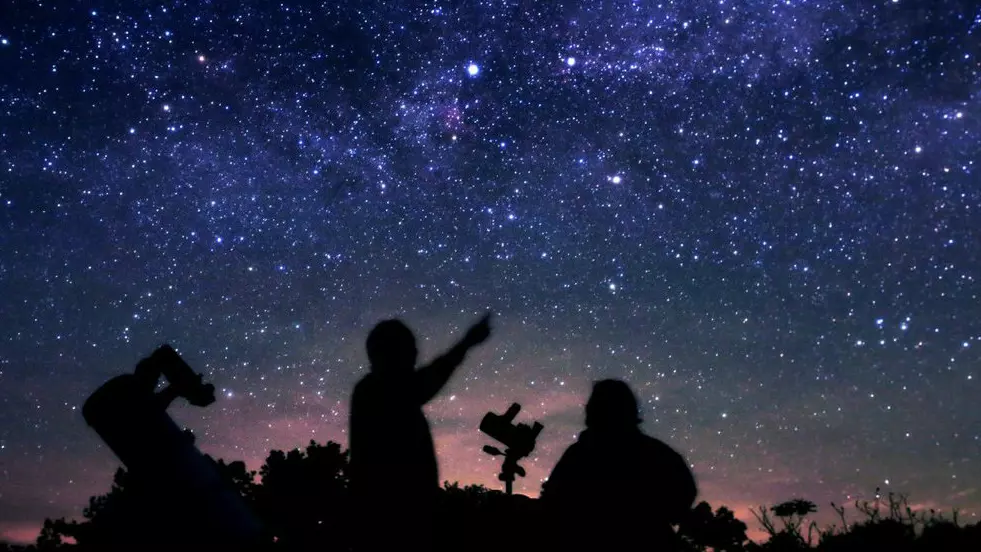
For most urban families, the balcony represents the most convenient location. It offers convenience — you do not need to travel anywhere, and you can access it on any evening. However, there are limitations to utilizing a balcony. Observing through a glass window should be avoided, as it distorts the image. The telescope must be directed directly towards the open sky. The optimal solution is to fully open the window or to place the telescope outdoors. Additionally, it is important to consider that during winter, when indoor temperatures are warmer than outside, the rising warm air from the open window may further distort the image.
A second limitation associated with urban balconies is light pollution. Cities such as Kyiv, Dnipro, Kharkiv, Lviv, and Odesa emit such intense illumination at night that the horizon appears tinged with an orange hue. While celestial bodies like the Moon, Jupiter, and Saturn remain visible despite the city’s luminosity, faint deep-space objects are virtually unattainable from this location. To observe these objects, one must travel approximately 30 to 40 kilometers away, where the sky is significantly darker.
For serious stargazing, a summer cottage, a park outside the city, or a riverbank are among the most suitable options. If one can venture there at least once a month, it unveils an entirely new realm. What remains unseen within the city limits becomes observable beyond, even through a basic telescope.
Allow me to offer additional practical advice for your initial evening outing. Please permit your eyes to adapt to the darkness, a process that typically requires 15 to 20 minutes. During this period, it is advisable to refrain from viewing bright lights, as this will necessitate restarting the adaptation process. Should illumination be necessary, utilize a red flashlight, which does not compromise night vision. Furthermore, it is prudent to dress in warmer attire than you might initially consider necessary, since even during summer evenings, temperatures tend to drop after an hour of inactivity and observation.
If there is a bright moon in the sky, direct your telescope towards it. There is truly much to observe: craters, seas, and mountain ranges. Please be aware that it is so luminous that it illuminates the surrounding sky and hampers your night vision, rendering faint objects difficult to detect on such nights. It is advisable to seek them on different evenings or prior to the Moon’s emergence.
The telescope also requires an adjustment period. If it has been stored in a warm environment and subsequently brought into a cold one, allow approximately 20–30 minutes for it to equilibrate. The presence of warm air within the tube can cause image blurring. Although a minor detail, this can substantially influence your initial observing experience.
To ensure that you do not overlook any intriguing information, kindly follow our updates on Universe Space Tech, where we consistently share the most captivating space news.
The sky is awaiting expression
Your initial evening with a telescope is an experience you will likely remember for a lifetime. Imperfections may occur, such as spending considerable time searching for Saturn or encountering difficulties in achieving proper focus initially. However, the moment the celestial object ultimately appears in the eyepiece remains vividly etched in your memory for an extended period.
Therefore, the most crucial action you can undertake following the purchase of a telescope is to take your child outdoors on the very first clear evening. Avoid postponing this activity until the weekend, and do not wait for optimal conditions. Even observing the Moon through the eyepiece for the first time constitutes a discovery in itself.
Furthermore, the sky itself will guide you on subsequent actions. Your child will inquire about the craters, and together you will look up their names. They will ask why Saturn has rings, and that discussion can be reserved for the evening. A telescope does not provide definitive answers, but it ignites a sincere desire to explore and discover.

