

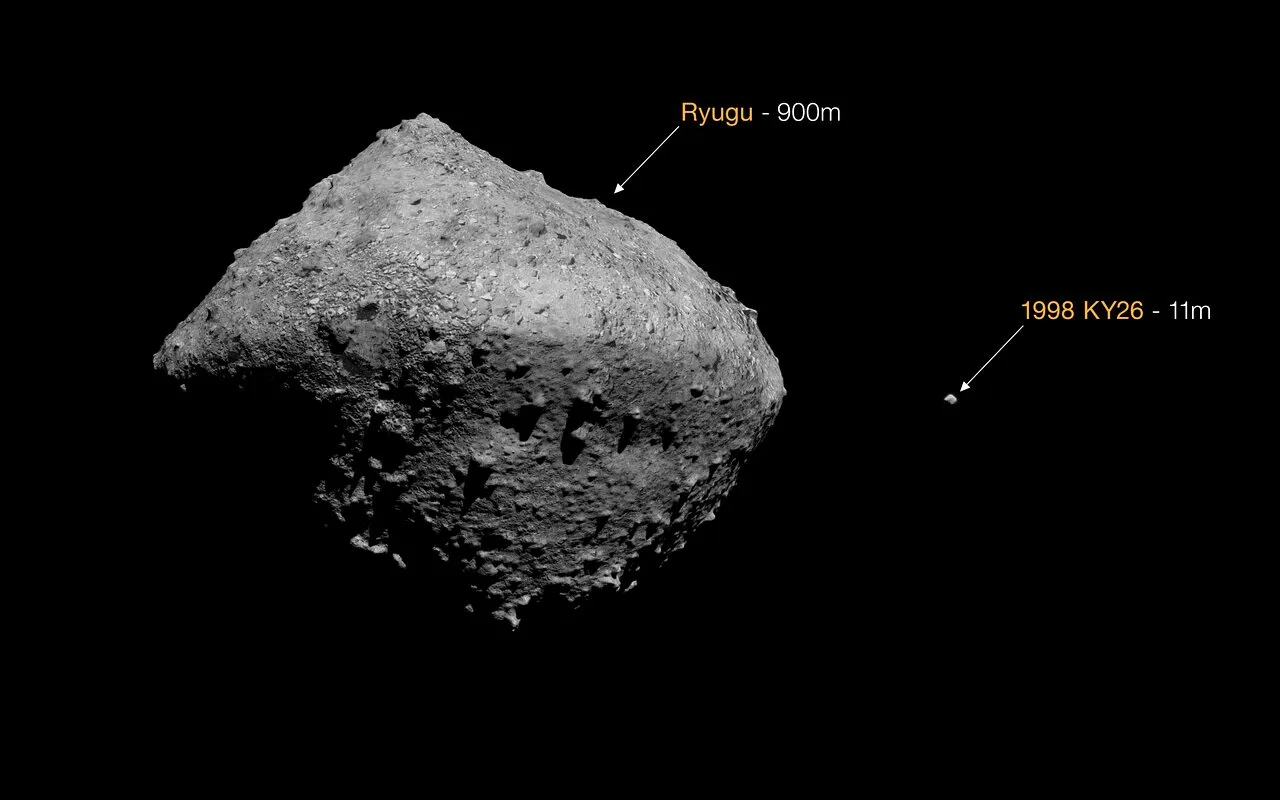
The updated mission of the Japanese spacecraft Hayabusa2 in 2031 should bring it closer to asteroid 1998 KY26, the smallest object ever visited by a spacecraft. New observations using the Very Large Telescope (VLT) of the European Southern Observatory (ESO) and partner observatories have shown that this body has a diameter of only about 11 meters and rotates approximately once every 5 minutes — significantly faster and smaller than previously thought (estimated at ~30 m and ~10 min). These parameters make any low-altitude operations extremely difficult.
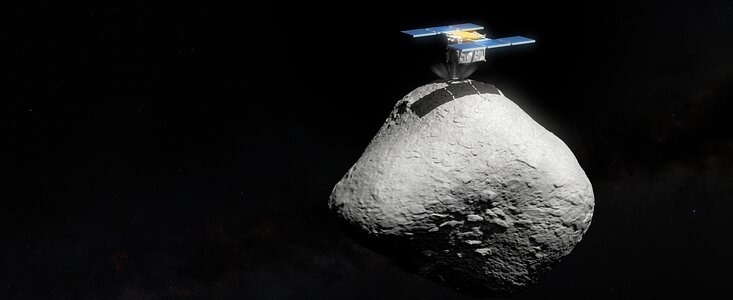
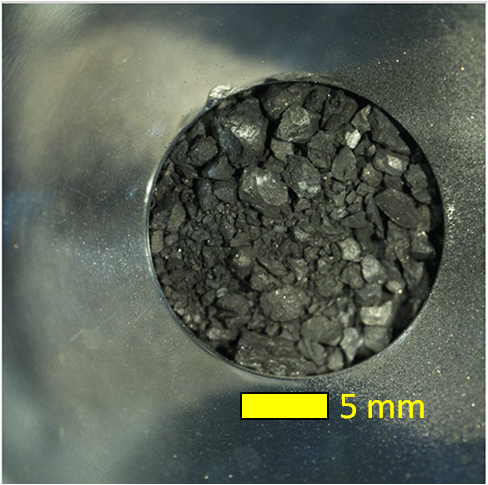
Hayabusa2 has already made history by returning samples from the asteroid Ryugu in 2020, and now continues its flight as part of an expanded program: first, a flyby of 2001 CC21 in 2026, followed by a controlled rendezvous with 1998 KY26 in 2031. The scientific goal is to study ultra-small and rapidly rotating objects that are at the limits of modern techniques.
The team estimates that due to such rapid rotation, centrifugal forces at the surface of KY26 may exceed the asteroid’s own gravity. This unique environment affects the behavior of regolith, the stability of the spacecraft’s orbit at low altitudes, and even the possibility of brief contact with the surface. That is why KY26 is the ideal testing ground for new navigation and engineering solutions when working with the smallest bodies in the Solar System.
Why is this important? The study of 1998 KY26 will provide reference data on the physics of the smallest asteroids: density distribution, material strength, thermal properties, and surface evolution under microgravity and ultra-fast rotation conditions. Such knowledge is critically important for planetary defense: objects measuring 10–50 meters most often enter Earth’s atmosphere, and their internal structure determines whether they will ablate (lose their outer layer of material due to external forces) or disintegrate. In addition, validation of remote methods (radar/IR observation) on a real target will improve the accuracy of small NEO classification, and testing of approach with a 11 m scale model will push the boundaries of interplanetary mission navigation.
Are you interested in the tiny 1998 KY26 and want to understand how it brings us closer to mining resources in space? Follow our analysis of commercial asteroid mining: what technologies are needed (from capture systems to autonomous robots and processing), what mission profiles are realistic, how to estimate the energy budget and Δv, and where the hype ends and the numbers begin. Briefly, in essence, with examples and calculations in the article “What is needed for commercial asteroid mining? Considering technologies and making calculations.”
According to eso, interestingengineering

