

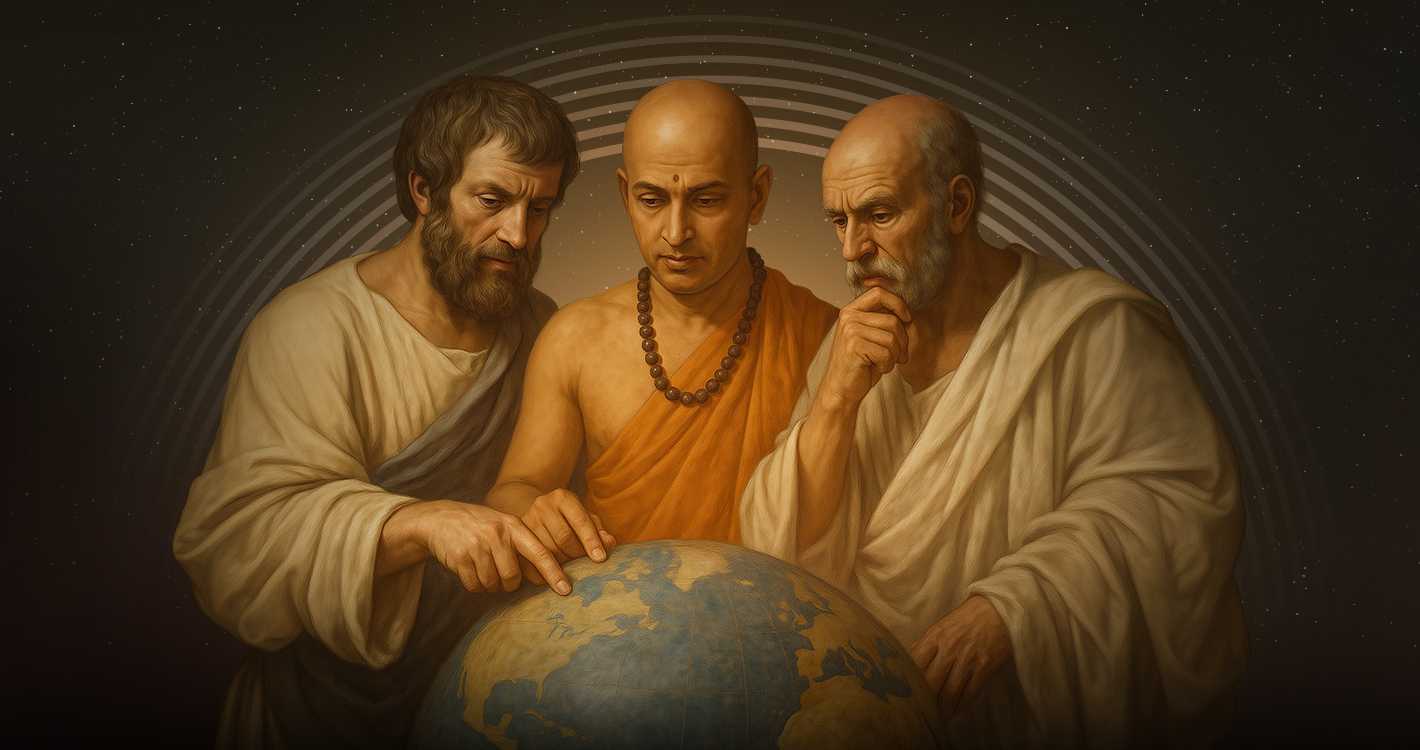
Ancient Greek philosophers knew that the Earth was spherical. Moreover, they even conducted experiments, the results of which allowed them to determine its radius more or less accurately. But how did they manage to do this? Let’s figure it out together!
The Earth is a sphere
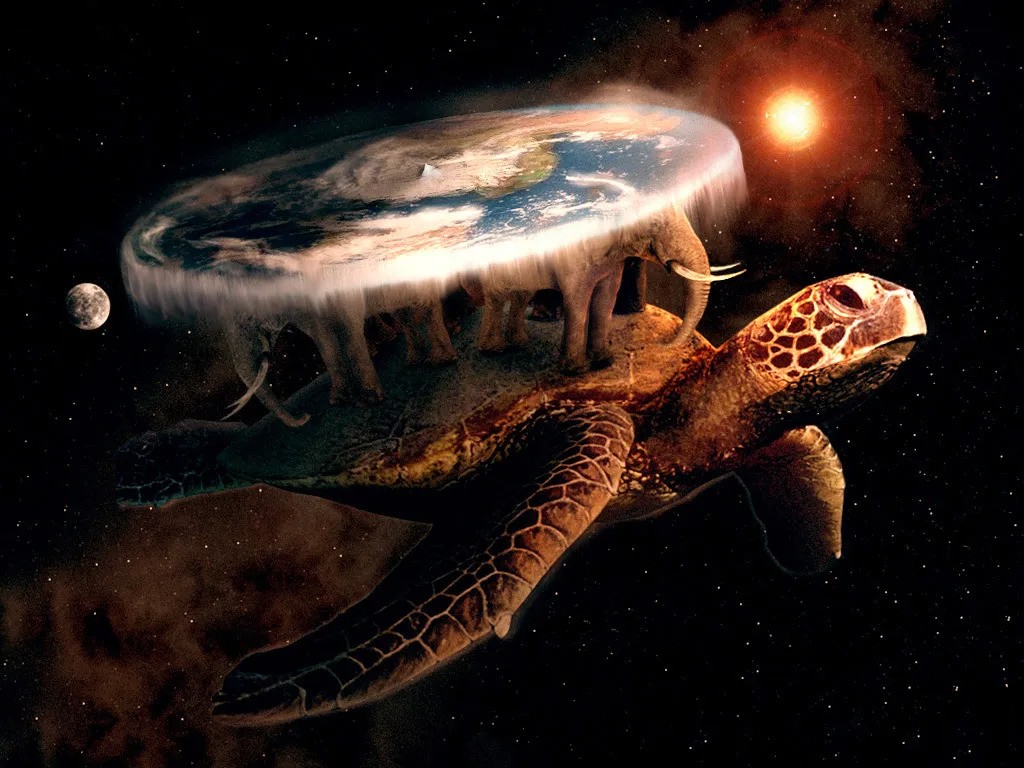
Those who now claim that the Earth is actually flat are often ridiculed. Moreover, the very people who do so are often convinced that in the past, no one knew that the Earth was a sphere. In fact, the idea that it is spherical was well known to educated people even before Nicolaus Copernicus described in his book the calculations of planetary motion based on the heliocentric system of the world.
Moreover, the spherical shape of the Earth was known to the inhabitants of ancient Greece even before our era. Ancient authors themselves attribute this discovery to Pythagoras, although there is no concrete evidence of this in his works.
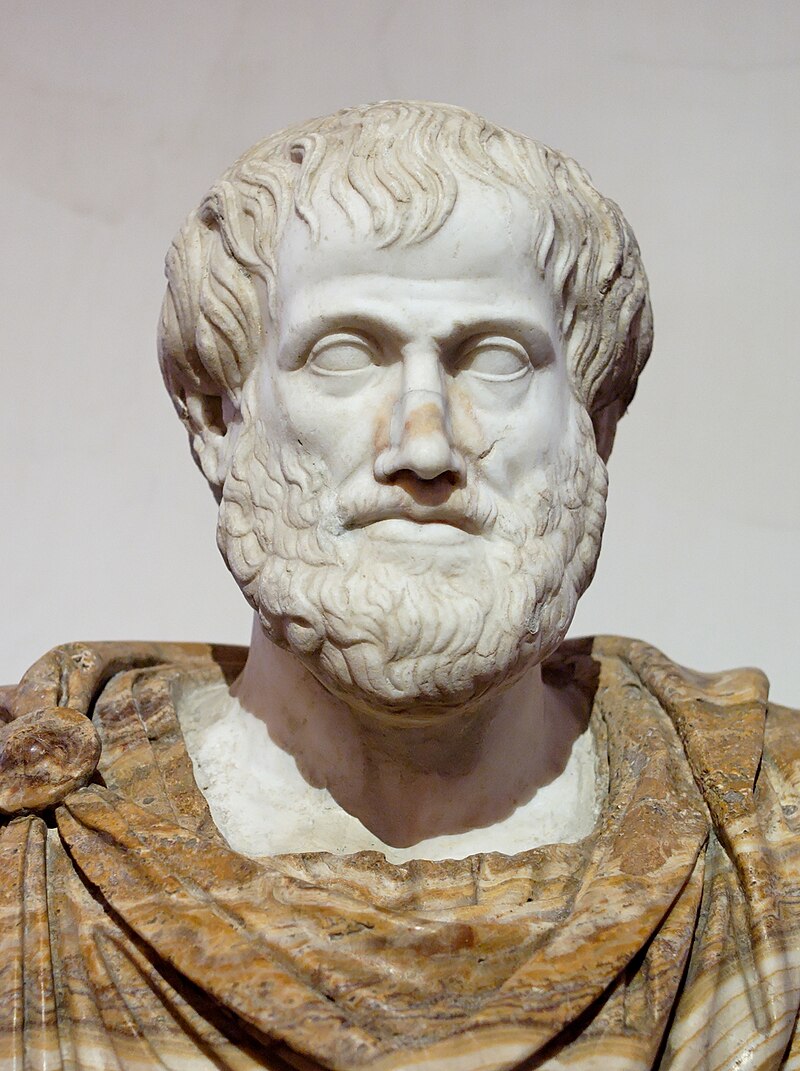
Formally, the first author whose works contain the idea that the Earth is spherical and provide evidence for it is Aristotle, who lived from 384 to 322 BC. One of his main arguments in favor of the spherical shape of the Earth is the one that is still used in internet memes: the shadow of the Earth on the Moon during an eclipse is always round. And this is only possible if our world is spherical.
Source: apilgriminnarnia.com
Aristotle’s works also contain observations about the North Star. Even then, it was noticed that the further north you travel, the higher it is above your head. However, movement to the east and west does not affect its visibility. The same is true of the zodiacal constellations, except that they are visible directly overhead near the equator.
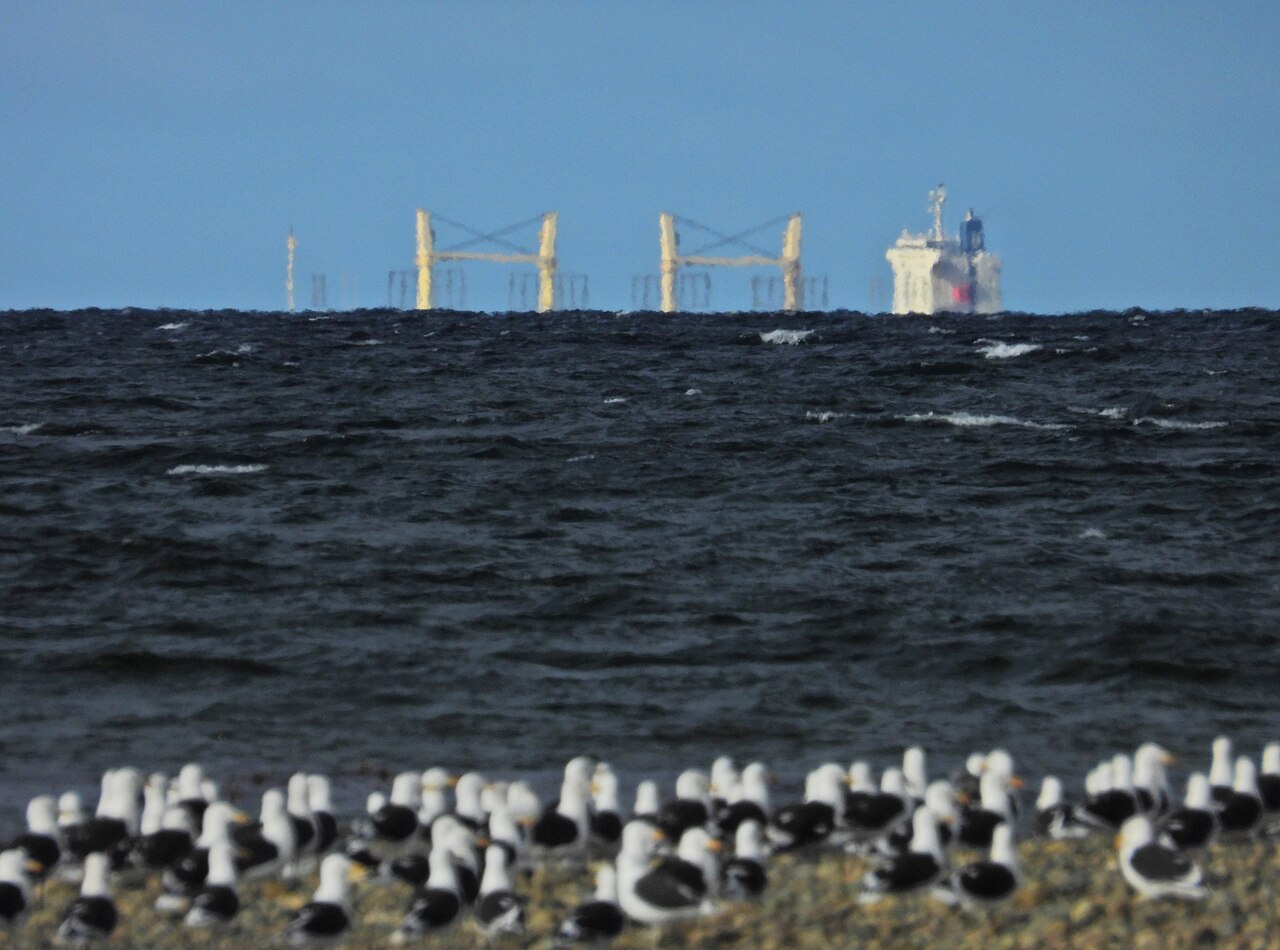
In addition, the purely earthly signs of the sphericity of our world were well known. In very tall objects, such as ship masts, when they are close to the horizon, the lower part disappears first. This is especially noticeable in hot weather, when, due to the refraction of heated air, their upper part seems to hang above the surface.
Aristotle accompanies all these constructions with the first, rather naive theory of gravity, which does not explain what this force is, but allows us to understand why objects do not fall from a sphere. At the same time, the scientist does not attribute all these conclusions to himself, instead referring to numerous predecessors.
There is no doubt that by the middle of the 4th century BC, at least in the Mediterranean region, the concept of the Earth’s sphericity was well known. However, we will probably never know who was the first to make such an assumption based on the observations cited by Aristotle.
Perhaps it was indeed Pythagoras at the beginning of the 5th century BC, or perhaps some other philosopher. Perhaps it was not even the ancient Greeks, but, for example, Phoenician sailors who traveled extensively, or Babylonian priests who had considerable experience observing the starry sky.
It is not so important who first came up with this idea, but rather the fact that the idea of the Earth’s sphericity was known several centuries before our era. Although it should be noted that the correct view of the shape of our planet had to coexist for quite a long time with alternative theories that were not limited to a flat shape alone.
How to find out the radius of the Earth
However, ancient scientists not only established that the Earth is spherical, but also managed to approximately measure its circumference and, from that, its radius. The first to do so was a philosopher named Eratosthenes. He lived in the 3rd century BC in Alexandria, Egypt. That is, he was already well acquainted with the works of Aristotle and had no doubt about the sphericity of the Earth.
Eratosthenes learned that in the city of Siena, located far to the south, there was a well whose bottom was reached by the sun’s rays once a year – at noon on the summer solstice. In his native Alexandria, even on this day, a vertical rod called a gnomon cast a shadow, and therefore such a well could not exist there.
The existence of the Sienna well is explained by the fact that the city is located on the northern tropic of the Earth, and during the summer solstice, the sun’s rays fall on the surface at a right angle. On the other hand, the distance from the center of the globe to Siena was its radius. The distance from the center to Alexandria was also the same. And the angle at which the gnomon cast a shadow in Alexandria during the summer solstice was equal to the angle between these two radii.
When Eratosthenes measured it, it turned out to be equal to 1/50 of a circle, or approximately 7°. Next, he needed the distance from Alexandria to Siena. It was measured for him by specially hired surveyors. They found that this distance was approximately 5,000 stadia. From this, it is easy to calculate that the entire circumference of the Earth is 250,000 stadia.
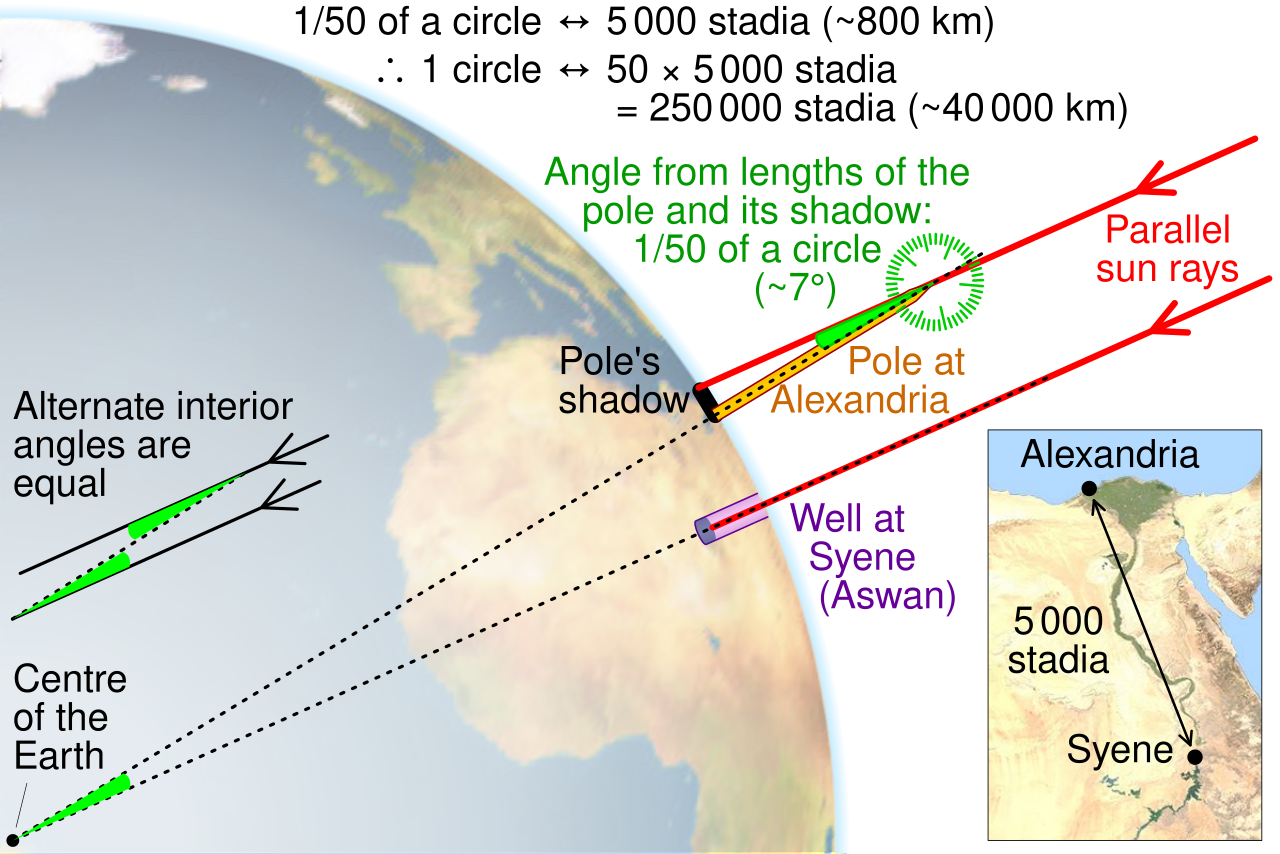
What does this mean? In fact, we are not sure, because the Greeks used several different stadia, and it is unknown which ones are meant here. If it is the Italian stadia of 184.8 m, then the circumference of the Earth is 44,100 km; if it is the Olympic stadia of 176.4 m, then it is 46,100 km. However, there is speculation that Eratosthenes used a much smaller stadium, equal to 157.7 m. In that case, the circumference of the Earth would be 40,074 km, which is only 66 km more than the actual value. And even if other values of the stadium were used, the error would only be 10% and 15%, respectively.
After Eratosthenes
After Eratosthenes’ experiments, scientists mainly used his calculations, although they continued to coexist with completely incorrect ideas about the shape and size of the Earth, which were widespread among the less educated segments of the population.
However, some people tried to determine the size of our world on their own. For example, at the beginning of the 1st century BC, Posidonius calculated it based on the fact that the star Canopus (Alpha Carinae), which never rose above the horizon in his native Rhodes, was clearly visible in Alexandria. He measured the angle at which it rose there, which turned out to be equal to 1/48 of the circumference. He then determined that the distance between these two places was 5,000 stadia and further calculated that the length of the Earth’s circumference was 240,000 stadia. Again, it is unclear which stadium should be used, but most researchers agree that it should be 39,000 km, which is only 5% less than the true size of our planet.
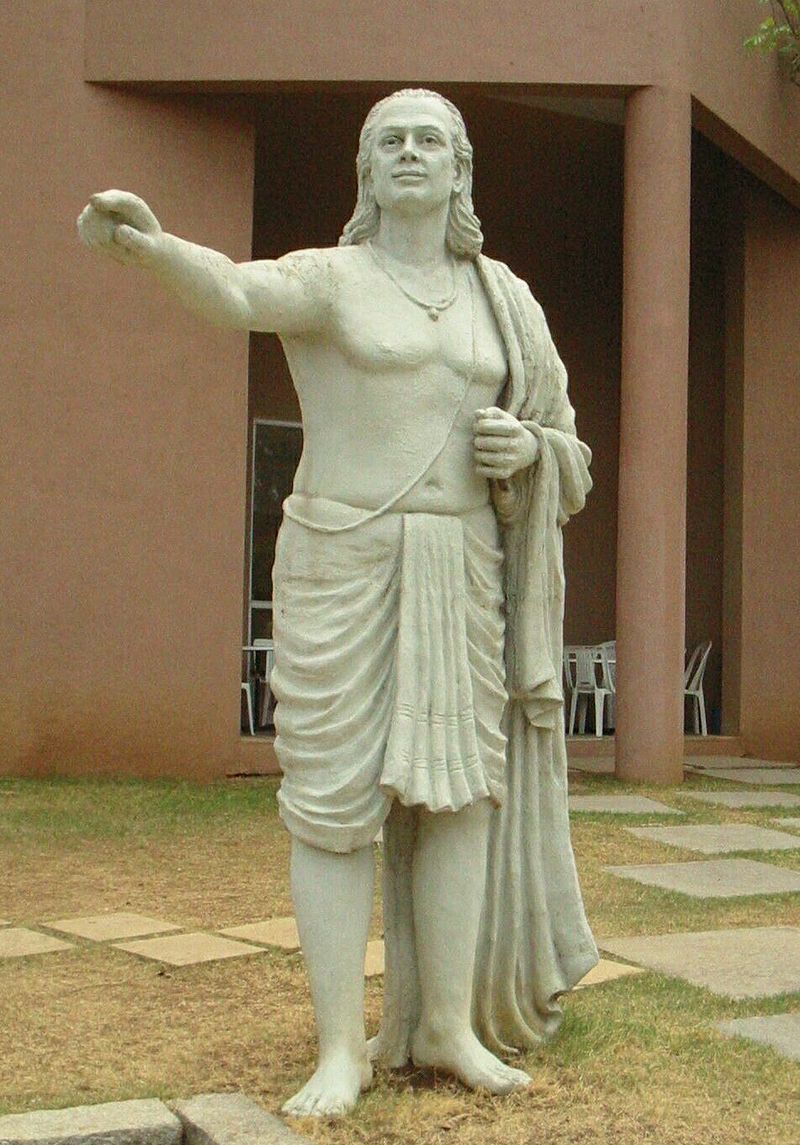
In 525 AD, the Indian mathematician Aryabhata calculated the size of the Earth. According to him, the radius of our planet is 10,500 yojanas. How many kilometers that is remains a matter of debate. Different estimates of the length of a yojana range from 13,440 to 15,360 km, which is 5 to 20% more than the actual value.
In 830, a group of Muslim mathematicians led by al-Khwarizmi obtained a value that differed from the actual value by 15%. And in 1037, al-Biruni proposed a method that allowed the radius of the planet to be calculated without measuring a distance of hundreds of kilometers.
All you need is a mountain. By measuring its height, the angle between its highest point and the horizon from a certain point, and the distance from that point to the mountain, you can use trigonometric functions to calculate the radius of our planet.
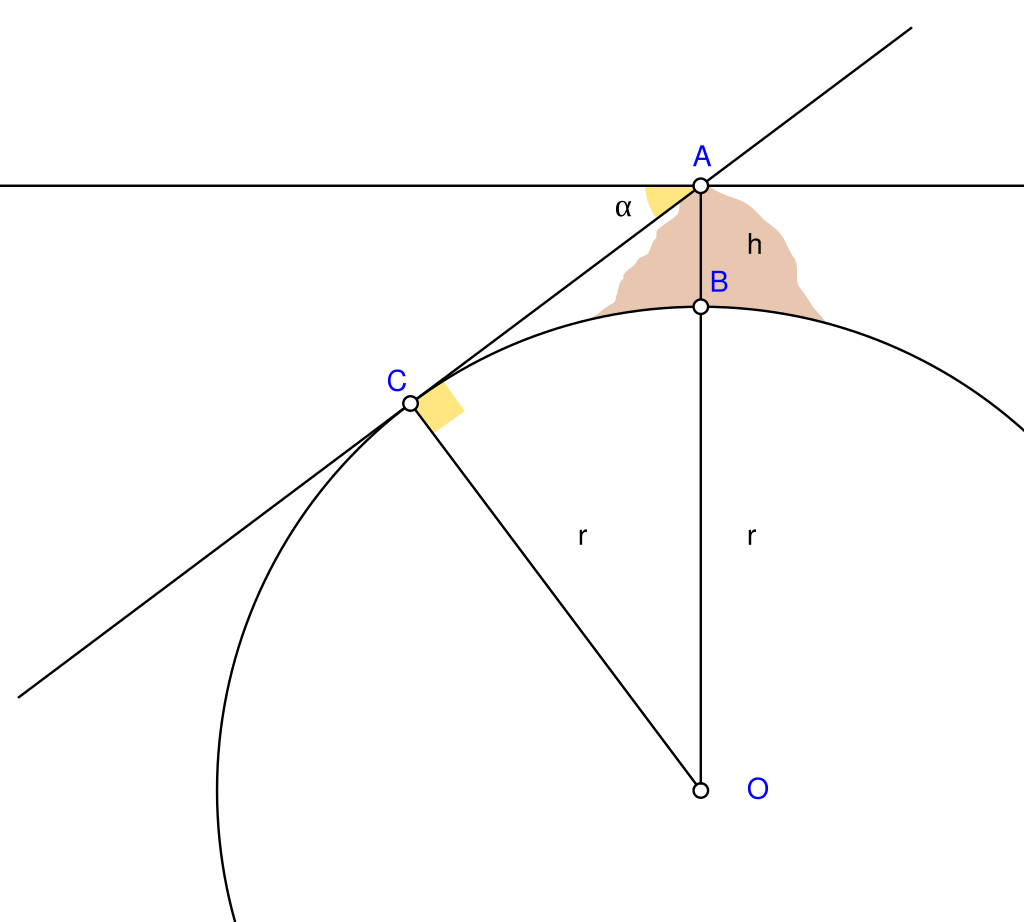
Al-Biruni’s value differs from the modern one by only 2%. Interestingly, he also calculated the sizes of Eurasia and Africa and concluded that they occupy only 2/5 of the Earth’s circumference. This means that there is enough space in the world for the existence of as-yet unknown continents.
Interestingly, Christopher Columbus was familiar with the calculations of Eratosthenes, and possibly those of his followers. However, from the very beginning, he sailed not for new lands, but for rich India, and, according to astronomers, he had no chance of reaching it. So, he simply believed not these calculations, but the maps, which suggested that East Asia was not so far from Europe.
So, in fact, in ancient times, the idea that the Earth was spherical was not so unfamiliar to scientists. Even if they saw our modern globe, they would not be so surprised. Another thing is that only a relatively small circle of people were familiar with this concept. Most people did not even think about such things.

