

Scientists analyzed the rotation speeds of gas giants and brown dwarfs in other star systems. It turns out that the first are much faster than the latter, and there is an explanation for this.
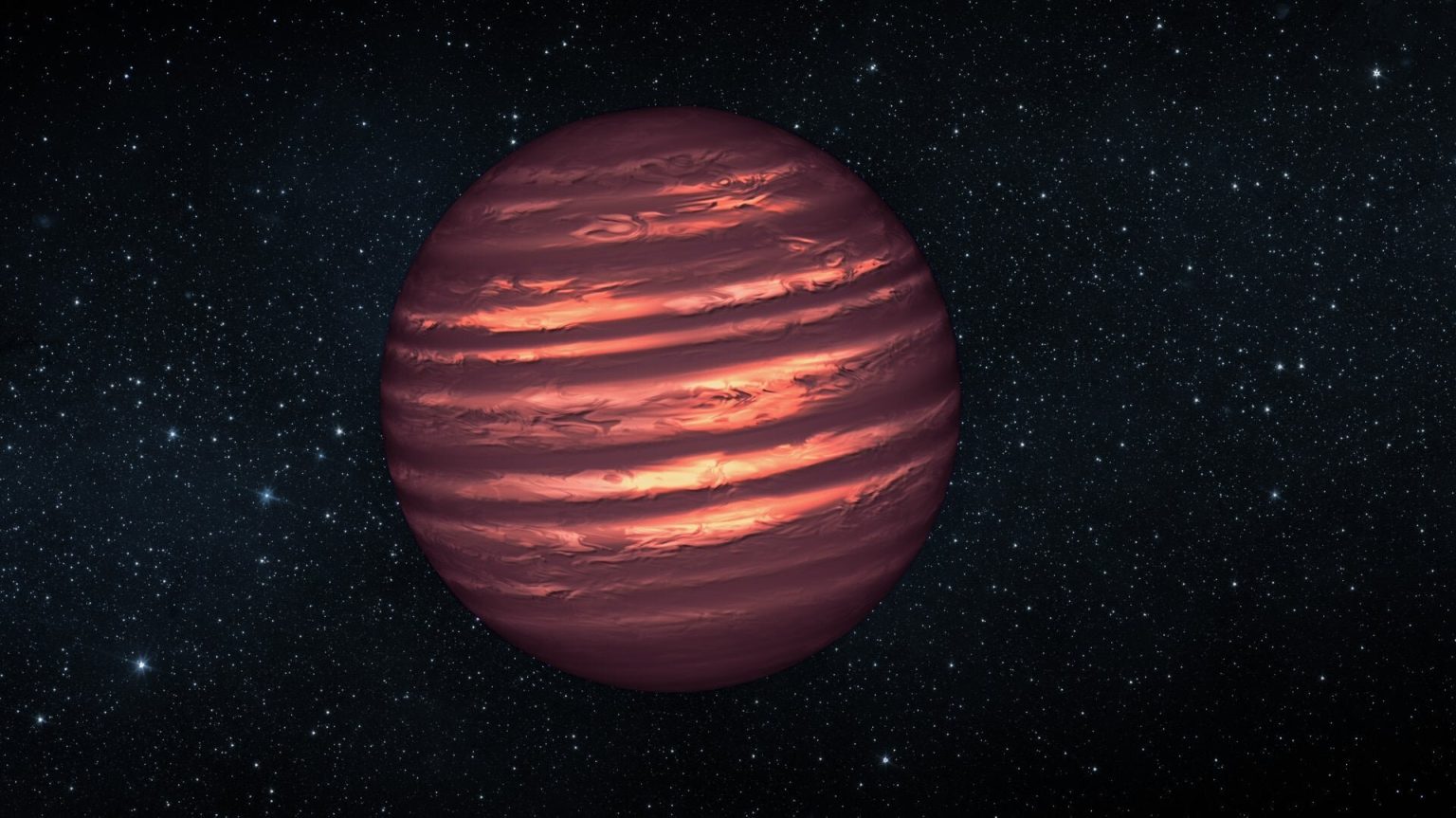
Research on gas giants and brown dwarfs
In the Solar System, the gas giants—Jupiter and Saturn—rotate faster than any other planets. Is this just a coincidence? And what would happen if the diameter of a celestial body were to increase even further? Recently, a large group of researchers from several American universities attempted to answer this question in an article published in The Astronomical Journal.
They analyzed data collected by the KPIC camera mounted on the Keck telescope. The study focused on 43 substellar components of planetary systems, as well as 54 isolated brown dwarfs and orphan planets.
This powerful instrument, which remains practically unrivalled to this day, was able not only to determine the mass and dimensions of these objects, but also their speed of rotation. Turns out, the brown dwarfs, which are significantly more massive, orbit much more slowly.
Why do brown dwarfs rotate more slowly?
At first glance, it all seems very strange. On the one hand, observations show that gas giants rotate around their axes just as quickly as Jupiter and Saturn. Brown dwarfs, on the other hand, rotate several times more slowly.
The HR 8799 system serves as a prime example here. It contains both a gas giant and a brown dwarf, with the latter orbiting six times slower than the former. So why does mass, which up to a certain point contributes to faster rotation, subsequently begin to have the opposite effect?
Scientists believe that mass itself has nothing to do with it. A planet’s rotation around its axis is a remnant of the angular momentum it acquired when it was a cluster of matter in the protoplanetary disk. And it stands to reason that the greater the mass, the longer the body maintains its rotational speed due to inertia.
However, in massive celestial bodies, an increase in mass is usually accompanied by an increase in magnetic field strength. And it is strongest around brown dwarfs. The planet’s magnetic field interacts with the gas and dust surrounding it. And since the force of action equals the force of reaction, this slows down the celestial body’s rotation. Brown dwarfs manage to slow their rotation down quite significantly even in the early stages of their existence.
According to phys.org

