

We are used to measuring long periods of time in years. However, this unit of time is the period during which the Earth completes one revolution around the Sun. Therefore, for worlds that revolve around other stars, “a hundred years” and “half a year” may mean something completely different from what we are used to.

How long is a year?
There are only a few days left until the New Year. For many, this means that it is practically here already, because what are a few days compared to its duration? In just a week, we will be able to start counting down to the next one.
We know that it will be a long time, and it is on this knowledge that our sense of long periods of time is based. Twelve years is the length of a child’s schooling. Independent Ukraine has existed for 34 years. Taras Shevchenko was born 190 years ago, and a thousand years ago, Kievan Rus’ existed.
And nowhere do we add that we are talking specifically about Earth years, although the year we are familiar with is only the period of our planet’s rotation. The same period of time that we call 1,000 Earth years corresponds to 531.9 Martian years. Or 1,623.4 Venusian years.
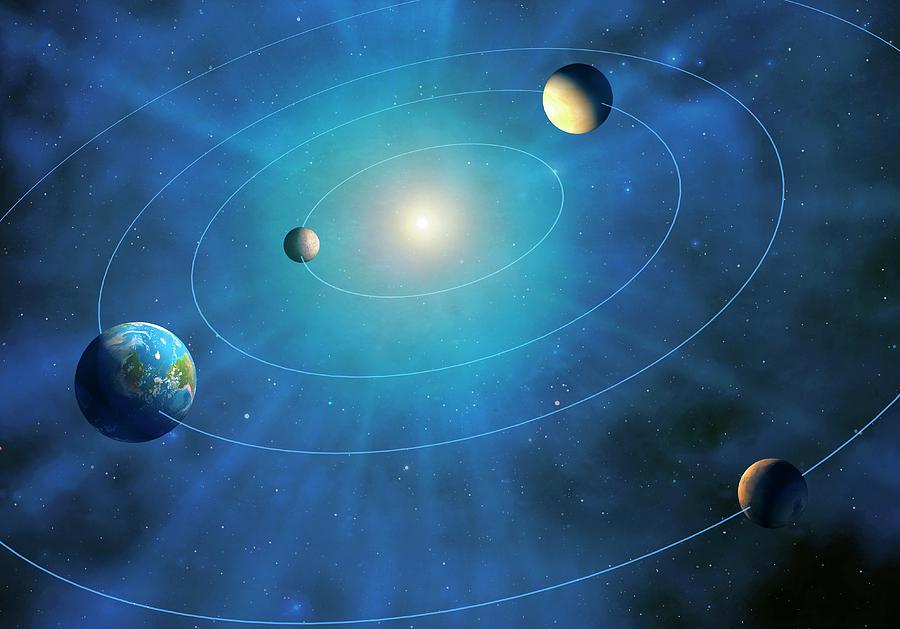
All this seems unimportant. After all, we live on Earth, and everyone knows how long a year lasts. And in other years, it is easy to calculate if the need suddenly arises. But this is only true as long as we live on Earth.
Earth-like planets
No one can say for sure, but proponents of space exploration are confident that sooner or later, humans will live in other star systems. It is then that people will fully realize how relative the concept of a year is.
Of course, the planet can orbit around the star at any time, as long as it is not for a couple of hours, because then, even in the case of a red dwarf, it will literally touch its atmosphere. It can be a matter of days, or tens, hundreds, or thousands of years.
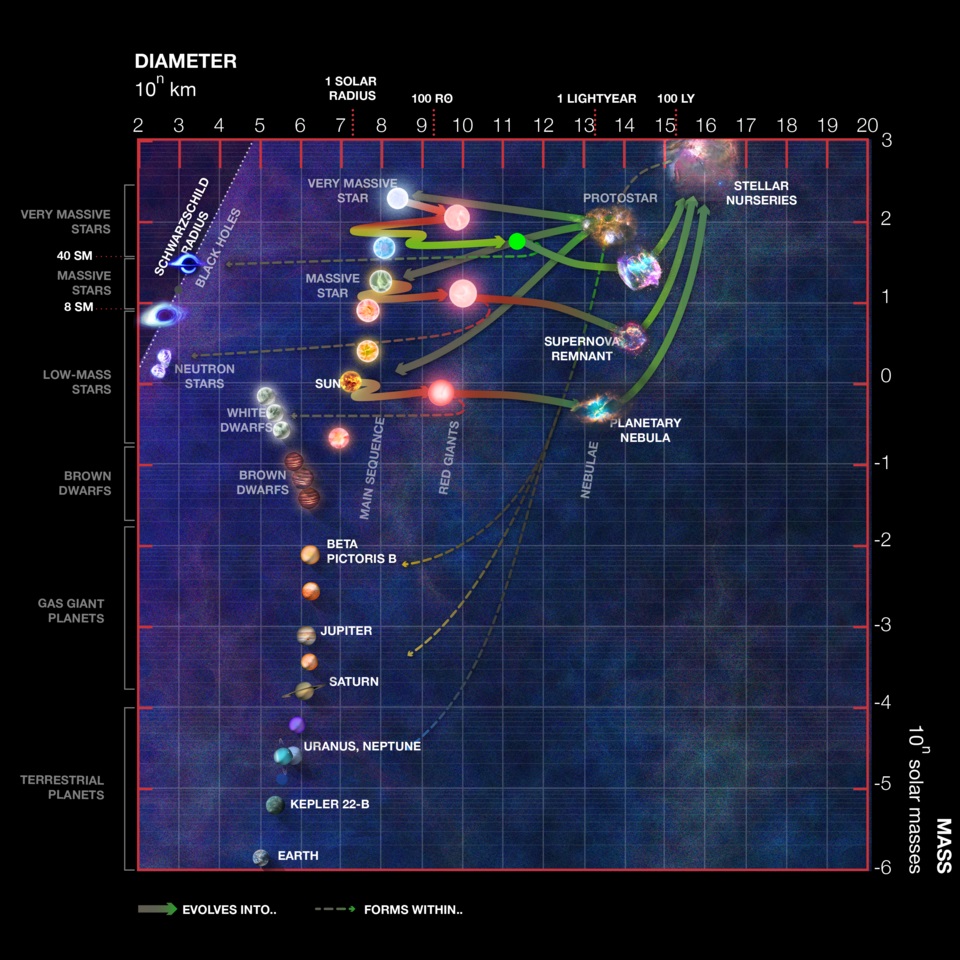
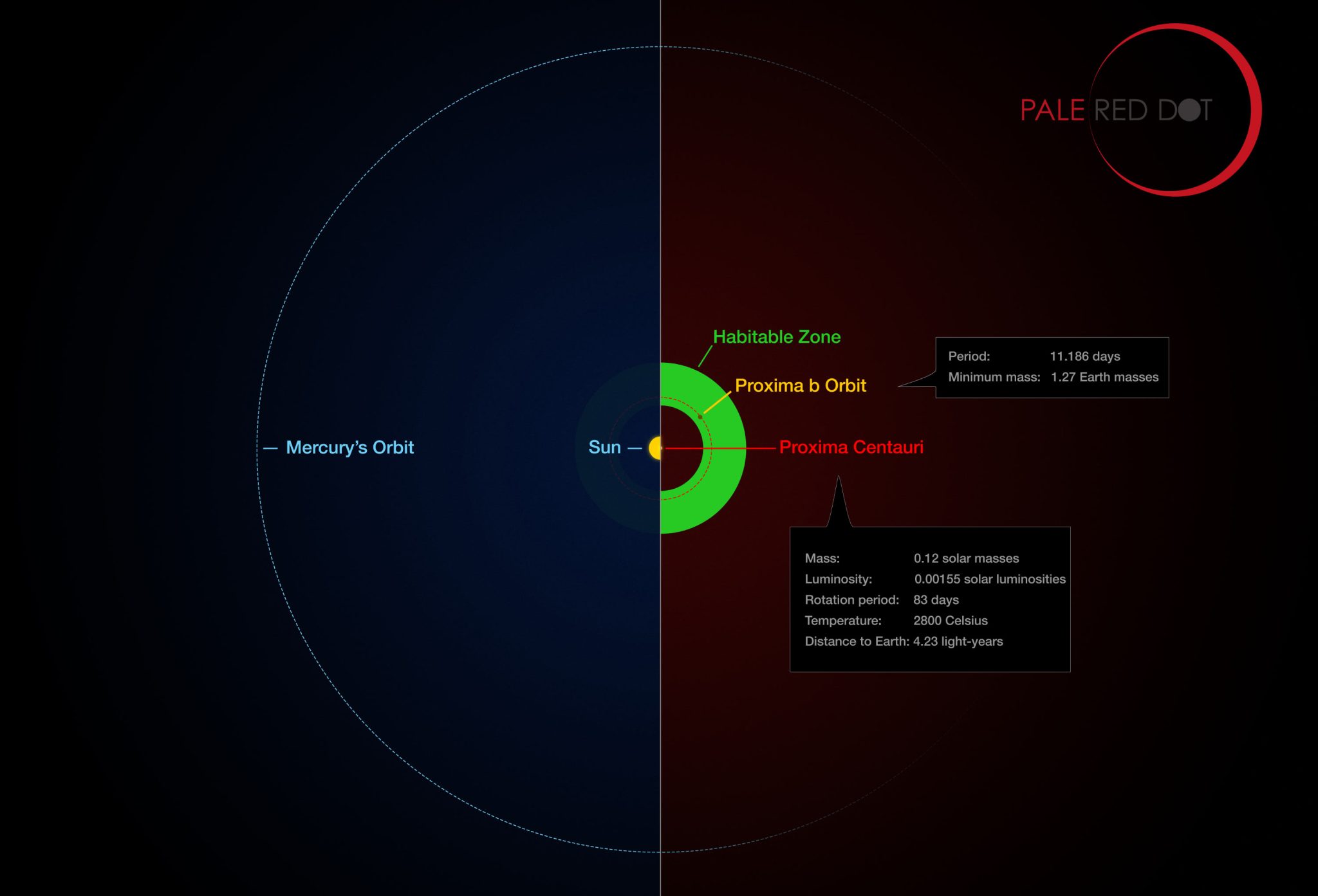
However, if we are talking about an Earth-like planet, for it to have conditions in which humans can survive, it must orbit somewhere in the so-called “habitable zone.” This means from approximately 5 Earth days for the hottest worlds in the systems of the smallest stars to approximately 13.9 Earth years if we are talking about something that orbits a star with the luminosity of Sirius and is more similar to Mars than Earth in terms of its temperature regime.
Theoretically, stars with greater luminosity may have significantly wider “habitable zones.” However, in practice, it is not possible to speak of the Earth-like nature of worlds located in such zones. The fact is that the entire evolution of such stars – from protostars to red giants or even supernova explosions – takes less than a billion years, while the evolution of life on Earth before the appearance of humans took about 4.5 billion years.
And the brightness of these stars changes too quickly. In just a few million or tens of millions of years, a world that was once suitable for life can become too hot for it. Therefore, in reality, there are simply no Earth-like planets where a year lasts dozens of times longer than on Earth.
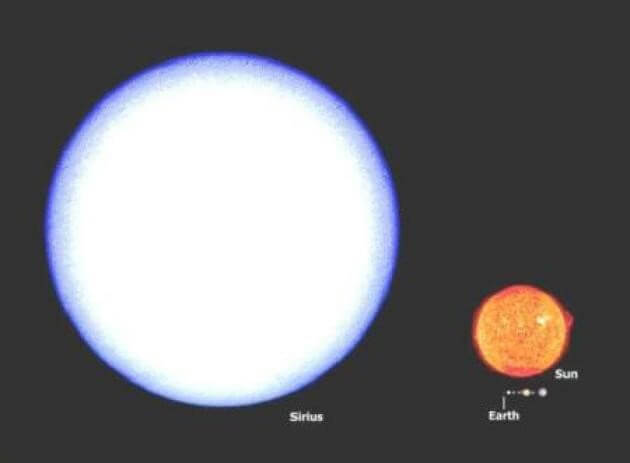
Even worlds orbiting stars with masses 1.4-2 times greater than Earth’s are unlikely to develop a biosphere. And without it, it is difficult to imagine a planet with an oxygen-rich atmosphere and soils suitable for agriculture. At least, that is the case if we consider biological evolution on Earth to be a typical example.
In other words, most Earth-like planets orbiting other stars do so in periods ranging from the familiar week to approximately four years. And in fact, even this is enough to get confused.
Length of the year
The previous paragraph rightly specifies that we are talking about Earth weeks and years. Because if we imagine a person born and living on a planet orbiting another star, the concept of an “Earth year” would be quite meaningless to them.
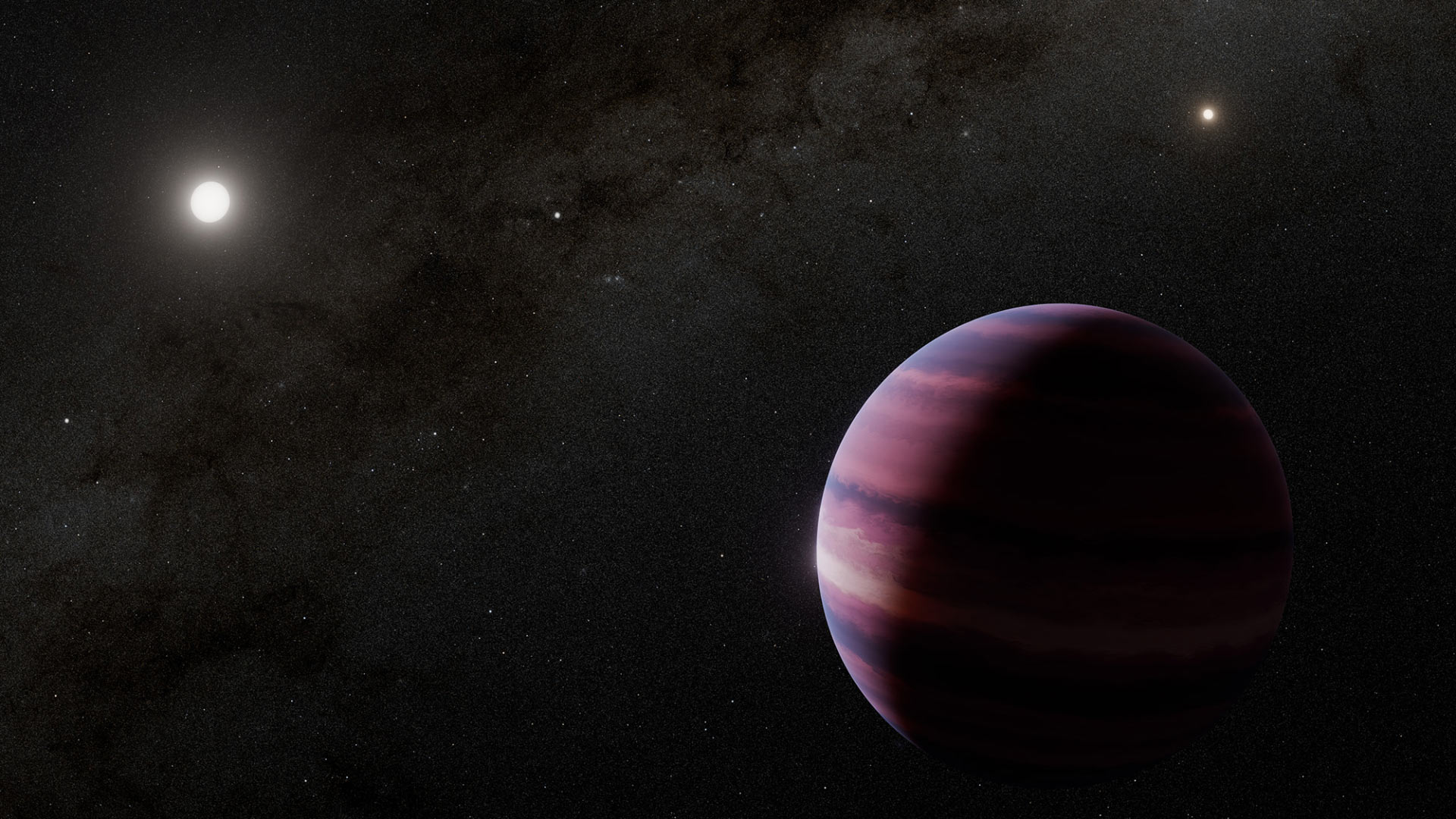
“How long is that?” someone might ask you, and it would be difficult to answer that question. Because the answer “365 days” would mean nothing to them, since the length of a day on that planet is most likely different from that on Earth. Therefore, it is entirely possible that in Earth days, the period of the planet’s rotation around the sun will be greater than 365, and in local days, it will be less.
And in general, for the Earth’s year, a duration of 365 days is not a very accurate answer, because in a leap year, there are 366 days. This, in turn, is a way to cope with the fact that the true astronomical year between two spring equinoxes is 365.25637 days.
Even more absurd terms are “earth month” and “week,” because both are tied to the changing phases of the Moon, and another planet may not have a moon at all. Or it may have two, both of which will have orbital periods that do not coincide with the lunar cycle.
The only more or less reliable unit of time is the second. In fact, according to the theory of relativity, it can vary for different planets due to different gravitational forces, but in reality, these differences are so small that over the lifetime of human civilization (several thousand years), they amount to less than five minutes.
That is, only by measuring the period of the planet’s rotation around the star in seconds and comparing it with the corresponding value for Earth (31,556,952 seconds for an astronomical year, 31,536,000 seconds rounded for a normal year, and 31,622,400 seconds for a leap year), it is possible to find a common “coordinate system.” How the year is divided into local days, weeks, and months will have to be explained separately.
How many days until your birthday?
The following example illustrates how confusing this can be. Let’s say you fly to another star system, meet a girl, and ask her what kind of alcohol she likes to drink on holidays. She replies that she is only 25 years old, still a minor, and therefore cannot drink alcohol.

And even on her next birthday, which is in 17 days, she will not try it, and on New Year’s Eve, which is in 20 days, she will do without it. Then she will have to wait another 268 days until she turns 27 and reaches the age of majority.
In reality, she will most likely use some local equivalents for months and weeks instead of the numbers mentioned, which will completely ruin her understanding of how long she has to wait for a glass of champagne.
But how crazy are the laws on this planet, from our point of view? Not really, because in the earthly units of measurement we are familiar with, 27 years correspond to 17 years and 292 days. It is just that a year on this planet lasts 240 Earth days, and a day lasts 20 hours.
How often can you celebrate New Year’s Eve on other planets?
The extent to which the length of a year can vary on different planets is well illustrated by the following thought experiment. Let us assume that some known stars have planets that receive the same amount of light as Earth, i.e., they are located in the appropriate part of the “habitable zone.” How often could you celebrate New Year’s Eve on these planets, and how many years could you live if you counted the years in ordinary Earth days and considered the average life expectancy to be 73.5 Earth years?
Let’s start with TRAPPIST-1, one of the smallest stars in the vicinity of the Sun. The radius of this red dwarf is only slightly larger than that of Jupiter. It is known for having seven Earth-like worlds orbiting around it, one of which, planet g, receives about as much light as Earth.
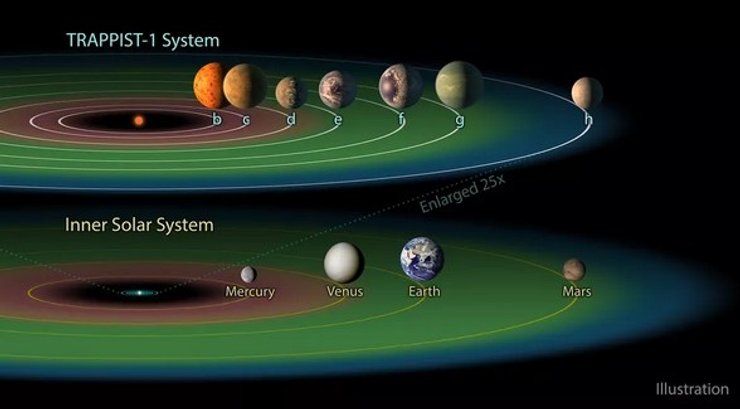
On this planet, the New Year comes every 6.1 days. That means you can celebrate every week. As for the average life expectancy, based on the local periods of rotation around the star, it would be 4,401 years. There, if you are a thousand years old, it means you are still young.
Or let’s take Lalande 21185, located only 8.3 light-years away from us. It is also a red dwarf, but much larger than TRAPPIST-1. It has two planets, but neither of them is in the “habitable zone.” But if somewhere in the middle of it, for example, at a distance of 0.18 AU, there was a world similar to our planet, then a year on it would last about 28 days, which is approximately equal to our month. In this case, you could celebrate your birthday an average of 959 times during your lifetime.
Next, you can look at 61 Cygni. It is a binary system located 11.4 light-years away from us. Its two components are orange dwarfs that orbit each other in over 600 years, meaning the distance between them is much greater than even that between the Sun and Pluto. So, from the perspective of a planet orbiting in the “habitable zone,” each of them can be considered a separate star.
Component A is brighter. Its “habitable zone” extends from 0.26 to 0.58 AU. If a planet orbited somewhere in the middle of it, New Year’s could be celebrated every 99 days. This means that the average human lifespan on it could easily be 271 years.
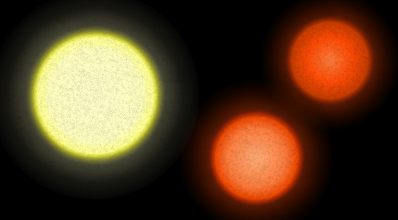
61 Cygni B is slightly dimmer. Its habitable zone ranges from 0.24 to 0.5 AU. If we take a point somewhere in the middle, for example, at a distance of 0.37 AU, then the New Year can be celebrated every 82 days. It is quite realistic to celebrate your birthday here 327 times.
But if we take the much larger orange dwarf Epsilon Eridani, the distance at which the planet receives as much energy as Earth is 0.61 AU. A year lasts 179 days there, half as long as on Earth. Accordingly, the average lifespan there would be about 160 local years.
If we take a star with a luminosity slightly greater than that of the Sun, for example, Eta Cassiopeia A, located 19 light-years away from us, its “habitable zone” extends from 0.9 to 1.7 AU. Therefore, a year on a planet similar to Earth would last 540 days. You would have to wait twice as long for it. And you would only be able to celebrate your birthday 50 times during your lifetime.
Be that as it may, this does not mean that life is shorter in some places and longer in others. It is just that the units we use to measure its duration are actually quite arbitrary.

