

On the morning of September 14, 2015, scientists working with the LIGO laser interferometer received a message from the system that controls its operation about an event designated GW150914. Thus, humanity received confirmation of the existence of gravitational waves in the universe.
Waves all around us
Today, observing gravitational waves has become common practice for astronomers. Almost every week, articles are published about discoveries made with their help. At the same time, it is easy to forget that their first direct observation took place only 10 years ago.
It was on September 14, 2015, that GW150914 was recorded, becoming the first confirmed detection of gravitational waves. At first glance, it may seem that too much attention is being paid to this discovery. To understand why it is so important, it is worth remembering what it actually is.
A wave is a change in a certain set of physical quantities that can move away from its source or oscillate within a limited area of space. There are different types of waves, but the mechanical type, which can be observed in almost any body of water, has been known since ancient times.
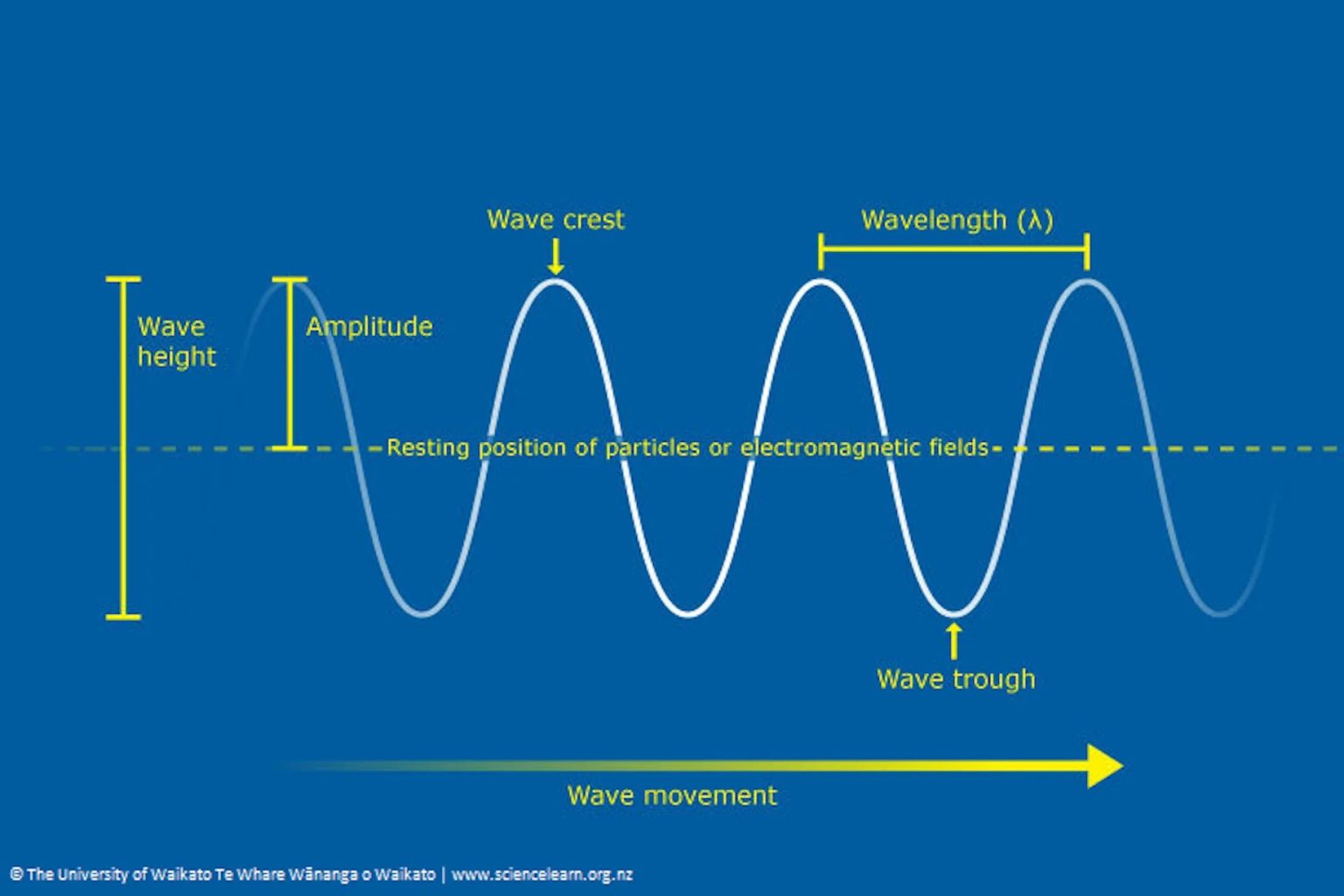
A wave has an amplitude – the difference between the minimum and maximum values of the oscillating quantity (in the case of mechanical oscillations, this is, for example, the water level), a period or wavelength – the distance in time or space between two peaks, and a frequency – the number of oscillations per unit of time.
Mechanical vibrations are the most obvious example, but they can also lead people into the trap of misconceptions. This is because it may seem that a certain medium or object, such as the string of a musical instrument, is vibrating. When scientists discovered other types of vibrations in the last couple of centuries, it caused a number of problems.
While chemical waves, which are a special type of chemical reaction, can still be said to have a specific medium, electromagnetic waves, which include visible light, radio waves, and X-rays, are not so simple. Their propagation does not require the presence of a medium consisting of individual atoms. That is why they can propagate freely and infinitely in a vacuum.
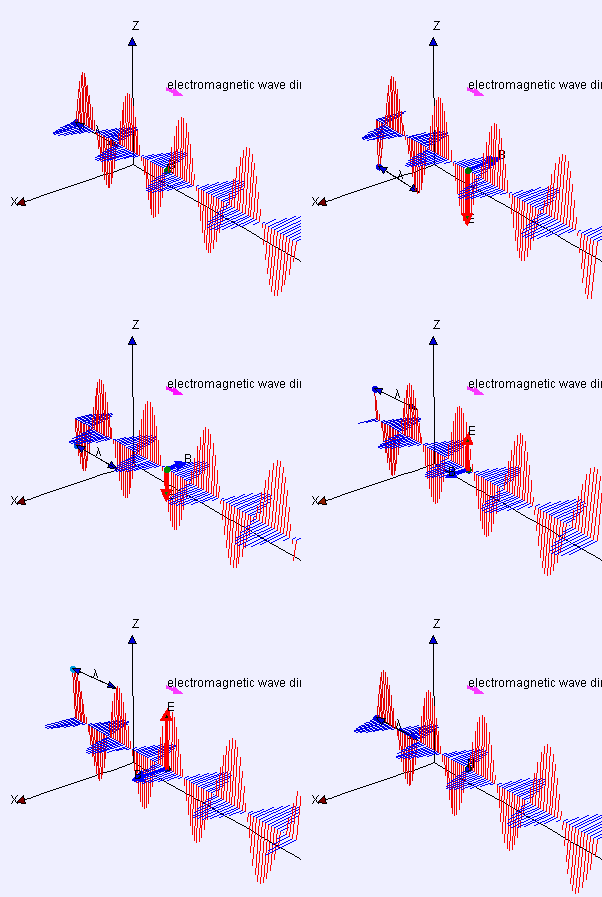
At the same time, they do not disappear completely as they spread through space, but they do not violate the law of conservation of energy. That is, as the front of their spread increases, the energy density in it decreases all the time. That is why, to see distant objects, we need to collect radiation from them over a large area.
Gravitational waves
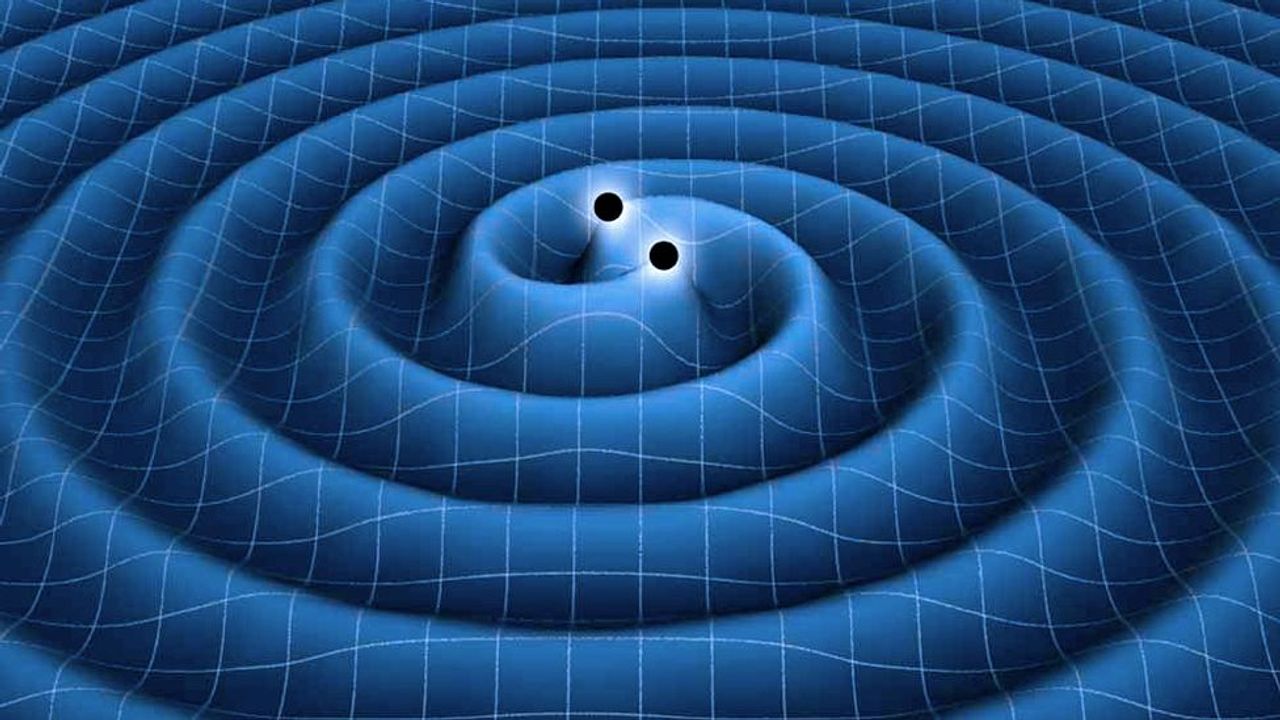
However, things got much worse when Einstein developed the theory of relativity in the early 20th century. In 1916, he deduced from it that any mass moving with variable acceleration must generate gravitational field fluctuations that propagate freely through space.
Simply put, he predicted the existence of a new type of wave – gravitational waves. And since, according to the theory of relativity, gravity itself is actually a distortion of space, these waves were not electromagnetic in nature, but were precisely oscillations of the curvature of space propagating throughout the universe.
It should be remembered that gravity is the weakest of the four fundamental interactions, and as waves propagate, they, like electromagnetic waves, must weaken due to the law of conservation of energy. Therefore, to confirm Einstein’s theory, it is necessary to search for extremely weak and short-lived fluctuations in the gravitational field.
That is why, for a whole century after their theoretical prediction, gravitational waves could not be found in space. The fact is that the vast majority of objects in space are not capable of giving them enough force for us to feel them, even theoretically. The exceptions are close pairs of massive compact objects, such as white dwarfs, neutron stars, and black holes, which can experience very significant variable acceleration, especially when they merge, as well as clusters of interacting galaxies. The latter, although they do not experience such accelerations, have no competitors in the entire universe in terms of mass. Later, a theory was put forward that gravitational waves could have been born in the early universe, which we can still feel under certain conditions.
The path to discovery
However, the main question regarding the detection of gravitational waves remained unresolved: how to detect them? After all, we are talking about a distortion of space equivalent to reducing the distance from the Sun to Neptune by an amount equal to the thickness of a spider’s web. So how can such a tiny deviation be detected?
Researchers in the 1950s and 1960s attempted to use mechanical devices to detect vibrations that seemed to come from nowhere. And in 1969, Joseph Weber announced the discovery of gravitational waves using one such device.
However, the discovery was never confirmed. On the contrary, it turned out that there are many sources of mechanical vibrations on Earth that are much stronger than gravitational waves from space. Cars driving past the building, the movement of tectonic plates, even people talking nearby – all of this had to be taken into account and excluded from the measurement results.
At the same time, the idea of long-base interferometry emerged. In general, interference is a phenomenon in which two waves, overlapping each other, create not one peak, but several, which are located at equal intervals. If this principle is applied to two beams of coherent radiation (i.e., radiation in which the oscillations occur in the same plane), then by observing the pattern of spots, it is possible to measure extremely small oscillations passing through the device.
However, it was impossible to build a gravitational wave observatory using this principle in the 1970s and 1980s. Therefore, scientists resorted to indirect methods that would at least allow them to confirm the existence of gravitational waves.
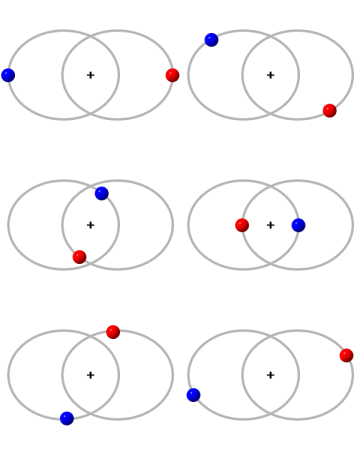
The theory of radiation emitted by pairs of massive objects came to the rescue. Fortunately, pulsars had already begun to be discovered at that time, and one of them, called PSR B1913+16, was a close binary system consisting of two neutron stars, each about 1.4 times the mass of the Sun. However, only one of them emitted periodic radio signals.
Both bodies move in elongated orbits around a common center of mass. At their closest point, the distance between them is only 1.1 solar radii, and at their furthest point, it is 4.8 solar radii.
However, the most interesting thing that astronomers discovered back in 1974 is that for every Earth year, the rotation period of these two objects decreases by 76 microseconds. Such incredible measurement accuracy was achieved precisely because the pulsar PSR B1913+16 is a high-frequency beacon that rotates around its axis 17 times per second.
The determined value of the reduction in the rotation period by only 0.2% differs from that predicted in the assumption that this object constantly emits gravitational waves and expends its energy on them.
Although gravitational waves from PSR B1913+16 have not yet been detected, scientists do not doubt their existence since the system was discovered. After all, it behaves with fantastic accuracy exactly as it should when emitting them.
LIGO and other gravitational wave detectors
By the beginning of the 21st century, astronomers had arrived at a point where, on the one hand, they had a strong desire to finally detect gravitational waves directly, and on the other hand, they had technologies that already allowed them to implement a laser interferometer scheme sensitive enough to see black hole mergers.
This idea, conceived by American physicist Rainer Weiss, was realized in the form of the Laser Interferometer Gravitational-Wave Observatory, known by its abbreviated name LIGO. It consists of two identical detectors, one located in Hanford, Washington, and the other in Livingston, Louisiana. The distance between them is 10 light milliseconds.

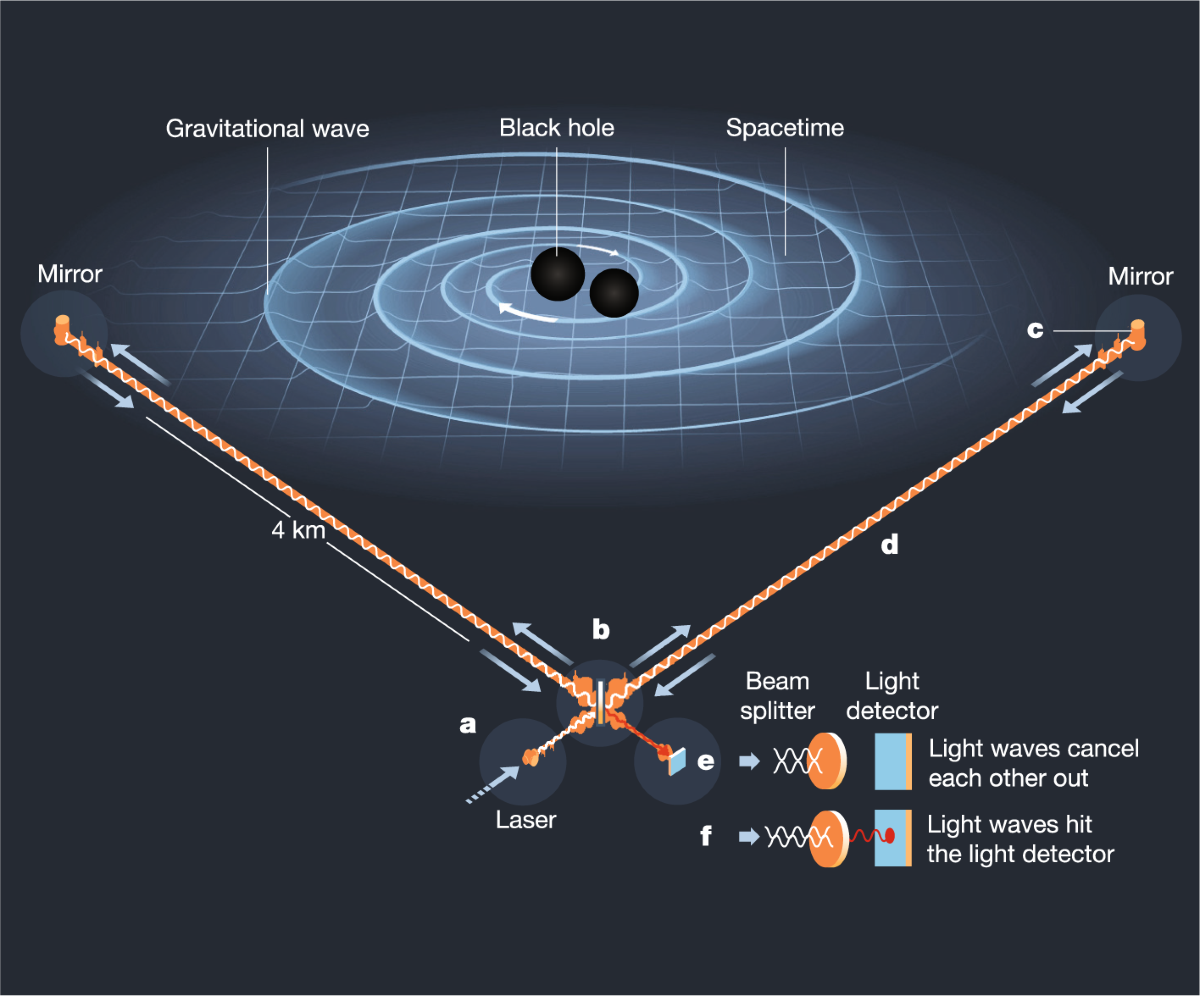
This allows you to determine which side the signal came from based on the delay with which the event is recorded. Each instrument consists of a laser radiation source, a target, and a system of mirrors.
The first one splits the beam into two parts, which diverge at an angle of 90 degrees and each travels 4 km, reflects again, flies back, and interferes with the other, as a result of which light-sensitive sensors on the target record an interference pattern. It constantly fluctuates slightly due to everything that happens on Earth, so a certain level of noise is constantly recorded.
However, when a gravitational wave arrives from space, it produces a much clearer signal that stands out amid this noise. LIGO began operating in 2002, but during its first eight years of operation, it was unable to detect any gravitational waves. Therefore, in 2010, a major upgrade began, which lasted five years.
At the same time, a structurally similar but smaller and single interferometer, VIRGO, was being built in Europe. It is located near the Italian city of Pisa and began operating in 2007.
In 2012, VIRGO also began modernization, which ended in 2017, after which it finally registered gravitational waves and has been working with LIGO ever since. In 2019, they were joined by the Japanese interferometer KAGRA.
The era of gravitational wave astronomy
It is noteworthy that LIGO recorded the GW150914 event literally in the first days after resuming its work in a modernized form. That is, the reasons why it had not detected anything for several years before that were its technical imperfections.
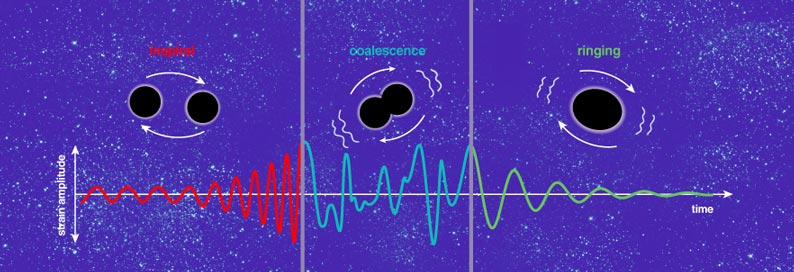
However, after improvements were made, interferometers opened up a world of objects that we would otherwise never have been able to see. Event GW150914 was the result of a black hole merger that occurred 1.2 billion light-years away from us. However, the direction from which the signal came could only be determined very approximately.
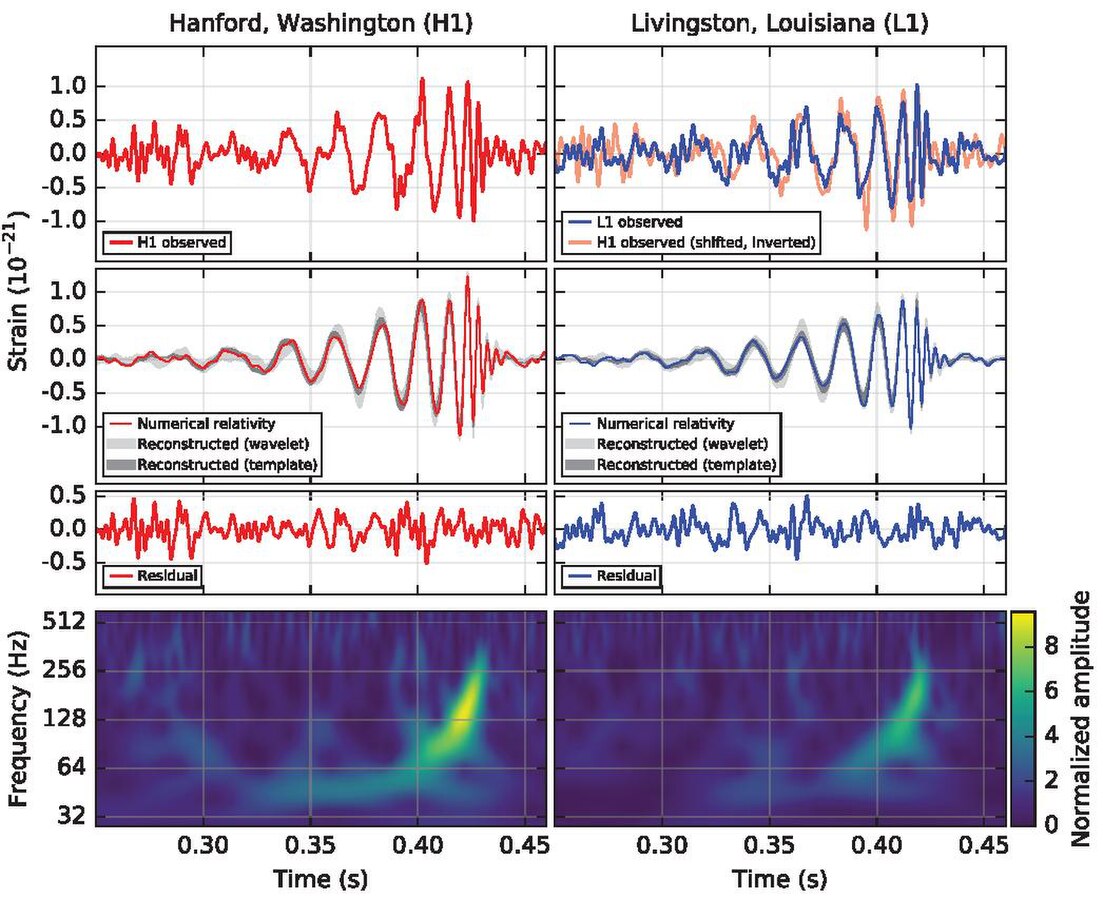
However, scientists have determined that the black holes involved in the merger had masses 36 and 29 times greater than that of the Sun. The resulting object is 62 times more massive than our star. Approximately three solar masses of matter were converted into gravitational waves at the moment of the merger.
At the same time, given the distance to the signal source, the question of what an ordinary telescope operating in any of the electromagnetic spectrum ranges would see is debatable. From this point of view, gravitational wave astronomy has capabilities that surpass anything else.
In the 10 years since GW150914 was detected, scientists have recorded dozens and hundreds of gravitational waves coming from all over the universe. The joint work of LIGO, VIRGO, and KAGRA allows us to determine not only the distance to them but also their direction with much greater accuracy.
Thanks to gravitational wave astronomy, we now know that it is not only black holes that merge. The same thing happens with neutron stars, white dwarfs, and between objects of different classes. And this is really a glimpse into processes that we have no idea about. For example, what will happen when a black hole, which can tear everything apart, and a neutron star, which is incredibly dense in itself, come together?
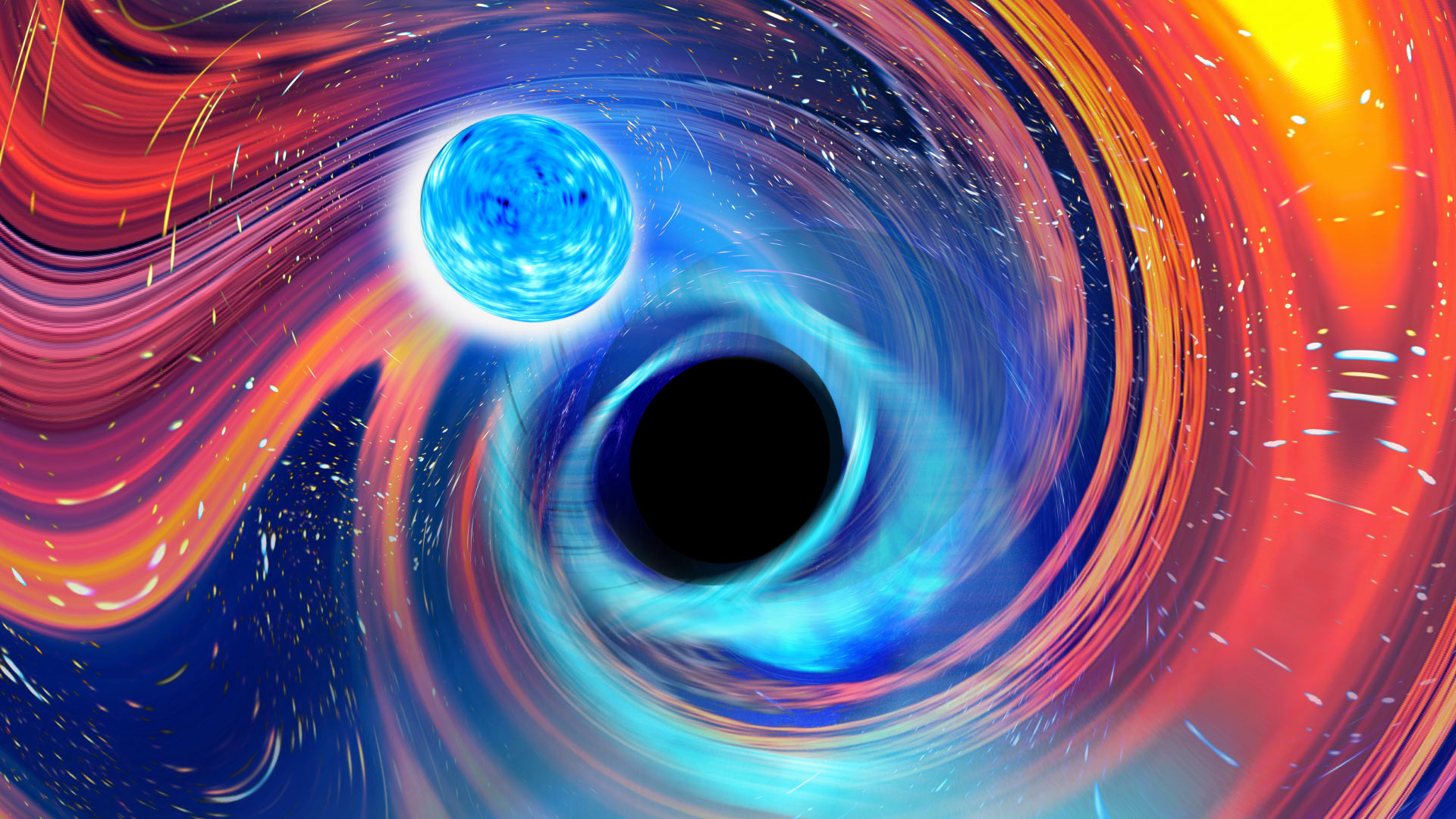
There are actually a lot of such questions. And they are the main problem of gravitational wave astronomy. By showing us invisible objects, it actually tells us very little about them compared to conventional astronomy.
In other similar cases, astronomers always try to observe objects in different ranges. But gravitational wave astronomy seems to be detached from the rest of this science. It simply cannot see the vast majority of objects that other telescopes study. And the events that are accessible to it are too short-lived to quickly redirect the largest optical and radio instruments to them. A lot of work is currently being done in this area.
And this is really important, because gravitational waves should actually be generated in many other cases, such as supernovae and tidal disruption events. They can also be seen at enormous distances, so it would be possible to look for correlations between the readings of interferometers and telescopes, and this could tell us a lot about how electromagnetic radiation is related to gravity, that is, about the very foundations of physics.

