

Some say that the universe will begin to expand faster and faster, objects in it will be torn apart into atoms, and we will all die. Others say that the universe will contract until it is the size of a speck, and we will all die. So who should we believe, and what do scientists really think about the death of the universe?
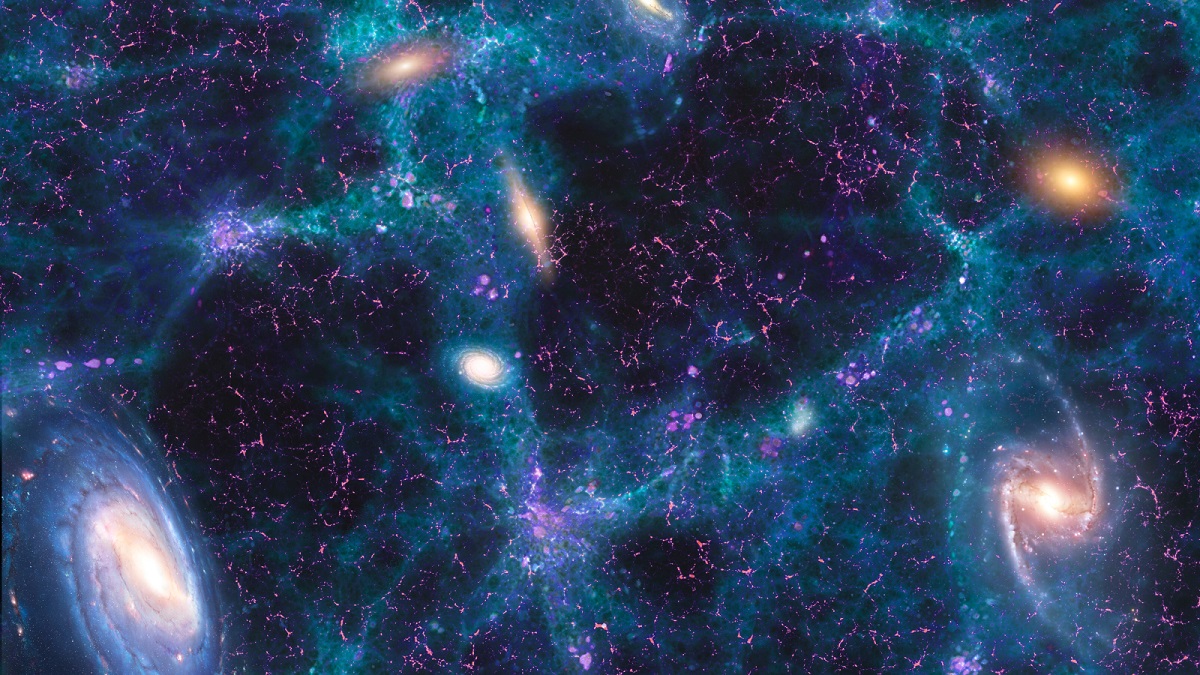
The death of the universe
According to current scientific understanding, the universe was born approximately 13.8 billion years ago as a result of the Big Bang. At the very beginning of its existence, it was a compact object with infinite density, containing all matter, energy, space, and time itself, but it gradually took on its present form.
However, our earthly experience tells us that nothing lasts forever. All living things eventually die, and even mountains turn to dust over time. However, when it comes to the world beyond our planet, our ideas are often mistaken. Is this the case with the death of the universe?
From time to time, individual scientists publish studies claiming that the universe will die in a large but finite number of years. The rest of the scientific community usually remains relatively indifferent to such studies, although everyone generally agrees that something similar to the death of the universe will indeed happen. What exactly, and under what conditions, is a rather complicated story, but it can be figured out.
Cosmological constant
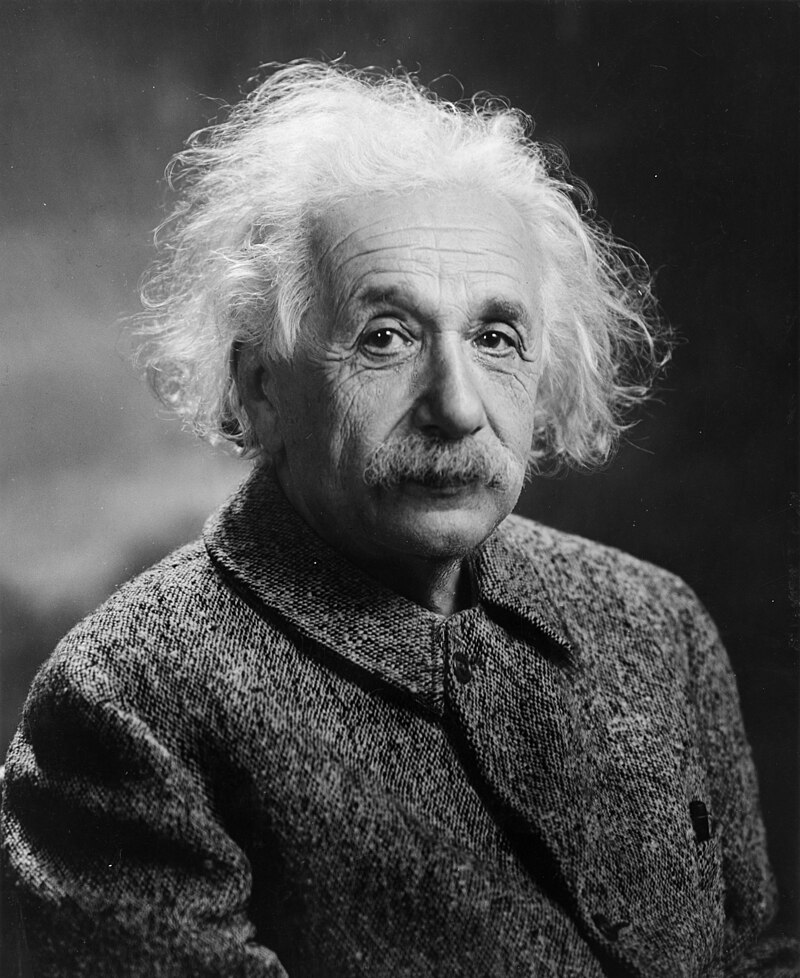
A little over a century ago, science was dominated by the idea that our universe is stable, infinite, and eternal. It has neither beginning nor end. And Albert Einstein decided to create an equation that describes such a world. Today, it looks like this:
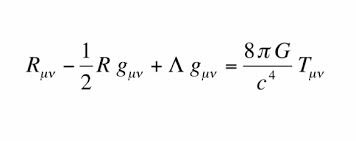
If it seems scary to you, it is still a simplified form, because in reality, he created a system of equations. However, the main thing to know about this notation, called Einstein’s field equation, is that it combines mass, energy, gravity, space, and time into a single whole.
However, the most interesting part of it is ?g??, especially the value of ?. It was not present in the first version of the equations, but the universe they described was unstable. Therefore, Einstein added this element without having any idea what it was or what it should be equal to. Without this thing, which became known as the lambda term, the equations simply did not work.
Einstein himself considered the lambda term to be merely a mathematical trick, but in 1922, his colleague Alexander Friedmann showed that different values of this term could be used to describe a universe with different curvatures that could expand and contract at an accelerating rate. The author of the theory of relativity tried to refute all these constructions, but in the end, he was unable to do so.
In the simplest terms, ? is the gravitational force of space. In classical physics and the theory of relativity, it is equal to zero, but this does not follow from any theoretical assumptions. For most of the 20th century, observations of the universe showed that Einstein was right, that emptiness does not generate gravity, and that all of Friedman’s constructions are meaningless.
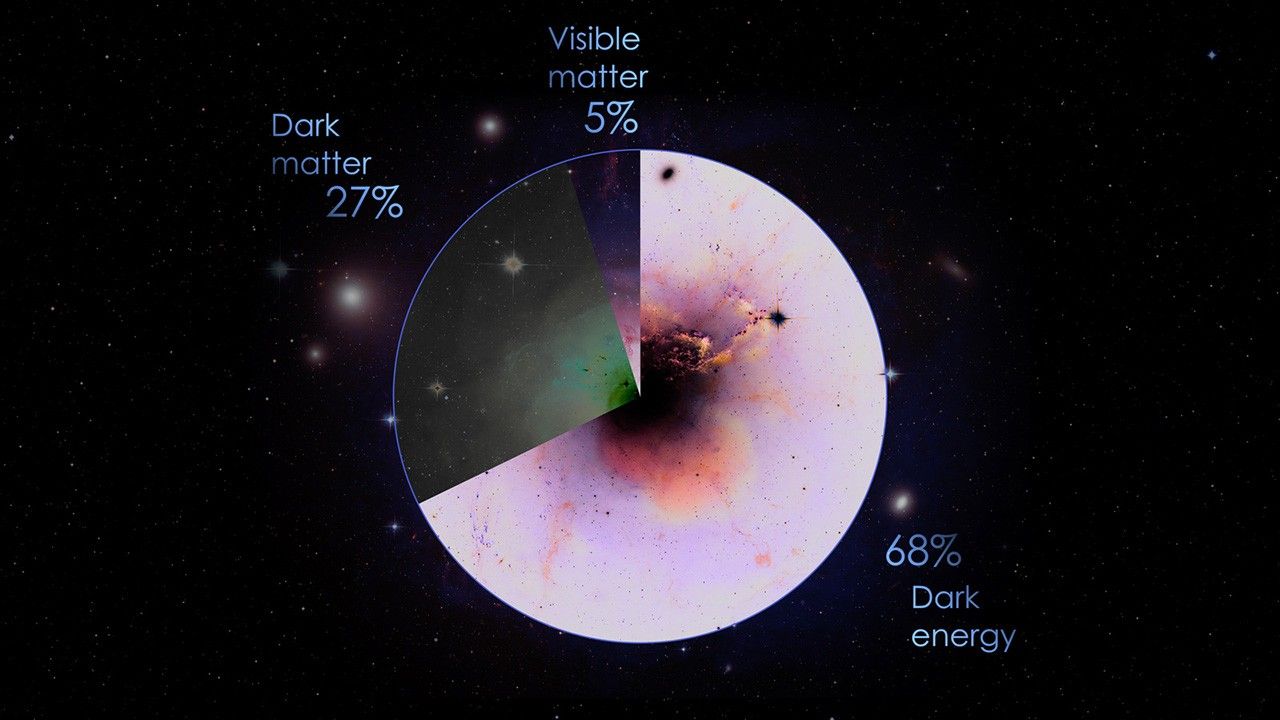
However, in 1997, observations of supernovae showed that there is gravitational acceleration that cannot be explained by either visible matter or dark matter. This means that the lambda term is not equal to zero after all. To explain this, it was necessary to introduce dark energy, the existence of which is extremely difficult to prove by other methods, but the main thing is that Friedman’s scenarios now make sense, and the fate of the universe depends on them.
Three scenarios for the end of the universe
According to data from the Planck collaboration published in 2020, Λ = 1.0905·10-52 m-2. That is, it is a value that differs only slightly from zero in the positive direction. Scientists are not entirely sure that this value remains constant in other parts of the universe – or even that it does not change over time. Therefore, all three scenarios for the demise of the universe remain potentially possible.
The first describes a situation where ? = 0 or is extremely close to this value. In this case, the expansion or contraction of the universe occurs extremely slowly, the gravity of the vacuum has practically no effect on the evolution of the universe, and the process of entropy growth comes to the fore.
The amount of energy available as a result of chemical and nuclear transformations will decrease, and there will be less and less gas for the formation of stars and planets. Accordingly, the proportion of giants among newborn stars will decrease, and the number of red dwarfs will increase. The proportion of white dwarfs and neutron stars among the total number of stars in the universe will also grow. As a result, it will become increasingly dim.
Trillions and quadrillions of years from now, the main sources of radiation will be matter falling into black holes and the decay of protons. But then, after an incredibly long time, even these processes will become impossible. The universe will freeze at the lowest possible energy levels.
This scenario is called the Big Freeze, or heat death. And given what we know about the universe, it seems the most likely outcome. The good news is that it will not happen anytime soon. So soon, in fact, that the 13.8 billion years that have passed since the Big Bang may seem like a blink of an eye.
Another thing is the Big Rip. This is the second possible scenario for the death of the universe, and it will happen if ? is much greater than zero and than the value currently assigned to it. The probability of this scenario is low, but it does exist.
During the Great Rip, the gravitational pull of the void will stretch space more and more. First, galaxy clusters will be destroyed, then the members of the Local Group will lose their connection with each other. Next, the Milky Way will break up into separate stars. Planets will lose their connection to stars, and all types of objects will begin to disintegrate until only individual elementary particles remain in space.
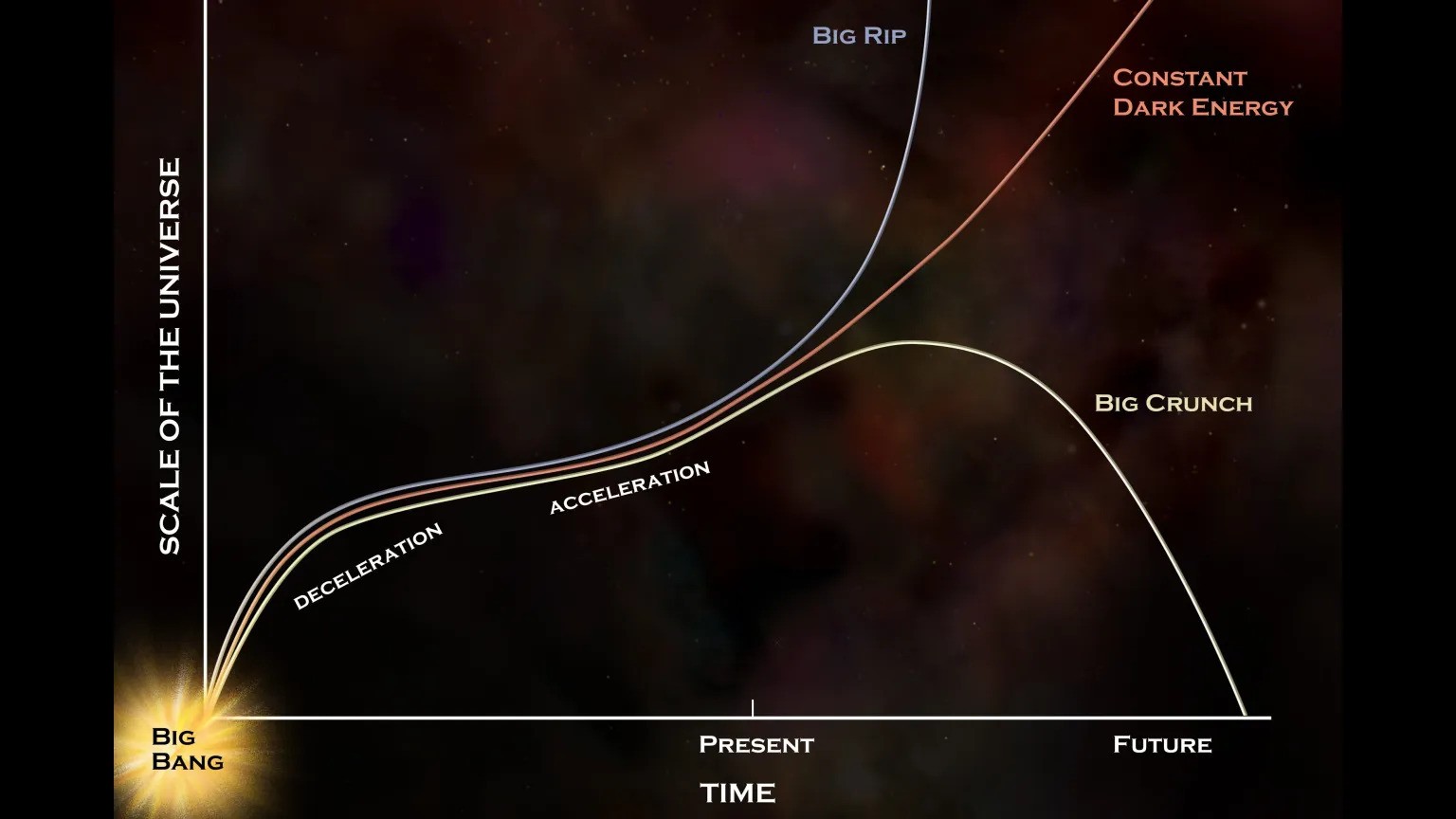
Although the likelihood of such a scenario is low, the expected time of the universe’s death in this case is significantly shorter than in the case of the Big Freeze. According to the latest estimates, this could happen in as little as 200 billion years. However, even that is quite a long time.
Finally, there is a third option, which will occur if the lambda term has a negative value. It is called the Big Crunch. In this scenario, we will see galaxies stop moving apart and the gravity of the void begin to pull them together. Then the same thing happens to the stars, and eventually we return to that incredibly dense and hot moment from which the universe was born. Perhaps a new beginning awaits it, and everything will repeat itself, but humanity will not survive this event.
The Big Crunch is the least likely scenario from the point of view of traditional physics, but various alternative theories recognize the negative value of the cosmological constant as very likely. They paint an absolutely apocalyptic picture, according to which it should end 33 billion years after the Big Bang. And since 13.7 billion years have already passed since the beginning of the universe, we have about 20 billion left.
Critical density of the universe
In fact, the fate of the universe also depends on its density relative to a certain value called critical density. This determines its topology and which scenarios are possible in it and which are not. For example, if the density is higher than the critical density, we would have a closed universe where the sum of the angles of a triangle, at least at cosmic distances, is always greater than 180°, and parallel lines always converge at some point. In general, in this case, the universe should resemble a closed bubble.
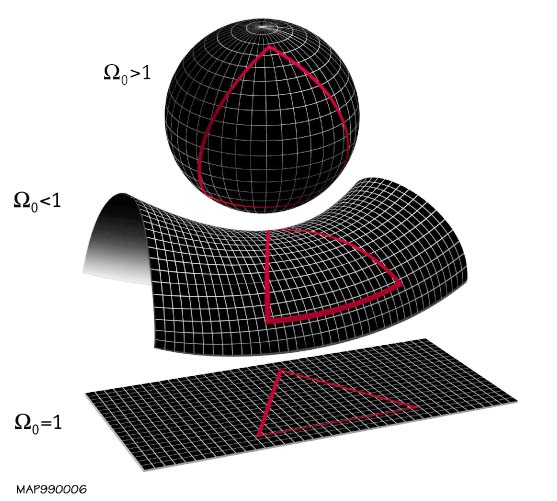
With this geometry, the universe always tries to collapse back into a singularity, but if there is enough dark matter in it, it will expand forever. This is true for our universe, where dark energy accounts for 68% of its total mass. For a closed universe to collapse, the density of ordinary matter must be 17 times higher than what we observe.
The situation is different if the density of the universe is less than critical. In this case, it has negative curvature and forms a surface similar to a saddle. The most likely scenarios for its demise are heat death and the Big Rip. Only a very large negative value of the cosmological constant can cause it to contract.
Finally, the critical density of the universe may be equal to one. Research shows that this is indeed the case. Parallel lines remain parallel on any sufficiently large scale, and the sum of the angles of a triangle is always equal to 180°.
In this case, everything depends on whether the cosmological constant has a noticeable effect. If it is zero, then the universe will expand forever, gradually slowing down. This means that we are facing heat death. If ? is not zero, then everything will happen as in a universe with negative curvature.
Unpredictable cosmological constant
But all of the above is true only for theories that view the physics of space in a more or less traditional way. And there is one significant problem with this view. No one can explain where the gravity of the void comes from.
More precisely, in quantum field theory, the theory underlying quantum mechanics, there is an explanation that this is vacuum energy, but the same theory predicts that the value of the cosmological constant should be approximately 60 orders of magnitude (i.e., sixty zeros after the unit) greater than what is observed. And this is after the latest corrections, because previously this difference was between 120 and 122 orders of magnitude. The worst prediction in history.
That is why some people question all theoretical constructs around the cosmological constant. After all, the fact that dark energy is responsible for it is only an assumption. And the fact that ? must be a constant does not follow from anywhere. There is only a term in the equation and observations that correspond to a certain value of it here and now. They may well change both in space and time. This means that scenarios for the death of the universe may be much more interesting and unusual than we think.

