

A Chinese scientific team conducted ground tests of an inflatable, reconfigurable module for an orbital factory to be deployed after launch. The concept involves launching a folded module and deploying it in orbit to its full working volume. During testing, the hermetic connection of the flexible shell to rigid nodes, controlled deployment and stability of the environment for high-precision processing were checked — key conditions for serial production in zero gravity. The project is presented as a step towards large-scale industrial production in low Earth orbit, removing the limitations of the rocket’s cargo compartment size and reducing the cost of creating large orbital objects.
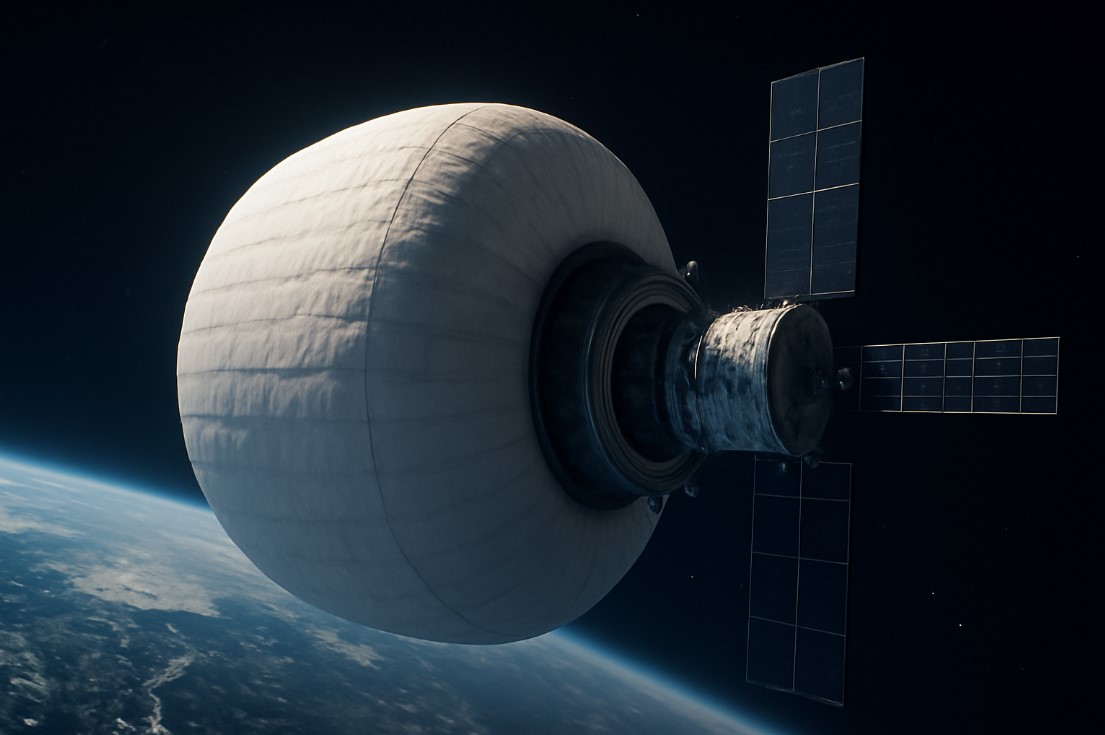
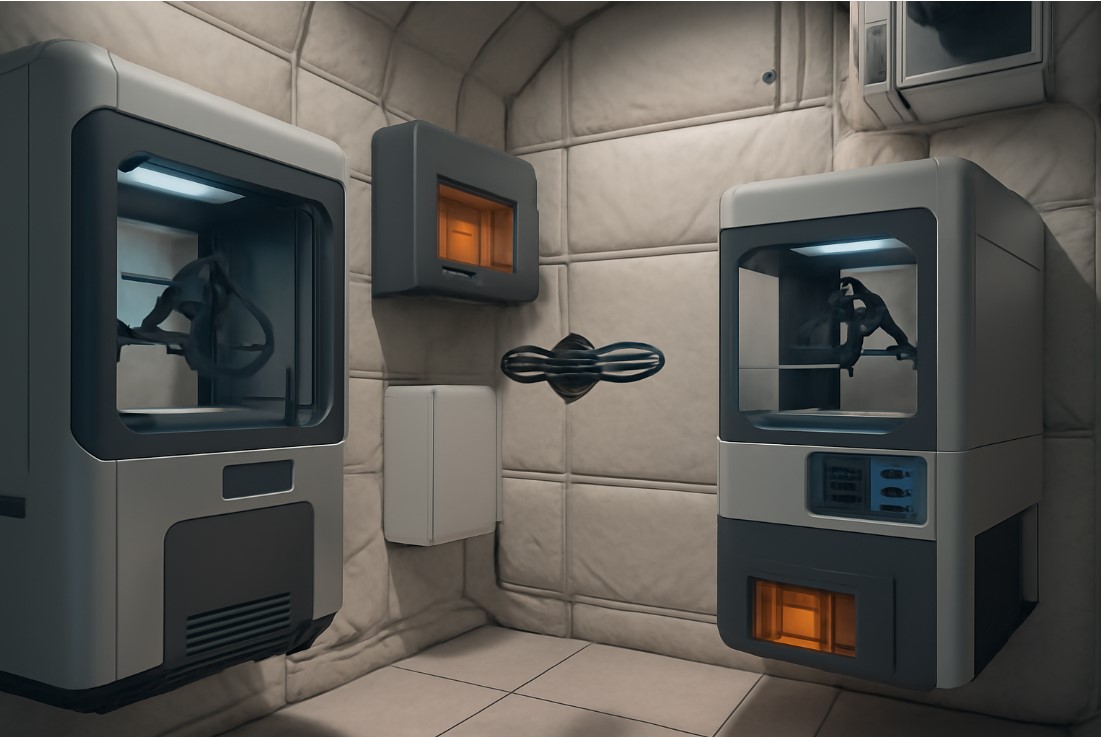
The idea behind these workshops logically complements China’s focus on orbital manufacturing: the module can be quickly reconfigured for various processes, from pulling ZBLAN fibre and growing ultra-pure crystals to 3D printing biomaterials and precision assembly of microsystems. Reconfigurability reduces the number of launches of various specialised units and allows the working areas to be scaled simply by adding another section.
How does it work? Imagine a complex tent that is launched in a rocket in a rolled-up form and then inflated in orbit like an air mattress. Inside, there are rigid frames and connecting nodes that fix the shape, and the shell is multi-layered: it withstands pressure and protects against micrometeorites and cold. Next, power, ventilation and modular cabinets with equipment are connected — workers set up machines, 3D printers and crystal furnaces. The secret lies in two things: firstly, the inflatable structure is dozens of times more compact at launch, but unfolds into a large workshop without expensive rigid casings; secondly, microgravity and a clean vacuum allow materials to be made more uniform and “clean” (less stress, bubbles and deformations), so fibre optics, crystals or thin films are of higher quality than on Earth.
Why is this important? Orbital manufacturing can reduce the cost of creating large, rigid, and ultra-precise structures—such as mirror segments and gratings for next-generation telescopes or ultra-lightweight radio antennas with large apertures. Manufacturing without the effects of gravity reduces defects and internal stresses, improving optical quality and stability. This paves the way for the launch of larger scientific instruments (astronomical and heliophysical) and the rapid modernisation of observatories without returning components to Earth. In the future, such factories could assemble modules for interferometers and form giant telescopes in orbit, which would be unattainable in size for traditional rockets.
Want to keep the space vibe going after this news? Head over to our list of ‘12 films, TV series, and books about the Moon that are worth your time,’ which has everything from documentary discoveries and sci-fi to lyrical stories about the human dream of reaching further. Easy-to-use guide to help you pick what to watch or read tonight to experience the Moon in a whole new way.

