

The sun and other stars shine thanks to thermonuclear reactions, which convert matter into energy. This is one of the most efficient ways to obtain energy in the Universe. Humanity has been able to partially reproduce this process, but only in thermonuclear bombs. And even that has proven to be extremely problematic.
Thousand of Suns
“If hundreds of thousands of suns rose up at once into the sky, they might resemble the effulgence of the Supreme Person in that universal form.” — these words from the Bhagavad Gita, a Hindu sacred text written two thousand years ago, were quoted by Robert Oppenheimer after testing the first nuclear bomb in history in the desert of New Mexico.
There is nothing surprising in the fact that he chose this particular quote to express his impressions. A nuclear explosion, with temperatures reaching millions of degrees at its center, is difficult to compare with anything other than the Sun. And it actually has something in common with the explosion in the Mojave Desert: in both cases, a reaction occurs that converts part of the mass of matter into energy.
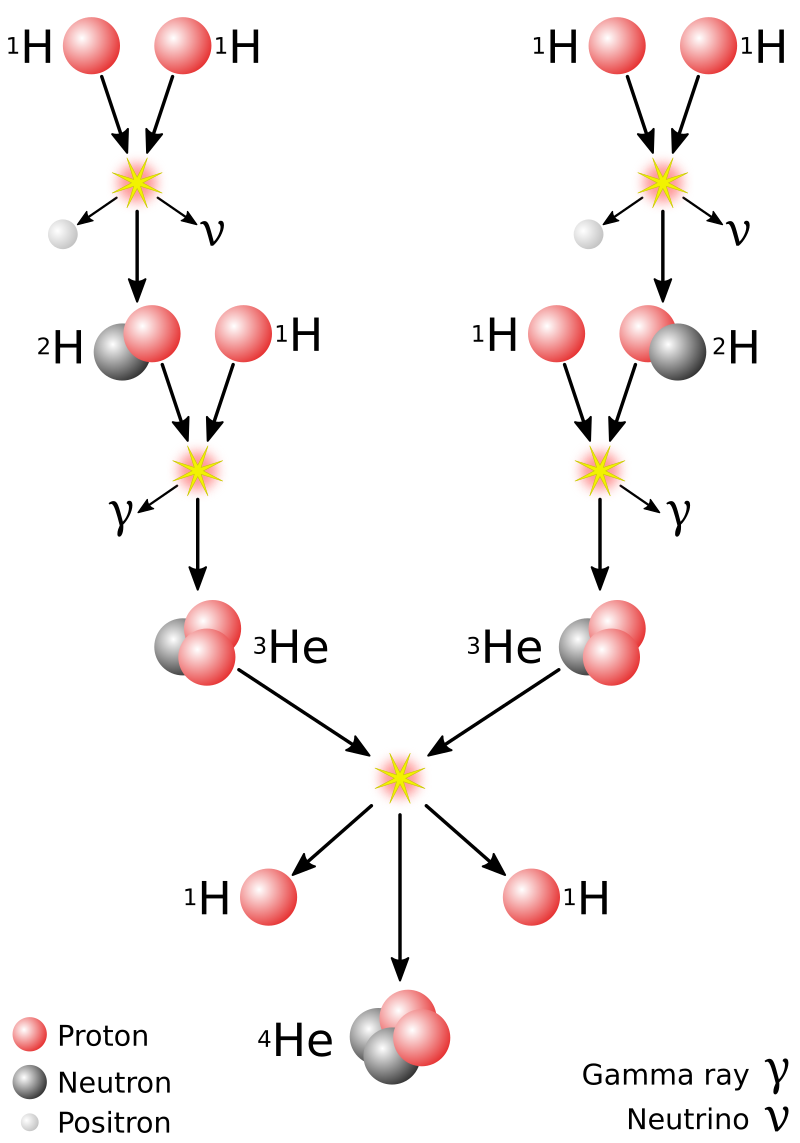
But that is where the similarity ends. Nuclear reactors and bombs use the process of fission, which splits heavy nuclei consisting of a large number of protons and neutrons. Stars, on the other hand, are powered by thermonuclear fusion, the process of merging light nuclei into heavier ones.

The scale of this process is truly impressive. Solar flares, which cause magnetic storms on Earth, are several orders of magnitude more powerful than any weapon created by humans. And the energy that our star emits into space every second would be enough to power Earth’s civilization for several centuries.
Scientists can even describe the cycles of thermonuclear reactions. They mainly involve various isotopes of hydrogen and helium, and it would seem that there are enough of these substances on our planet. Therefore, it would be possible to try to replicate what happens in nature. However, this requires recreating incredibly high temperatures and pressures, otherwise the reaction will not start.
Experimental thermonuclear devices have been around for decades. However, it has not yet been possible to obtain a stable energy output from them. For this reason, thermonuclear bombs, the first of which was tested 73 years ago on November 1, 1952, remain the only way to truly ignite the sun on the Earth’s surface.
Design of a thermonuclear bomb
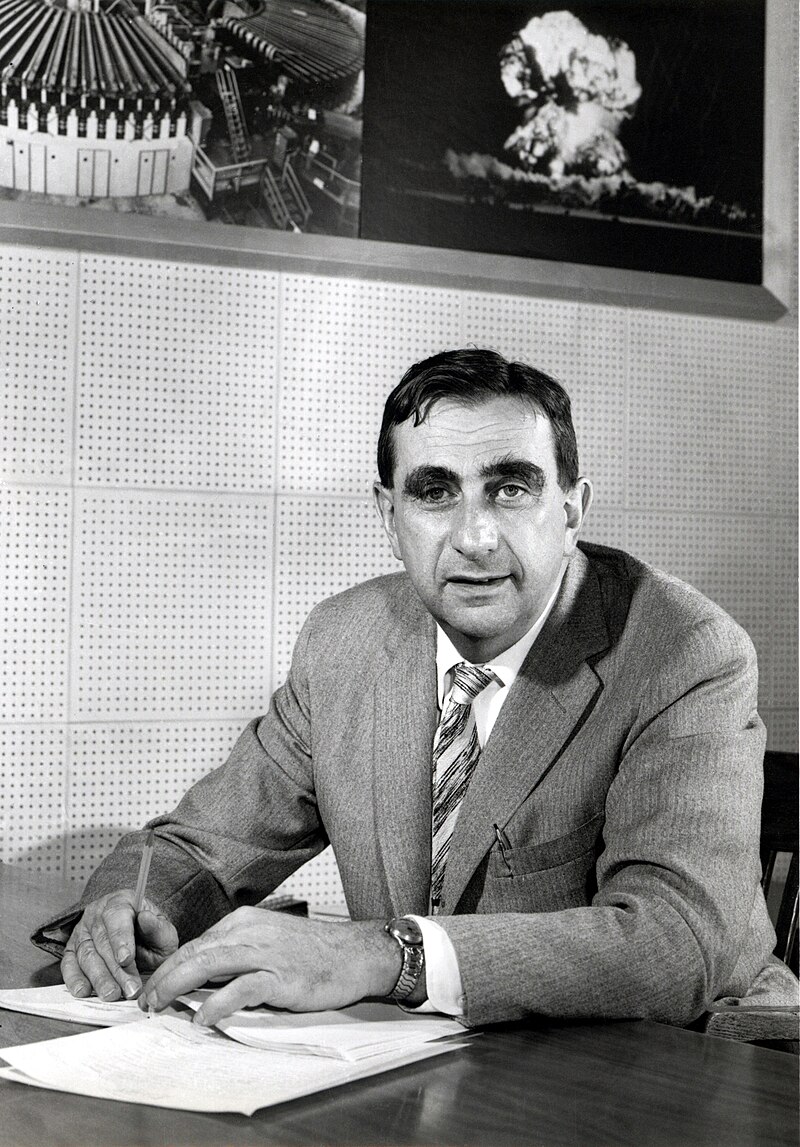
The idea of creating a weapon based on thermonuclear fusion was first proposed in the autumn of 1941, when bombs based on nuclear fission were still under development. Its authors were Enrico Fermi, the same man who later formulated the paradox of the absence of extraterrestrial observations, and Edward Teller.
The latter became very enthusiastic about the prospect of creating such a weapon, because the path to its implementation seemed obvious: ignite hydrogen using a nuclear explosion. However, it quickly became clear that it would not be possible to achieve this even using uranium fission. Instead of ordinary hydrogen, it was necessary to use a heavier isotope called deuterium. In order for it to begin transforming into helium-4, 400 million degrees Celsius was sufficient, and this seemed entirely feasible.
However, Teller quickly realized that he had not taken into account the Compton effect, which causes the enormous amount of heat generated by a thermonuclear explosion to dissipate before the required temperature is reached.
The thermonuclear bomb turned out to be not as simple as it seemed. The situation could have been saved by using an even heavier isotope of hydrogen, tritium, together with deuterium. However, it is unstable, present in seawater in negligible quantities, and extremely difficult to produce.
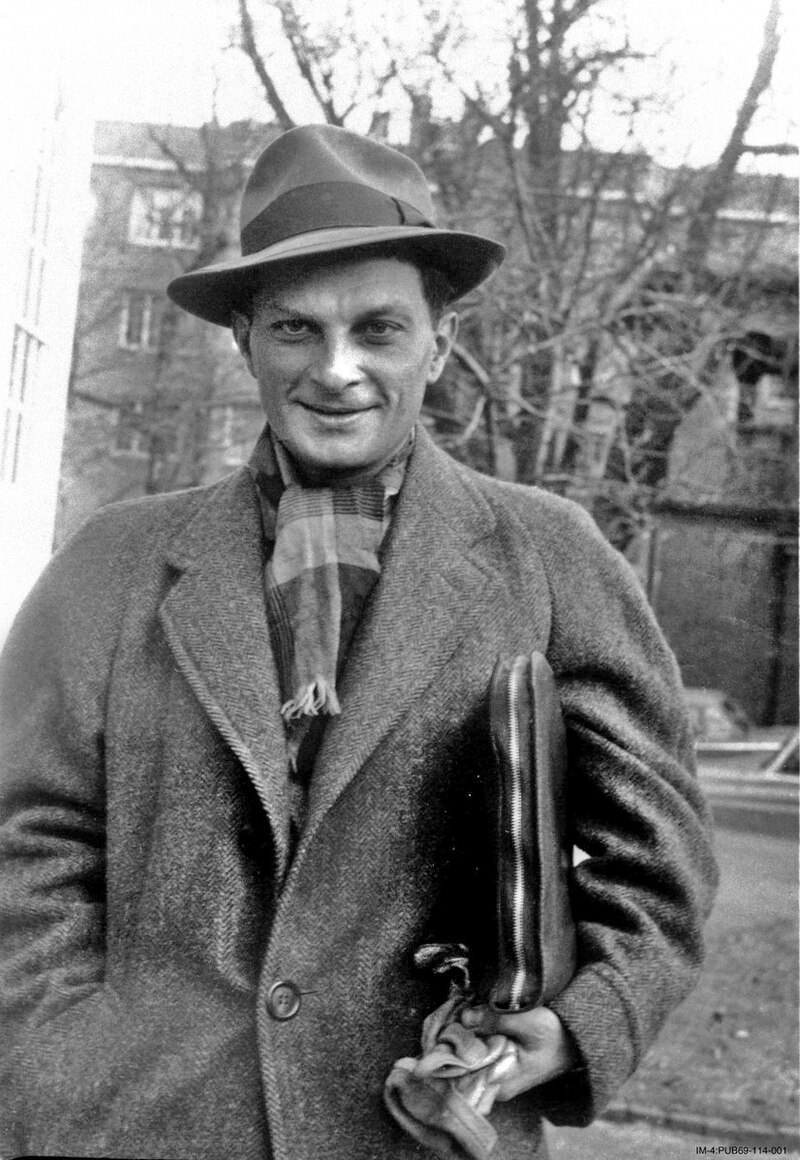
At that very moment, one of Teller’s group members, Stanislav Ulam, a native of Lviv, joined the discussion. He pointed out that if thermonuclear fuel were compressed very strongly, significantly lower temperatures would be required to initiate the fusion reaction. All this could be achieved with the help of the same nuclear explosion.
However, it turned out that even before the project was implemented, a lot of calculations had to be made, because everyone understood that the closer the deuterium tank was to the epicenter of the thermonuclear explosion, the greater the chances were that the deuterium-tritium mixture would start a fusion reaction. But no one could say for sure how close it should be to the nuclear charge. Perhaps it should have been placed inside it?
When the nuclear sun first flashed in the Mojave Desert in 1945 and Oppenheimer began quoting the Bhagavad Gita, no one knew whether it was actually possible to create a thermonuclear bomb. However, it became necessary quite quickly.
It became clear that the Soviet Union would soon have an atomic bomb, and that it would not be possible to create more powerful devices simply by increasing the amount of uranium or plutonium. The reaction occurred so quickly that only a small portion of the substance had time to participate in it. The rest simply evaporated.
In 1951, Ulam suggested that to achieve the necessary density, a container with deuterium should be made in the form of a cylinder, and an atomic bomb should be attached to one of its ends. Then, instead of gas pressure, radiation from the explosion would compress the fuel properly and start the reaction. They and Teller refined the design, resulting in a form that was then used in the construction of most bombs, known as the “Teller-Ulam design.”
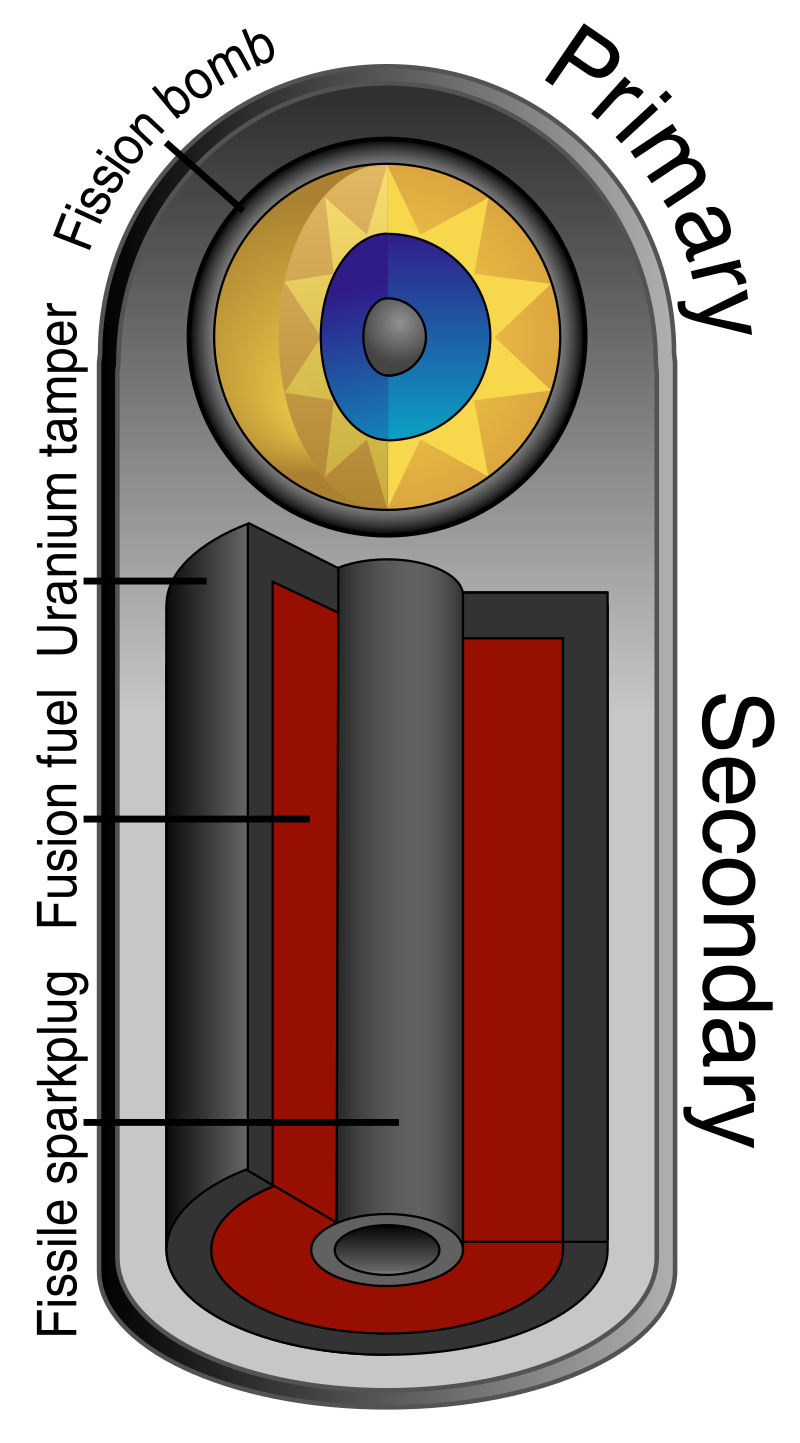
The explosion of a thermonuclear device occurs in two stages. In the first stage, a conventional bomb explodes. A stream of radiation of incredible intensity moves through a container of deuterium and encounters a rod of enriched uranium or plutonium located along the axis of the cylinder. The compressed nuclear fuel reaches a supercritical state and the fission reaction begins. A counter shock wave is formed, and at the point where it meets the wave from the first explosion, the temperature and pressure finally become high enough to ignite the deuterium and tritium.
The first thermonuclear explosion on Earth took place on November 1, 1952, during the Ivy Mike test on Enewetak Atoll (Marshall Islands in the Pacific Ocean). More precisely, the bomb, which was more like a 73.8-ton structure, was installed on the tiny island (motu) of Eleugale, part of Enewatec.
More precisely, it was part of it, because as a result of the bomb detonation, it simply ceased to exist. A water-filled crater 50 meters deep and almost 2 kilometers in diameter formed in its place. The force of the explosion was 10.4 million tons of TNT equivalent, which is 690 times greater than the bomb dropped on Hiroshima.
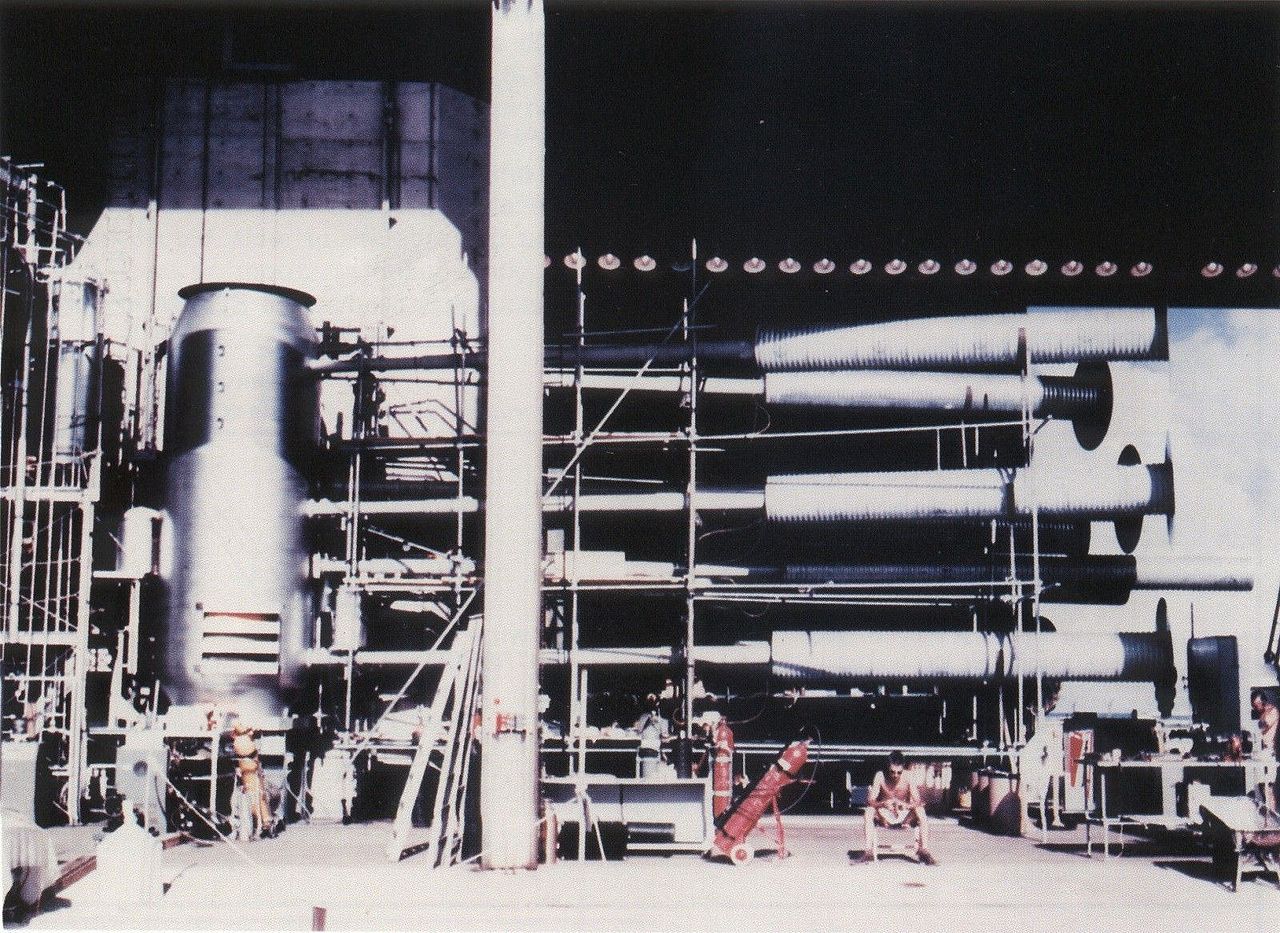
At that time, it was the most powerful explosion ever created by humans. The Teller-Ulam design worked, but it was impossible to use it as a weapon. Deuterium and tritium required cryogenic equipment, and it was impossible to place such a design inside a bomb.
Alternative designs
At that time, the USSR had already tested its atomic bomb and begun work on a thermonuclear one. And, of course, they encountered the same problems as Teller and Ulam. Spies in the US could not help them much because they had been removed from the scientists even before Ulam expressed the idea of a two-stage explosion.
Therefore, Andrii Saharov and Yulii Haryton, who led the development, turned to the idea of implosion, which Teller had been thinking about at the end of World War II. Implosion is a kind of “inward explosion” that makes atomic bombs work. Pieces of uranium or plutonium are surrounded on all sides by conventional explosives, detonated, and the pressure of the gases compresses them to a critical density at which the fission reaction begins.
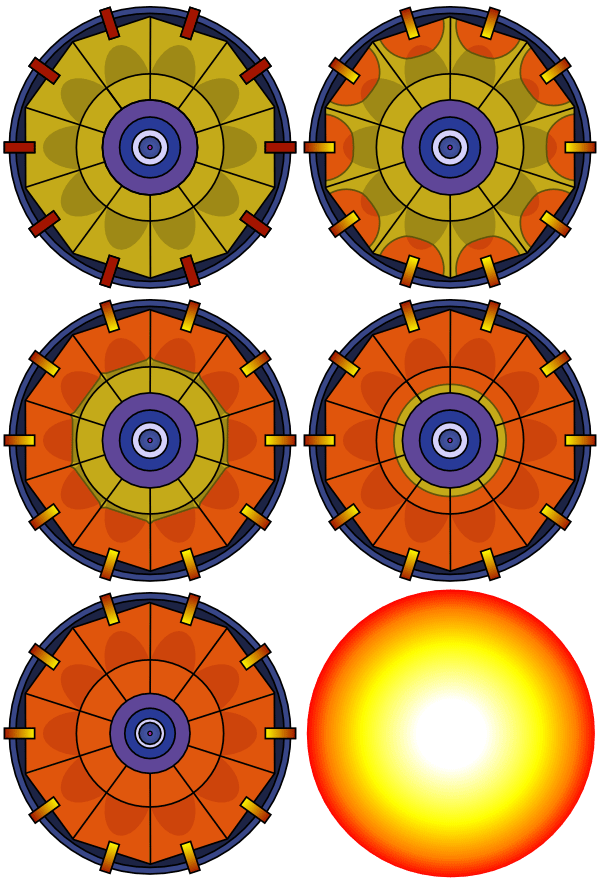
So, if an atomic bomb is an implosive device on its own, why bother thinking about which side to attach it to? It is possible to simply place layers of nuclear and thermonuclear fuel inside a sphere of explosives, forming something like a layer cake. Actually, this scheme is called a “layer cake.”
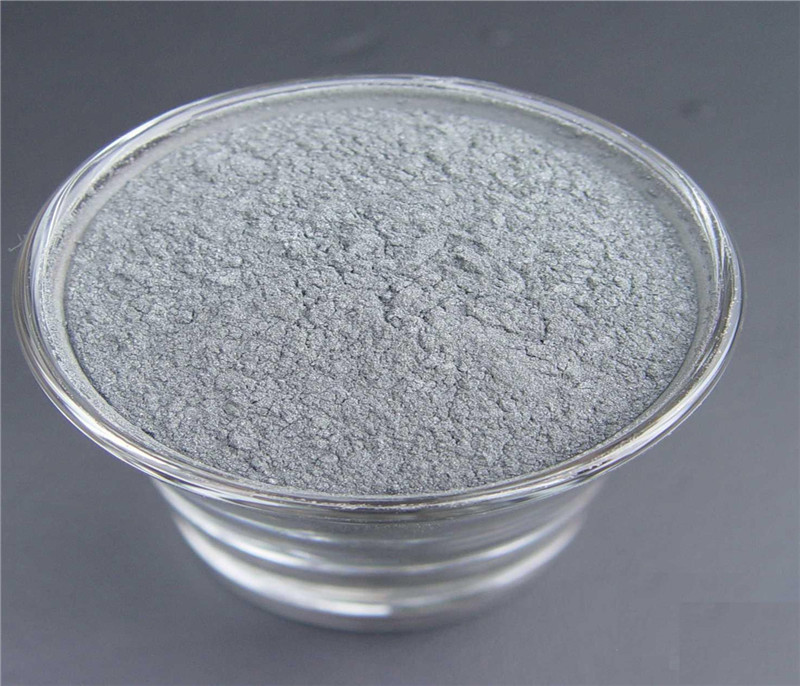
In addition, the Soviet Union decided to replace gaseous deuterium with a solid compound: lithium deuteride. This made it possible to get rid of the bulky cryogenic installation, since this substance is not a gas, but a powder. However, no one could say for sure whether a thermonuclear reaction would start in this substance or not.
Anyway, on August 12, 1953, less than a year after Ivy Mike, the RDS-6s bomb, constructed precisely on the principle of a layer cake, was tested at the Semipalatinsk nuclear test site. The explosion took place, and it became clear that the Soviet device, unlike the American one, could be used as a weapon.
At the same time, the explosive power was only 400 kilotons, of which only 15-20% was attributable to the fusion reaction. It was immediately clear that it would be impossible to make the “layer” more powerful. The correct solution was to use lithium deuteride in the Teller-Ulyam design.
The Americans managed to achieve this on March 1, 1954. On that day, a test called “Castle Bravo” took place on the Marshall Islands, more precisely on Bikini Atoll. This time, the explosion had a power of 15 megatons of TNT equivalent, which was 2.5 times greater than the 6 megatons calculated by Teller.
The reason lay in the thermonuclear fuel used in the bomb. Lithium deuteride is essentially a type of lithium hydrate: a metal atom bonded to a hydrogen atom. Only in this case, the hydrogen is replaced by deuterium. But lithium also has different isotopes. In the Castle Bravo device, half of the thermonuclear fuel contained lithium-6, and half contained lithium-7.
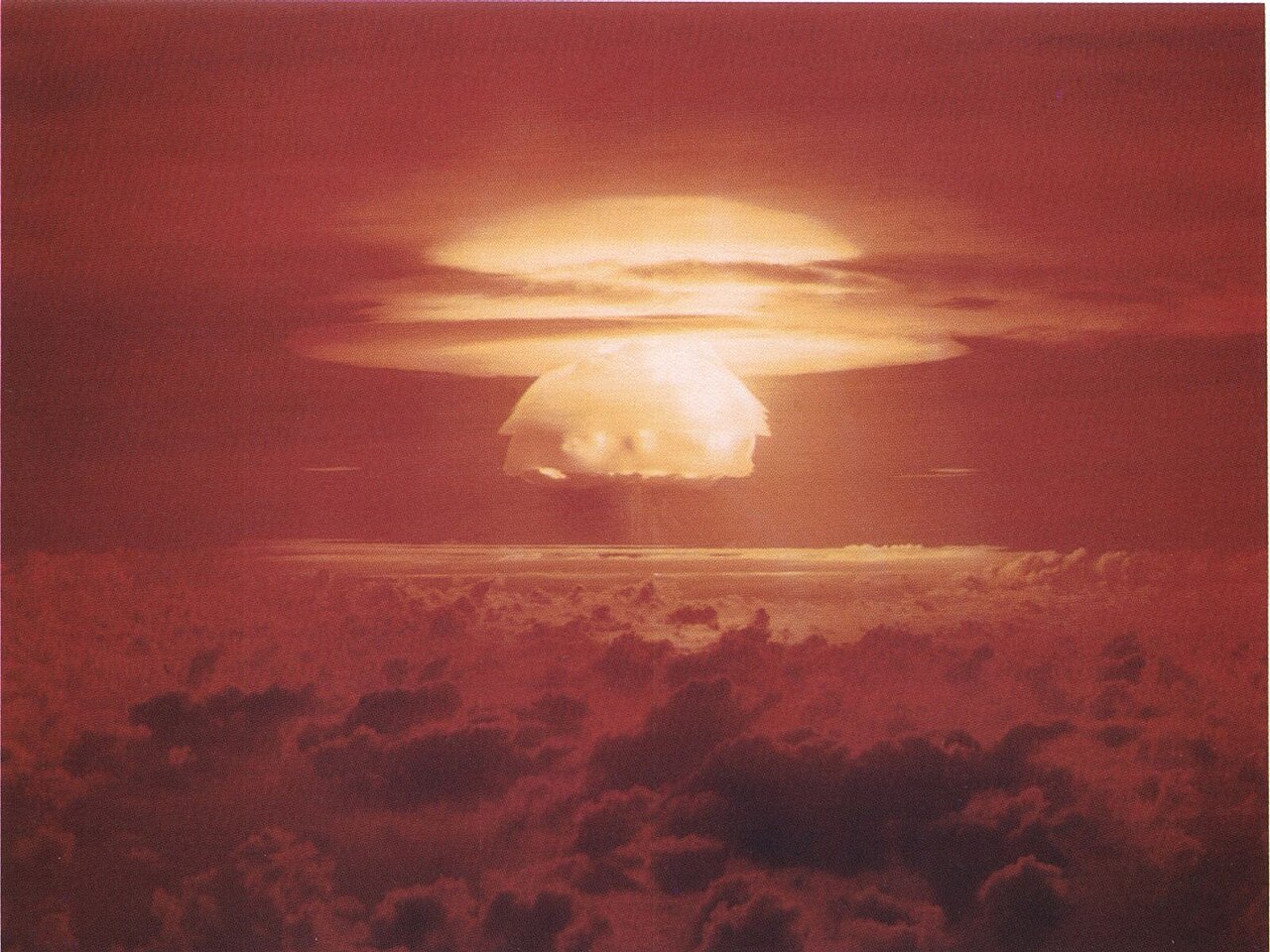
Actually, lithium also undergoes thermonuclear reactions in stars. But everyone believed that the conditions in the Castle Bravo test were not extreme enough for this to happen. However, it turned out that the scientists were wrong. One of the consequences was the irradiation of people over a large area and radioactive fallout caused by the dispersion of the second-stage uranium rod.
The most powerful explosion in history
All the problems with Castle Bravo did not prevent the US from creating something they wanted on its basis: the most powerful weapon in the world. The explosion at Bikini Atoll (which, incidentally, gave its name to a well-known type of women’s swimsuit) remained the most powerful in history for seven years.
During this time, the USSR developed its own response. It went down in history as the “Tsar Bomba” and “Kuzkina Mat,” although its official name was AN602. It was based on the idea of a three-stage explosion. Engineers took a huge tank of lithium deuteride and attached a conventional Teller-Ulam thermonuclear bomb to each side. The entire structure had a diameter of 2.1 meters, a length of 8 meters, and a weight of 26 tons.
According to the engineers’ idea, the simultaneous detonation of nuclear charges was supposed to trigger a thermonuclear reaction in smaller devices. The radiation generated by them was supposed to create shock waves that would move towards each other and create an implosion effect for the central device. The reaction in the latter was supposed to produce the main energy output.
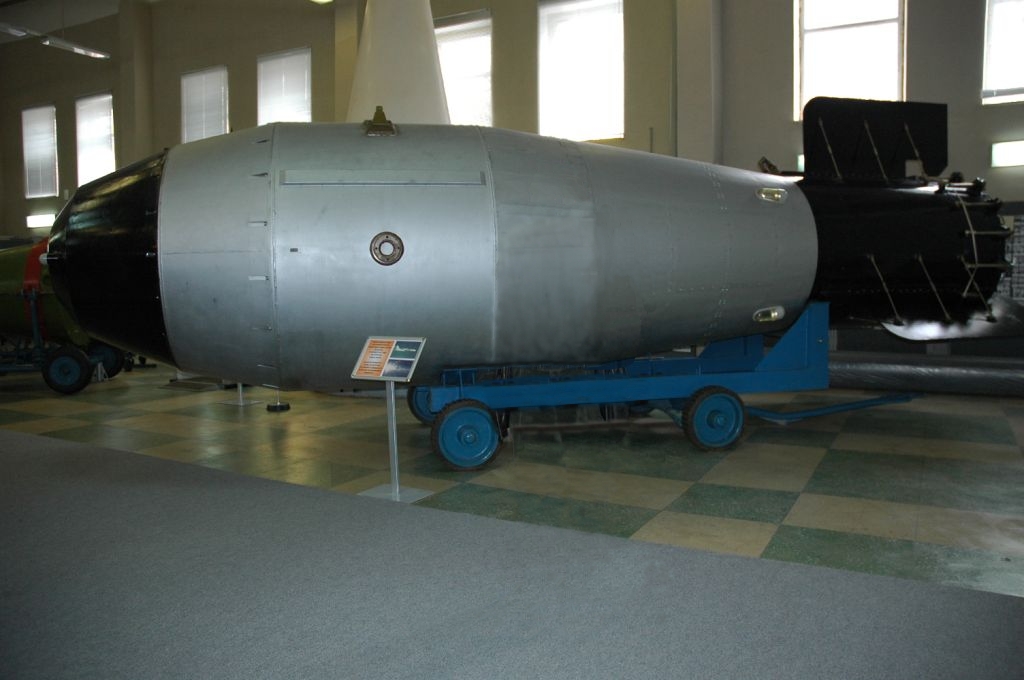
The explosion was planned to have a power of 50 megatons of TNT equivalent. However, engineers could easily increase it to 100 megatons by placing another uranium rod inside the large block.
There are various theories as to why this was not done. One of them stated that Soviet physicists were concerned that the explosion would initiate a chain thermonuclear reaction in the Earth’s atmosphere. According to calculations, this could not have happened at all, but after the lithium-7 incident during Castle Bravo, not many people wanted to test it. The official version, that they did not want windows to be blown out in Moscow, was voiced by Soviet leader Nikita Khrushchev, and, considering how the tests ended, the joke in his words was only partial.
Whether it was a coincidence or not, the test took place almost exactly nine years after Ivy Mike. Unlike Ivy Mike, however, the Tsar Bomba was dropped from an aircraft, demonstrating that it was indeed a usable weapon and not just an experiment.
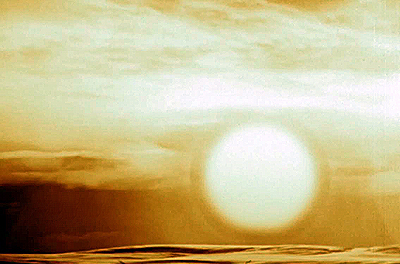
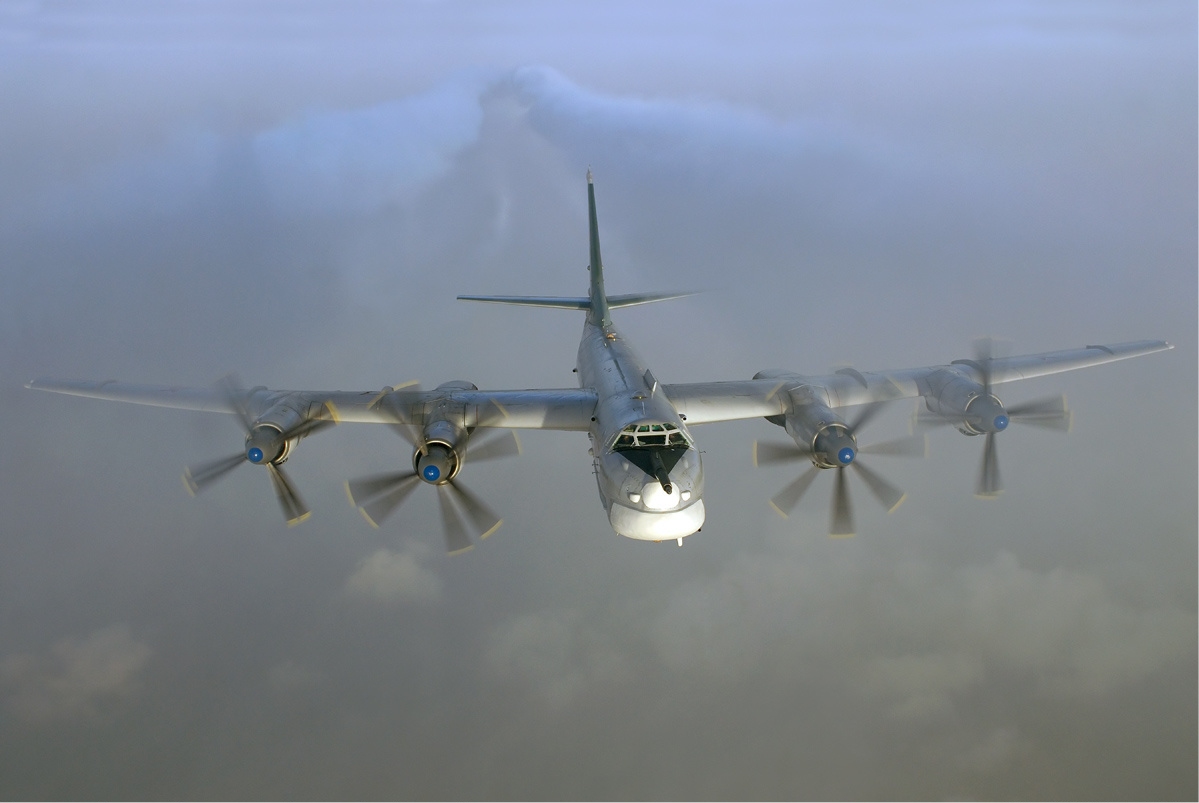
The target was a test site on the Arctic archipelago of Nova Zemlia. A specially converted Tu-95 bomber carried the AN602 to an altitude of 11.5 km and dropped it over the target. The bomb had its own parachute, thanks to which it descended smoothly to an altitude of 4,000 m, where it detonated. Its power turned out to be 20% greater than estimated, amounting to 58 MT.
This time, a flash resembling the sun was observed 1,000 km away from the test site. A mushroom-shaped cloud was visible 800 km from the explosion site, and windows were blown out in houses 600 km away. Radio communication was completely lost for a couple of hours over a significant part of the northern polar regions of the Earth.
The AN602 explosion ultimately remained the most powerful in history, although engineers had already determined at that time that the three-stage design could be scaled up to create charges with a power of hundreds of megatons.
But this was no longer necessary, because the military began to wonder how to deliver these huge devices to their target. Even for the AN602, the Tu-95 bomber had to be modified. As a result, it simply could not carry additional fuel tanks and would not be able to reach the possible drop site, for example, London.
Super-powerful thermonuclear bombs required the creation of a super-heavy class of ballistic missiles. The Soviet super-heavy carrier H-1 was originally designed specifically as a means of delivering super-heavy thermonuclear weapons, and later it was repurposed for the lunar program.
But eventually, both the USSR and the US realized that increasing power was a dead end, and instead began working on miniaturizing warheads. First, warheads were created to be launched from silos, and then ones that could be deployed on submarines. In fact, all warheads with a power of more than 400 kt in the arsenals of nuclear powers are actually thermonuclear.
Future of thermonuclear weapons
After the USSR and the US, thermonuclear weapons were also developed by the UK, China, France, and North Korea. In each case, at least partially, their engineers had to follow Teller and Ulam’s path on their own, and they ultimately reached the same conclusion.
In addition to its high power, thermonuclear weapons have another advantage over conventional nuclear weapons. Compared to the latter, they are relatively clean. That is, their use generates a lot of radiation, but all of it is reduced. As a result, almost no heavy isotopes are formed, making long-term contamination of the territory almost non-existent.
Thermonuclear weapons have never been used in actual warfare. Their power means that if they were ever used anywhere, it would mean that the conflict had truly become global. And no one wants that. Nevertheless, no one is going to abandon them.
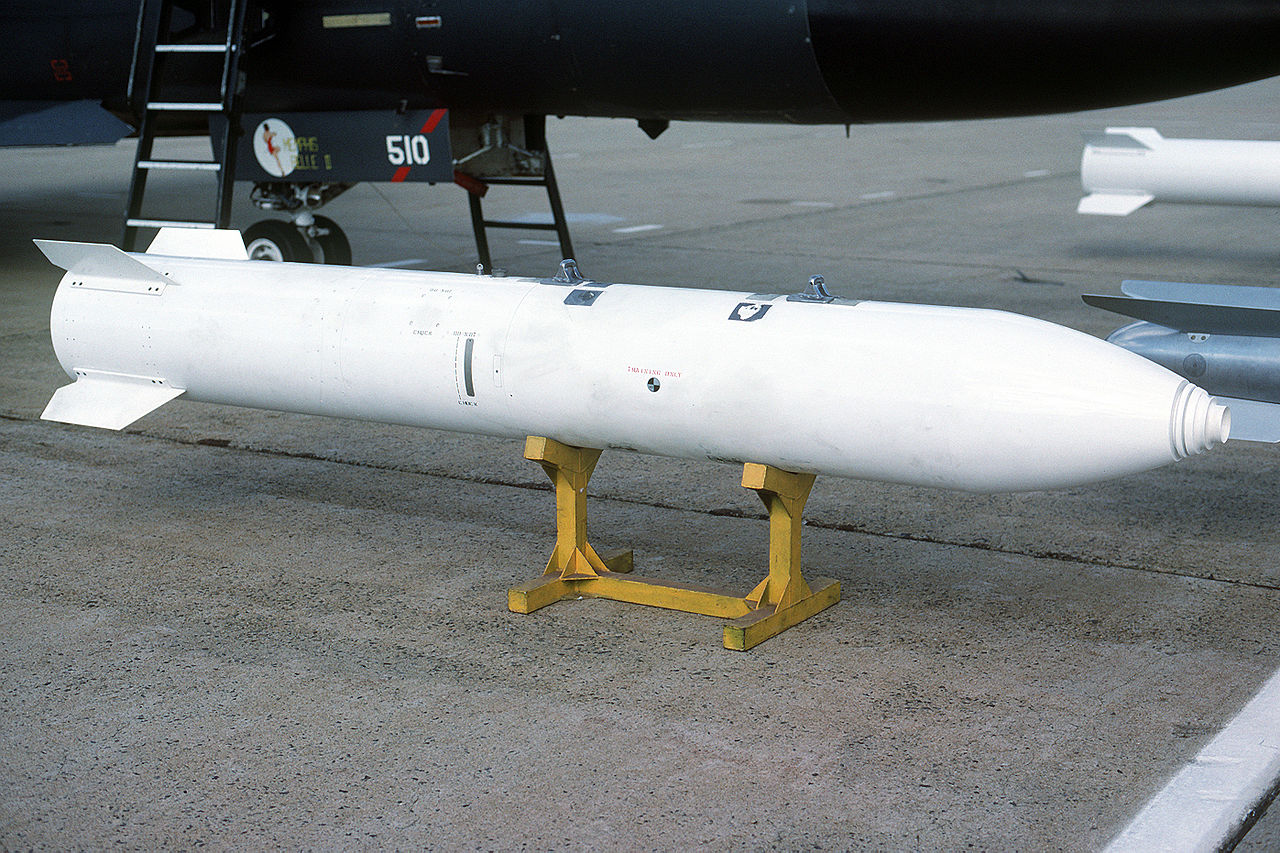
Therefore, it is quite possible that in the future it will not only not disappear, but will also develop. After all, it is quite possible that the Teller-Ulam design is not the best that can be devised. Since it was developed, powerful lasers have appeared. And one of the ideas is connected precisely with them.
This is known as laser ignition. It involves concentrating several powerful laser beams on a single point where thermonuclear fuel is located. This creates the temperature and pressure required for ignition. In laboratories and on microscopic samples, this method has already been successfully tested, but no one knows how to implement it in real weapons.
Laser-ignited thermonuclear bombs have several advantages. First, they are even cleaner than those based on the Teller-Ulam design. The reason for this is that in the latter, uranium, which initiates the explosion, is responsible for the main part of radioactive contamination, while in the new design, it is simply not present.
The second advantage is that thermonuclear devices can be made less powerful. This will make it possible to replace some nuclear bombs with them. Third, it is quite possible that they will be smaller and simpler than the current ones.
Thermonuclear weapons are a terrible thing. But it seems that humanity simply cannot abandon them. Therefore, they will remain with us in the future and will continue to be improved.

