

Prolonged stays in orbit affect astronauts’ vision. There are a number of factors behind this, one of which is a change in blood circulation. Scientists are looking for ways to investigate this problem.
Space neuro-ocular syndrome
One of the unpleasant discoveries made by space medicine in the 21st century is that astronauts’ vision in orbit is significantly affected by weightlessness. It is predominantly negative, although there are known cases when people with myopia experienced even slight improvements in their condition.
In the last century, this problem was virtually unknown because only Soviet cosmonauts made long expeditions beyond Earth, and those were infrequent. In fact, the deterioration in vision, which has been dubbed space neuro-ocular syndrome, was only discovered thanks to a survey of 300 astronauts.
It is believed that the main cause of space neuro-ocular syndrome is a change in the shape of the eyeball and deformation of the optic nerve canal. And it is quite possible that the root cause of all this is a change in blood flow to this area of the body.
If so, cuffs can serve as a means of counteracting problems associated with fluid movement, including SANS. A simple and easy-to-use device that prevents fluid from moving upward toward the head could help protect astronauts during future missions to the Moon and Mars. Cuffs can also be used to help with conditions on Earth that cause fluid buildup in the head or upper body, like long periods of bed rest and certain illnesses.
Researching the problem
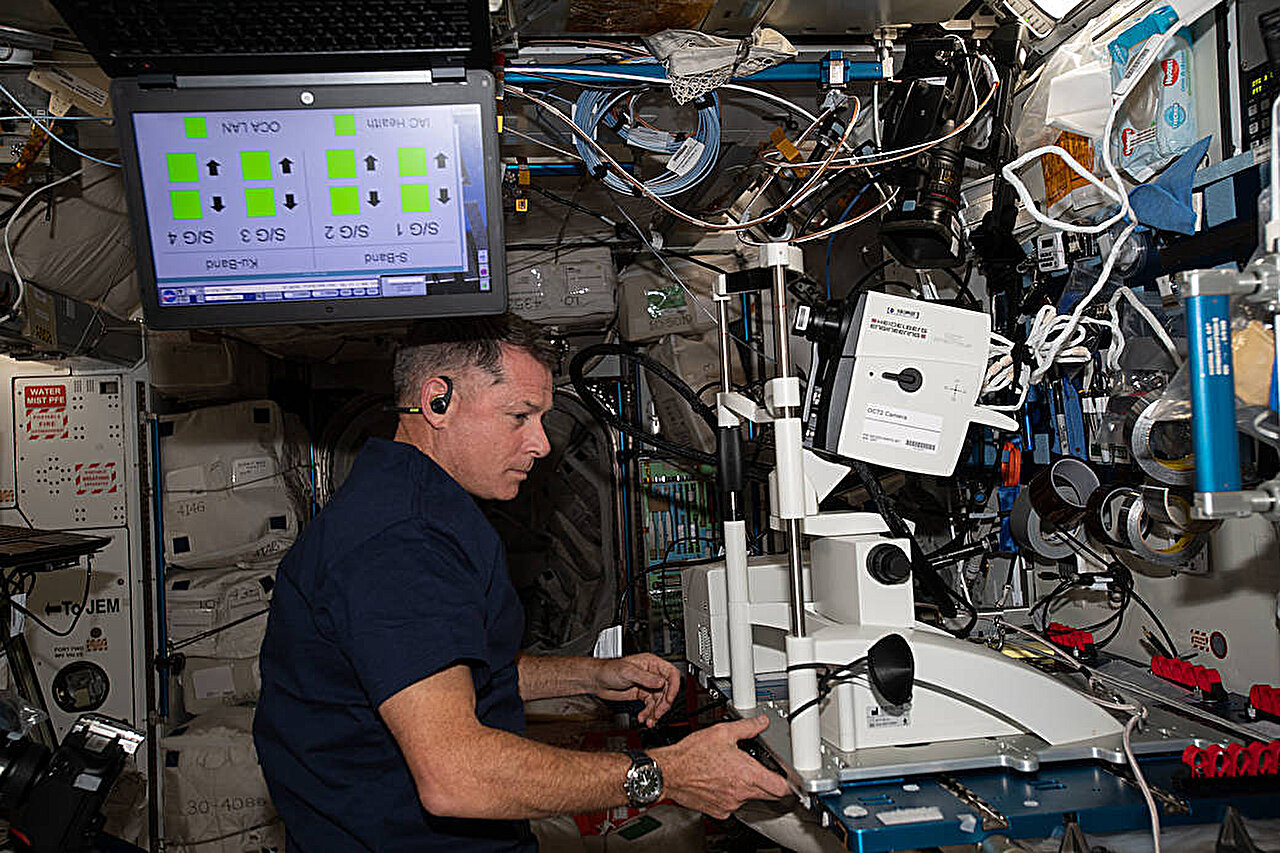
The Fluid Shifts study, conducted between 2015 and 2020, recorded changes in blood flow from the brain in microgravity for the first time. These findings formed the basis for the Vision Impairment and Intracranial Pressure (VIIP) project, which began to investigate how changes in fluid balance and the associated increase in intracranial pressure may contribute to the development of SANS. This study used various methods, including clinical eye examinations with and without pupil dilatation, imaging of the retina and associated blood vessels and nerves, non-invasive imaging to measure the thickness of retinal structures, as well as magnetic resonance imaging of the eye and optic nerve. In addition, approximately 300 astronauts filled out questionnaires to document changes in their vision during their missions.
In one of the published articles devoted to this study, scientists described how these imaging methods helped to better understand SANS. The authors summarized the results of new research on the development of a head-mounted virtual reality display that can perform multimodal noninvasive assessment for the diagnosis of SANS.
Diagnosis of the disease
Other researchers have found that measuring the diameter of the optic nerve sheath is a promising method for detecting and quantifying changes in the eyes and vision during spaceflight. The article also contains recommendations on standardizing visualization tools, measurement methods, and other aspects of study design.
SANSORI, a study by the Canadian Space Agency (CSA), used an imaging technique called “optical coherence tomography” to test whether a decrease in the stiffness of eye tissues contributes to the development of SANS. On Earth, changes in the stiffness of the tissues around the eyeball are associated with aging and diseases such as glaucoma and myopia. Researchers have found that long-term space flights alter the mechanical properties of eye tissue, which may contribute to the development of SANS syndrome. This discovery deepens our understanding of vision changes in microgravity and may also be relevant to research on age-related eye changes on Earth.
The MHU-8 study by JAXA (Japan Aerospace Exploration Agency), which examined changes in DNA and gene expression in mice after space flight, revealed changes in the optic nerve and retinal tissue. Researchers also found that artificial gravity can reduce these changes and serve as a precautionary measure in future missions.
These and other studies may help researchers prevent, diagnose, and treat vision disorders in crew members and people on Earth.
According to phys.org

