

Astronomers working with the Hubble Space Telescope have published a new photo. It shows the spiral galaxy NGC 4535, also known as the “Lost Galaxy.”
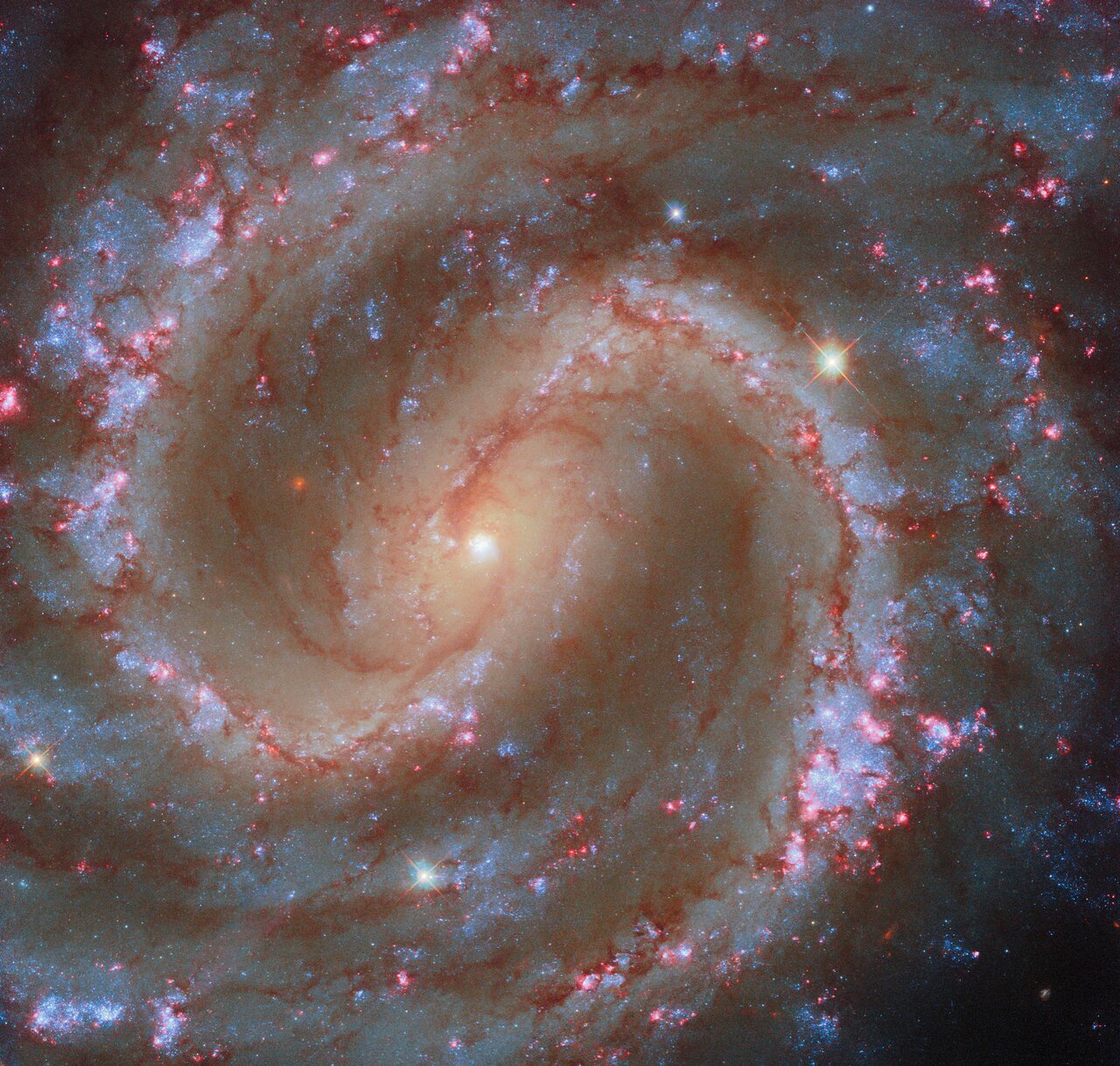
NGC 4535 is located about 50 million light-years from Earth in the direction of the constellation Virgo. It received its unusual nickname the “Lost Galaxy” because it is extremely faint when viewed through a small telescope and difficult to see.
Fortunately, this is not a problem for Hubble. Thanks to its 2.4-meter mirror, it is well suited for observing faint galaxies such as NGC 4535 and detecting details of their structures, such as spiral arms and central bars.
The Hubble image clearly shows the young star clusters NGC 4535 scattered throughout its spiral arms. Many groups of bright blue stars are surrounded by glowing pink clouds. These clouds, called H II regions, are a sign that the galaxy contains particularly young, hot, and massive stars that emit high-energy radiation. By heating the clouds in which they were born and ejecting powerful stellar winds, they eventually explode as supernovae. Massive stars change their environment and enrich it with heavy elements, which will later become part of the next generation of stars and exoplanets.
The image of NGC 4535 was taken as part of a program in which Hubble studied about 50,000 H II regions in nearby galaxies. Its goal is to improve our understanding of the relationship between young stars and cold gas.
Earlier, we reported on how astronomers discovered an extremely hot stellar nursery in the early Universe.
According to Esahubble

