

NASA has released new stunning images of the Crab Nebula, captured by the legendary Hubble Space Telescope. This event marked the symbolic culmination of 25 years of observing one of the most famous objects in the night sky. By precisely recording the state of the nebula, scientists can observe the changing structure that resulted from one of the most powerful cataclysms ever observed by humans.
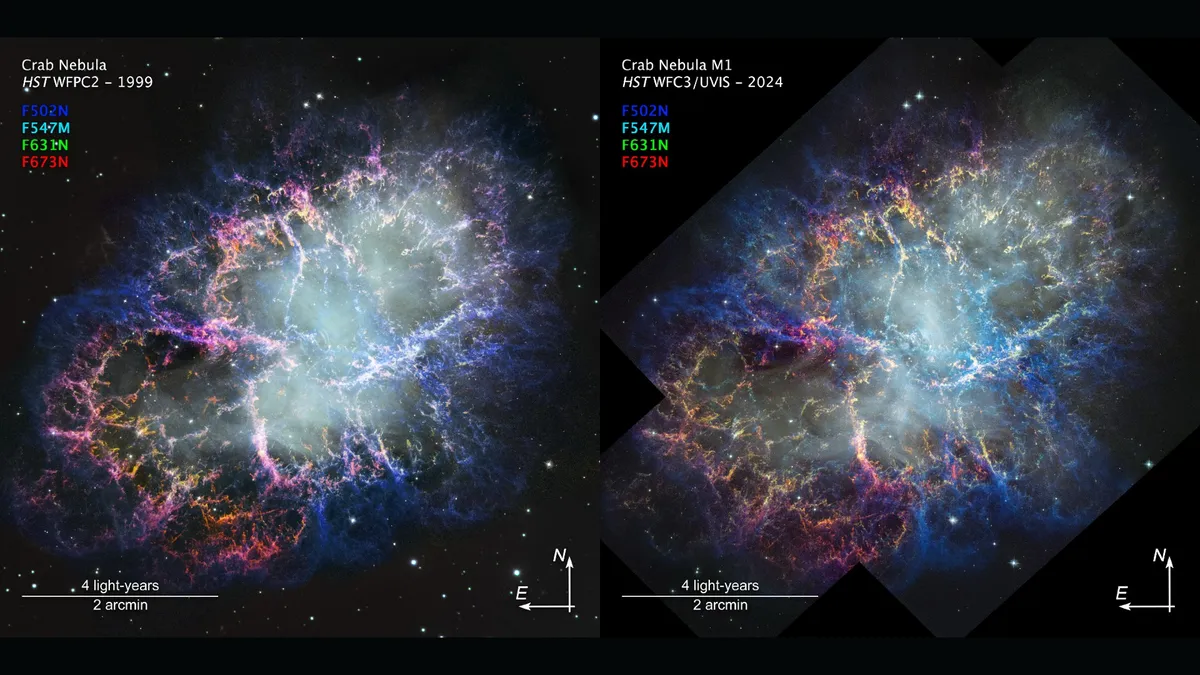
The history of this “crab-like” celestial object, which is the first in the Messier catalogue (M1), began in 1054. Then a supernova flared up in the sky; it was so bright that it could be seen with the naked eye even during the daytime. Nowadays, we can see only its colorful remnants—a gigantic cloud of gas and dust located 6,500 light-years away in the constellation Taurus.
Evolution from 1999 to 2024
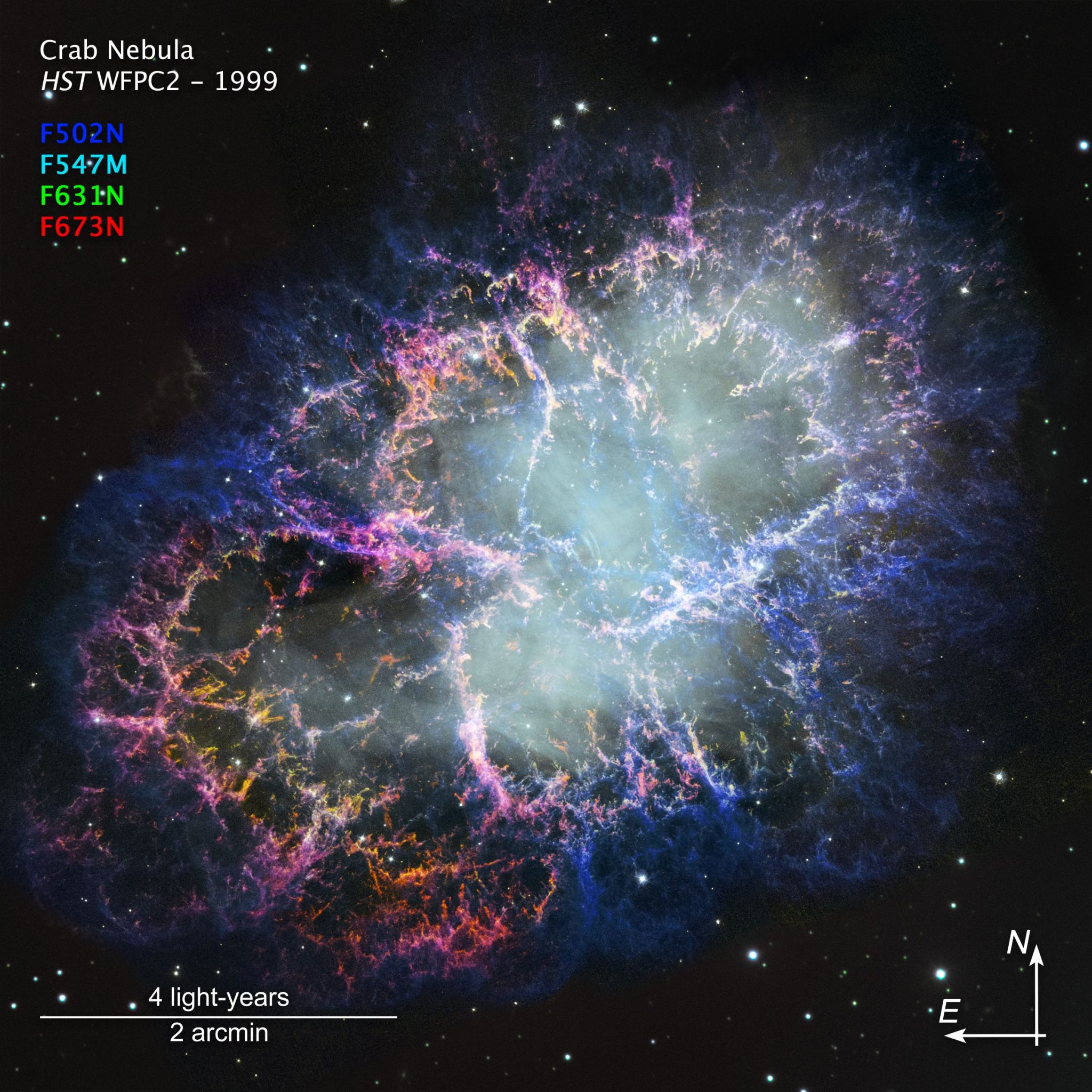
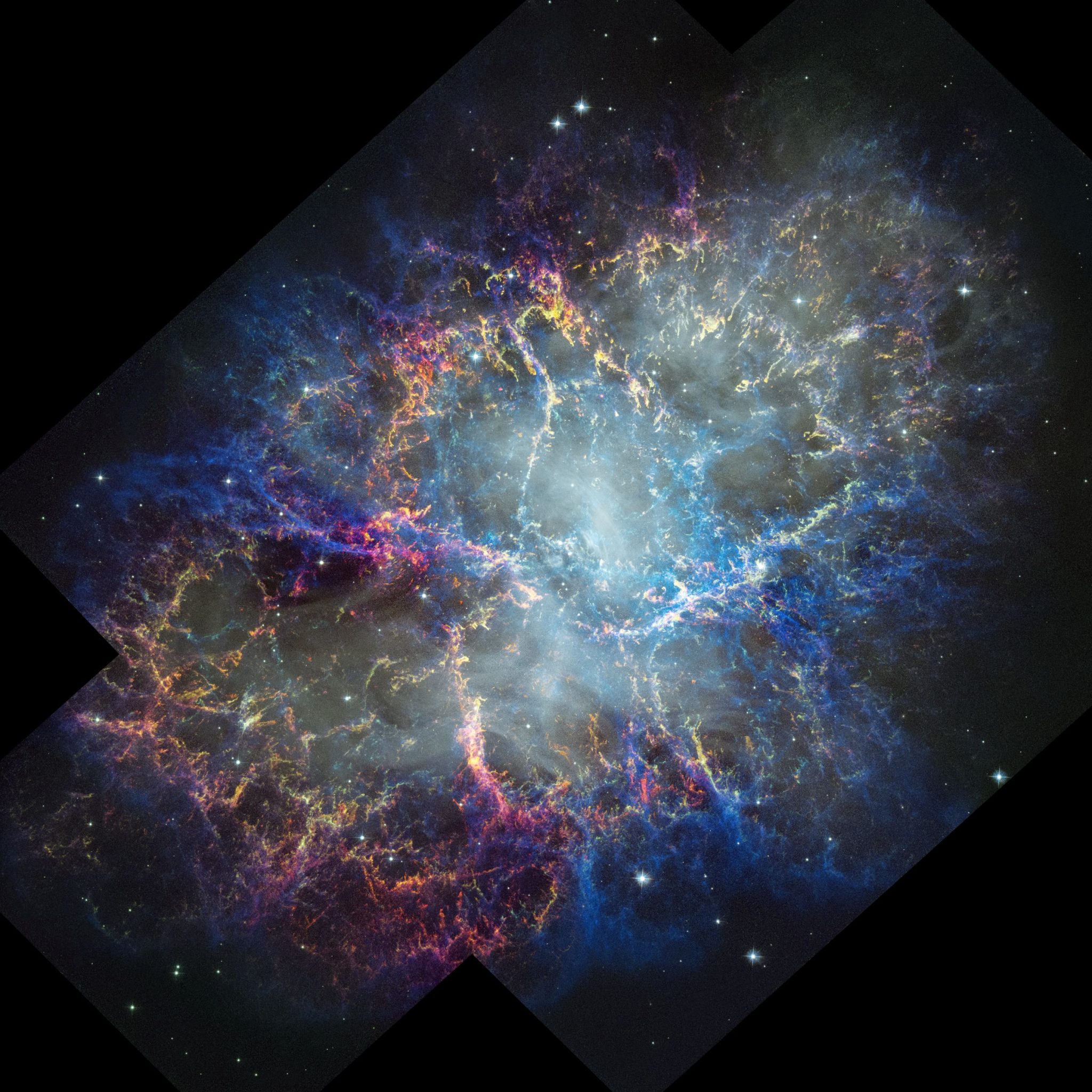
Hubble first photographed this nebula in 1999. It was a sensation, but technology has come a long way since then. In 2009, during the STS-125 space shuttle mission, the astronauts upgraded the observatory by installing the WFC3 wide-field camera. Thanks to this update, the new 2024 images have significantly higher resolution.
By comparing images taken a quarter of a century apart, astronomers were able to detect thin filaments of gas streaming out from the center of the former explosion at an incredible speed—more than 5.5 million km/h.
What has changed in the nebula?
A comparison of images from 1999 and 2024 has revealed the dynamic nature of space, which is difficult to observe over the course of a single human lifetime. Scientists have observed actual changes in:
- temperature: the gas gradually cools or heats up as a result of its interaction with the environment;
- density: the clouds become less dense as they expand into space;
- chemical composition: the distribution of elements changes under the influence of the powerful magnetic field of the pulsar at the center of the nebula.
Hubble’s longevity was key to this discovery. Without such a long operational lifespan, we would still be viewing these supernova remnants as a “static image.”
This study destroys one of the biggest myths about the Universe.
“We tend to think of the sky as being unchanging, immutable,” notes astronomer William Blair of Johns Hopkins University. “However, with the longevity of the Hubble Space Telescope, even an object like the Crab Nebula is revealed to be in motion, still expanding from the explosion nearly a millennium ago.”
The Crab Nebula continues its rapid expansion, reminding us of the incredible energy that once gave birth to this masterpiece of cosmic art.
Earlier, we discussed the hidden secrets of the Crab Nebula.
According to NASA

