

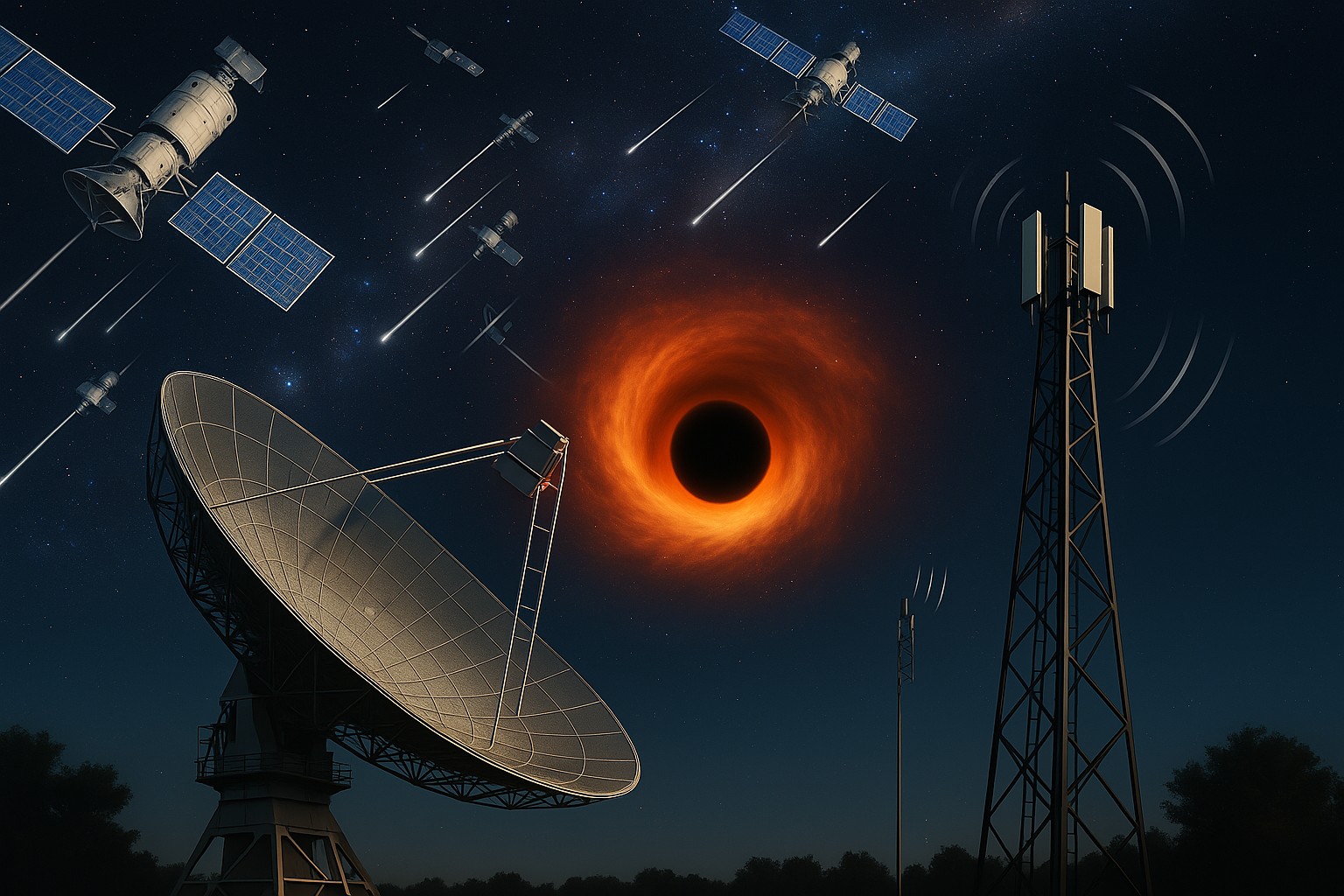
Our civilization would be unimaginable without satellites. They provide accurate navigation, climate control, power systems, logistics, and even online banking. But knowing the exact location of the satellites is an incredibly complex task. The Earth rotates, the Sun flies through the galaxy, and satellites are constantly moving. This requires a reliable, almost immovable basis for measuring position in space. Incredibly, the best reference points for this planetary geodesy are supermassive black holes at the centers of distant galaxies.
Space beacons and the battle for frequencies
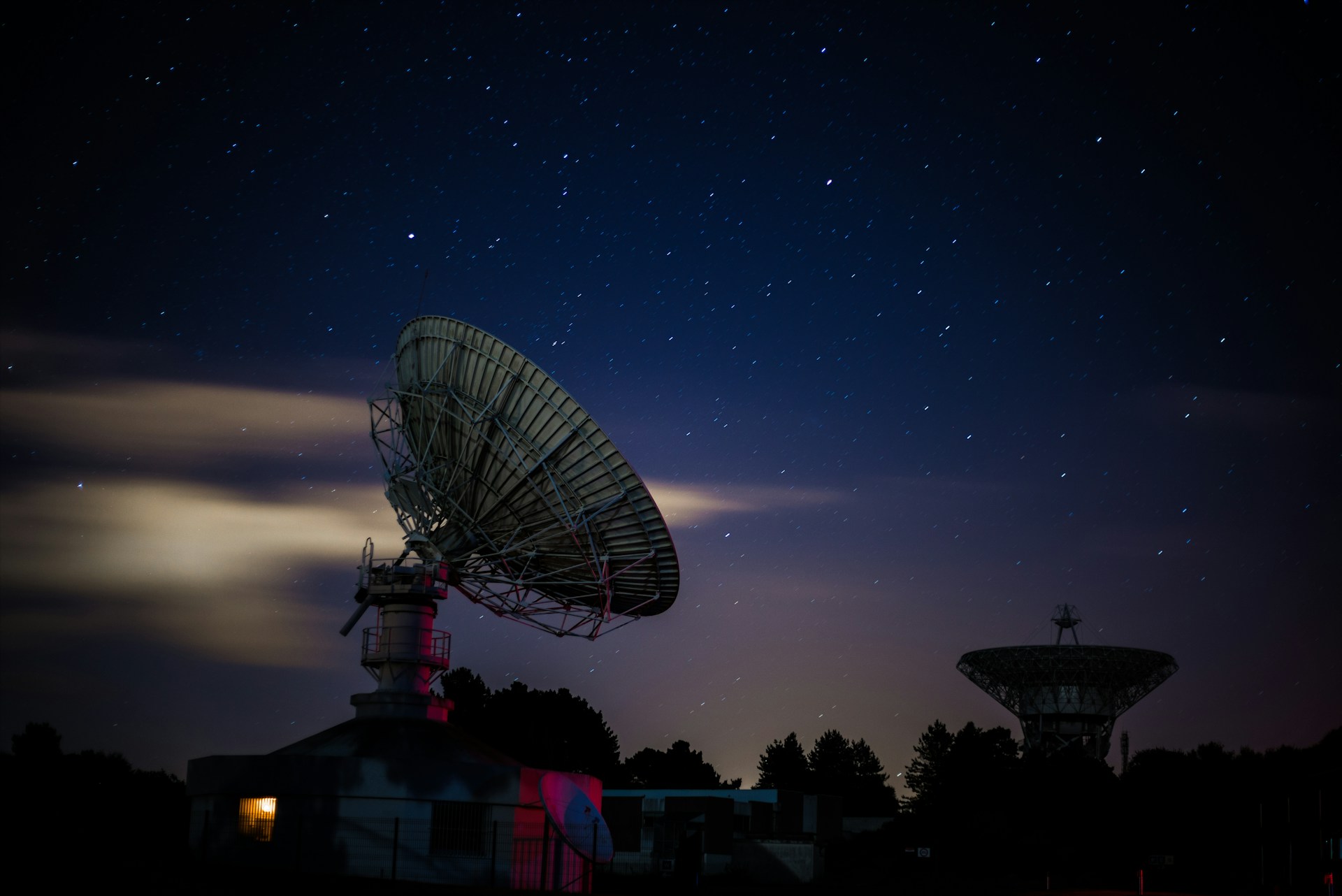
As they consume matter, these voracious giants emit intense radio waves. Scientists use VLBI (Very Long Baseline Interferometry) technology, combining radio telescopes from around the world into one giant virtual telescope. It detects signals from black holes, allowing the position of Earth in space to be determined with incredible accuracy and, as a result, the position of satellites in orbit. Radio waves are ideal — they pass through the atmosphere in any weather. However, it is precisely these frequencies that have become the arena for fierce competition.
The same radio waves are the basis of modern communications: mobile networks from 2G to 5G/6G, Wi-Fi, and Starlink satellite internet. Although international regulations designate narrow bands for astronomy, reality is harsher. Artificial radio emissions around the Earth have risen to unprecedented levels. Signals from black holes are extremely weak, so they are simply drowned out by the powerful interference from millions of devices and thousands of satellites, and geodetic observatories lose their spatial reference points.
A threat to everyone
If scientists are unable to accurately track black holes, the accuracy of determining the position of the Earth and satellites will drop dramatically. The consequences will be catastrophic:
- Satellite navigation systems (GPS, GLONASS, Galileo) will become inaccurate or unreliable.
- Weather forecasting and climate change monitoring will deteriorate.
- There will be disruptions in the management of energy networks and global supply chains.
- Online banking and other financial transactions requiring precise timing and positioning will become risky.
Imagine: your navigation system is wandering, your food delivery is hours late, and your money transfer is lost in space. This is a potential reality that could occur when radio noise reaches a critical level.
Ways to save space signals
Scientists propose several solutions, but all of them require global coordination. Create zones with strict restrictions on radio emissions around key observatories. It is also important to establish close cooperation with satellite operators to prevent interference with radio astronomy and develop “quieter” technologies.
The battle for airwaves is a battle for the stability of our technological world. In order for our phones to show the correct route and for satellites to function reliably, we need to restore the stars — or, more precisely, the giant black holes in the depths of space — to their rightful place in our planet’s radio wave spectrum.
We previously reported on how an ancient method of navigating by the stars could help drones overcome GPS obstacles.
According to Space

