

In 2026, Formula 1 will undergo significant changes. Cars will become much more electrically powered: a significant portion of the power will be provided by a hybrid system, and teams will learn to manage energy as precisely as they manage speed. At the same time, the championship will switch to 100% e-fuel – not from crude oil, but from alternative sources such as captured CO2, waste, or non-food biomass. For fans, this is just another new regulation, but for engineers, it is a huge testing ground for technologies that may be used far beyond the racetrack tomorrow.
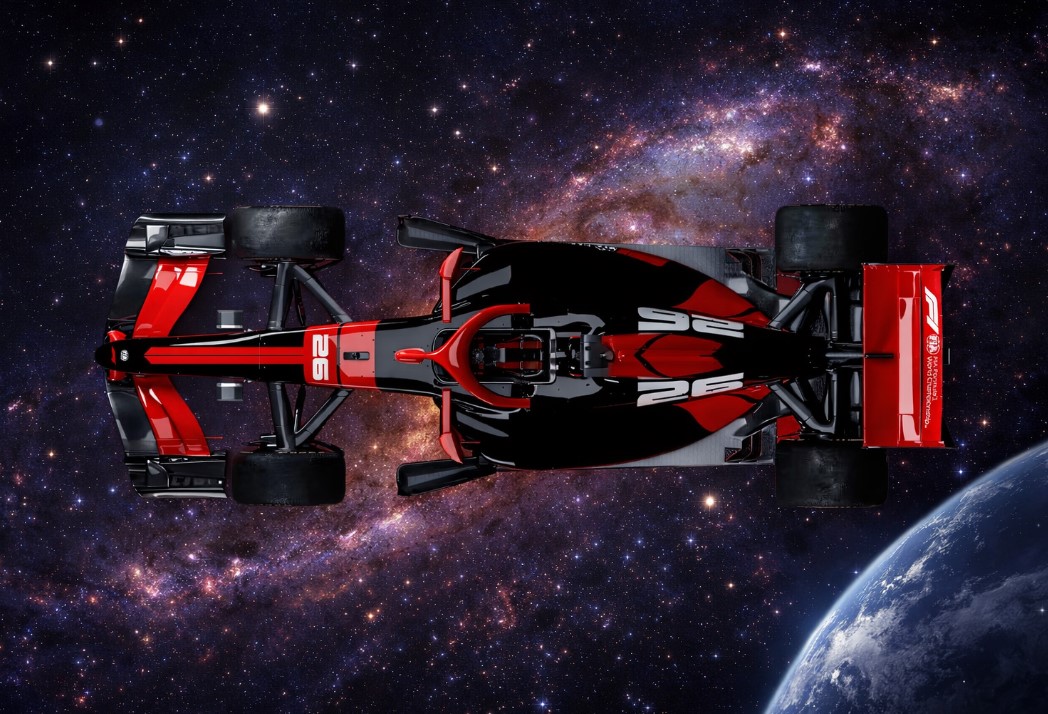
F1 is a sport with astronomical budgets and a unique development rhythm: dozens of iterations per season, strict requirements for weight, efficiency, and reliability. In such an environment, solutions are refined to perfection – power electronics, cooling, sensors, energy management algorithms, materials, and lightweight structures. And the space industry operates precisely where every gram of weight and watt of energy counts. F1-2026 demonstrates technologies that can already be adapted for satellites, electric jet engines, and future space platforms.
Why is the F1-2026 technical package interesting for space?
Regulation 2026 pushes teams towards electrified thinking: almost a threefold increase in MGU K power to 350 kW, abandonment of MGU H, active aerodynamics with corner/straight modes, reduction in size/weight, and 100% green fuel.

For space, it is not the numbers in F1 themselves that are important, but architectural patterns:
- High-voltage cables + power conversion.
- HV (High Voltage) safety and diagnostics: The documents of the International Automobile Federation (FIA) explicitly mention guidelines for the Battery Management System (BMS) function, insulation measurements, contact requirements, and even a maximum operating voltage of 1000 V in cars, which is similar in philosophy to the safety system on a spacecraft. Such a system detects a malfunction, determines where the problem is, and automatically switches the device to safe mode or activates a backup so that it can continue to operate.
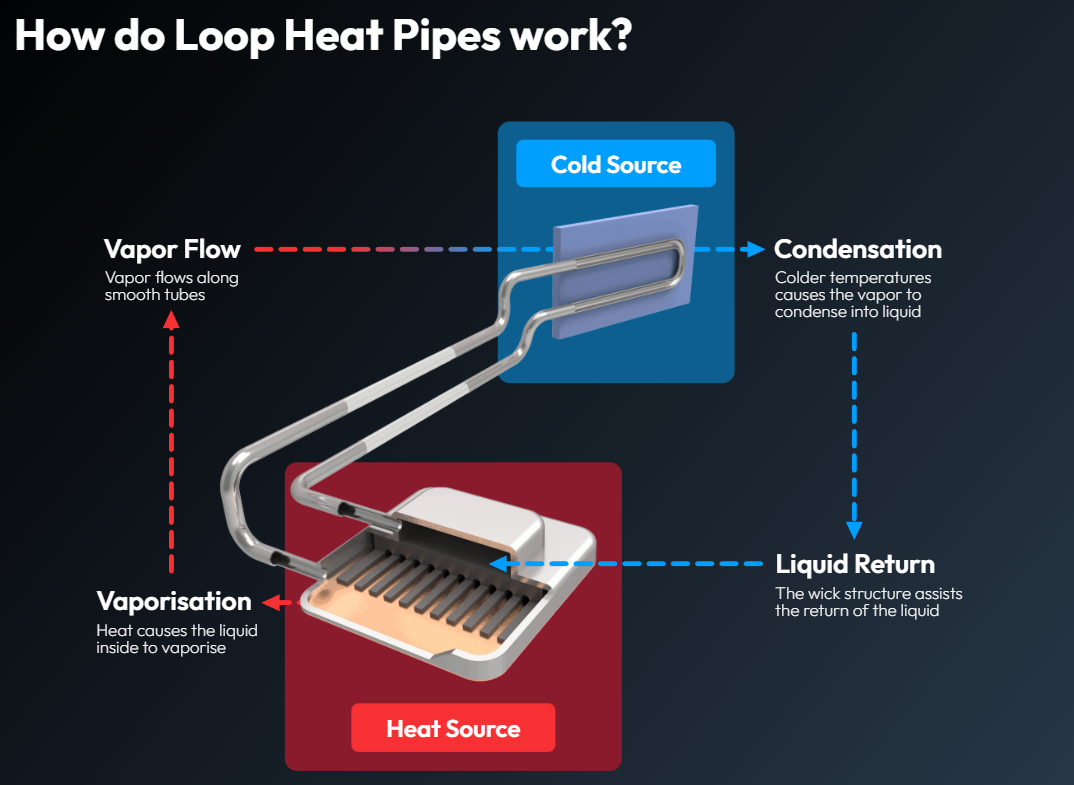
- Thermal management for dense packaging: there is no convection in space, but the problem of where to put the heat flow is even tougher – heat pipes and radiators are needed, often based on two-phase systems (Loop Heat Pipe).
Which F1 2026 technologies can actually be used in space?
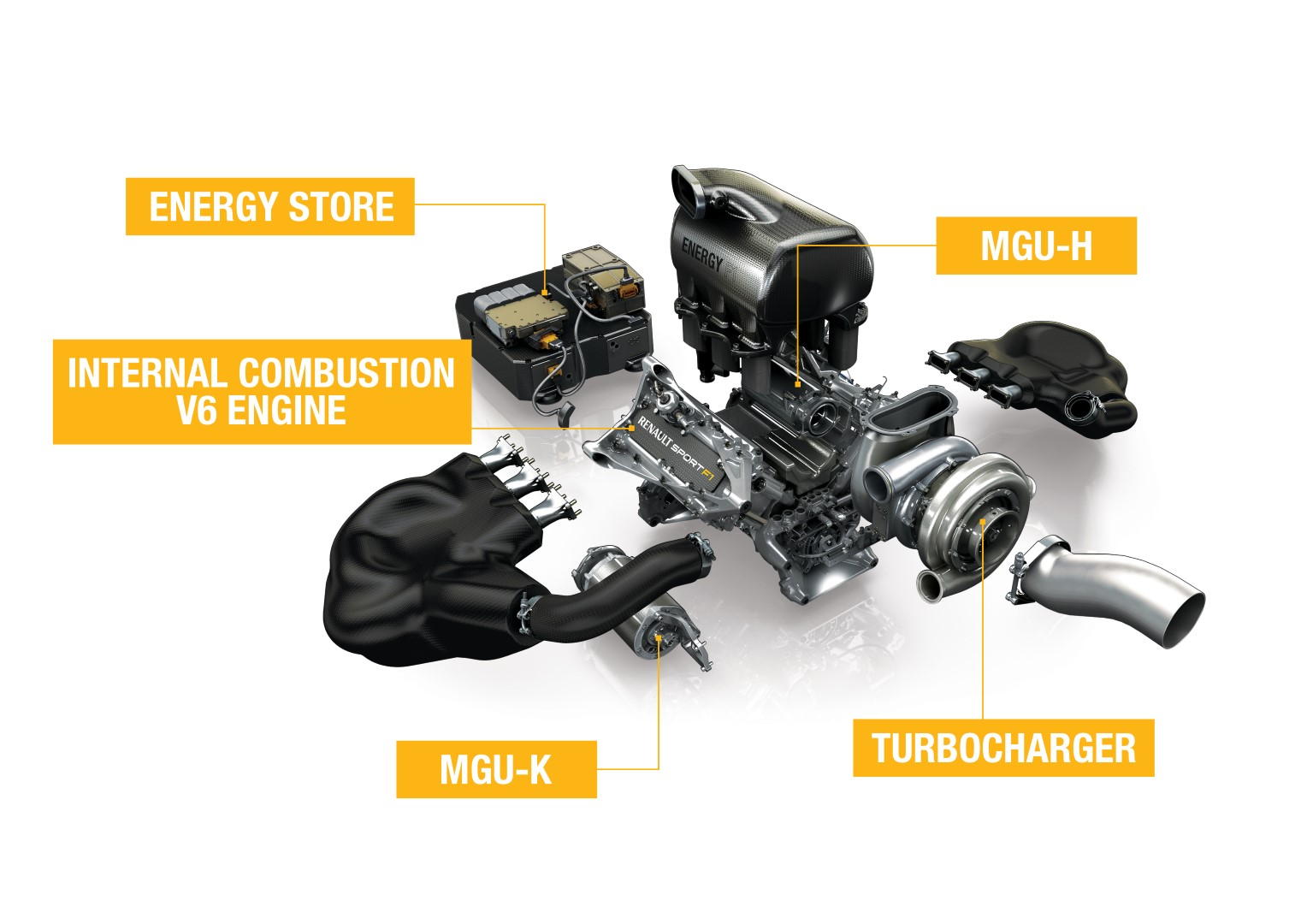
High-power MGU K and 50/50 hybrid
In the 2026 F1 season, cars will become much more electric: approximately half of their power will be provided by the electrical system. To achieve this, a very powerful MGU-K* electric motor generator is being developed, with up to 350 kW. Therefore, the main thing in the race is to be able to manage energy wisely: when to accumulate it, when to use it, how not to overheat, and not to crash the system.
*MGU-K is an electric motor-generator that recovers energy during braking (works as a generator and charges the battery) and returns it during acceleration (works as a motor and adds power).
There is no such MGU-K in space, but there is something very similar in terms of function: a power unit that powers the satellite’s electric motor (often referred to as a PPU – power processing unit). It takes energy from the onboard network and converts it so that it can power an ion or Hall motor. NASA has already demonstrated examples of such space power units: they can have an input of about 300 V and output up to ~15 kW. In other words, this high-power electricity is very similar in concept to what will be pumping F1 in 2026.
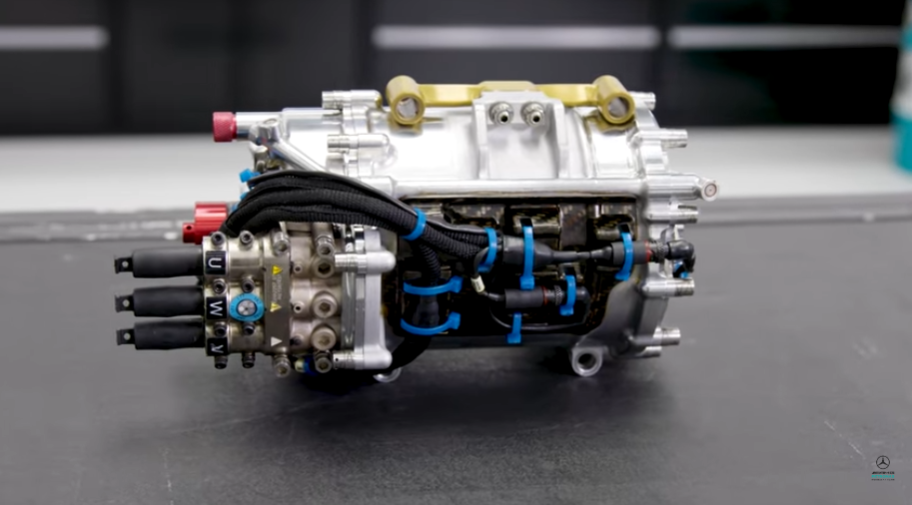
In space, a similar approach can be applied to satellites during peak loads – during communication sessions, radar operation, or laser transmitter operation. Instead of a large battery, a flywheel accumulator is installed: an electric motor spins the rotor and, when necessary, brakes it and powers the onboard network. As a bonus, the flywheel can also function as a reaction wheel for orientation. Important adaptations for space include vacuum cooling, radiation resistance, and a safe rotor housing.
Rejection of MGU H as an engineering compromise between “complexity <-> accessibility.”
In F1, the MGU-H* component was removed because it was very complex and expensive. The idea is simple: fewer complex components → cheaper and easier to manufacture the engine, but the electrical part remains important.
*MGU-H is an electric generator on a turbine in a Formula 1 engine: it takes energy from the exhaust gases, converts it into electricity (charges the battery), and can help spin the turbine to generate thrust faster.
There is a similar dilemma in space. For example, solar panels could be used to power a satellite’s electric motor almost directly. This has advantages: fewer electronic components, less weight, and fewer parts that can break.
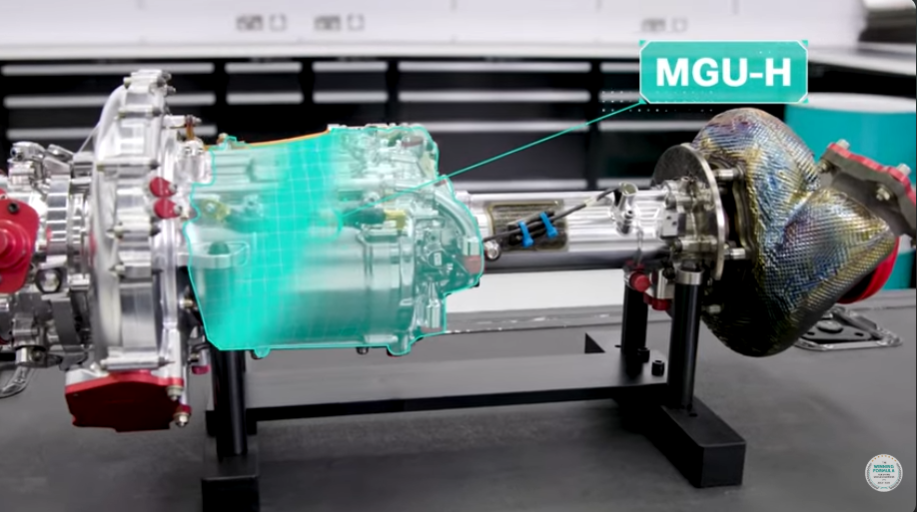
But there is a downside: when you remove one intermediate electronics block, new risks arise. In particular, high voltage in space can cause electric arcs (sparks) and problems due to interaction with the plasma around the satellite. Studies show that such risks become noticeable at levels of hundreds of volts (approximately 200-500 V).
In other words, the logic is the same as in F1: we simplify the system → we save weight/cost/complexity, but in return we get new technical challenges that need to be addressed separately (insulation, arc protection, plasma control). In other words, instead of the “solar panels → large power conversion unit (PPU) → motor” scheme, we switch to direct drive.
100% Advanced Sustainable Fuels
In 2026, Formula 1 will switch to 100% “greener” fuel. It is not made from oil, but from alternative sources: for example, from captured CO₂, household waste, or non-food plant raw materials. The origin of such fuel must be independently verified and certified so that it is not just for show.
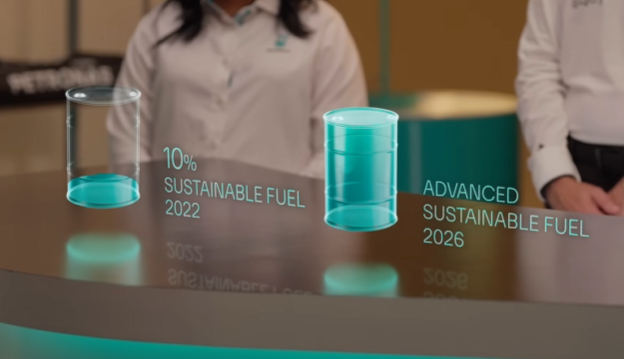
Source: Mercedes-AMG Petronas Formula One Team
For the space industry, it is not about “refueling satellites with such fuel.” The following ideas are useful here:
- Uniform rules and standards
Just as there are standards for green fuel in aviation, the space industry needs clear rules for future green solutions on Earth – for example, for fuel and energy systems at spaceports. This makes the supply stable and predictable. - Assessment of environmental friendliness throughout the entire life cycle
They calculate not only what comes out of the pipe, but the entire journey: how it was produced, transported, and how much CO₂ and energy were consumed. This helps to make a real comparison between options, rather than just sticking on an “eco-label.”
For the space industry, the direct equivalent is reducing emissions from ground infrastructure: generators, refuelers, tractors, transport, and power systems for test stands. Spaceports can switch to synthetic components, introduce requirements for assessing the environmental impact throughout the entire life cycle, and implement fuel quality standards.
Active Aero (X‑mode/Z‑mode)
F1 2026 will feature active aerodynamics – the car will be able to switch its wings to different modes:
- X-mode: less air resistance – for faster riding on straights.
- Z-mode: more downforce for better grip in corners
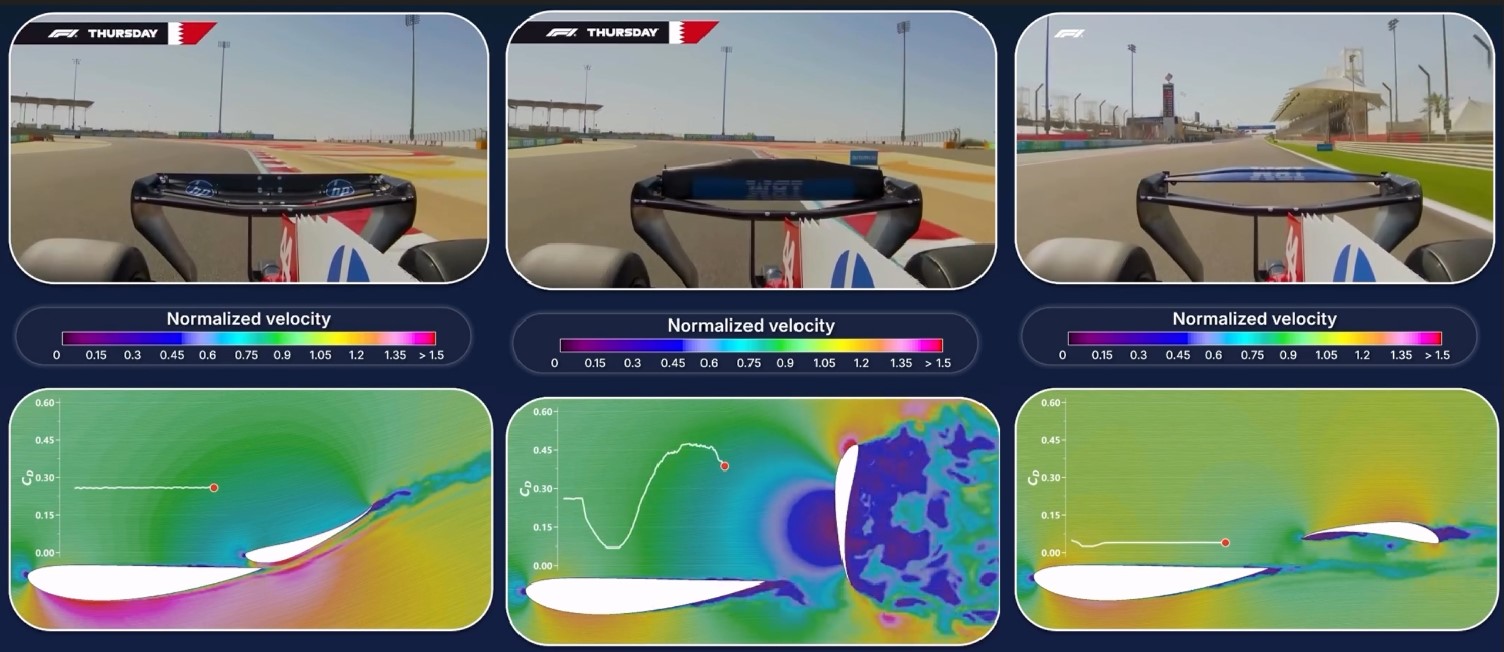
Source: cfdominik
In the aerospace sector, this only works where there is an atmosphere. But that is precisely where it is very important:
- When the spacecraft enters the atmosphere and descends or slows down through the atmosphere. Here, controllable surfaces can be developed on descent vehicles to more accurately control flight in the air, even at very high temperatures.
- When a satellite in low orbit needs to be removed from it. That is, use Active Aero to change the drag and dispose of the satellite: for example, the satellite unfolds a special sail that increases drag and helps it leave orbit faster and burn up in the atmosphere.
In other words, in F1 it is a button for speed/controllability, and in space it is a way to brake, stabilize, and safely complete the mission.
Reduced dimensions/lightweight chassis
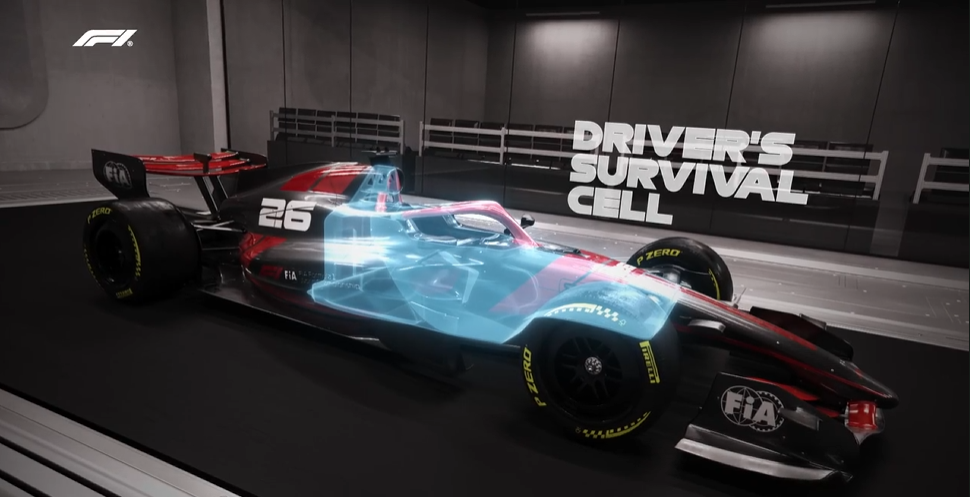
The FIA explicitly declares smaller and lighter cars: a reduction in wheelbase to 3400 mm, a narrower car, and a reduction in minimum weight. For space, this translates into two practical directions.
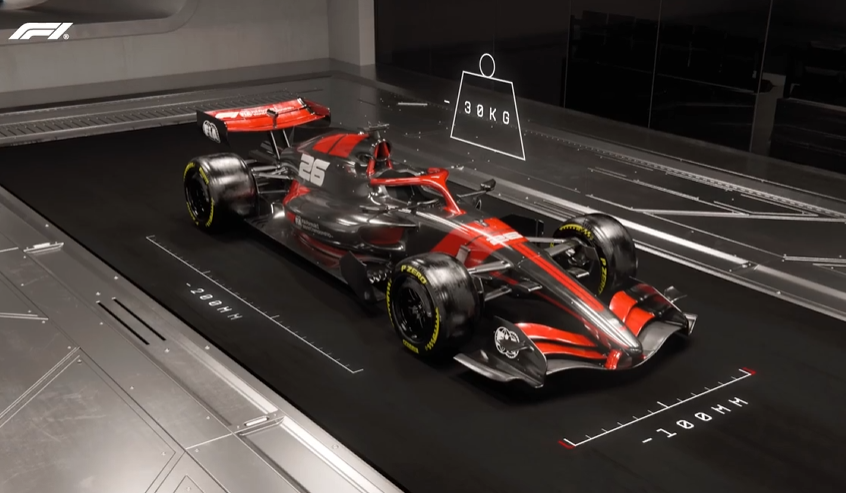
Source: formula1
The first is multifunctional structures. Approaches that already demonstrate integrated panels with built-in functions (heaters, distribution elements, etc.), which reduce weight and cabling. This is conceptually close to F1, where the structure, cooling, and installation of power electronics are integrated into a single system.
The second is composites as part of thermal power architecture. The X 38 mentions not only composite panels, but also high-temperature composite materials. These are CFRP (Carbon Fiber Reinforced Polymer) sandwich panels with electronics integrated into a composite casing that simultaneously carries the load, conducts heat, and provides a certain radiation/shielding function.
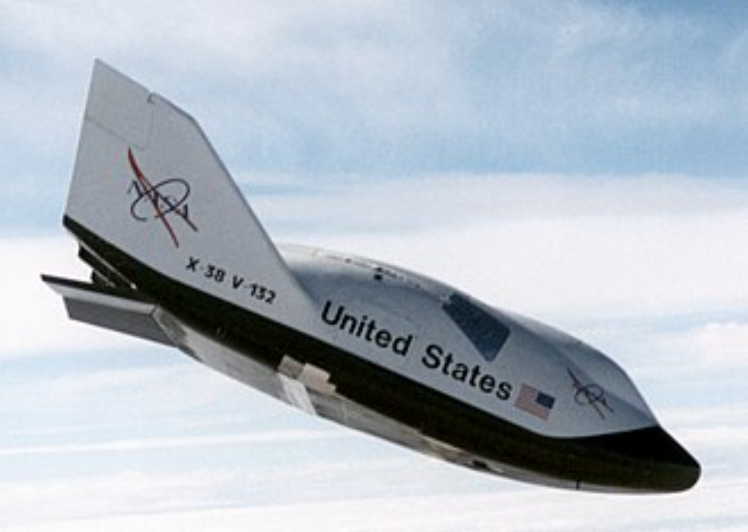
In space, this can be replicated on small satellites: the CFRP sandwich panel contains a flexible circuit board (flex-PCB), temperature/deformation sensors, built-in heaters, and connectors at the edge. Pros: fewer cables, faster integration, better condition monitoring. Cons: more difficult repair and protection.
Thermal management, energy management, and batteries
In F1 2026, the regulations show a focus on safety, BMS, contacts, and post-accident survivability of monitoring systems. In space, these topics are fundamental, but the loads are different: thermal and energy peaks are often caused by maneuvers and data transmission. To survive during the lunar night, the BMS must operate in extreme cold, monitor temperatures/voltages, perform pre-charging, and isolate defects.
Two-phase heat pipes are a key technology for thermal control in space. A loop heat pipe is a device that transfers heat through evaporation/condensation of the working fluid and capillary forces, without an external pump. This is where the expertise in dense packaging + thermal stabilization from F1 has the greatest effect for satellites with high heat flows (transmitters, PPU, onboard processing).
Source: calyos-tm
Risks, limitations, and prospects
Formula 1 in 2026 is not just about cars, but about accelerating engineering. It takes expensive and complex areas – high-power electricity, energy management, certified e-fuel, integrated composites – and brings them to a point where they become more widespread, cheaper, and more reliable. For the space industry, this means concrete gains: lighter and more compact power modules for electric traction, better algorithms for energy management and automation of rescue systems, fewer cables and less weight thanks to integrated composite panels, as well as ready-made guidelines for green spaceports.
But most importantly, F1 sets the pace. Space traditionally moves slowly due to risks and certifications, while motorsport, on the contrary, teaches us to quickly and iteratively test solutions at the limits of what is possible. As a result, the world of technology gets a bridge between two cultures: fast-racing engineering makes components mature, and space engineering adds resistance to vacuum, radiation, and long missions. Together, this accelerates the emergence of new classes of systems – from more powerful satellites and cheaper constellations to more efficient energy solutions on Earth, where every watt and gram also matters.

