

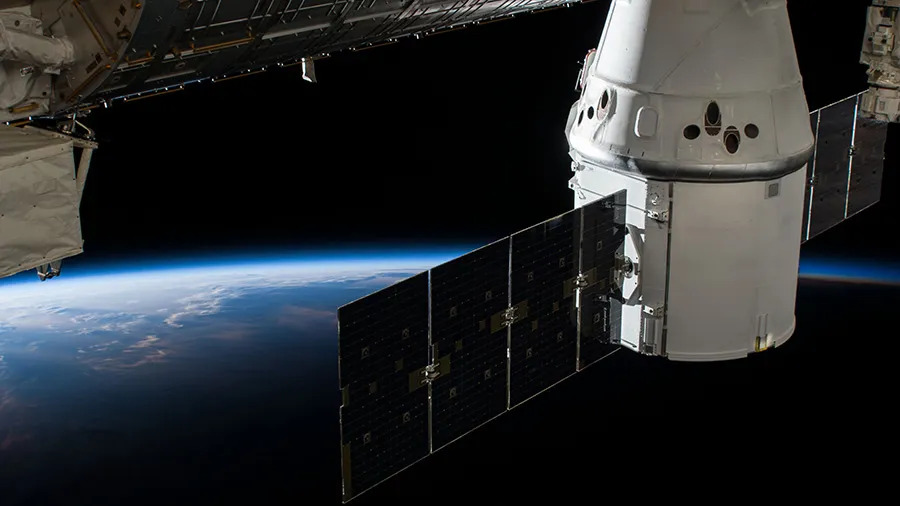
NASA and SpaceX are preparing to launch another cargo mission to the International Space Station in mid-May. The Dragon is carrying nearly three tons of cargo, equipment for five scientific experiments, and spare parts without which the station cannot operate normally.
Five questions about microgravity
The ODYSSEY study will test how accurately Earth-based microgravity simulators replicate actual space conditions. Scientists will study the behavior of bacteria in microgravity and compare the data with the results of similar experiments conducted in ground-based simulators.
If the measurements differ, it will mean that ground-based facilities cannot fully replicate orbital conditions. Consequently, the conclusions drawn from them will need to be revised.
From bones to dust
Green Bone will monitor how bone cells grow and develop in microgravity on a wooden frame. The results could help in the development of treatments for bone fragility disorders, particularly osteoporosis.
The Laplace mission will study the motion and collisions of dust particles in microgravity—to better understand the origins of Earth and other planets in the Solar System. Data on how dust aggregates and moves in the absence of gravity will enable scientists to model the early stages of planetary formation.
Crew health and weather in space
SPARK will monitor changes in astronauts’ red blood cells and spleens during long-duration flights—to find ways to protect the crew’s health far from Earth. Researchers will analyze samples before, during, and after the flight to identify patterns.
STORIE will measure the flows of charged particles around the planet that are generated during solar flares. These particles can disable satellites or disrupt power grids on the ground—so more accurate space weather forecasts will have practical significance.
What else is in the hold?
Along with scientific equipment, Dragon is carrying spare parts for the water supply and oxygen regeneration systems, an ultrasonic inspection tool, and patches for emergency hull repairs. A separate tank is being flown to replenish the station’s nitrogen supply.
After about a month in orbit, Dragon will undock and splash down in the Pacific Ocean. On board will be scientific samples and equipment for further work by teams on Earth.
According to nasa.gov

