

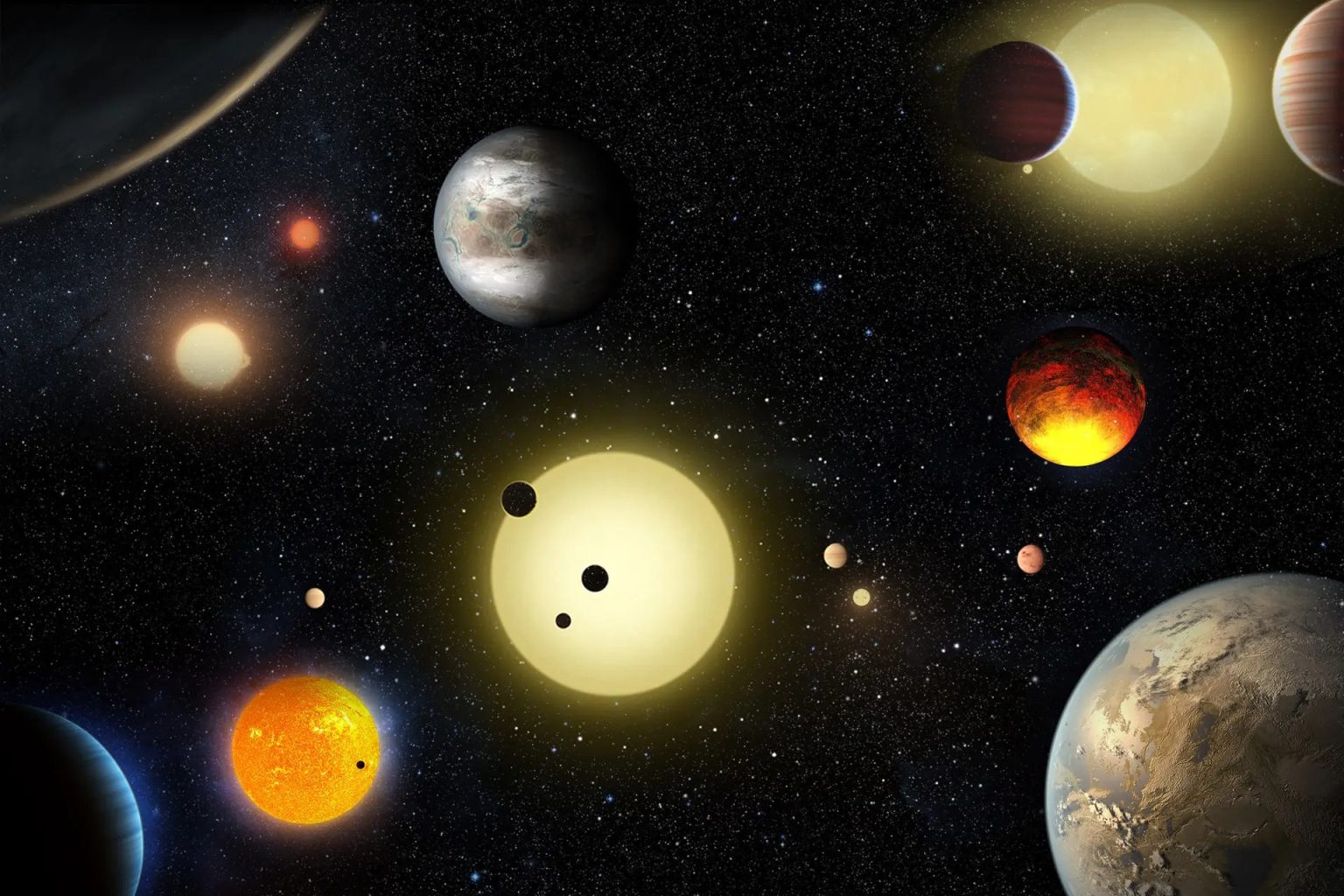
It is believed that, whatever the star, there is a zone around it in which a planet similar in mass to Earth will be Earth-like. But let’s see what worlds orbiting red dwarfs and blue supergiants might be like.
Zone of life
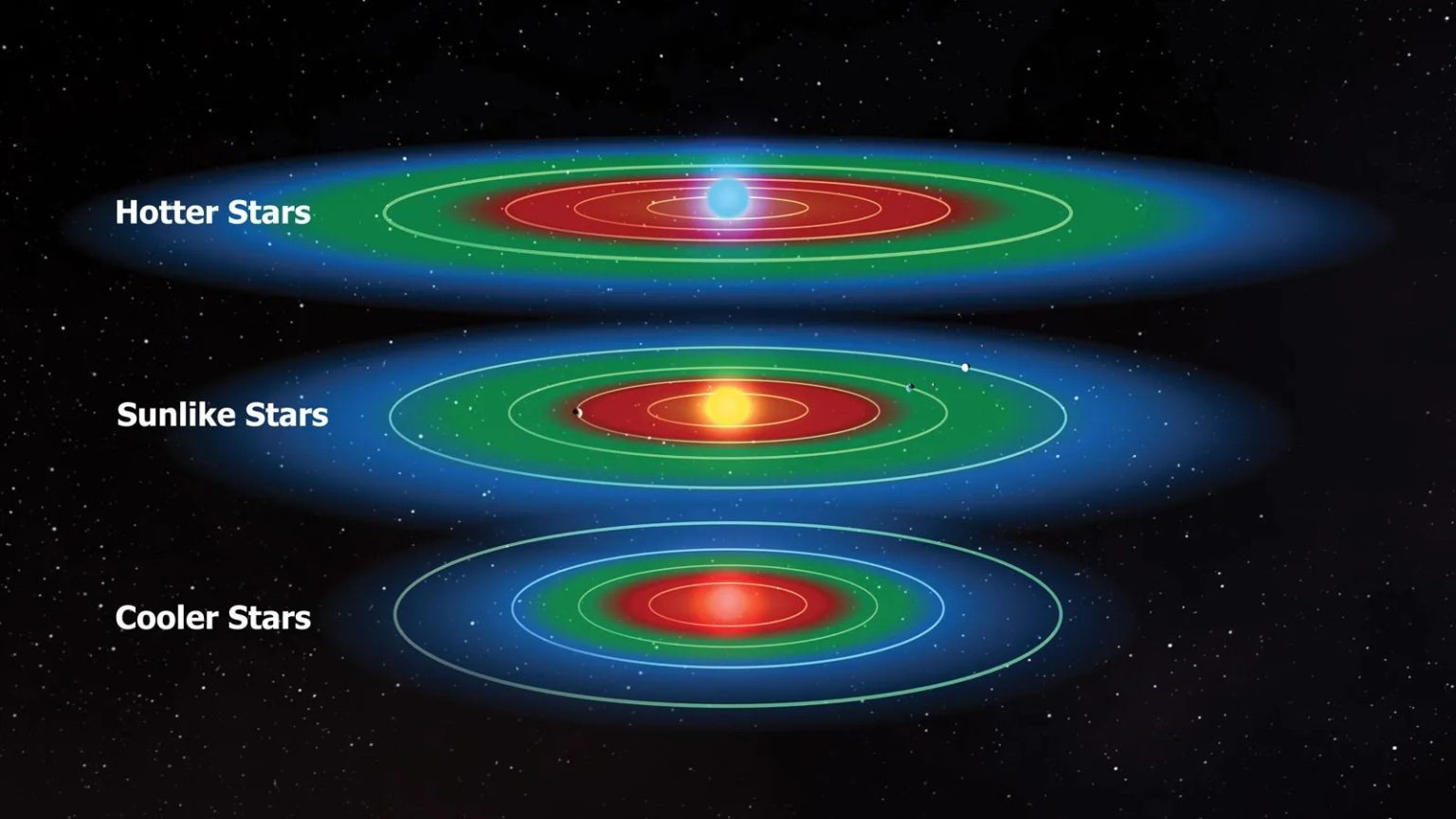
Often, when discussing the possibility of life near other stars, one hears that some of them are too dim for this, and some are too hot. In reality, the brightness of a star only affects the distance at which a planet must be located for life to exist on it.
It is a whole range of distances between which water can exist in a liquid state. It is also called the Goldilocks Zone. Simply falling within a certain part of it does not determine the climate on the planet. Important factors that influence it also include the mass of the celestial body, the eccentricity of its orbit, the tilt of its axis of rotation, the thickness of its atmosphere, and so on.
So, is a star merely a source of light, whose characteristics determine only the length of the year on a planet where life is possible? In general, the answer to this question is “no”, but it is worth considering each case individually.
Stars lighter than the Sun
The Sun is considered a star of average diameter, mass, and luminosity. If you look at the Hertzsprung-Russell diagram, it is difficult to disagree with this. Our star is located right in the center of the main sequence. But this is only true if we do not take into account the number of stars of a certain size in the Galaxy. More than 90% of them are smaller than the Sun. Stars larger than it are much rarer.
Excluding brown dwarfs, which occupy an intermediate position between stars and planets, the smallest stars are red dwarfs, such as Proxima Centauri, Wolf 359, Ross 154, and others close to Earth but invisible to the naked eye. You can read more about the problem of Earth-like worlds in their orbits in this article.
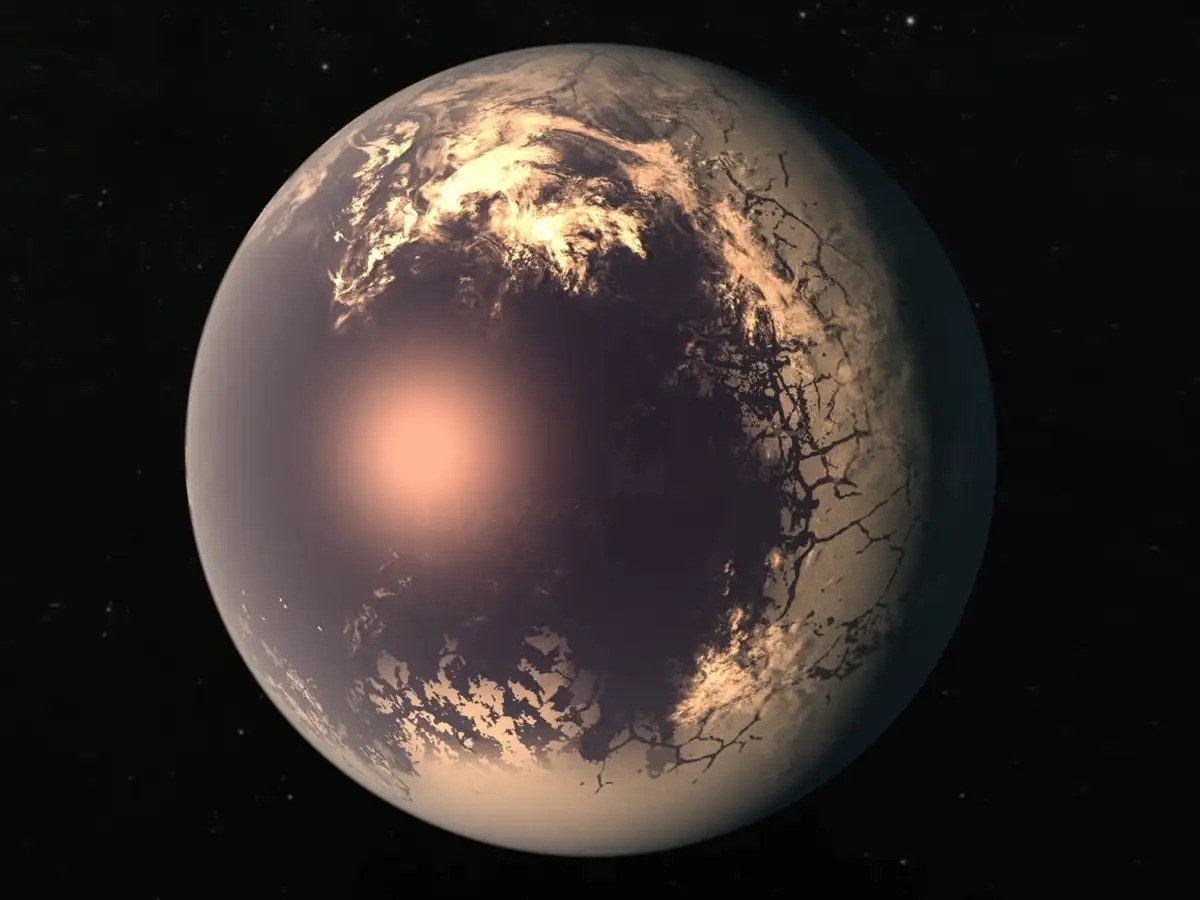
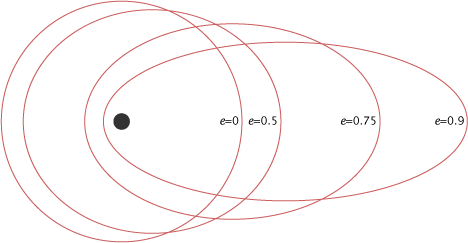
It should be noted that the existence of these worlds as a result of tidal locking of the “day” and “night” hemispheres is not their main feature. The fact is that this may not be the case if the eccentricity of the planet’s orbit is large enough. However, long days lasting 2-3 Earth days are inevitable.
The constant threat of powerful flares is also not mandatory. Most planets in red dwarf systems do indeed experience them, but among these stars, there are many in which such activity is not observed. This is especially true for those who are significantly older.
However, there is one feature that is present in all planets, more or less similar to Earth, that orbit red dwarfs, and that is an extremely short year, which can last 10-20 days. As a result, there should be virtually no change in seasons.
There are two mechanisms for changing the illumination of a particular area on a planet during its rotation around a star: a change in distance from the star due to the large eccentricity of the orbit, and the inclination of the axis of rotation. A combination of these two factors is also possible. But whatever it may be on a particular red dwarf, significant long-term weather fluctuations will not occur.
For this, water and air have too much thermal inertia. Combined with a very long or absent cycle of change for day and night, this will result in a very even climate. The inhabitants of such a planet may not know what winter and summer are.
Between red dwarfs and yellow stars, similar to our Sun, are orange stars. The luminosity of these stars is tens of percent of the Sun’s, and there are also many of them in the Galaxy. Examples include Epsilon Eridani, Epsilon Indi, 61 Cygni, and 70 Ophiuchi.
Orange dwarfs, like yellow ones, end their existence by first turning into red giants and then into white dwarfs.
However, no orange dwarf in the Milky Way has reached this stage of its existence yet, because it takes between 15 and 30 billion years to do so. It is precisely because of the combination of the long stable existence of Goldilocks Zone planets and their prevalence in the universe that planets near these stars are considered the best candidates for the search for extraterrestrial life.
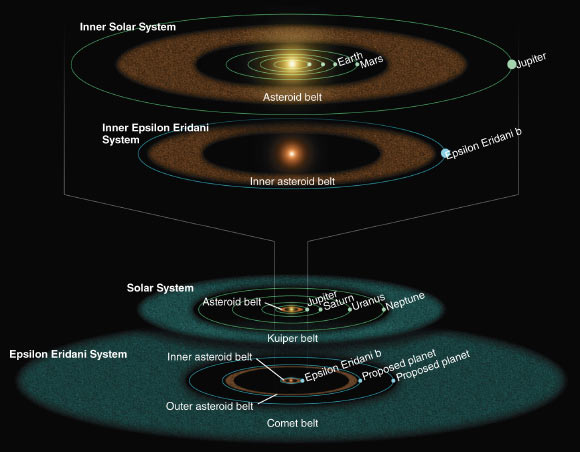
The tidal forces of their stars still exert a strong influence on them, causing a slowdown in their daily rotation. However, to cause tidal capture, the day must be “stretched” to dozens of Earth days, which can only be achieved over many billions of years.
Orange dwarfs also have increased flare activity compared to the Sun. However, planets in the “habitable zone” in their case are still much further from the star than in the case of red dwarfs. And the explosions on their surface are not as large-scale and frequent as in the latter. Therefore, the probability of serious losses of the atmosphere and hydrosphere is quite low.
Another key feature of the climate on these planets is their short year. With a duration of 40-200 days, fluctuations in light caused by orbital eccentricity and axial tilt become more noticeable. However, if only 30-50 Earth days pass between the days of minimum and maximum insolation, the difference between summer and winter is relatively small. Most likely, over billions of years of evolution, life on these worlds has primarily adapted to daily temperature changes rather than annual ones.
Stars heavier than the Sun
As for stars whose size, mass, and luminosity exceed that of the Sun, the situation is completely different. The first thing to realize is that there are not many such stars. Within a radius of 50 light-years from the Sun, there are barely two dozen of them, compared to several hundred red and orange dwarfs.
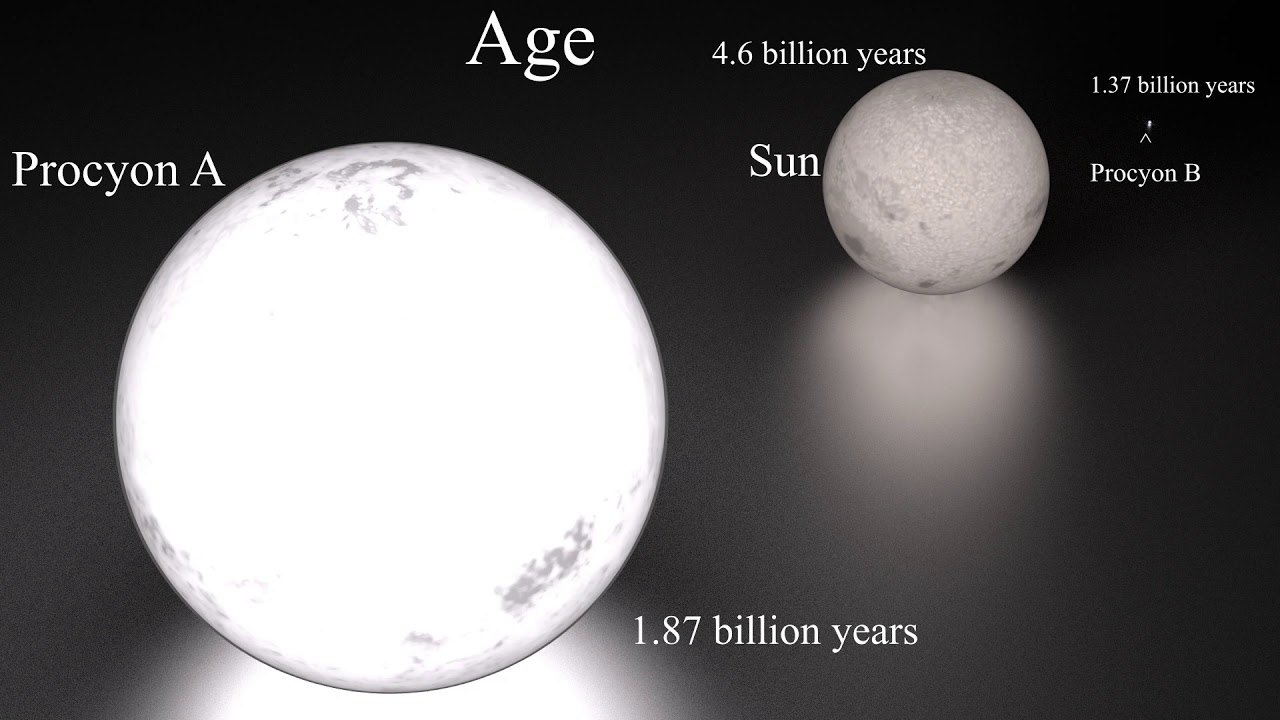
There are no problems with tidal braking and flares in the Goldilocks Zone of these stars. Their luminosity, which is significantly greater than that of the Sun, means that they must be much further away than Earth is from the Sun. Accordingly, a year on them must last from several tens of percent to several times longer than on our home planet.
However, there are most likely no planets with a developed biosphere and a year 10 times longer than Earth’s in space. The fact is that even yellowish stars of spectral class F, whose mass is 30-60% greater than that of the Sun, complete their entire evolutionary path to becoming red giants in only 3-5 billion years.
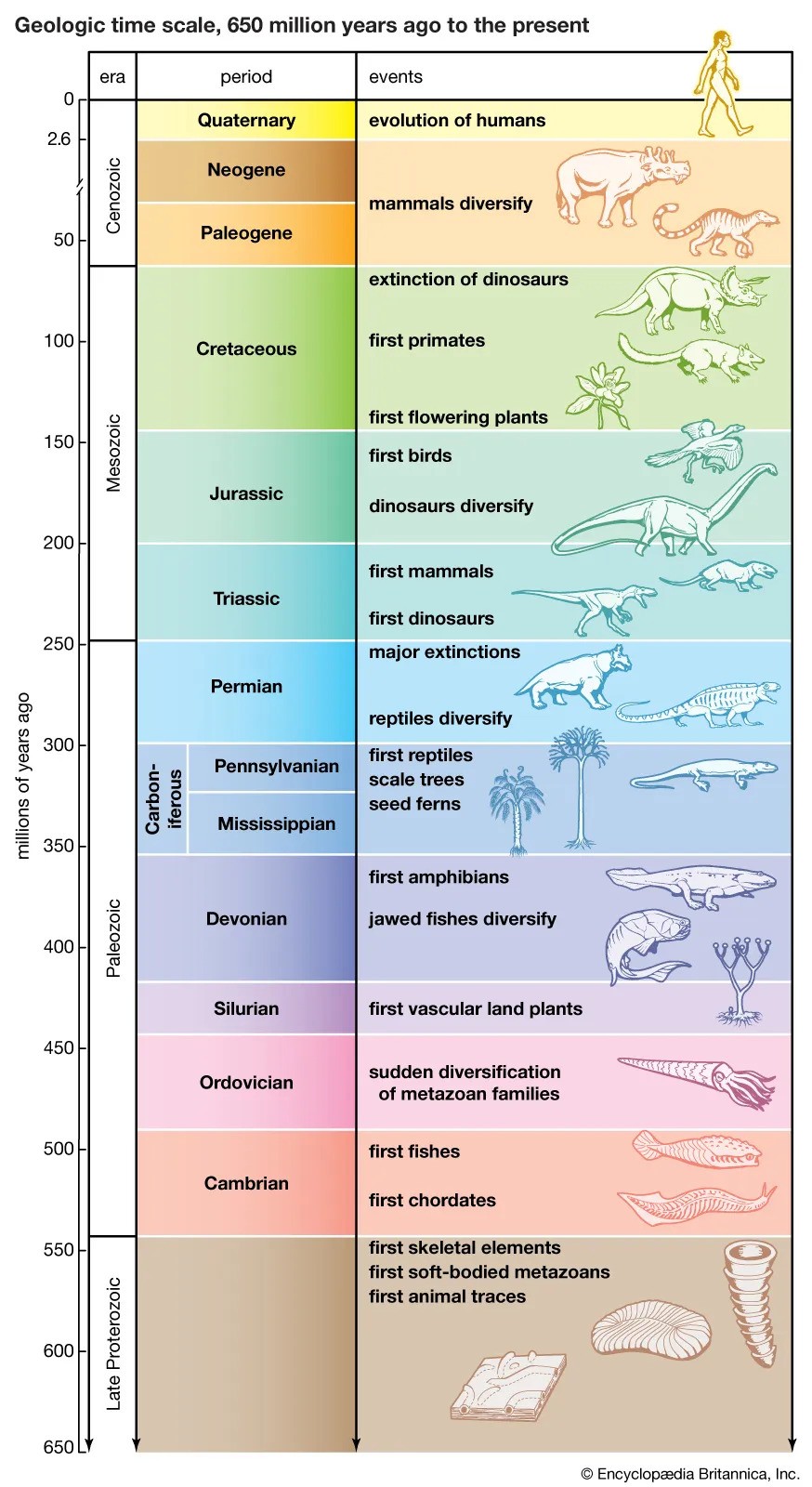
Life on Earth needed a comparable amount of time to evolve not only humans, but also terrestrial multicellular organisms. Of course, we do not know to what extent the pace of biological evolution on our planet is typical for the entire Milky Way galaxy. But it is most likely to assume that this time does not differ much from a certain average.
However, the star does not instantly turn into a red giant. Its luminosity increases gradually. For example, our own Sun could render Earth uninhabitable in a billion years. In larger stars, these processes occur much faster.
That is, most likely, regardless of how large the axial tilt and orbital eccentricity of worlds orbiting stars brighter than the Sun are, these planets experience significant temperature fluctuations throughout the year. It is highly unlikely that multicellular life or life on land exists on them. And the atmosphere is most likely unsuitable for breathing, despite the presence of entirely terrestrial oceans and temperatures acceptable for human existence.
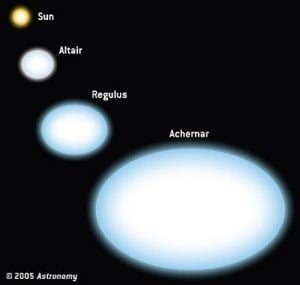
In general, judging by everything, our star is close to the upper limit of mass, beyond which complex life simply does not have time to develop. For example, large hot stars such as Sirius, Vega, and Achernar have a lifespan of just a few hundred million years. If there are planets there, then only very primitive life could have emerged on them.
Planets near older stars
However, all of the above cases involve planets orbiting stars that are on the main sequence, i.e., undergoing a relatively stable period of their evolution. However, we may find a planet orbiting a giant or red giant at a distance that can be considered the Goldilocks Zone. They will have sufficiently long years and, in principle, may have a temperature regime conducive to the existence of life, but it must be remembered that in the past, these planets were analogous to Mars or Jupiter’s moons.
That is, for billions of years, if life existed on them, it barely flickered somewhere beneath the surface. And then, over a relatively short period of time, the influx of heat increased significantly, and conditions on them became quite favorable.
Will we see a world with forests, meadows, and perhaps cities living under a big red sun? This is a very interesting question, but we do not know the general answer. It depends on two factors: how complex organisms can arise in conditions of insufficient sunlight and, possibly, liquid water. So far, we cannot rule out either the possibility that even primitive multicellular organisms could develop in such conditions or that nothing more primitive than bacteria could emerge.
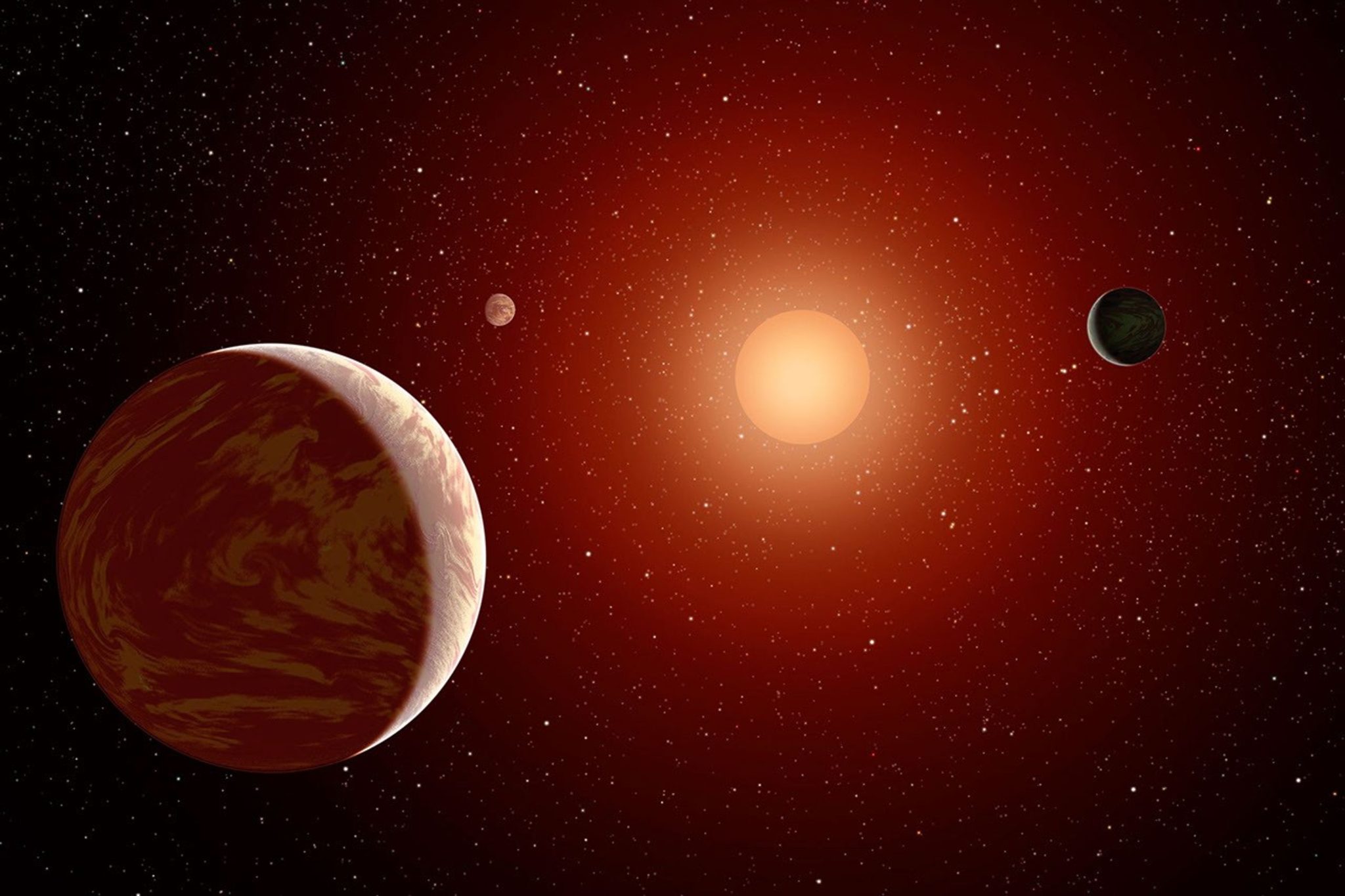
On the other hand, much depends on the stage of stellar evolution at which the planet entered the Goldilocks Zone. If it is transforming into a subgiant, then in the case of stars comparable to our Sun, this process can take hundreds of millions of years, during which the surface temperature will rise quite slowly.
If by that time the evolution of life had already made some progress, then this time would be sufficient for life to give rise to a developed terrestrial biosphere. For example, on Earth, the path from primitive marine invertebrates to monkeys living in forests took only half a billion years.
However, if the planet became warm enough for life only after its sun turned into a red giant, the situation is much worse. Here, too, the changes will take millions of years, but the transition from an icy world to a scorching one can happen extremely quickly. And there will be practically no time for evolution.
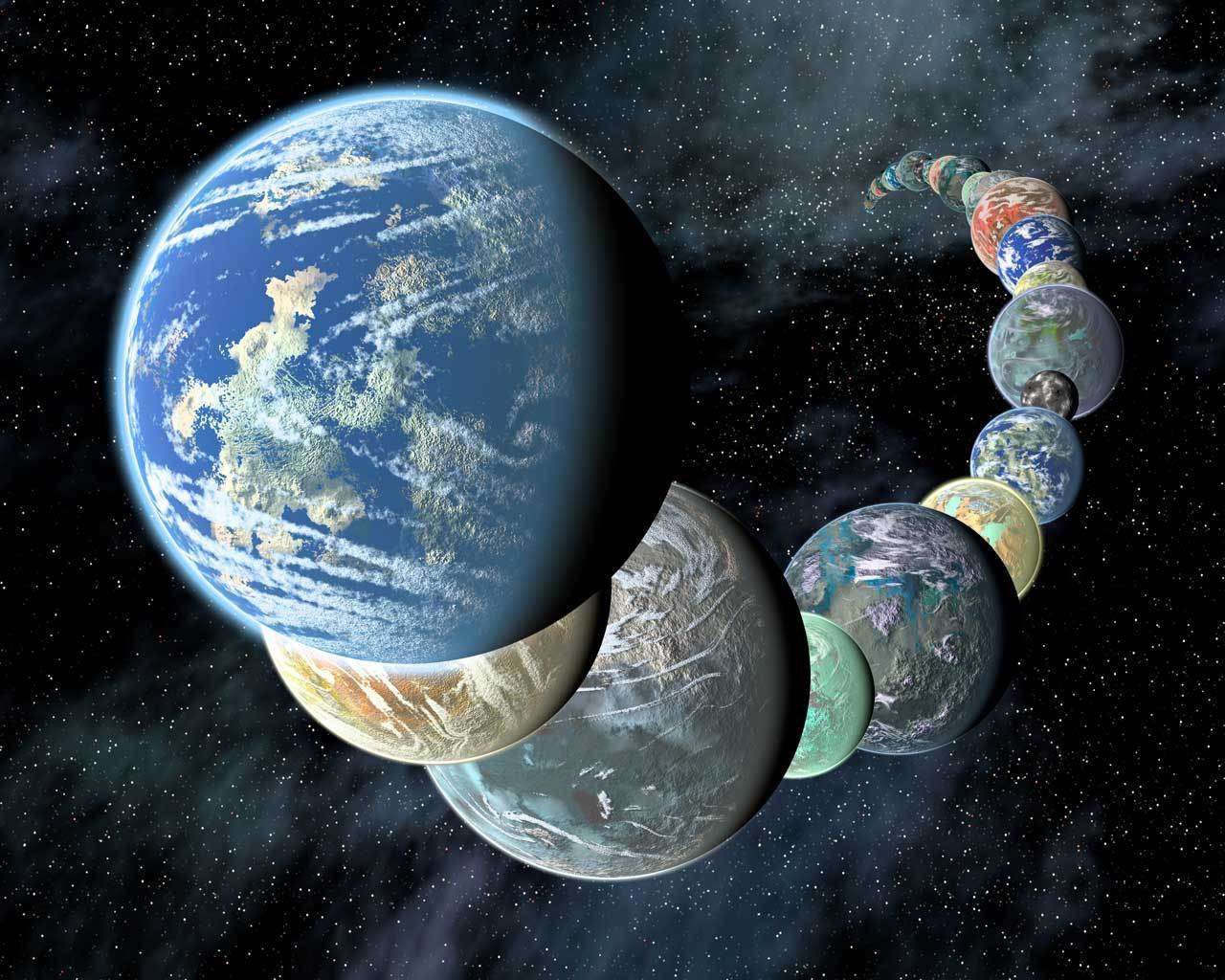
White dwarfs may also have a Goldilocks Zone. However, it is important to remember that it is located where the outer layers of the star used to be during its red giant or even subgiant phase. Can a planet survive this? Can a new world form around a white dwarf?
Science does not provide definitive conclusions on this matter, but it is more likely that the answer to the first question is no rather than yes, and to the second question is yes rather than no. In other words, we are very likely to find a planet in the Goldilocks Zone of a white dwarf, but water is unlikely, although anything is possible. And it is highly doubtful that there is any life there. As for black holes and neutron stars, planets may exist in their orbits. But most likely, high levels of radiation make life on them impossible.
It may seem that truly Earth-like planets can only exist in the orbits of a small number of stars and that their diversity is limited. But in fact, this is not the case. Even what has been described means that there are millions of planets in the Galaxy, some of which may seem incredible to us.

