

After studying data collected by the James Webb Space Telescope (JWST), astronomers discovered galaxies with very unusual characteristics. Researchers figuratively compared them to platypuses.
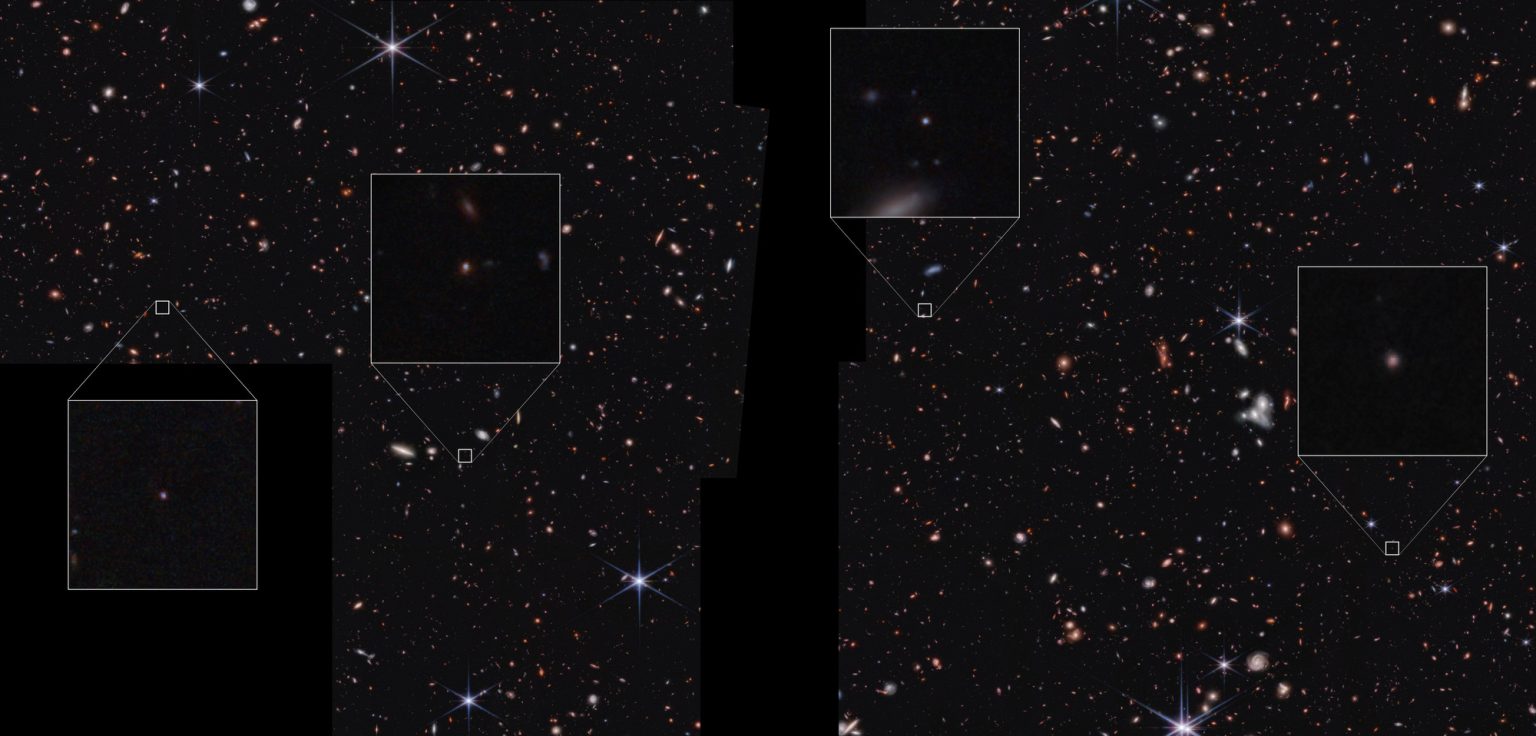
The discovery was made while studying a sample of 2,000 objects that existed 12–12.6 billion years ago. Scientists managed to identify nine unusual sources with very strange spectral characteristics. They are too far away to be stars in our galaxy and too dim to be quasars.
Lead researcher Haojing Yan compared the discovery to a platypus: an animal that defies classification in biology.
“It seems that we’ve identified a population of galaxies that we can’t categorize, they are so odd. On the one hand they are extremely tiny and compact, like a point source, yet we do not see the characteristics of a quasar, an active supermassive black hole, which is what most distant point sources are.”
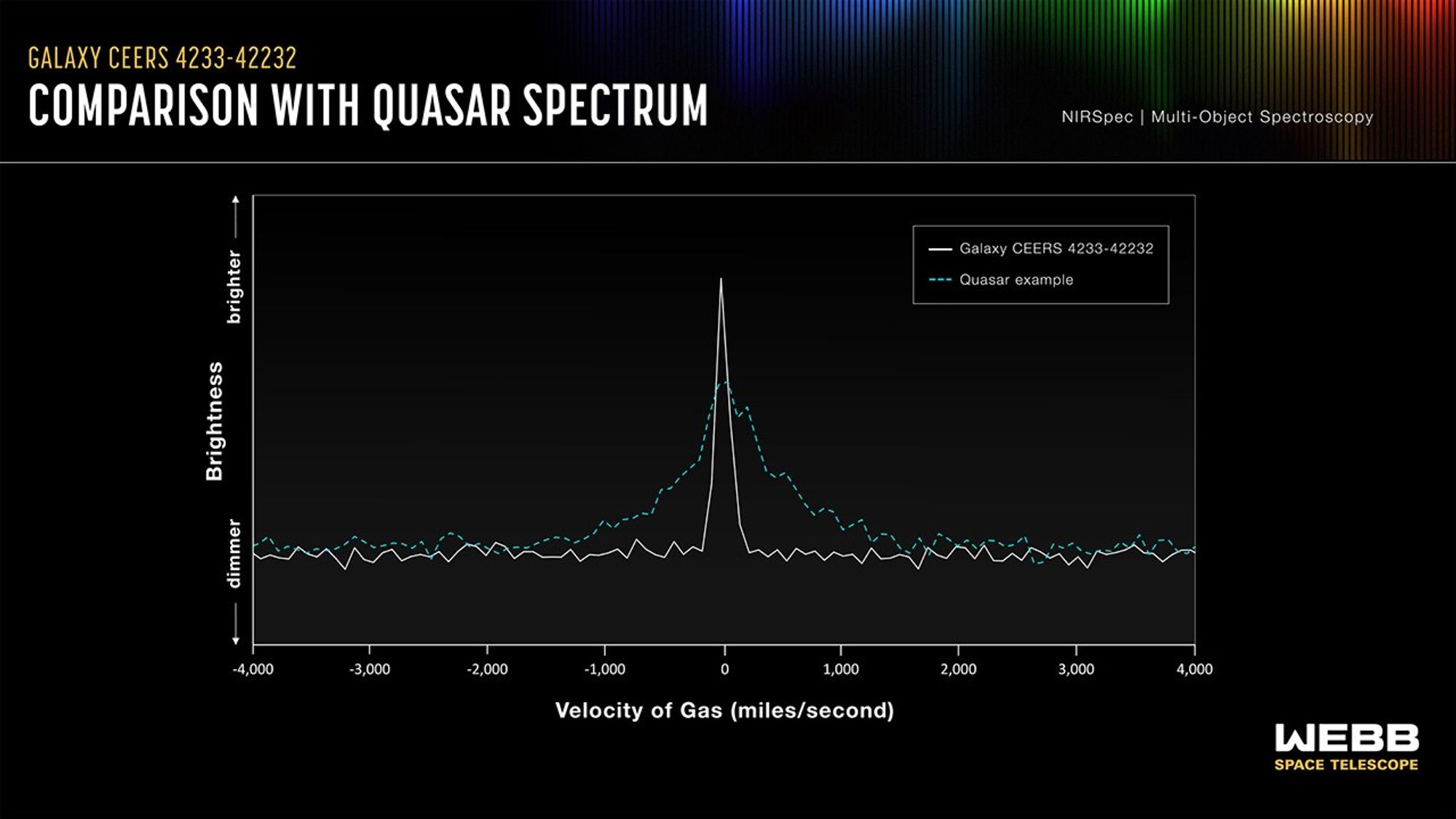
Yan explained that for typical quasars, the peaks in their characteristic spectral lines of radiation look like hills with a broad base, indicating the high speed of gas spinning around a supermassive black hole. Instead, the peaks of “space platypuses” are narrow and sharp, indicating slower gas motion.
During further analysis, astronomers determined that these objects could be star-forming galaxies. However, due to their small size, they are not yet able to see their individual details.
One of the team’s hypotheses is that JWST has discovered earlier stages of galaxy formation and evolution than those ever observed before. It is believed that massive galaxies, such as our Milky Way, were formed as a result of the merger of many smaller galaxies. But what preceded them?
Scientists suggest that before chaotic mergers began, small galaxies—building blocks—could have formed in a calm environment. Perhaps JWST has discovered precisely these. However, to obtain an accurate answer, additional observations and higher-resolution spectra are required.
Earlier, we reported on how the Hubble Telescope discovered a cloud of dark matter.
According to NASA

