
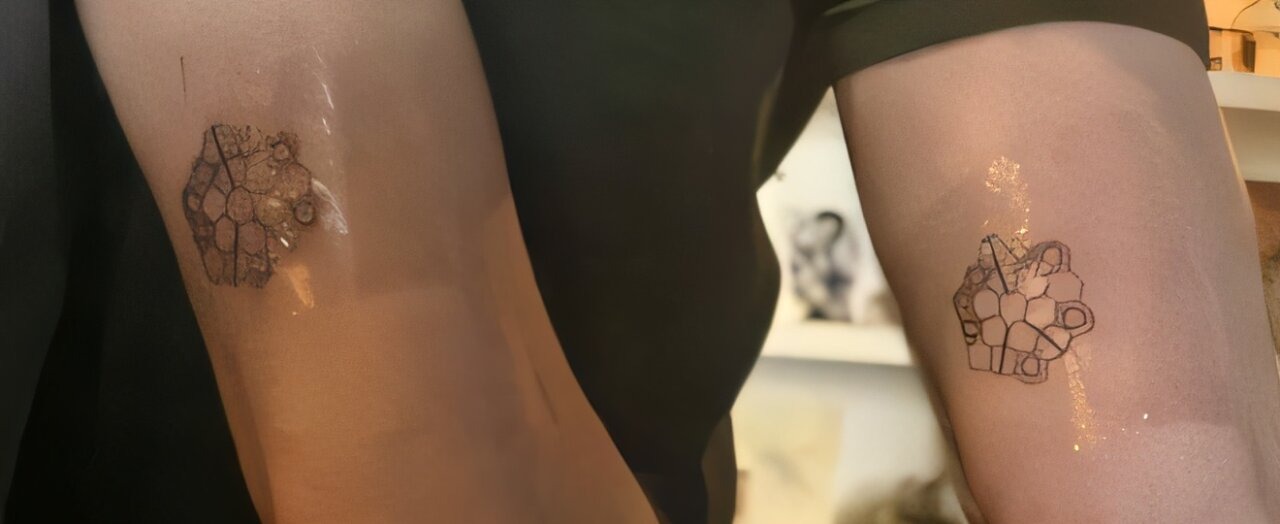
Two Australian graduate students have achieved the incredible – they have “repaired” one of the most important instruments of the James Webb Space Telescope (JWST). Moreover, this operation did not require sending a single repair mission into space. Their work not only achieved scientific success, but also left a memorable mark in the literal sense: as a sign of their victory, the researchers got tattoos depicting the instrument they had improved.
Problem with cosmic “vision”
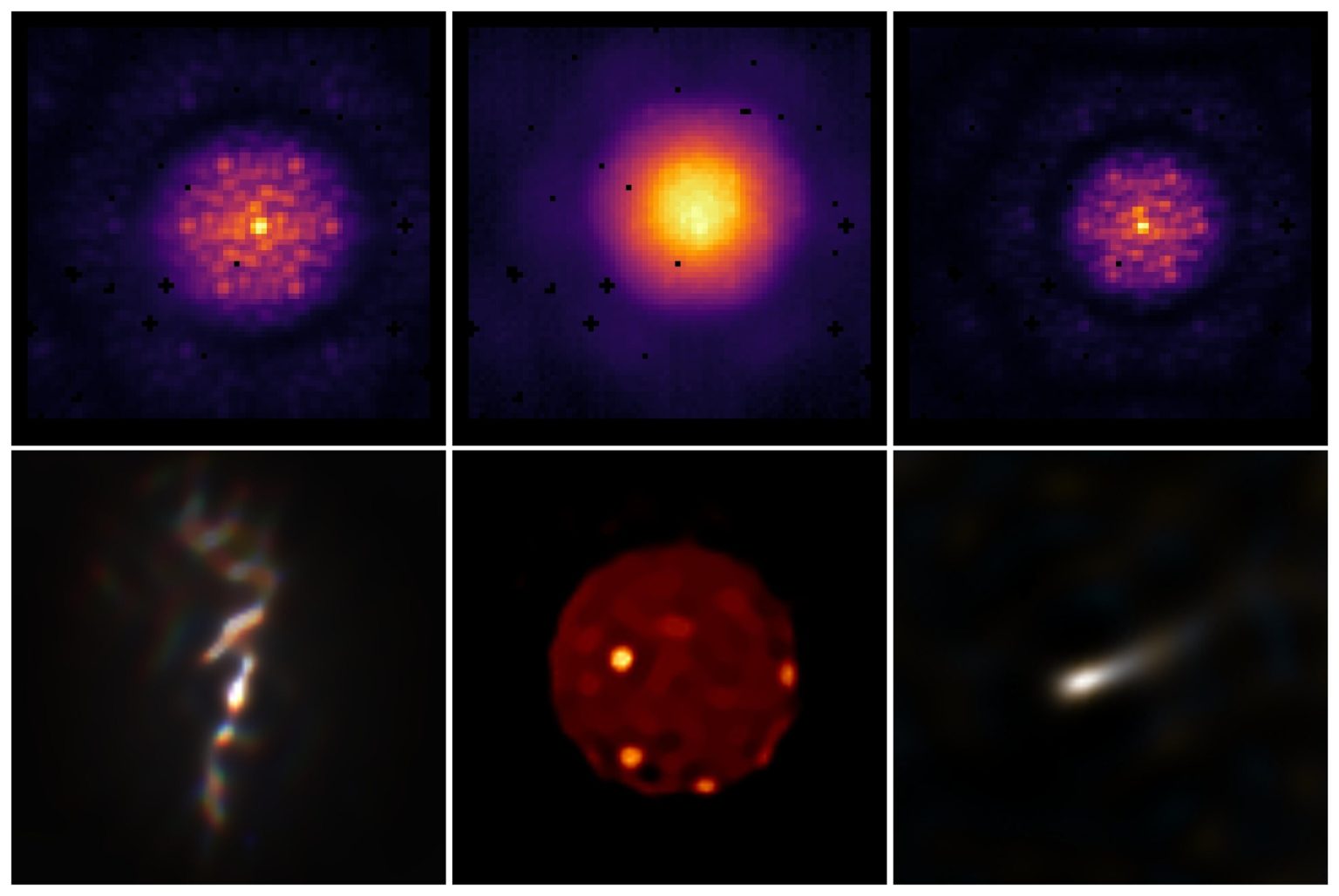
After the launch of JWST, scientists encountered a problem: the AMI (Interferometer with Aperture Masking) instrument, developed in Australia, allowing to obtain very clear images of exoplanets and stars, produced blurry photos. The cause of this was the “brighter-fatter” effect—the flow of electrical charge between neighboring pixels of the infrared detector. This situation was reminiscent of the Hubble telescope, which required an expensive space mission to repair.
Ingenious way to repair
Instead of planning impossible repairs in orbit, graduate students Louis Desdoigts and Max Charles from the University of Sydney, under the guidance of Professor Peter Tuthill, came up with an ingenious software solution. They developed the AMIGO system, which uses advanced modeling and neural networks to accurately simulate and compensate for the telescope’s optical distortions directly from Earth.
“Instead of sending astronauts to install new parts, they managed to fix the situation using code on Earth,” Professor Tuthill noted with satisfaction.
A new vision for the Universe
The result exceeded all expectations. After being “firmware” with AMI software, it began to work better than ever. The telescope has gained the ability to take the clearest images ever of faint objects such as distant exoplanets. The upgraded instrument has already photographed a black hole jet, the volcanic surface of Jupiter’s moon Io, and dusty stellar winds.
“This work brings JWST’s vision into even sharper focus,” Dr. Desdoigts said. “It’s incredibly rewarding to see a software solution extend the telescope’s scientific reach—and to know it was possible without ever leaving the lab,” Dr. Desdoigts shares his impressions.
The research has already been published on arXiv. The scientific community plans to quickly make the code that corrected the telescope’s “vision” for $20 billion available to all astronomers working with James Webb.
Earlier, we reported on how James Webb confirmed the most powerful explosion in the Universe.
According to phys.org

