

The Japan Aerospace Exploration Agency launched the HTV-X1 cargo spacecraft into space. Launched using the new H3 super-heavy rocket, it is carrying essential cargo to the International Space Station.
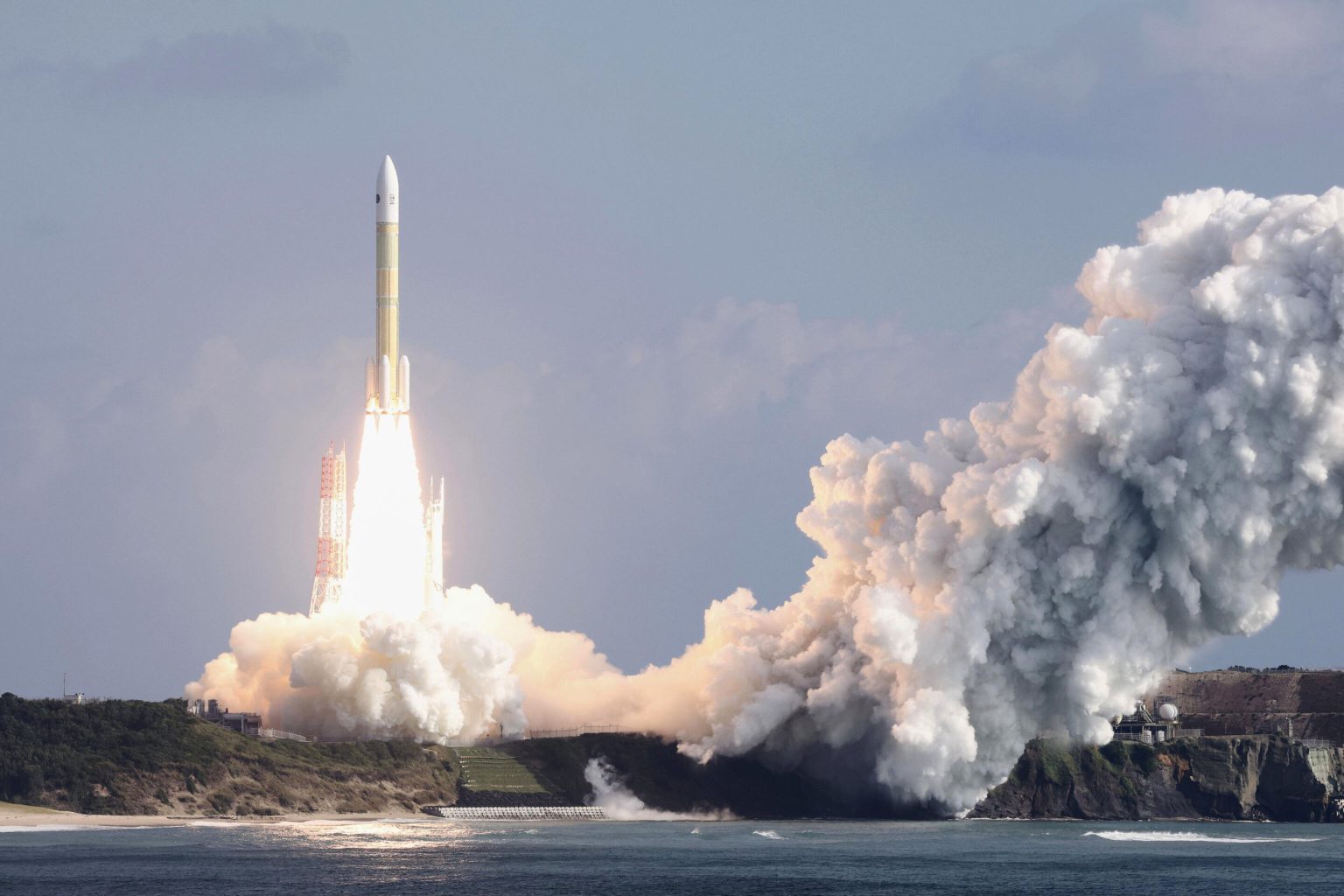
Flight of the new Japanese spacecraft
The Japan Aerospace Exploration Agency successfully launched its most powerful rocket, the H3, on Sunday, carrying a newly developed unmanned cargo spacecraft for its first mission to deliver supplies to the International Space Station.
The Japan Aerospace Exploration Agency reported that the HTV-X1 spacecraft successfully launched on rocket No. 7 H3 from the Tanegashima Space Center in southern Japan and confirmed that it entered its target orbit 14 minutes after launch.
The spacecraft separated and entered its planned orbit, JAXA reported. If all goes well, it is expected to arrive at the ISS in a few days to deliver cargo. Japanese astronaut Kimiya Yui, who is currently on the ISS, plans to catch the spacecraft with a robotic arm in the early hours of Thursday.
Purpose of the HTV-X spacecraft
HTV-X is the successor to the H-II Transfer Vehicle unmanned transport spacecraft, known as Kounotori, or “stork” in Japanese, which completed nine missions to the ISS between 2009 and 2020.
The new cargo spacecraft can carry more supplies and provide power during flight, enabling transportation of laboratory samples that require low-temperature storage. HTV-X is designed to dock with the ISS for up to six months to deliver supplies and remove waste from the ISS, and then perform technical missions during its three-month orbital flight after leaving the station.
Debut of the Japanese H3 launch vehicle
Sunday’s launch also marked the successful debut of the most powerful version of the H3 rocket, with four rocket boosters and a large fairing, an upper payload compartment, officials reported.
JAXA President Hiroshi Yamakawa called Sunday’s launch “an important step forward” that demonstrated Japan’s ability to deliver cargo into space, which is “the foundation of autonomous space activities.”
Iwao Igarashi, head of Mitsubishi Heavy Industries’ space business division, responsible for developing the H3 in collaboration with JAXA and launching rockets, noted that Japan’s experience in timely launches and accurate delivery of payloads, as well as the recently modified rocket, prove that they can meet a wide range of customer needs. He added that his company plans to expand its launch capabilities.
The H3 rocket replaces the H-2A rocket, a favorite among the Japanese, which made its last flight in June, and it is a new flagship model designed to increase competitiveness in the global space market.
Japan considers stable, commercially competitive space transportation capabilities to be a key factor in its space program and national security.
According to phys.org

