

As the space industry seeks ways to make flights to Mars, Jupiter, and the outer reaches of the Solar System not only possible but also practical, next-generation engines are coming to the forefront. The British company Pulsar Fusion has announced a significant milestone in this area: in March 2026, it achieved the first plasma in the test exhaust system of its Sunbird project. The demonstration was shown during the MARS conference in California, and the test was conducted in Bletchley, UK.
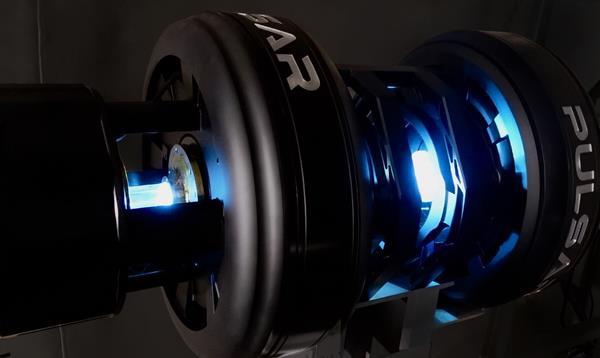
This isn’t about a fully developed fusion tug or a fully operational reactor in space, but rather an early, but significant demonstration: engineers were able to create and sustain plasma within the Sunbird exhaust system. According to the company, in this experiment, charged particles were guided and accelerated using a combination of electric and magnetic fields, and krypton—a chemical element and inert gas with the symbol Kr (not to be confused with kryptonite)—was used as the working medium for the initial series of tests.
Pulsar Fusion describes the next step as measuring the actual thrust and plasma outflow velocity using specialized diagnostic instruments. At the same time, the company is working with the UK Atomic Energy Authority on modeling neutron shielding and the effects of radiation on components of the future system. On Sunbird’s official website, Pulsar also describes a long-term concept for an interplanetary tug featuring very high specific impulse, combined propulsion, and electric power for deep-space missions—but these parameters remain only a stated development goal rather than confirmed flight performance data.
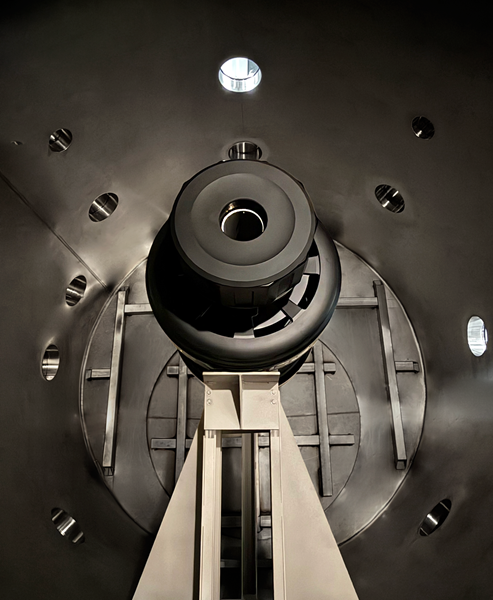
How does it work? The idea works like this: the gas is converted into plasma—a very hot, ionized state of matter—and then electric and magnetic fields push these charged particles in one direction. According to the law of conservation of momentum, the device is given an impulse in the opposite direction. In the case of Sunbird, the company has demonstrated only the basic step—the creation and control of plasma in the exhaust system—that is, the foundation for a future engine, not a fully developed space tug.
Why is this important? Such systems are of interest to space science because their high specific impulse makes it possible to either reduce fuel mass or deliver scientific instruments to distant destinations more quickly. NASA specifically emphasizes that electric propulsion is particularly promising for operations in orbit and for deep-space missions, while Pulsar views Sunbird as a system capable of providing both propulsion and power for the payload. This means more freedom for heavy scientific instruments, powerful radars, communication systems, and long-duration interplanetary missions.

