

In aerospace engineering, fluids are typically predictable: fuel flows through pipelines, coolants circulate through circuits, and industrial mixtures are fed uniformly into printing or processing systems. But a new study has shown that, under certain conditions, liquids can literally fracture like solids. A team from Drexel University reached precisely this conclusion; their work has been published in Physical Review Letters.
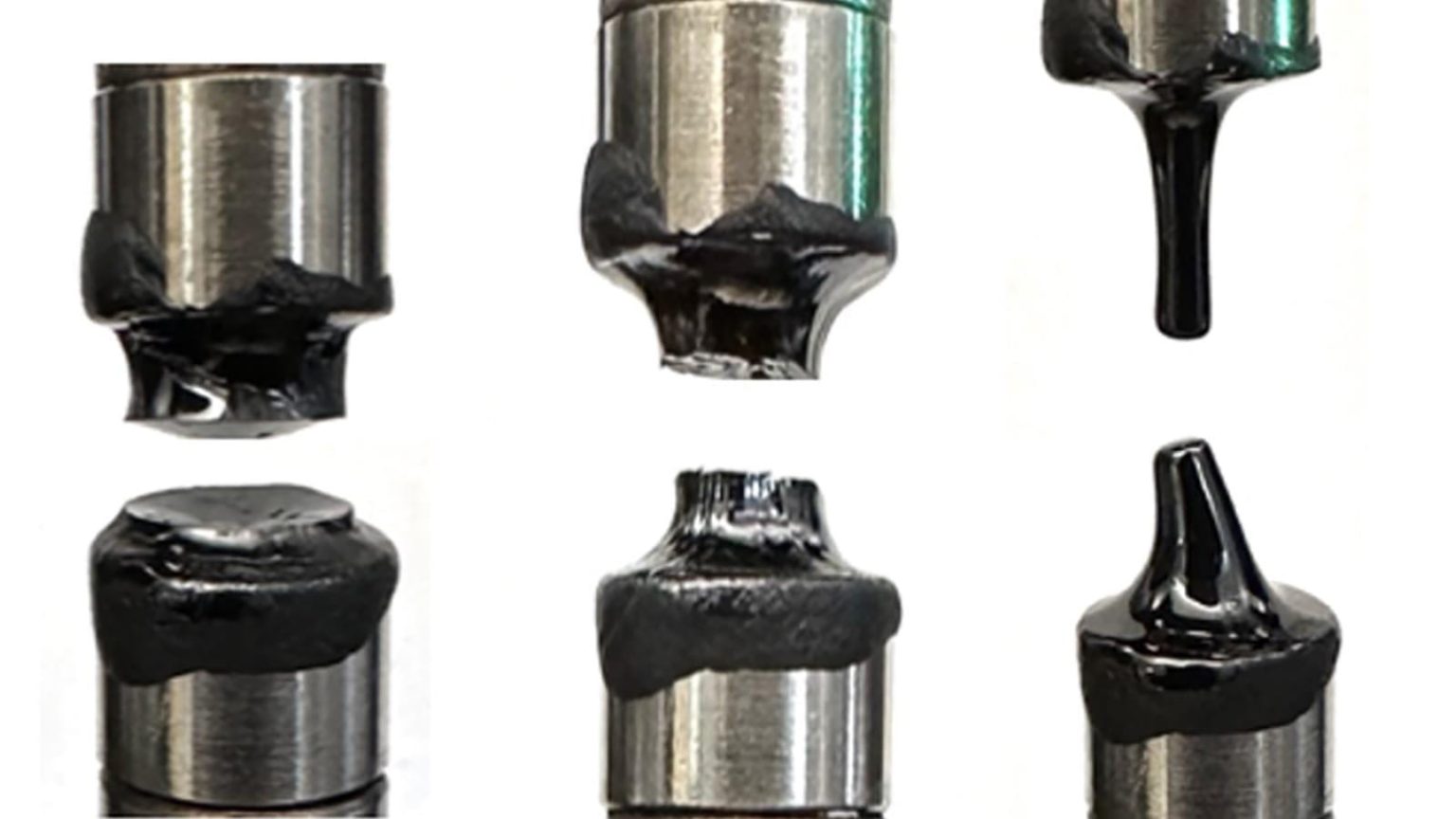
During the experiments, scientists stretched simple liquids in a test of extensional rheology* and observed something unexpected: instead of the usual elongation into a thin thread, the liquid suddenly snapped with a characteristic sharp click. This was first observed in viscous hydrocarbon mixtures, and the result was then replicated using a styrene oligomer with a similar viscosity. In both cases, the liquid reached a critical stress of about 2 megapascals, after which it behaved like a brittle solid.
*Extensional rheology is a branch of the study of fluid materials that examines how a liquid or soft material behaves under tensile stress rather than shear stress.
The most important thing about this work is that it is not elasticity but viscosity that plays the key role. This contradicts the common belief that fracture propagation through a crack is characteristic only of solid or clearly viscoelastic materials. Researchers also suggest that the mechanism may be related to cavitation—the formation and rapid collapse of bubbles within a liquid. If these findings are confirmed for a broader class of liquids, it could revolutionize approaches to hydraulics, fiber forming, and 3D printing.
How does it work? Imagine a very thick syrup. We usually think that if we pull on it, it will simply stretch into an increasingly thin thread until it transforms into a new shape. However, scientists have shown that if you pull quickly and forcefully enough, some liquids do not have time to flow smoothly. They reach their breaking point and, instead of stretching further, break sharply—much like a taut piece of plastic or a thin sheet of glass.
Why is this important? For the space industry, this discovery could prove significant in all areas related to the behavior of viscous fluids under high stress: from fuel and cryogenic lines to microfluidic systems, off-Earth material production, and 3D printing in orbit. The researchers have already pointed out the potential significance of these findings for fluid dynamics, 3D printing, and fiber-forming processes; it follows that such models could also be useful for space systems, where controlling fluid flow is critically important.

